111582316542


Untitled

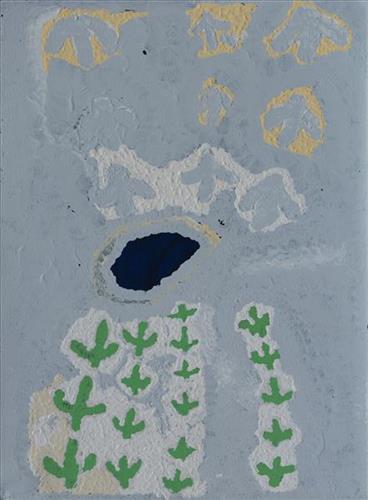
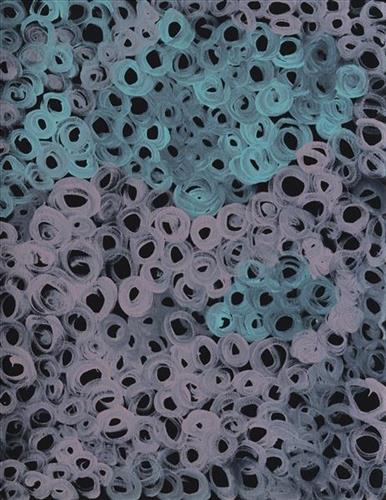
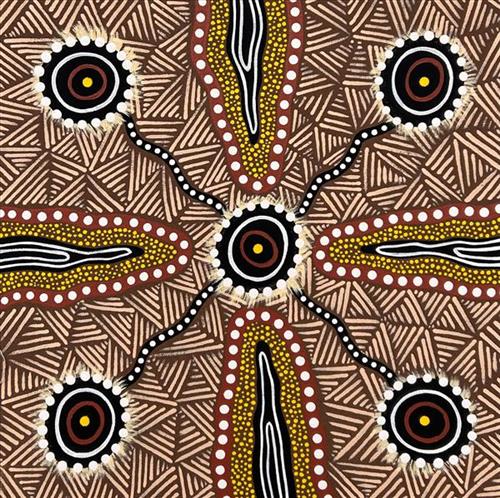
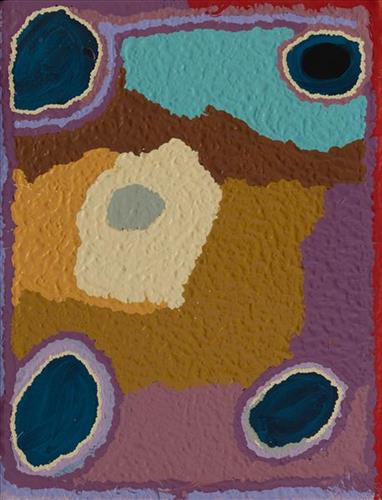
This is Yikartu’s Country- her ‘ngurra’ (home Country, camp). People identify with their ngurra in terms of specific rights and responsibilities, and the possession of intimate knowledge of the physical and cultural properties of one’s Country. Painting ngurra, and in so doing sharing the Jukurrpa (Dreaming) stories and physical characteristics of that place, has today become an important means of cultural maintenance. 

Yikartu’s ngurra encompasses the Country that she and her family walked in the pujiman (traditional, desert-dwelling) era. Yikartu was born at Lalyipuka. She grew up, walked and hunted primarily within Yulparija Country, north of Manyjilyjarra Country, and through to the Percival Lakes area, at the northern boundary of the Martu homelands. She continued to live nomadically before eventually deciding to move to Jigalong Mission along with many other relatives following an extreme and prolonged drought in the 1960s. 

Portrayed in this work are features of Yikartu’s ngurra, such as the dominant permanent red tali (sandhills), warta (trees, vegetation), and the individually named water sources she and her family camped at. These include Yulpu, Yimiri, Kupankurlu, Kurturrara, Wirnpa, Jurnpanja, Rulu-rulu, Taparl-taparl, Wirrkujapayi, Tayiku and Puntita. Rock holes, waterholes, soaks and springs were all extremely important sites for Martu people during the pujiman period, and are generally depicted with circular forms. 

The encyclopaedic knowledge of the location, quality and seasonal availability of the hundreds of water bodies found in one’s Country sustained Martu as they travelled across their Country, hunting and gathering, visiting family, and fulfilling ceremonial obligations. They would traverse very large distances annually, visiting specific areas in the dry and wet season depending on the availability of water and the corresponding cycles of plant and animal life on which hunting and gathering bush tucker was reliant. As they travelled and hunted they would also burn areas of Country, generating a greater diversity of plant and animal life.
111582316541


Minnie Mintern Great Great Grannie

How did you get to this style of painting?

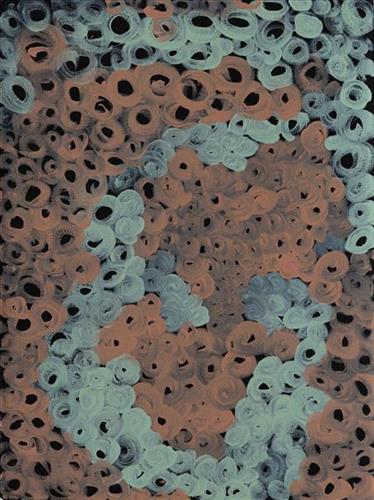
“Do you mean, what have I done with my life? (chuckles to herself) To me these paintings are a sense of energy. So if I see someone and they’re happy, I paint a happy vibe. Cos their spirit is happy. And sometimes it’s hard because on the outside they’re real happy but on the inside they’re real sad. Sometimes you do stuff (like a painting) and it adds up later on. But I still don’t know what it means and don’t know where my style comes from because it’s both the path I walk on and the cracks in the dirt. It’s like looking at a landscape but I haven’t been there yet. Maybe I’ll get there one day. I believe things happen for a reason.”

– Sylvia Wilson

111582316540


Laripuka

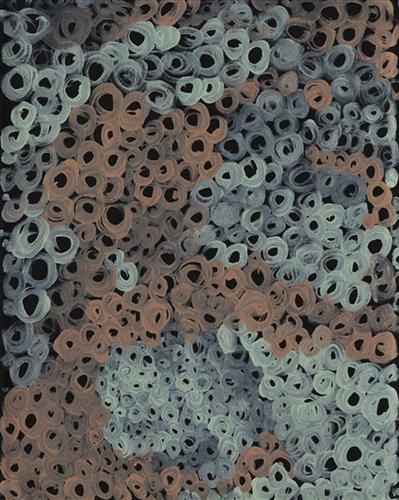
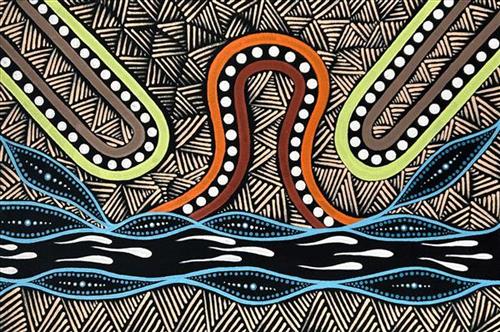
Laripuka is a waterhole kayili (north) of the Percival Lakes region of Western Australia’s Great Sandy desert. This is Yikartu’s ngurra (home Country, camp); she was born here. Yikartu recalls travelling here with her family and Grandmother in the pujiman (traditional, desert dwelling) days.

The Western Desert term ‘ngurra’ is hugely versatile in application. Broadly denoting birthplace and belonging, ngurra can refer to a body of water, a camp site, a large area of Country, or even a modern house. People identify with their ngurra in terms of specific rights and responsibilities, and the possession of intimate knowledge of the physical and cultural properties of one’s Country. This knowledge is traditionally passed intergenerationally through family connections. Painting ngurra, and in so doing sharing the Jukurrpa (Dreaming) stories and physical characteristics of that place, has today become an important means of cultural maintenance. Physical maintenance of one’s ngurra, like cultural maintenance, ensures a site’s wellbeing, and is a responsibility of the people belonging to that area.

111582316539


Daughter Minnie Mintern

How did you get to this style of painting?

“Do you mean, what have I done with my life? (chuckles to herself) To me these paintings are a sense of energy. So if I see someone and they’re happy, I paint a happy vibe. Cos their spirit is happy. And sometimes it’s hard because on the outside they’re real happy but on the inside they’re real sad. Sometimes you do stuff (like a painting) and it adds up later on. But I still don’t know what it means and don’t know where my style comes from because it’s both the path I walk on and the cracks in the dirt. It’s like looking at a landscape but I haven’t been there yet. Maybe I’ll get there one day. I believe things happen for a reason.”

– Sylvia Wilson

111582316538


Daughter Minnie Mintern

How did you get to this style of painting?

“Do you mean, what have I done with my life? (chuckles to herself) To me these paintings are a sense of energy. So if I see someone and they’re happy, I paint a happy vibe. Cos their spirit is happy. And sometimes it’s hard because on the outside they’re real happy but on the inside they’re real sad. Sometimes you do stuff (like a painting) and it adds up later on. But I still don’t know what it means and don’t know where my style comes from because it’s both the path I walk on and the cracks in the dirt. It’s like looking at a landscape but I haven’t been there yet. Maybe I’ll get there one day. I believe things happen for a reason.”

– Sylvia Wilson

11564004961


Status: Stock


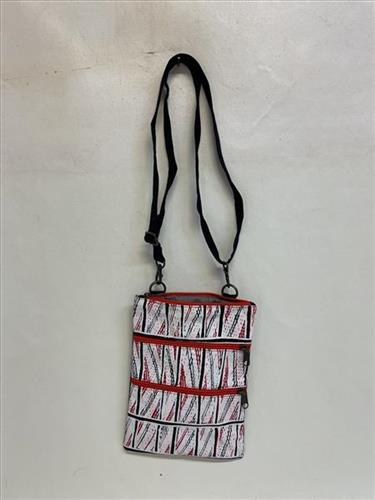
Serena bag

FABRIC ARTWORK

This product was screenprinted by Yolŋu art workers at Bula’Bula Arts. We print small batches of tea towels, tshirts and fabric lengths by hand because we love putting Yolŋu designs on everyday items – especially ones that balanda (non-Yolŋu) use! Due to the lovely handmade nature of this product, print quality may vary.

 Available in four fabric designs and multiple colourways:

  • Dawurrmonuk (itchy caterpillar) by Evonne Gayuwrri
  • Lidjilidji (Crimson Finch) by Andrew Wanamilil
  • Lorrpu (Sulphur-crested Cockatoo) by Peter Gambung
  • Ngambi (limestone) spear by Shannon Ashley

Manymak (very good)! Buying Bula’Bula Arts products helps us build a sustainable income source for our 150 artists and artworkers from Ramingining and surrounding outstations.


WORKING WITH FLYING FOX FABRICS 

We work with Flying Fox Fabrics, a small social enterprise based in Darwin. Flying Fox Fabrics, make and sell accessories, clothing and homewares from fabrics designed by Aboriginal artists which have been hand printed in Australia. They work in partnership with Aboriginal artists and fair trade organisations in Cambodia that train and employ disabled artisans.

11564004960


Status: Stock


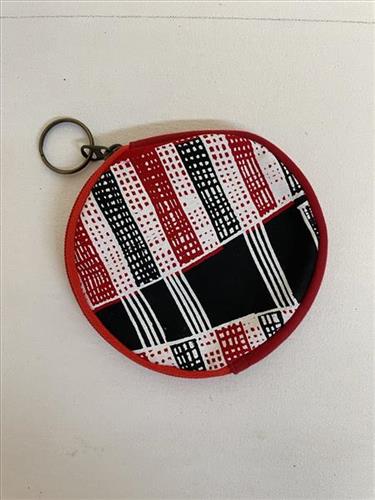
Coin Purse

FABRIC ARTWORK

This product was screenprinted by Yolŋu art workers at Bula’Bula Arts. We print small batches of tea towels, tshirts and fabric lengths by hand because we love putting Yolŋu designs on everyday items – especially ones that balanda (non-Yolŋu) use! Due to the lovely handmade nature of this product, print quality may vary.

 Available in four fabric designs and multiple colourways:

  • Dawurrmonuk (itchy caterpillar) by Evonne Gayuwrri
  • Lidjilidji (Crimson Finch) by Andrew Wanamilil
  • Lorrpu (Sulphur-crested Cockatoo) by Peter Gambung
  • Ngambi (limestone) spear by Shannon Ashley

Manymak (very good)! Buying Bula’Bula Arts products helps us build a sustainable income source for our 150 artists and artworkers from Ramingining and surrounding outstations.


WORKING WITH FLYING FOX FABRICS 

We work with Flying Fox Fabrics, a small social enterprise based in Darwin. Flying Fox Fabrics, make and sell accessories, clothing and homewares from fabrics designed by Aboriginal artists which have been hand printed in Australia. They work in partnership with Aboriginal artists and fair trade organisations in Cambodia that train and employ disabled artisans.

11564004959


Status: Stock


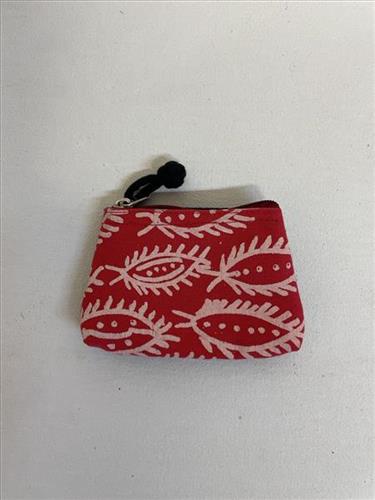
Poppet purse XS

Features:

  • Fully lined
  • Zip closure
  • Internal zip pocket

FABRIC ARTWORK

This product was screenprinted by Yolŋu art workers at Bula’Bula Arts. We print small batches of tea towels, tshirts and fabric lengths by hand because we love putting Yolŋu designs on everyday items – especially ones that balanda (non-Yolŋu) use! Due to the lovely handmade nature of this product, print quality may vary.

 Available in four fabric designs and multiple colourways:

  • Dawurrmonuk (itchy caterpillar) by Evonne Gayuwrri
  • Lidjilidji (Crimson Finch) by Andrew Wanamilil
  • Lorrpu (Sulphur-crested Cockatoo) by Peter Gambung
  • Ngambi (limestone) spear by Shannon Ashley

Manymak (very good)! Buying Bula’Bula Arts products helps us build a sustainable income source for our 150 artists and artworkers from Ramingining and surrounding outstations.


WORKING WITH FLYING FOX FABRICS 

We work with Flying Fox Fabrics, a small social enterprise based in Darwin. Flying Fox Fabrics, make and sell accessories, clothing and homewares from fabrics designed by Aboriginal artists which have been hand printed in Australia. They work in partnership with Aboriginal artists and fair trade organisations in Cambodia that train and employ disabled artisans.