377810582313074


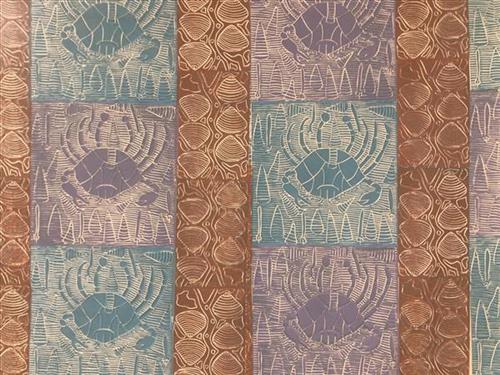
Barnkabarra (Mud Crabs)

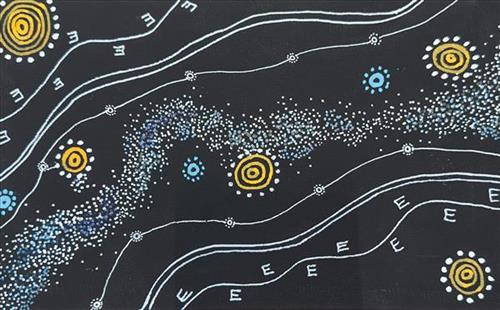
This design tells the story of Elizabeth’s homeland – a dreaming place, a good dreaming place with plenty of Barnkabarra (Mud Crabs). Elizabeth’s homeland lies east of Maningrida, at the mouth of Blyth river. This country is known for a large spiritual mud crab, which lives in the area.

Many families go and collect crabs to eat there with long sticks, or collect directly from the shores. Mud crabs hide in the muddy bottoms of estuaries and mangrove forests in areas surrounding Maningrida. After a king tide, a large cyclical tide which bring the crabs out from the mangroves, it is a good time to find crabs.

Barnkabarra (mud crabs) in Kuninjku language, or Rrugurrgurda (mud crabs) in the Burarra language, are good baladji (bush food in Burarra) and can be caught all year round. They are put on the fire to cook and they are ready when they turn a bright orange colour.

377810582313069


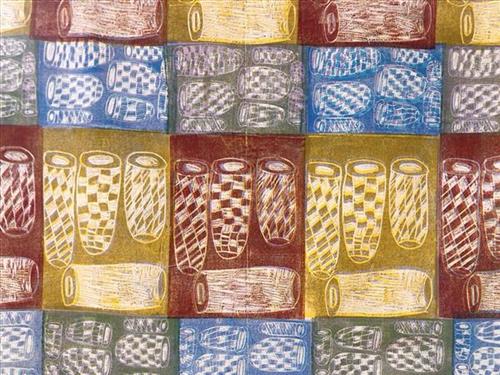
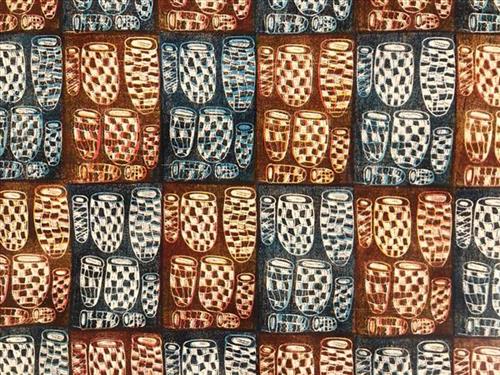
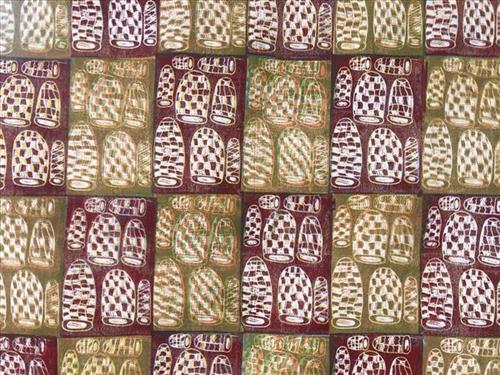
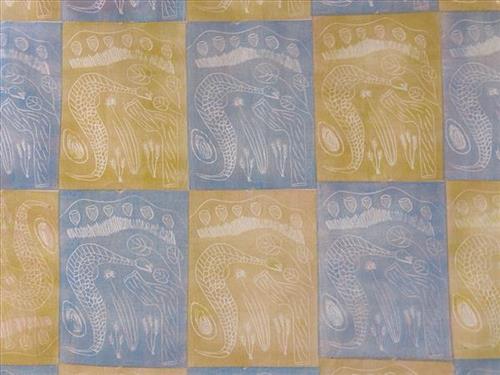
Kunmadj

Kunmadj is the Kuninjku term for large woven collecting baskets, known as dillybags.

They are often made from the burney vine (Malaisia scandens), a strong, pliable plant that grows along the ground and into the canopy of monsoon vine thickets. The baskets are used to collect a variety of heavy foods, such as fish caught in conical fish traps or a good harvest of yams. As well as being of practical use, dillybags are of cultural significance to Arnhem Land people. Dillybags are totemic objects and they are associated with particular sites in the landscape.

377810582313066


Kunmadj

Kunmadj is the Kuninjku term for large woven collecting baskets, known as dillybags.

They are often made from the burney vine (Malaisia scandens), a strong, pliable plant that grows along the ground and into the canopy of monsoon vine thickets. The baskets are used to collect a variety of heavy foods, such as fish caught in conical fish traps or a good harvest of yams. As well as being of practical use, dillybags are of cultural significance to Arnhem Land people. Dillybags are totemic objects and they are associated with particular sites in the landscape.

377810582313063


Kunmadj

Kunmadj is the Kuninjku term for large woven collecting baskets, known as dillybags.

They are often made from the burney vine (Malaisia scandens), a strong, pliable plant that grows along the ground and into the canopy of monsoon vine thickets. The baskets are used to collect a variety of heavy foods, such as fish caught in conical fish traps or a good harvest of yams. As well as being of practical use, dillybags are of cultural significance to Arnhem Land people. Dillybags are totemic objects and they are associated with particular sites in the landscape.

225182313467


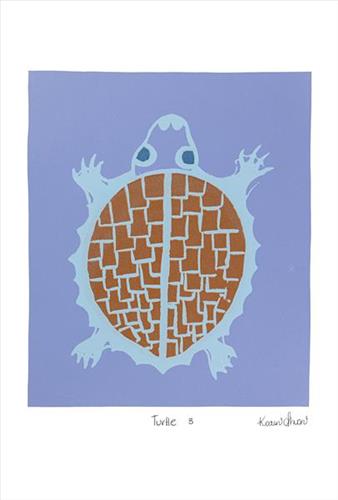
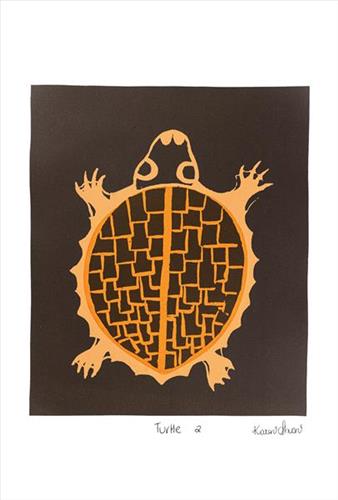
Ngujay (Freshwater Turtle)

Ngujay (Freshwater Turtle) was a source of meat as well as a surface for painting. Traps for catching them were made from lawyer vine and spider’s web was used to make fishing line. To clean the shell for decorating, we would leave it near a green ant nest and then go through a process of soaking and drying it prior to painting. Culturally it is forbidden for pregnant women to eat either freshwater or saltwater turtle.

________________

FRAMED

Custom framed locally with Tru Vue Museum Glass ®.

Hand printed screen print, limited edition on archival Hahnemühle, signed by the artist.

225182313464


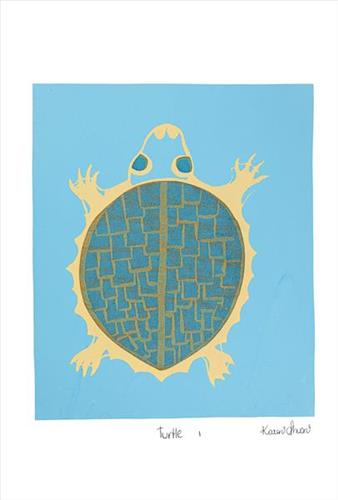
Ngujay (Freshwater Turtle)

Ngujay (Freshwater Turtle) was a source of meat as well as a surface for painting. Traps for catching them were made from lawyer vine and spider’s web was used to make fishing line. To clean the shell for decorating, we would leave it near a green ant nest and then go through a process of soaking and drying it prior to painting. Culturally it is forbidden for pregnant women to eat either freshwater or saltwater turtle.

________________

FRAMED

Custom framed locally with Tru Vue Museum Glass ®.

Hand printed screen print, limited edition on archival Hahnemühle, signed by the artist.

225182313460


Ngujay (Freshwater Turtle)

Ngujay (Freshwater Turtle) was a source of meat as well as a surface for painting. Traps for catching them were made from lawyer vine and spider’s web was used to make fishing line. To clean the shell for decorating, we would leave it near a green ant nest and then go through a process of soaking and drying it prior to painting. Culturally it is forbidden for pregnant women to eat either freshwater or saltwater turtle.

________________

FRAMED

Custom framed locally with Tru Vue Museum Glass ®.

Hand printed screen print, limited edition on archival Hahnemühle, signed by the artist.

225182313457


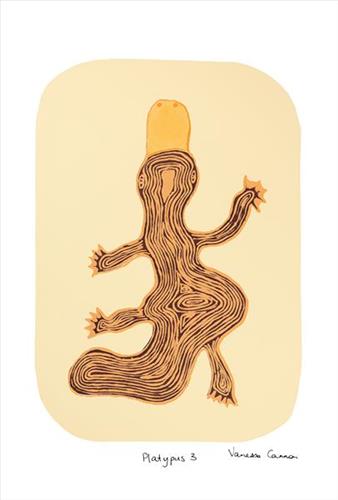
Wambiji (Platypus)

Platypus are very shy. They like to hide under rocks and can rarely be seen when people are around.  When I was 17 years old, I used to go for a swim with my partner, Laurence, in the Mossman River, at a site called Jabuljabul (Girls/Women). Some mornings, a  platypus was coming out of his hiding place, searching for food. He swam around. When he heard us, he swam back to his hiding place until we were gone.

________________

FRAMED

Custom framed locally with Tru Vue Museum Glass ®.

Hand printed screen print, limited edition on archival Hahnemühle, signed by the artist.