220982442937


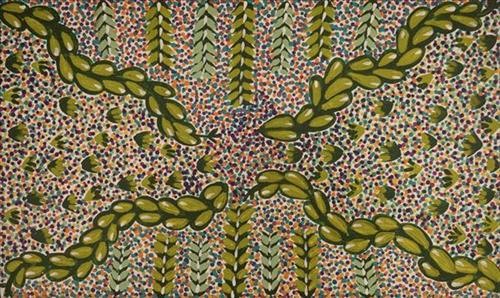
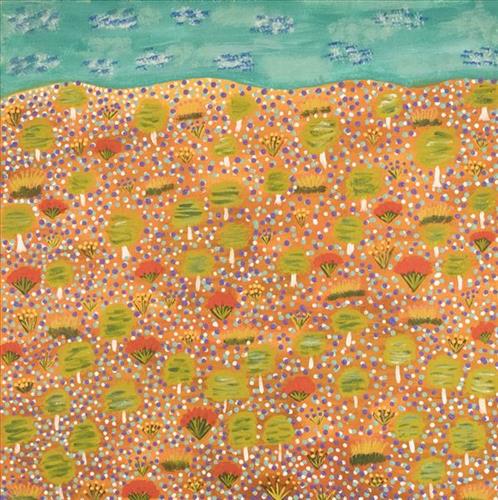
Jenna Kemarre Teece – Rlkwanty (Bush Flowers)

I am new to painting, I love landscapes and I want to paint them. I want to paint in dot painting style bush medicine plants and the beautiful flowers that I see after the rain. In my family are famous painters such as Lulu Pitjara Teece, Selina Pula Teece and Leanne Pula Teece, I want to paint like them

220982445981


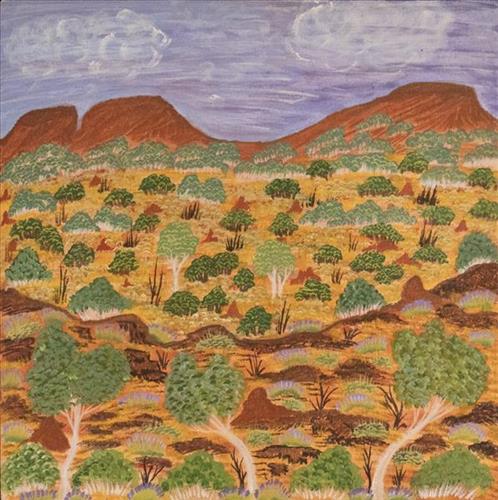
Eileen Kemarre Bonney – Tijamburra, My Mothers Country

This is my mothers country, Tijamburra, we go hunting there for wild onions, goannas, echidnas and sugarbag honey in the trees. I like to hunt there, there’s water all year round. Even if it doesn’t look like there is, we follow the bird tracks to know where to dig and we find water.

From living here in the remote community of Ampilatwatja, going hunting out bush and traveling for family and ceremonies Eileen knows this land, her country.

The community of Ampilatwatja made a conscious decision not to paint altyerr (dreaming stories). The artists paint their country where those stories sit.

220982445980


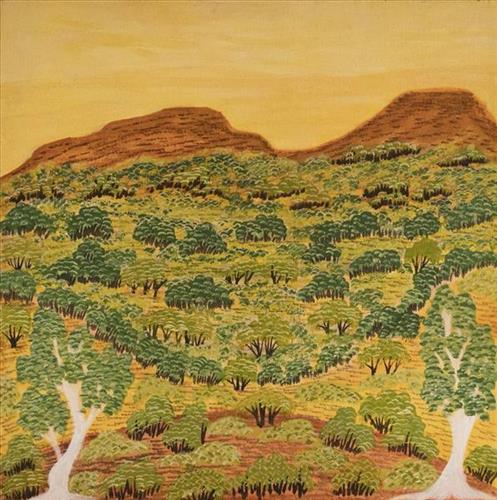
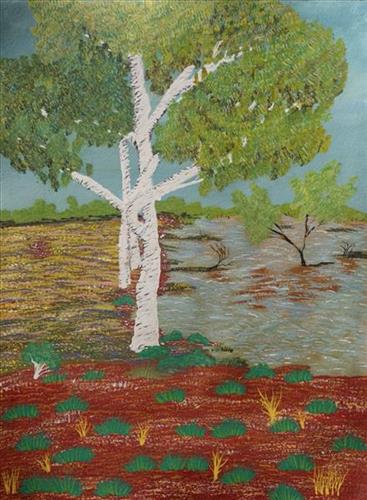
Yvonne Ngwarraye Bonney – My Hunting Country

Yvonne has painted her favourite hunting country after rain. “This is when the storm ants come and make the goannas nice and fat, the ground is soft for digging honey ants and it’s when the bush foods and grasses come up and grow strong. The country is normally bare with small stones and rocks everywhere, but after rain, everything comes alive.”

Yvonne is a tremendous hunter, she is skilled in reading tracks and reading the land. Painting hunting country is important and special to her. 

The community of Ampilatwatja made a conscious decision not to paint ‘altyerr’(dreaming stories). The artists paint their country where those stories sit.

220982445977


Bettrina Pula Bundey – Atyenh Artna Arnernp (My Bush Medicine)

Bush medicine plants are used for healing on the body and for drinking. We make this by grinding the plants with a rock, we use the juice and the fibre of the plant.

We collect bush medicine plants when we are out hunting. Different kinds of plants grow during different seasons.

There are lots of different medicines, we know what their stories are, we learnt them from our parents and we teach these stories to our children.

Bush medicine knowledge is still strong in Ampilatwatja, it continues to be passed down to the younger generations and is widely used.


When the women go hunting they often gather bush medicine. The plants are found in the country around Ampilatwatja, they are used for soothing skin infections and to make a drink to help with colds and coughs.

Painting bush medicine stories is important because it helps to maintain a strong knowledge and culture for the community.

220982446238


Levina Pitjara Morton – Atyenh Amper (My Country)

When I paint, I think of the stories my Grandmother Lilly tells me of how she and her family used to live. Where they lived on her country as she was growing up and how they followed their mothers and their grandmothers.

When I go hunting with family for bush tucker and bush medicine it makes me think of Lilly’s stories, the way they used to live off the land, traditionally.
I paint those places my Grandmother tells me about, I paint how I imagine they were and the life they used to lead.

Levina’s fine dot technique requires a lot of time and patience, communicates the pride and passion she has for her paintings and her country.

The community of Ampilatwatja made a conscious decision not to paint altyerr (dreaming stories). The artists paint their country where those stories sit.

220982446233


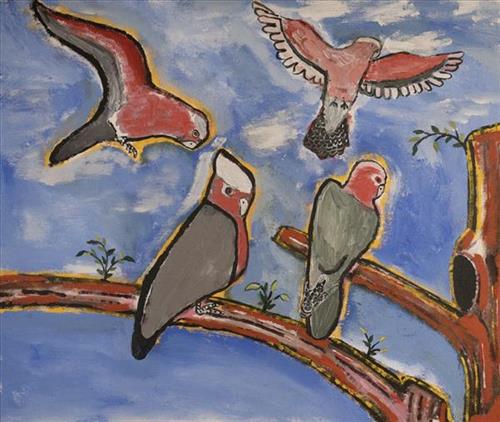
Kelvin Kemarre Ladd – Ilenty (Galahs)

Our first pet was an ilenty (galah). My dad caught him, it used to be in the house all the time, feeding on Weetabix, yeah, but when he grew old and that, he started to fly around and coming back to places, and start talking to us. We taught him how to speak, he used to speak language (Alyawarr) sometimes English.

The Cloughs (owners of Epenarra Station in the 80s) used to have one in their homestead, that pet used to speak a lot of English and our galah came out there and started to pick things out. He started to come back and talking to us. Yeah. One day, he flew and never came back. Yeah.

220982446232


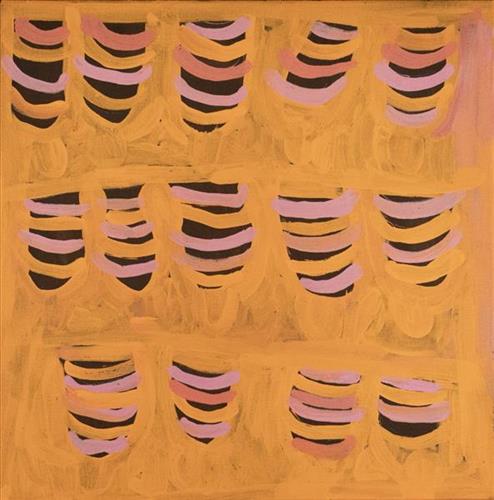
Maisie Petyarre Bundey – Anhelengkw (Emu) Dreaming

Anhelengkw (emu) dreaming is the breast body painting depicting the story of the mother emu who runs away and leaves the father emu to look after the eggs until they hatch, he then raises the chicks.

This story is passed down through Maisie’s family and celebrated in dance.

111982446209


Derrko (Dragonfly)

Derrko is the word used for dragonfly across inland central Arnhem Land by Kune, Kuninjku and Rembarrnga language speakers. The appearance of dragonflies throughout the region usually signals a seasonal shift, marking the approach of the dry season, and end of the humid wet season. 

Works in fibre from the Maningrida region are widely recognised as some of the finest in Australia. Artists confidently push the boundaries of fibre craft and cultural expression, adapting traditional techniques and forms to produce strikingly inventive and aesthetically exquisite artworks.

In 2003, Kuninjku artist Marina Murdilnga brought a revolutionary new form of pandanus weaving to Maningrida Arts & Culture: a flat yawkyawk made from knotted pandanus on a jungle-vine frame, painted with natural pigments. She next explored using dyed pandanus and feathers in this way. Murdilnga’s innovation inspired many other weavers, who are producing an array of beautifully resolved flat figurative works (stingray, butterflies, spiderwebs) and spiritual figures and Ancestral beings. Alongside Murdilnga, leading artists of this form of fibre art are Anniebell Marnngamarnnga, Frewa Bardaluna and Rembarrnga artists Vera Cameron and Maisie Cameron. Lulu Larandjbi has woven interpretations of the rock pools at Kobumi where Ngalyod (the Rainbow Serpent) entered and died.

Commonly used fibres include the leaves of pandanus (Pandanus spiralis), and palms (Livistonus), mírlírl (burney or jungle vine, Malaisia scandens), and the inner bark of kurrajong and stringybark eucalyptus trees. Weaving is physically hard work, now done only by women. They colour the pandanus using natural dyes made from the roots, leaves or flowers of plants within the weaver’s clan estate. The same dye bath is often used to dye a number of batches of fibre, with variations in the colours depending on the time spent in the dye bath and the potency of the bath. The women skilfully use salt and wood ash as mordants and colour enhancers.
111982446208


Derrko (Dragonfly)

Derrko is the word used for dragonfly across inland central Arnhem Land by Kune, Kuninjku and Rembarrnga language speakers. The appearance of dragonflies throughout the region usually signals a seasonal shift, marking the approach of the dry season, and end of the humid wet season. 

Works in fibre from the Maningrida region are widely recognised as some of the finest in Australia. Artists confidently push the boundaries of fibre craft and cultural expression, adapting traditional techniques and forms to produce strikingly inventive and aesthetically exquisite artworks.

In 2003, Kuninjku artist Marina Murdilnga brought a revolutionary new form of pandanus weaving to Maningrida Arts & Culture: a flat yawkyawk made from knotted pandanus on a jungle-vine frame, painted with natural pigments. She next explored using dyed pandanus and feathers in this way. Murdilnga’s innovation inspired many other weavers, who are producing an array of beautifully resolved flat figurative works (stingray, butterflies, spiderwebs) and spiritual figures and Ancestral beings. Alongside Murdilnga, leading artists of this form of fibre art are Anniebell Marnngamarnnga, Frewa Bardaluna and Rembarrnga artists Vera Cameron and Maisie Cameron. Lulu Larandjbi has woven interpretations of the rock pools at Kobumi where Ngalyod (the Rainbow Serpent) entered and died.

Commonly used fibres include the leaves of pandanus (Pandanus spiralis), and palms (Livistonus), mírlírl (burney or jungle vine, Malaisia scandens), and the inner bark of kurrajong and stringybark eucalyptus trees. Weaving is physically hard work, now done only by women. They colour the pandanus using natural dyes made from the roots, leaves or flowers of plants within the weaver’s clan estate. The same dye bath is often used to dye a number of batches of fibre, with variations in the colours depending on the time spent in the dye bath and the potency of the bath. The women skilfully use salt and wood ash as mordants and colour enhancers.
111982446207


Derrko (Dragonfly)

Derrko is the word used for dragonfly across inland central Arnhem Land by Kune, Kuninjku and Rembarrnga language speakers. The appearance of dragonflies throughout the region usually signals a seasonal shift, marking the approach of the dry season, and end of the humid wet season. 

Works in fibre from the Maningrida region are widely recognised as some of the finest in Australia. Artists confidently push the boundaries of fibre craft and cultural expression, adapting traditional techniques and forms to produce strikingly inventive and aesthetically exquisite artworks.

In 2003, Kuninjku artist Marina Murdilnga brought a revolutionary new form of pandanus weaving to Maningrida Arts & Culture: a flat yawkyawk made from knotted pandanus on a jungle-vine frame, painted with natural pigments. She next explored using dyed pandanus and feathers in this way. Murdilnga’s innovation inspired many other weavers, who are producing an array of beautifully resolved flat figurative works (stingray, butterflies, spiderwebs) and spiritual figures and Ancestral beings. Alongside Murdilnga, leading artists of this form of fibre art are Anniebell Marnngamarnnga, Frewa Bardaluna and Rembarrnga artists Vera Cameron and Maisie Cameron. Lulu Larandjbi has woven interpretations of the rock pools at Kobumi where Ngalyod (the Rainbow Serpent) entered and died.

Commonly used fibres include the leaves of pandanus (Pandanus spiralis), and palms (Livistonus), mírlírl (burney or jungle vine, Malaisia scandens), and the inner bark of kurrajong and stringybark eucalyptus trees. Weaving is physically hard work, now done only by women. They colour the pandanus using natural dyes made from the roots, leaves or flowers of plants within the weaver’s clan estate. The same dye bath is often used to dye a number of batches of fibre, with variations in the colours depending on the time spent in the dye bath and the potency of the bath. The women skilfully use salt and wood ash as mordants and colour enhancers.