377810582311042


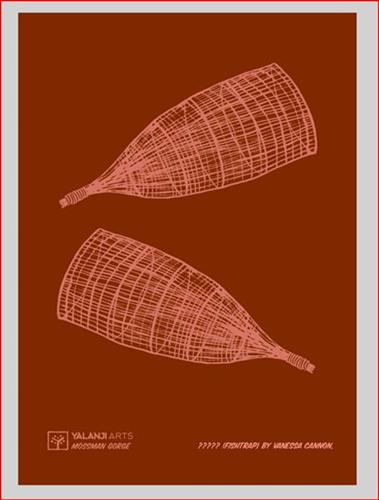
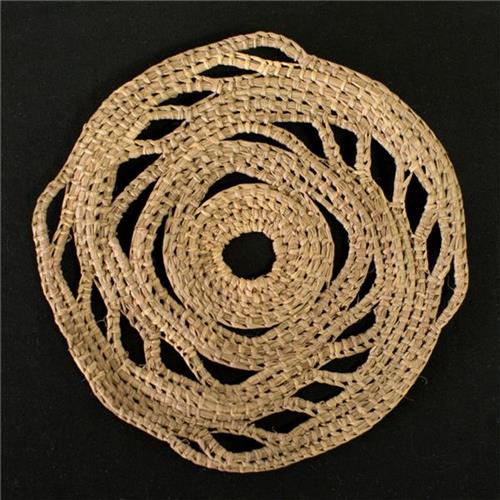
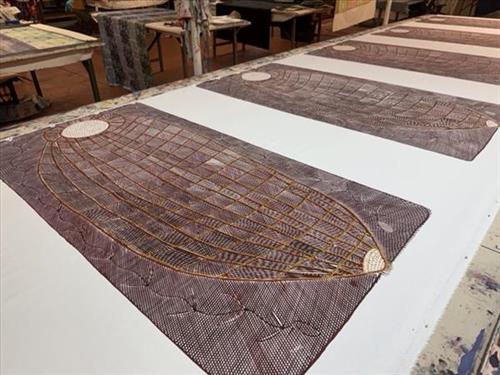
Mandjabu (Fish Trap) – Susan Marawarr

“In old times people would make these mandjabu (fish traps) to go fishing. They are made with vine we find in the jungle. That old man, Anchor Gulunba, he showed me how to make these fish traps. I would sit there and watch him making them. We catch barramundi, catfish, all kinds of fish.” – Helen Lanyinwanga

Kuninjku people traditionally make two sorts of conical fish traps. One called mandjabu made from a vine called milil, and another smaller one called manylik mandjabu, made from the grass manylik. The mandjabu conical fish trap is bigger and stronger and used in tidal reaches of creeks to catch large fish. The smaller, lighter manylik trap is used in freshwater flowing creeks to catch smaller fish and freshwater prawns. Traditionally, only men were involved in the construction of the large fish traps, but children would often crawl inside and assist.

To make fish traps and fish net fences artists firstly get vine (milil) from the jungle and they put it in water for one night to make it soft. Next they start weaving it; they make rings for the inside to keep the fish trap’s shape. Artists work for three or four weeks on the fish trap. They also make string from kurrajong (burdaga) to attach the hibiscus (bardainy) rings and to tie the conical end of the fish trap. This fish trap is used in saltwater and freshwater. People also use fish net fences called mun-dirra. A long time ago they would put the mun-dirra across rivers and creeks. In the middle they would place the an-gujechiya. They also used small things like sticks, rocks, mud and grass to block the fish from going through. People would then catch fish like saltwater barramundi rajarra, freshwater barramundi (janambal), small black freshwater catfish (buliya), bonefish (an-guwirrpiya), and sand bass (dalakan) in these fish traps.
221376230221


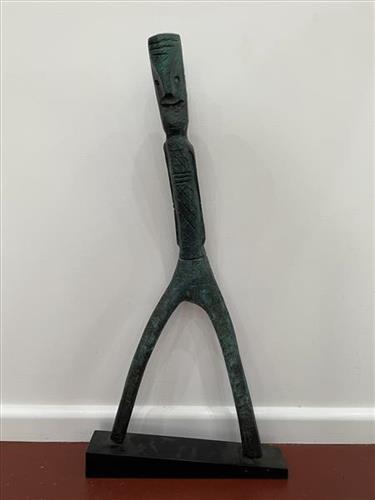
Mimi Spirit Bronze & Steel Base (ed. 5 of 6)

Wood carving has always been part of Aboriginal culture and Djilpin artists continue this tradition. Men carved wood for many purposes – tools for hunting or gathering food, axes and knives for building shelters, spears and clubs for protection of their lives and territory, objects for ceremony and to mark sacred sites.

Hunting implements include the boomerang, woomera and spear. The woomera is a lever which helps to increase the speed and distance the spear travels. Clapsticks are used as percussion instruments by the Songmen to accompany dancing along with the didgeridoo (mago).

As well as the more functional carvings, artists portray animals and birds in wood, and these carvings are often painted. Ceremonial carvings include spirit creatures including mukuy (devil devils) and mimi.

Some fine mimi figures have been cast in bronze.

221380617400


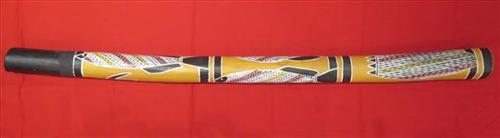
Mako (Key F, Toot B)

Key: F
Toot: B

Didjeridus from this region are made in the West Arnhem style. Called Mago, they’re different and special and follow the tradition made famous by Beswick’s Mago Master, elder David Blanasi.Ghunmarn didjeridus are hand cut by Aboriginal people on Aboriginal land. They are drilled out naturally by termites, not by machines. Top quality musical instruments, they are used in ceremony and performance and feature traditional designs handed painted with a grass brush. Supplied with natural sugar-bag wax mouthpieces, these are the genuine article.Didjeridus from Ghunmarn Culture Centre are hand-cut from the woolybutt tree and naturally termite eaten. Some cheaper didjerdius can be drilled out by machine. If you want to be sure yours is termite-eaten look inside, if it is a bit rough the termites have been at work, smooth interiors are a sign of drilling. Ghunmarn artists travel considerable distances on foot to find the just right woolybutt tree. Good instruments are hand-cut and taken back to camp to be worked, shaped, sanded and tuned.Most Ghunamrn didjeridus are high pitch D, low pitch D, F, C or G. The longer the dij the lower the pitch, a shorter didj will give a higher sound.

110681653685


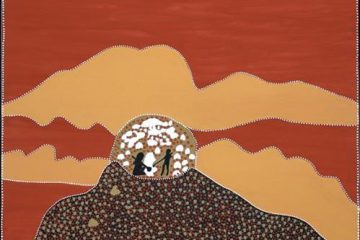
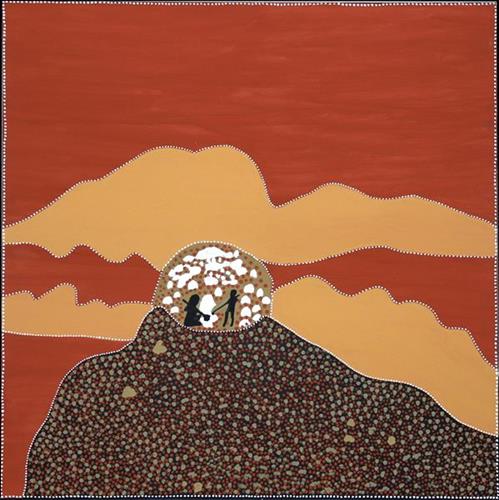
Bow River – Blowfly Dreaming

My parents were digging for Porcupine but the hairy man didn’t let them have it. He started all the blowflies to hunt them both away. So they left, leaving the Porcupine there, and when they got home, the old people told them that’s the Ngoongoony (the hairyman) didn’t want you mob to take it. That’s why my old people called that hill blowfly, meaning Wurrarlbul in blackfella name.