111582309409


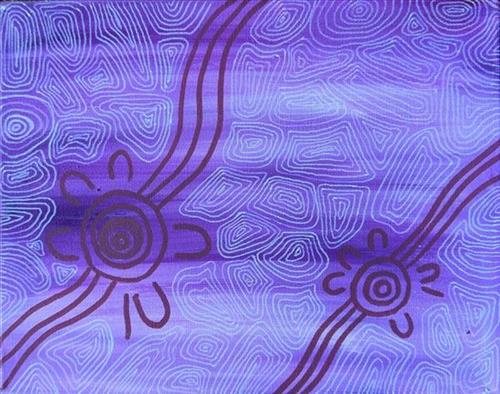
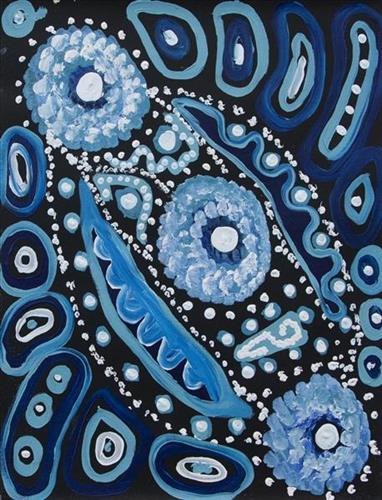
Wantili (Warntili, Canning Stock Route Well 25)

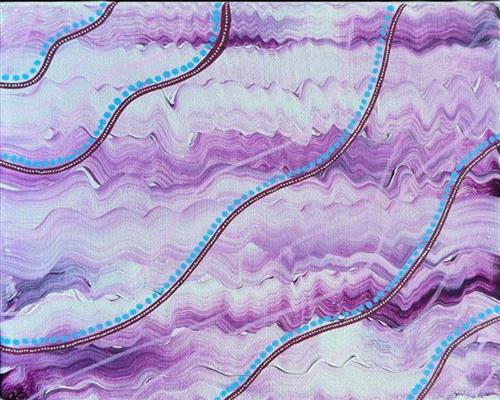
“This is my Grandmother’s [Bugai Whyoulter’s] Country, my Country. Wantili (Warntili, Canning Stock Route Well 25) is old Law Grounds from Dreaming days and very important to Martu people. My grandmother always tells me about Wantili because she grew up around Wantili. It is close to her birthplace and is her ngurra (home Country, camp). She was a young girl walking around at Wantili. Her family would travel between Wantili, Kaalpa, Juntu-juntu, Raarki, and Wuranu Wells along the Canning Stock Route. Big mob of people they been walking around there. She saw whitefellas there for the first time, Canning mob when they were traveling up and down the stock route with the bullock. They were running away from those whitefellas, watching them from a distance. She was a teenager when she was travelling around there with her four mothers and one daddy. They used to travel around in family groups, Bugai and Jakayu [Biljabu], and Jakayu’s nyupa (partner) Phillip Biljabu. They met Kumpaya [Girgirba] coming from Kun Kun (Kuny-Kuny), Kunawarritji area. Bugai returned to the Wantili area as a young woman, when she worked driving cattle along the Stock Route. 

Wantili is good for painting and telling stories. Our stories are still strong. I wanted to take Bugai back to Wantili. It is an important place; she hadn’t been there for a long time. My nana [Pinyirr] Nancy took me there as a young boy. Bugai is the older sister of Nancy. I been… three times going there. It’s important that place, out a long way from Newman… Those old people like going to Wantili, where the creation started. Jakayu and Kumpaya… them two aunties told me a story about Dreamtime, and how important Wantili was. People from different tribes…from all over the place could come there for the initiation ceremony. The Jukurrpa (Dreaming) stories from Wantili are just for Martu but the site is open, and anyone can go there. 

It’s a lovely part of the Country to take the kids for a swim. The place has changed. The water used to be muddy like chocolate, now the water is clear. Maybe from climate change, maybe from mining, maybe from something else. The changes don’t have to be bad; the landscape is always changing, same way as Martu people. It’s good to make work sitting out in Country, but I can make these paintings anywhere, just like those old people. Wherever I am, painting Country takes me back there in my head, back to Jukurrpa times, back to pujiman (traditional, desert dwelling) days when my grandmother walked around there, and back to days going there for a swim as a kid. I hope this painting carries people there too. I’m proud to be able to share my culture and stories with younger Martu people and whitefellas.”
377810582309375


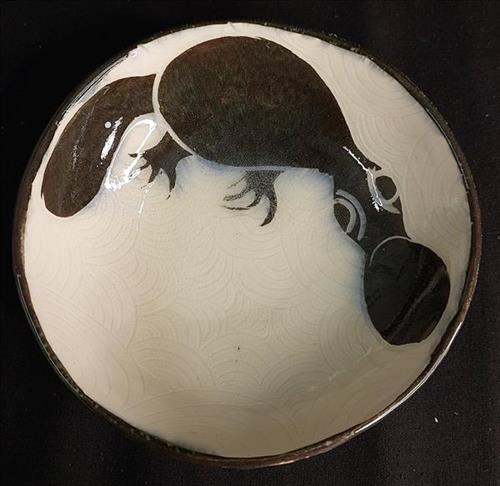
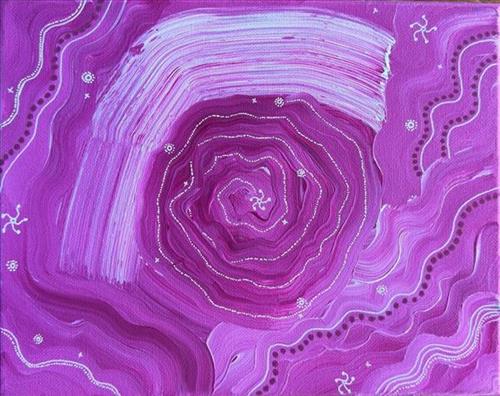
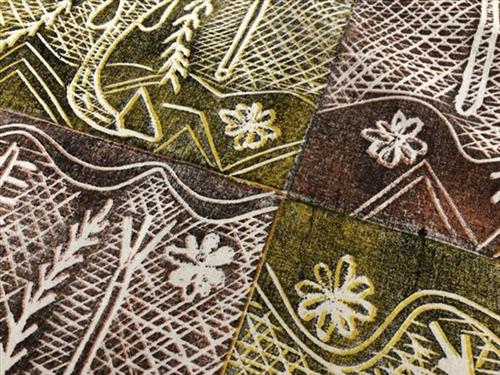
Djabayéna (Ancestral sawfish spirit)


Djabayéna is a highly significant saw fish creation spirit that is part of the symbolic identity of the Ndjébbana speaking Kunibidji people of West Arnhem Land. 

When seen from the sky, the formation of a large Djabayéna can be seen at the opening of the Liverpool River on the Western Point.

‘When tide in and then tide out we can see it’s up there round the corner on the point. There is one Djabayéna, really big. He sleep all the time here. Our dreaming, Djabayéna. We make t-shirt and they play football – home ground with Djabayéna.’ Verity Bangarra 2023

377810582309343


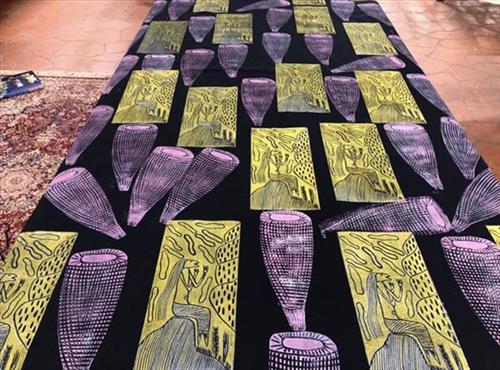
Yawkyawk – Janet Marawarr

‘Yawkyawk swim underneath the rock. They always stay there. When the sun comes out they come out from underneath the river, make themselves warm. They sit and they look around. When they sit, they cry to themselves. Ngaldjorlhbo (mother of everything) she created them – yawkyawk and the other one [Ngalng].

The Mimih one is a long way from the stone country. He is from my uncles country Bardijokhang. My uncle is the famous artist Crusoe Kurddal and he carves and paints Mimih.  

‘Sometimes yawkyawk sit inside the rock. Sometimes they go out to find the manme (food) and the mankung (sugarbag). Also they can sing inside the rock cave. Sometimes yawkyawk will see the big rain. When the big rain comes they start looking and when the rain comes they go inside and hide themselves.’

Some yawkyawk stay on the dry land in a special place inland from Bardijolhwang.

Some of the stones get stuck on the breasts of the yawkyawk.

There are two yawkyawk in this artwork. One, the wet season yawkyawk has a round face and long hair. The dry season yawkyawk has short hair. There are lots of different yawkyawk in the water.

In my fabric they are all coming together with the grass trees and leaves and the blowing wind. Some of the leaves will fall onto the water. All the round shapes are kunred (rocky country) with dry grass.

This country is called Gamadery (sp), which is located near Mankorlod and Korlobididah, Arnhem Land.’ 

Janet Marawarr 2022

221382310734


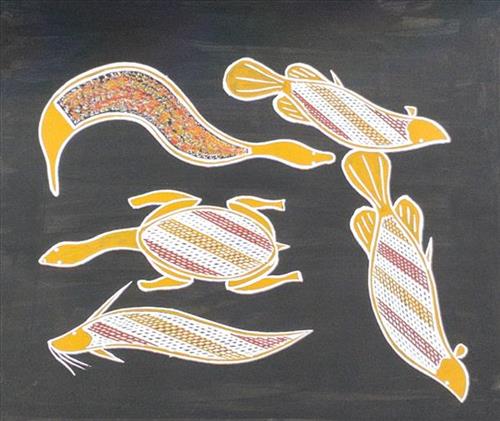
Billabong Fish

This painting depicts multiple species of fish and animals found in billabongs surrounding Beswick. Included are two barramundi, an eel tail catfish, a long neck turtle and a file snake. All are gudwan dagga, or tasty tucker especially when cooked in coals.

Painting has been completed using a handmade grass reed brush called Jarlk. Harvested from wet areas, this brush is used to create the fine line work called Raark. Raark is in Yirritja style and consists of multiple lines before alternating colour. This can be seen on all the animals except the file snake. The file snake has been finished using a stippling effect using modern paintbrushes.

221382310710


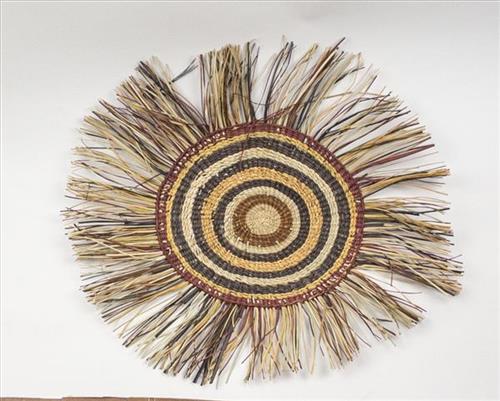
Woven Mat

Fibre Art is an ancient Aboriginal women’s craft that is still made today using the same techniques as their ancestors. Making fibre art is labour intensive and much care and fine needlework is required to ensure the finished object is both functional and beautiful. Fibre art from Ghunmarn Culture Centre includes dilly bags, floor mats, bush fans, woven creatures found in the landscape, plants such as yams (bush potato), baskets, place mats, and spirit figures such as mermaids and Mukuys. Natural pandanus fibre (Mukarra), is used to make much of the fibre art produced by the artists of Djilpin Arts. Women collect the pandanus by pulling from the top of the pandanus tree, then stripping and drying the leaves before they are dyed with natural bush colour collected from the Beswick surrounds.