225182225094
Basket Weaving
225182225047
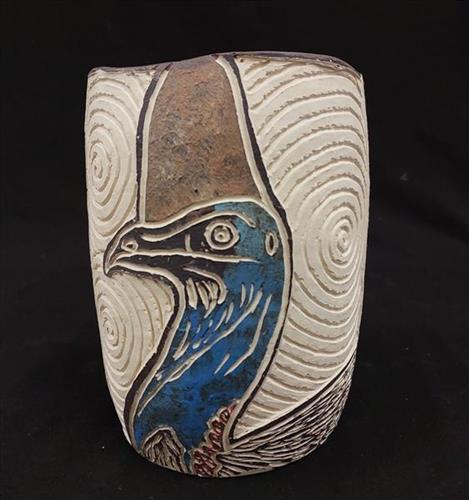
Kurranji (Cassowary)
The cassowary was a precious food source for our ancestors. They used the feathers for ceremonies and weavings, and made their skins into blankets.
I have chosen the cassowary for this vessel because it is my partner’s totem. He performs the cassowary dance in public ceremonies. It was bestowed on him by his mother’s sister when he was a young boy. In 1997 he went with the Yalanji Dance Group to Hong Kong to perform the Cassowary dance there.”
225182224988

Dugongs & Peoples
225182224985
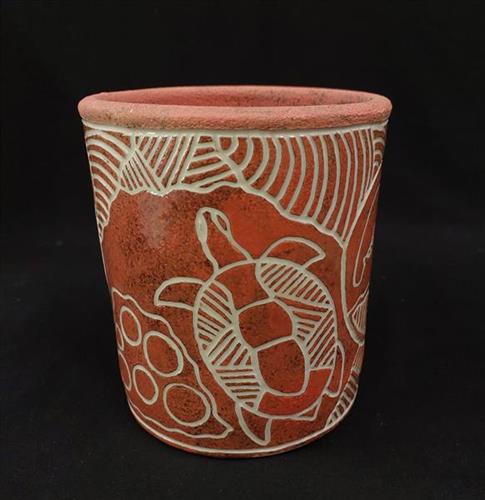
Turtles with Eggs & Dugongs
225182224984
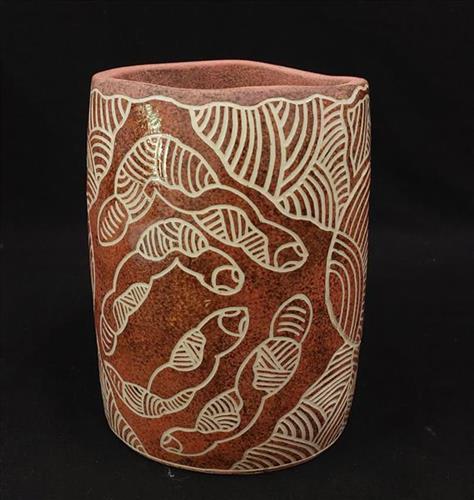
Whitty Grub
221382225196
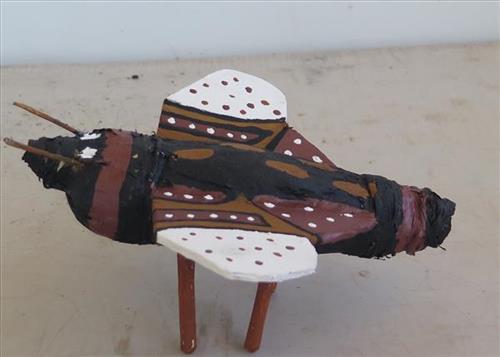
Sugar Bag Bee
This handmade Sugarbag Bee sculpture is crafted from a combination of paperbark bound with black wattle bark. Internally speargrass makes up the body or stuffing, while externally the piece is finished in natural ochre sourced from long distances away. Ochre is ground, and then bonded onto the sculpture using a fixative and modern paintbrush. Wings, legs and antennae are carved from Put-Put or Kurrajong.
225182226596
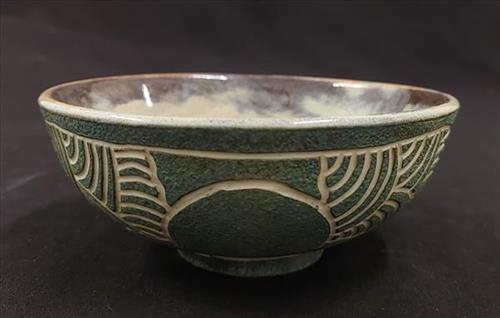
Rainforest Shield
Traditional shields were carved from a single piece of timber cut from side of the buttress root of a rainforest fig-tree. The kidney shaped shields are unique to the rainforest Bama of Far North Queensland. They were decorated with clan, totem or moiety designs using natural ochres and a water, fat or blood binder.
Shields were primarily used for deflecting spears in tribal fighting in conjunction with large rainforest swords.
Shields were usually made and painted by senior men and were a significant personal possession of adult males.
225182226557
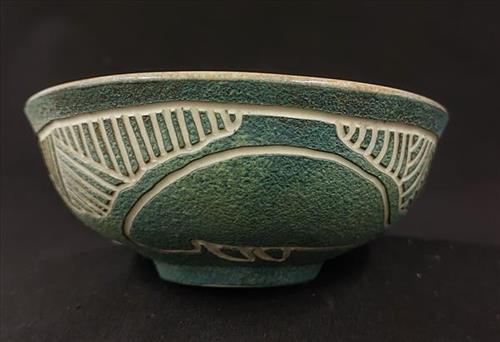
Kirbaji (Dugong)
In the past, Kirbaji (dugong) was an important food source. It was men’s business to hunt dugongs and it was their responsibility to cook and provide the meat to all the families. The meat of the dugong was cooked in an earth oven.
Our ancestors also made oil form the dugong fat. They used the oil for medicinal purposes. They used it for skin and hair treatments. When people had an upset stomach they used the oil as an ointment.
225182226556
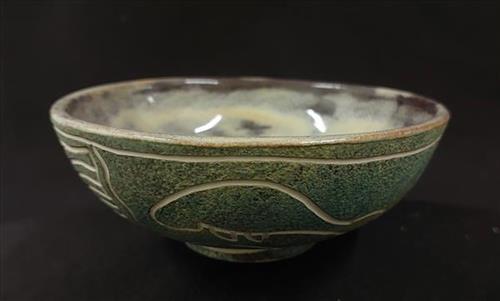
Kirbaji (Dugong)
In the past, Kirbaji (dugong) was an important food source. It was men’s business to hunt dugongs and it was their responsibility to cook and provide the meat to all the families. The meat of the dugong was cooked in an earth oven.
Our ancestors also made oil form the dugong fat. They used the oil for medicinal purposes. They used it for skin and hair treatments. When people had an upset stomach they used the oil as an ointment.