115682302895


Maratj

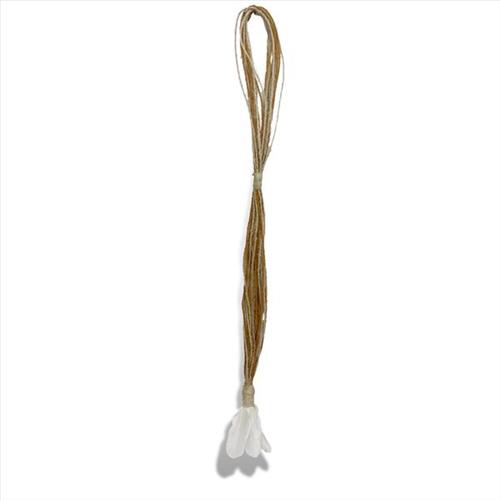
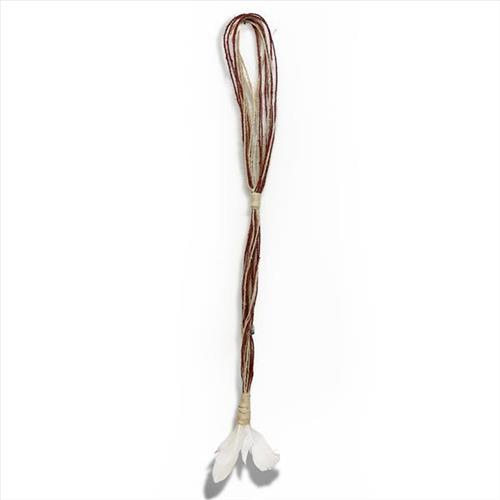
Maratj are ceremonial body adornments made from balgurr (Kurrajong). The bark is stripped from the tree, smashed with a rock to soften then boiled, sometimes with natural bush dyes. The balgurr is then rolled in the a rope then used to create ceremonial wear. These normally have feathers at the end. These are worn by women after a cleansing ceremony, especially after the death of a husband.
115682302987


Maratj

Maratj are ceremonial body adornments made from balgurr (Kurrajong). The bark is stripped from the tree, smashed with a rock to soften then boiled, sometimes with natural bush dyes. The balgurr is then rolled in the a rope then used to create ceremonial wear. These normally have feathers at the end. These are worn by women after a cleansing ceremony, especially after the death of a husband.
115682302986


Maratj

Maratj are ceremonial body adornments made from balgurr (Kurrajong). The bark is stripped from the tree, smashed with a rock to soften then boiled, sometimes with natural bush dyes. The balgurr is then rolled in the a rope then used to create ceremonial wear. These normally have feathers at the end. These are worn by women after a cleansing ceremony, especially after the death of a husband.
115682304306


Woven Mat

Traditionally, Nganiyal (conical mats) were used as an insect screen when erected, and as a sitting mat when folded. They are used in Ceremony as well as a functional item. 

Nowadays, artists weave many different shapes including flat, round and oblong. 

115682304227


Woven Mat

Traditionally, Nganiyal (conical mats) were used as an insect screen when erected, and as a sitting mat when folded. They are used in Ceremony as well as a functional item. 

Nowadays, artists weave many different shapes including flat, round and oblong. 

115682304095


Raki (hand spun bush string)

String is primarily made from the bark of Baḻgurr (Red-flowered Kurrajong – Brachychiton megaphyllus) but sometimes Banyan tree (Ficus virens) and Cocky Apple tree (Planchonia careya). Sections of the tree are cut, and depending on the size, whole portions or part portions from the trunk. The inner bark is beaten or chewed to soften then dyed with natural bush dyes. Once softened and dyed, parts of the fibre are separated into fine strips then rolled on the thigh to create a rope otherwise known as bush string. The bush string is a useful Yolngu item- it can be made into string bags, rope for fishing,  ceremonial items such as headbands, armbands, skirts and many other items.

115682304094


Raki (hand spun bush string)

String is primarily made from the bark of Baḻgurr (Red-flowered Kurrajong – Brachychiton megaphyllus) but sometimes Banyan tree (Ficus virens) and Cocky Apple tree (Planchonia careya). Sections of the tree are cut, and depending on the size, whole portions or part portions from the trunk. The inner bark is beaten or chewed to soften then dyed with natural bush dyes. Once softened and dyed, parts of the fibre are separated into fine strips then rolled on the thigh to create a rope otherwise known as bush string. The bush string is a useful Yolngu item- it can be made into string bags, rope for fishing,  ceremonial items such as headbands, armbands, skirts and many other items.

115682304356


Raki (hand spun bush string)

String is primarily made from the bark of Baḻgurr (Red-flowered Kurrajong – Brachychiton megaphyllus) but sometimes Banyan tree (Ficus virens) and Cocky Apple tree (Planchonia careya). Sections of the tree are cut, and depending on the size, whole portions or part portions from the trunk. The inner bark is beaten or chewed to soften then dyed with natural bush dyes. Once softened and dyed, parts of the fibre are separated into fine strips then rolled on the thigh to create a rope otherwise known as bush string. The bush string is a useful Yolngu item- it can be made into string bags, rope for fishing,  ceremonial items such as headbands, armbands, skirts and many other items.

22134004231


Status: Stock


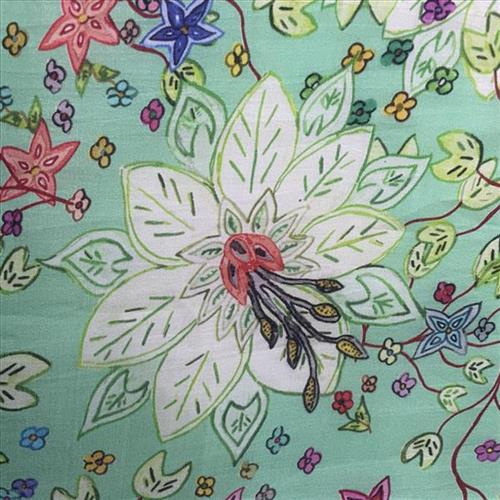
Lily Flower by Evangeline Wilson

“Since I’ve been growing up I’ve been looking at the water lily flower, when we were little and swimming in the billabong we would pick them. I’ve drawn the flower bud in the middle just before its ready to open out, and then how it looks when its open and all the little colourful flowers that grow near the billabong around my home.”

Crafted with the luxury of silk but blended with viscose for breathable comfort, the Djilpin scarf is perfect for everyday use. A wearable artwork investment evoking the spirit of Arnhem Land, perfect for summer or winter.

Silk Viscose blend. 46cm x 180cm. Designed in Wugularr / Beswick, Arnhem Land. 

377813282084881


Wak Wak (Crow)

Wak is the language word for black crow in many Kakadu and West Arnhem language groups. It is also the name for a significant and sacred djang (dreaming) site in West Arnhem Land at a place called Kurruldul, specific to bininj (aboriginal people) of the Kurulk clan. Often when artists depict this djang, the rarrk (crosshatching) painted is representing ‘Djimarr’, the black crow that resides at Kurruldul. It is said that the ‘Djimarr’ took the form of a rock formation that now sits at the bottom of Kurrurldul creek. This design is sometimes used in sacred ceremonial practices in Arnhem Land, which is painted onto bodies, representing ‘Djimarr’.