359709482294373


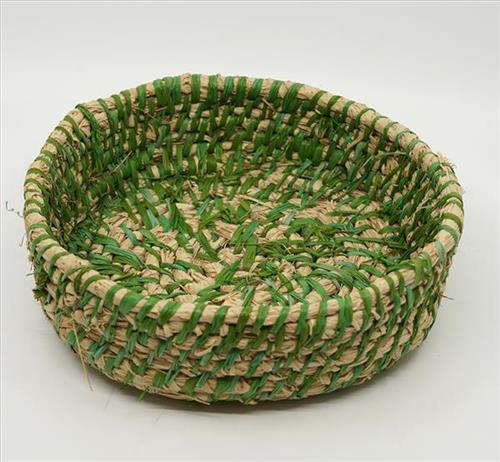
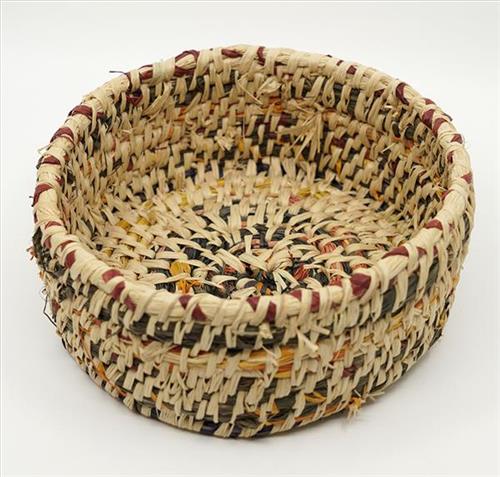
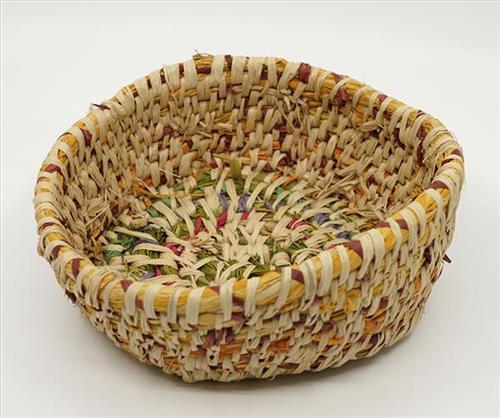
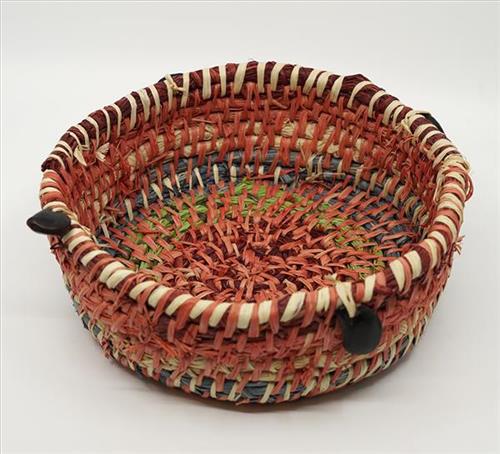
Vibrant love

Celebrating a special occasion, expressing your gratitude, or simply wanting to show someone you care, the vibrant love basket is the perfect choice. It is a gift that speaks volumes without saying a word, leaving a lasting impression of love and joy on the recipients heart. 

Art Centre notes: 

The basket is made of natural raffia, seeds.

The dyes are commercial and colour fast. It uses a traditional over and under weaving technique 

Size of bowl:  9 x 20cm


359709482294368


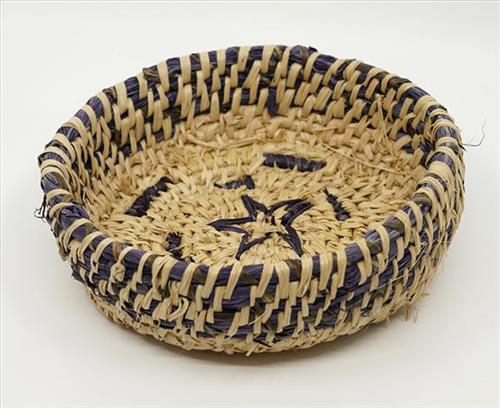
New Growth

This basket signifies new growth once a forgotten relic of the past, had now become a living breathing testament to the power of new beginnings. It stood as symbol of resilience and renewal, a reminder that even in the darkest of places, life could find a way to thrive and flourish. 

Art Centre notes: 

The basket is made of natural raffia, seed, using over and under weaving techniques. The dyes are commercial fast. 

The dyes are commercial and colour fast. 

Size of bowl: 7 x 20cm


359709482294367


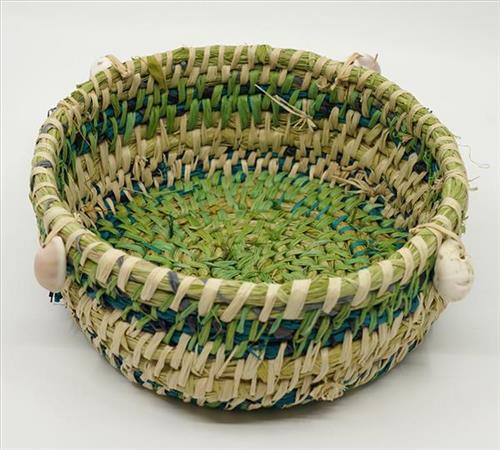
Down at the beach

I love going down to the beach it’s a magical place where the sky meets the sea, and the sand stretches out in all directions as far as the eye can see. It’s a place where worries melt away with the crashing waves and salty breeze, where the sun kisses your skin and the seagulls sing their melodies tunes. 

Art Centre notes: 

The basket is made of natural raffia / shells, dyes are commercial and colour fast, using a traditional over and under weaving technique. 

Artist: Fiona Mosby

Created: Moa Arts, Kubin 2024. 

359709482294365


Stormy Afternoon

This basket is about when going down to the jetty for fishing on a stormy afternoon, the sky painted in shades of ominous ray, as raindrops tap against the window panes like a soft melody. 

Art Centre notes:  The basket is made of natural raffia / shells. 

The dyes are commercial and colour fast. it uses a traditional over and under weaving technique

Artist: Fiona Mosby

Created: Moa Arts, 2024

359709482294364


Night watch

This basket describes the beauty of when the  sun dips below the horizon and the sky transforms into a canvas of twinkling stars, a new world awakens. 

Art Centre notes:  The basket is made of natural raffia / shells. 

The dyes are commercial and colour fast. it uses a traditional over and under weaving technique

Artist: Fiona Mosby

Created: Moa Arts, 2024

359709482294362


Afternoon Tide

Going down the jetty to fish as the afternoon sun dips lowers in the sky, a change begins in the shoreline. The gentle rhythm of the waves takes on a new energy, a sense of anticipation as the tide begins to shift, as children and fishers go down to the jetty to fish to pro


Art Centre notes:  The basket is made of natural raffia / shells. 

The dyes are commercial and colour fast. it uses a traditional over and under weaving technique

111582294384


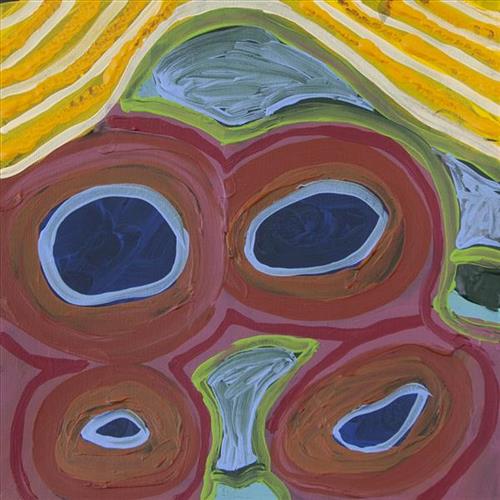
Untitled

“When Martu paint, it’s like a map. Martu draw story on the ground and on the canvas, and all the circle and line there are the hunting areas and different waters and tracks where people used to walk, and [some you] can’t cross, like boundaries. So nowadays you see a colourful painting and wonder what it is, but that’s how Martu tell story long ago. It’s not just a lovely painting, it’s a story and a songline and a history and everything that goes with it.” 

– Ngalangka Nola Taylor and Joshua Booth

This work portrays an area of Country that can be interpreted in multiple ways. Firstly, the image may be read as an aerial representation of a particular location known to the artist- either land that they or their family travelled, from the pujiman (traditional, desert dwelling) era to now. During the pujiman period, Martu would traverse very large distances annually in small family groups, moving seasonally from water source to water source, and hunting and gathering bush tucker as they went. At this time, one’s survival depended on their intimate knowledge of the location of resources; thus physical elements of Country, such as sources of kapi (water), tali (sandhills), different varieties of warta (trees, vegetation), ngarrini (camps), and jina (tracks) are typically recorded with the use of a use of a system of iconographic forms universally shared across the desert. 

An additional layer of meaning in the work relates to more intangible concepts; life cycles based around kalyu (rain, water) and waru (fire) are also often evident. A thousands of year old practice, fire burning continues to be carried out as both an aid for hunting and a means of land management today. As the Martu travelled and hunted they would burn tracts of land, ensuring plant and animal biodiversity and reducing the risk of unmanageable, spontaneous bush fires. The patchwork nature of regrowth is evident in many landscape works, with each of the five distinctive phases of fire burning visually described with respect to the cycle of burning and regrowth.  

Finally, metaphysical information relating to a location may also be recorded; Jukurrpa (Dreaming) narratives chronicle the creation of physical landmarks, and can be referenced through depictions of ceremonial sites, songlines, and markers left in the land. Very often, however, information relating to Jukurrpa is censored by omission, or alternatively painted over with dotted patterns.
111582294342


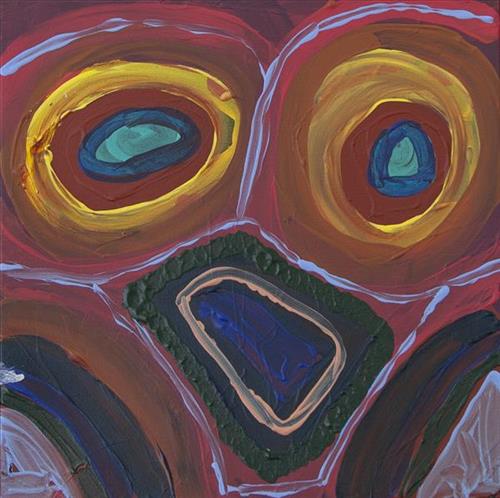
Kiwirrkurra

Kiwirrkurra is a rockhole located in the tali (sandhill) Country of the Gibson Desert, to the south west of Lake McKay. An Aboriginal community by the same name is now located nearby, to the west of the water source. 

Kiwirrkurra lies just east of Marapinti rockhole, an important site in the Minyipuru (Jakulyukulyu, Seven Sisters) Jukurrpa (Dreaming) narrative. At Marapinti the travelling women danced and pierced their noses, a practice also known as marapinti. Today the Minyipuru can be seen at Marapinti as a group of rocks, sitting up like women.

Minyipuru is a central Jukurrpa narrative for Martu, Ngaanyatjarra, Pitjantjatjara and Yankunytjatjara people that is associated with the seasonal Pleiades star constellation. Relayed in song, dance, stories and paintings, Minyipuru serves as a creation narrative, a source of information relating to the physical properties of the land, and an embodiment of Aboriginal cultural laws. Beginning in Roebourne on the west coast of Western Australia, the story morphs in its movement eastward across the land, following the women as they walk, dance, and even fly from waterhole to waterhole. As they travel the women camp, sing, wash, dance and gather food, leaving markers in the landscape and creating landforms that remain to this day, such as groupings of rocks and trees, grinding stones and seeds. During the entirety of their journey the women are pursued by a lustful old man, Yurla, although interactions with other animals, groups of men, and spirit beings are also chronicled in the narrative.

111582294341


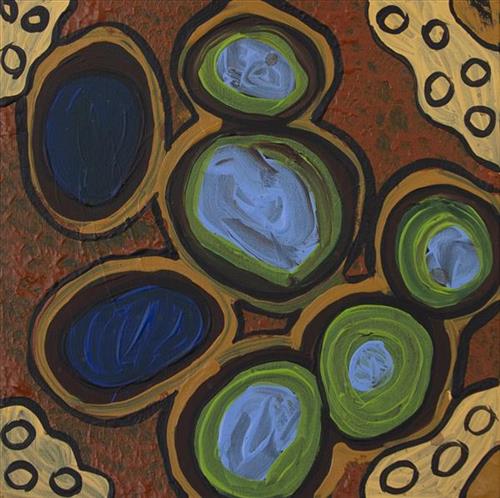
Kiwirrkurra

Kiwirrkurra is a rockhole located in the tali (sandhill) Country of the Gibson Desert, to the south west of Lake McKay. An Aboriginal community by the same name is now located nearby, to the west of the water source. 

Kiwirrkurra lies just east of Marapinti rockhole, an important site in the Minyipuru (Jakulyukulyu, Seven Sisters) Jukurrpa (Dreaming) narrative. At Marapinti the travelling women danced and pierced their noses, a practice also known as marapinti. Today the Minyipuru can be seen at Marapinti as a group of rocks, sitting up like women.

Minyipuru is a central Jukurrpa narrative for Martu, Ngaanyatjarra, Pitjantjatjara and Yankunytjatjara people that is associated with the seasonal Pleiades star constellation. Relayed in song, dance, stories and paintings, Minyipuru serves as a creation narrative, a source of information relating to the physical properties of the land, and an embodiment of Aboriginal cultural laws. Beginning in Roebourne on the west coast of Western Australia, the story morphs in its movement eastward across the land, following the women as they walk, dance, and even fly from waterhole to waterhole. As they travel the women camp, sing, wash, dance and gather food, leaving markers in the landscape and creating landforms that remain to this day, such as groupings of rocks and trees, grinding stones and seeds. During the entirety of their journey the women are pursued by a lustful old man, Yurla, although interactions with other animals, groups of men, and spirit beings are also chronicled in the narrative.

111582294339


Kiwirrkurra

Kiwirrkurra is a rockhole located in the tali (sandhill) Country of the Gibson Desert, to the south west of Lake McKay. An Aboriginal community by the same name is now located nearby, to the west of the water source. 

Kiwirrkurra lies just east of Marapinti rockhole, an important site in the Minyipuru (Jakulyukulyu, Seven Sisters) Jukurrpa (Dreaming) narrative. At Marapinti the travelling women danced and pierced their noses, a practice also known as marapinti. Today the Minyipuru can be seen at Marapinti as a group of rocks, sitting up like women.

Minyipuru is a central Jukurrpa narrative for Martu, Ngaanyatjarra, Pitjantjatjara and Yankunytjatjara people that is associated with the seasonal Pleiades star constellation. Relayed in song, dance, stories and paintings, Minyipuru serves as a creation narrative, a source of information relating to the physical properties of the land, and an embodiment of Aboriginal cultural laws. Beginning in Roebourne on the west coast of Western Australia, the story morphs in its movement eastward across the land, following the women as they walk, dance, and even fly from waterhole to waterhole. As they travel the women camp, sing, wash, dance and gather food, leaving markers in the landscape and creating landforms that remain to this day, such as groupings of rocks and trees, grinding stones and seeds. During the entirety of their journey the women are pursued by a lustful old man, Yurla, although interactions with other animals, groups of men, and spirit beings are also chronicled in the narrative.