377810582291103


Namorrorddo (dark angel) and Yawkyawk (young woman spirit)

‘Sometimes yawkyawk sit inside the rock. Sometimes they go out to find the food manme and the mankung (sugarbag). Also they can sing inside the rock cave. Sometimes yawkyawk will see the big rain. When the big rain comes they start looking and when the rain comes they go inside and hide themselves. Some yawkyawk stay on the dry land in a special place inland from Bardijolhwang.’ Janet Marawarr

Mythical creatures of a malevolent nature, namorrorddo are shooting star spirits. They have long claws and trails of white light coming from their heads. They also carry a long club called miyarrurl which they use to beat victims.Yiman kabenerohrok nakidjkidj ya nakka wanjh kabenerohrok namorrorddo. Namorrorddo kabirlikan, bidngalnjkuyeng yoh.

Namorrorddo is similar to the spirit called ‘Nakidjkidj’, the same as Nakidjkidj. Namorrorddo however carries light (ie. the shooting star) and has really long claws, yes.

Source: https://www.njamed.com/

377810582291090


Manyawok (Cheeky Yam)

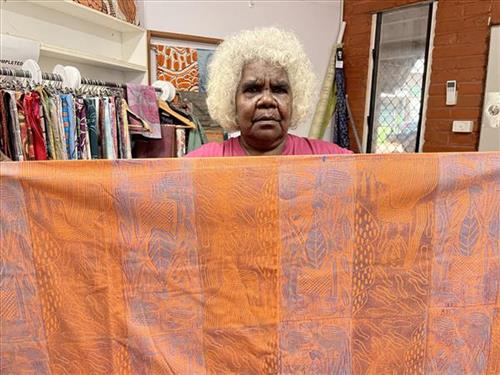
This design depicts the cheeky yam, which is found on the artist’s country, near the outstation of Mumeka in central Arnhem Land. Yams are an important bush food that are collected during the wet season.

Unlike other yams that can be eaten roasted, the cheeky yam can be poisonous if not properly prepared. The preparation process of the yam traditionally takes two days. Firstly, the yams are dug up with a digging stick and boiled over a fire. They are then peeled and sliced into thin strips, which are placed in a special dillybag woven by women from pandanus leaves. The yam-laden dillybag is then strung from an overhanging branch into a river, so the bag just touches the flowing fresh water. The cheeky yams are left like this overnight to allow the running water to remove the toxins. The next morning, people return and collect the dillybag, and leave the yam pieces in full sunlight to dry out. Finally, when the yam pieces have dried in the sun for a day, they are ready to eat.

377810582290986


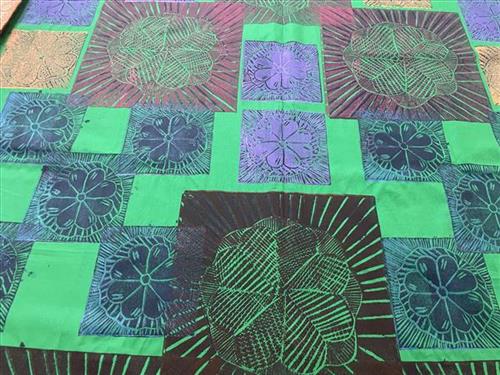
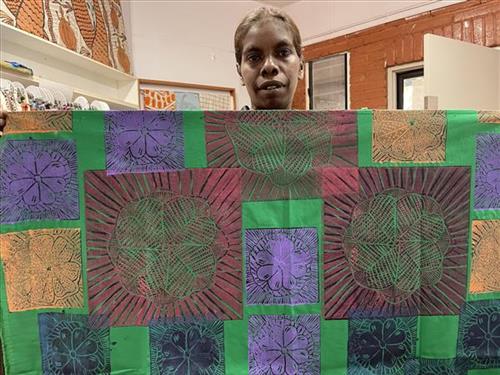
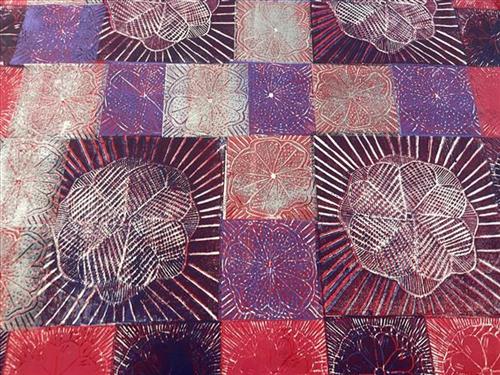
Fresh Water Flowers

This is a new circular design by Jacinta Lamilami depicting waterlily’s growing in Freshwater water billabongs. 


377810582290981


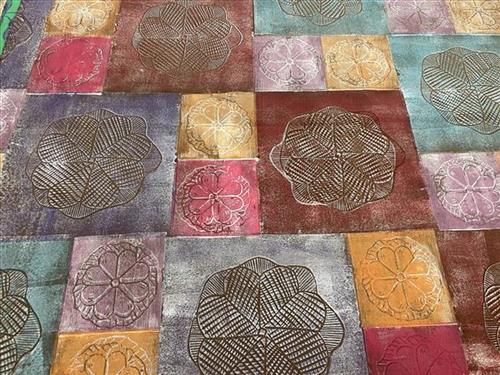
Fresh Water Flowers

This fabric was created using the linocut printing technique. The lino tile has been carved by the artist in Maningrida, and has been printed by hand using a variety of colours and layers. The linocut technique ensures each textile piece is a one-off, limited edition piece. Bábbarra Women’s Centre supports the economic independence of Indigenous women in the Arnhem Land community of Maningrida, Northern Territory, Australia. Designs created by the women at Bábbarra reflect strong cultural knowledge, which is passed down to younger generations through their textile design practice.

377810582290978


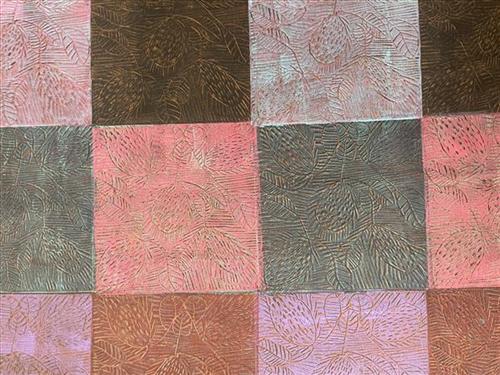
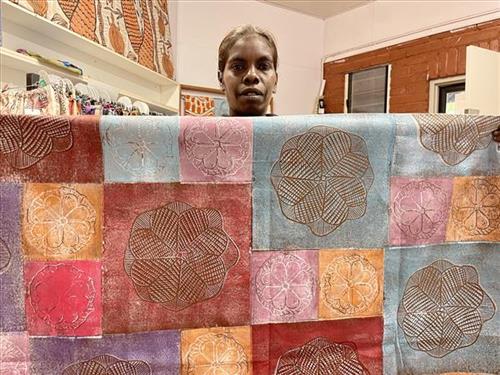
Fresh Water Flowers

This fabric was created using the linocut printing technique. The lino tile has been carved by the artist in Maningrida, and has been printed by hand using a variety of colours and layers. The linocut technique ensures each textile piece is a one-off, limited edition piece. Bábbarra Women’s Centre supports the economic independence of Indigenous women in the Arnhem Land community of Maningrida, Northern Territory, Australia. Designs created by the women at Bábbarra reflect strong cultural knowledge, which is passed down to younger generations through their textile design practice.

377810582290977


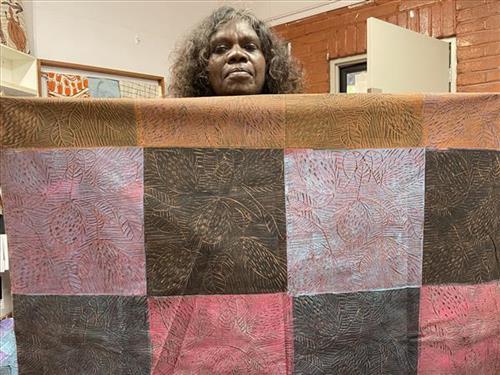
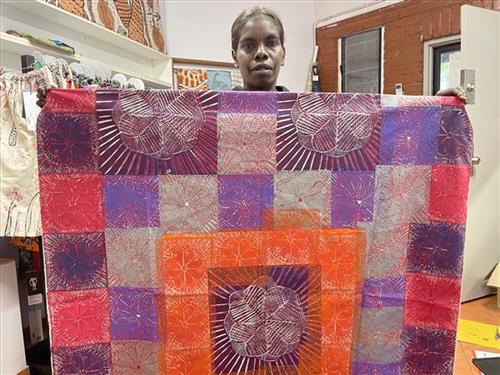
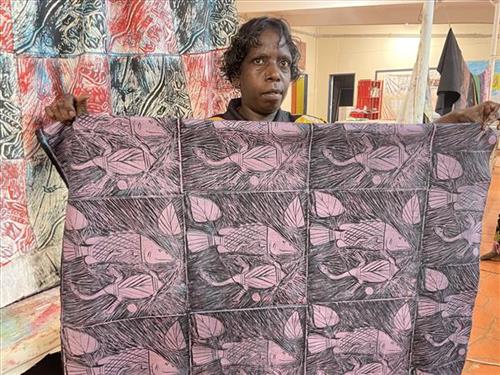
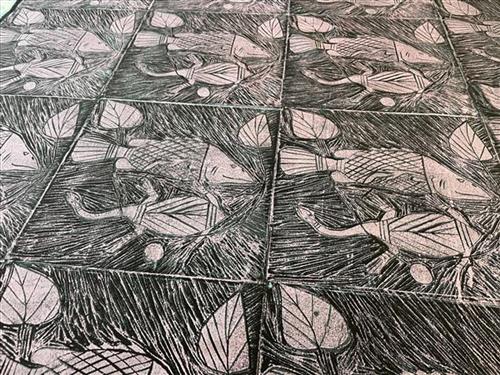
Barramundi and Long Neck Turtle

This fabric was created using the linocut printing technique. The lino tile has been carved by the artist in Maningrida, and has been printed by hand using a variety of colours and layers. The linocut technique ensures each textile piece is a one-off, limited edition piece. Bábbarra Women’s Centre supports the economic independence of Indigenous women in the Arnhem Land community of Maningrida, Northern Territory, Australia. Designs created by the women at Bábbarra reflect strong cultural knowledge, which is passed down to younger generations through their textile design practice.

111982290958


Yawkyawk

Yawkyawk is a word in the Kunwinjku/Kunwok language of Western Arnhem Land meaning ‘young woman’ and ‘young woman spirit being’. The different groups of Kunwinjku people (one of the Eastern dialect groups call themselves Kuninjku) each have Yawkyawk mythologies, which relate to specific locations in clan estates. These mythologies are represented in bark paintings and sculptures of Yawkyawk beings. There are also a few examples of rock art images of these beings.
The female water spirits Yawkyawk or Ngalkunburriyaymi are perhaps the most enigmatic of mythological themes. Sometimes compared to the European notion of mermaids, they exist as spiritual beings living in freshwater streams and rock pools, particularly those in the stone country. The spirit Yawkyawk is usually described and depicted with the tail of a fish. Thus the Kuninjku people sometimes call them ngalberddjenj which literally means ‘the young woman who has a tail like a fish’. They have long hair, which is associated with trailing blooms of green algae (called man-bak in Kuninjku). At times they leave their aquatic homes to walk about on dry land, particularly at night.
Aboriginal people believe that in the beginning most animals were humans. During the time of the creation of landscapes and plants and animals, these ancestral heroes in human form transmutated into their animal forms via a series of various significant events now recorded as oral mythologies. The creation ancestor Yawkyawk travelled the country in human form and changed into the form of Ngalkunburriyaymi as a result of various ancestral adventures. Today the Kuninjku believe that Ngalkunburriyaymi are alive and well and living in freshwater sites in a number of sacred locations.
Some features of a respective country are equated with body parts of Yawkyawk. For example a bend in a river or creek may be said to be ‘the tail of the Yawkyawk, a billabong may be ‘the head of the Yawkyawk and so on. Thus different groups can be linked together by means of a shared mythology featured in the landscape, which crosscuts clan and language group boundaries.

111982290942


Gulach (Spike Rush)

Greg Wilson is the son of artist Terry Ngamandara, who was a senior custodian of the Gun-gulol Gu-rrenyjinga group of clans, which includes his own clans Girnimba and Garramirra. These clans are all land owners for different areas of the large swamp called Barlparnarra which lies to the north-west of Gochan Jiny-jirra outstation on the Cadell River. Barlparnarra is a complex of important sacred sites for the Jowunga moiety group throughout central Arnhem Land. It is associated with the creation myth of the two sisters, which has a number of versions celebrated throughout Arnhem Land. The sisters are commonly known as Djangkawu, but in the Barlparnarra version they are called Murlurlu. Many dreaming tracks of mythological beings associated with the two sisters converge at this site and ceremonies which celebrate their journeys are still held there.

The artist has depicted a key emblem for the Gun-gulol Gu-rrenyjinga clans. It is a design for gulach, the spike rush, also known as water chestnut (Eleocharis dulcis) that dominates the Barlparnarra swamp country. The emblem appears as triangular motifs which cover the entire painting. The spike rush plant has edible corms which form a food source for magpie geese, a key swamp game animal. People also dig and eat the sweet corms.

111582291212


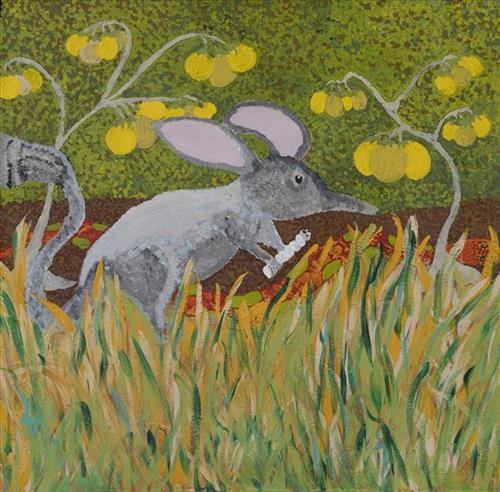
Young Bilby

“Those three animals we protect them now. The old people use to eat the animals and we’re working with the KJ (Kanyirninpa Jukurrp Ranger) mob to protect them. The top one (Mangkarr) is taller than this one (middle – Nurta). This one (Nurta) is stumpy like a guinea pig. The bottom one (Winyminji) is the same size as a cat. It’s like a cat.”

– Carol Williams

Mankarr (Greater Bilby) is a type of desert-dwelling omnivore, found in a range of habitats from rocky soils, shrublands, woodlands and spinifex regions. Its fur is usually grey or white, and has a long, sharp nose and long pinkish ears. At the time of European colonisation of Australia, there were two species. The lesser bilby became extinct in the 1950s, while the greater bilby has survived, it remains a threatened species.

The Nurta (desert bandicoot), was a bandicoot of the central and western dessert, considered to be extinct since 2016. It was small in size with a long and narrow head which it used to investigate the sand while digging. It had orange-brow fur on its back and white below, with one or two dark bands on the hindquarters. The decline and extinction of the desert bandicoot is attributed to a range of factors including predation by cats and foxes, and habitat destruction due to the impacts of exotic herbivores and to changed fire regimes

Winyminji (Quolls) are carnivorous marsupials also native to Australia. They are primarily nocturnal and spend most of the day in a den. They have brown or black fur and pink noses. They are largely solitary, but come together for a few social interactions such as mating which occurs during the winter season. Quolls eat smaller mammals, small birds, lizards, and insects. All species have drastically declined in numbers since Australasia was colonised by Europeans, with one species, the eastern quoll, becoming extinct in the 1960s.

KJ program manage the conservation of the natural and cultural assets on Martu country through the employment of Martu as Indigenous rangers.  KJ rangers work to build knowledge on and protect the many important species that occur on their country, including the Mankarr, the wiminyji and the mulyamiji (great desert skink).

111582291210


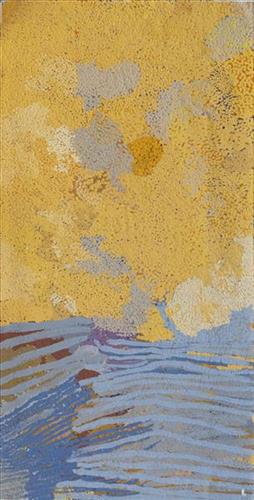
Wantili (Warntili, Canning Stock Route Well 25)

“Wantili (Warntili, Canning Stock Route Well 25) area, close to Parnngurr. My ngurra (home Country, camp), my jamu’s (grandfather’s) Country, my father’s daddy, Jakayu [Biljabu’s] daddy and my daddy’s Country. Jakayu been bury her father there. In pujiman (traditional, desert dwelling) days, my family and Jakayu’s family been walking round there together. Big sandhills here. Sandhill, sandhill, sandhill everywhere. Claypan there, in the middle. Good place for swimming and drinking, for hunting little kangaroo. When no water [we would] go to [the adjacent Canning Stock Route] well. When there [was] rain we stay there at Wantili. Everywhere, we been walking everywhere.       

Near to Wantili, road [Canning Stock Route] going kayili (north). Long time [ago] only horses and cattle [travelled along that road], going Meekatharra and back in the cold time, gone right up to GJ (Georgia) Bore. Half way, when he see water at Wantili, that mob would camp one night, bullock eating all the grass and men’s drinking water. One Martu been working with that mob, droving bullock. Every time he been give us meat, all the pujimanpa (desert dwellers).”

– Ngamaru Bidu


Wantili is a large round jurnu (soak) and linyji (claypan) near Well 25 on the Canning Stock Route. The Wantili region is dominated by claypans surrounded by tuwa (sandhills), and Nyilangkurr, a prominent yapu (hill) is located close to the eastern edge of the claypan. Following rain the typically dry claypans are filled with water, with the overflow from nearby waterholes flowing to Wantili. At that time, Wantili becomes an important place for obtaining fresh water for drinking and bathing. Wantili is significant for the fact that at this site Kartujarra, Manyjilyjarra, Putijarra and Warnman people would all come together for ceremonies during the pujiman era. Many jiwa (stones used by women for grinding seeds) from these times, including those used by Ngamaru’s family, can still be found there today.

Wantili lies within Ngamaru’s ngurra (home Country, camp) through her grandfather and father. As described in her account, Wantili was one of the sites Ngamaru knew intimately and travelled extensively with her family and other family groups, such as the Biljabu family. During the pujiman period Martu would traverse very large distances annually, moving seasonally from water source to water source, and hunting and gathering bush tucker as they went. Knowledge of water sources was critical for survival, and today Martu Country is still defined in terms of the location and type of water. 

As Ngamaru recounts, Wantili also held significance for her as a site of contact between her family and kartiya (white people); drovers with their cattle travelling along the Canning Stock Route. The establishment of the route by Alfred Canning and his team in 1910 resulted in first contact with Europeans for many Martu, including Ngamaru and her family. Increasingly, Martu followed the route to newly established ration depots, mission and pastoral stations. They were drawn to the route in search of food, by a sense of curiosity, or by loneliness. By the late 1950s and early 1960s, most of the desert family groups had left the desert. Eventually, these factors combined with an extreme and prolonged drought in the 1960s to prompt the few remaining pujimanpa to move in from the desert. 

Culturally, Wantili is an incredibly important site in two central Jukurrpa (Dreaming) stories. The first relates to the world’s creation. In this narrative, the world was initially dark, and people were like rocks, with no arms or legs. Following the sun’s first rising, life-forms become increasingly complex while particular features in the land are created. Beyond these details much of the narrative is ngurlu (sacred, taboo), and only for Martu, but the site is open, and anyone can go there. 

Wantili is also one of the many sites featured in the epic Minyipuru (Jakulyukulyu, Seven Sisters) Jukurrpa story. Minyipuru is a central Jukurrpa narrative for Martu, Ngaanyatjarra, Pitjantjatjara and Yankunytjatjara people that is associated with the seasonal Pleiades star constellation. Relayed in song, dance, stories and paintings, Minyipuru serves as a creation narrative, a source of information relating to the physical properties of the land, and an embodiment of Aboriginal cultural laws. The story follows the movement of a group of women travelling all the way across the desert, beginning at Roebourne on the coast of Western Australia, as they are pursued by Yurla, a lustful old man. As the women travelled, they stopped to rest at many sites to eat, dance, rest and sing, on the way leaving behind an assortment of articles that became formations in the land, such as groupings of rocks and trees, grinding stones and seeds. The sisters rested at Wantili before throwing seeds, then continued their journey far to the east and beyond Martu Country, stopping at various sites through central and South Australia.