111581406501


Untitled

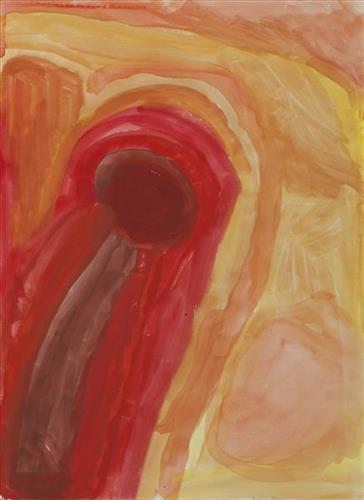
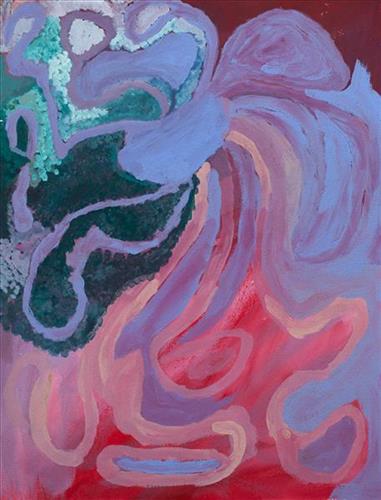
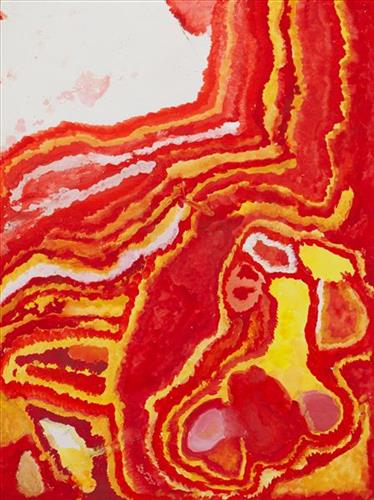
Wompi paints the Country around her homelands of Kunawarritji, a place associated with the Minyipuru Jukurrpa (Seven Sister Dreaming). In 1906, Kunawarrtiji also became a well on the Canning Stock Route, and from an early age Wompi and her family had encounters with the white men who drove cattle along the route. As a young woman, Wompi followed the drovers north to Balgo Mission, where she stayed for many years. She learnt to paint there with her close friend, Eubena Nampitjin, and returned to Kunawarritji, where she lives and paints today, when it became a community in its own right.

111581406497


Untitled

Wompi paints the Country around her homelands of Kunawarritji, a place associated with the Minyipuru Jukurrpa (Seven Sister Dreaming). In 1906, Kunawarrtiji also became a well on the Canning Stock Route, and from an early age Wompi and her family had encounters with the white men who drove cattle along the route. As a young woman, Wompi followed the drovers north to Balgo Mission, where she stayed for many years. She learnt to paint there with her close friend, Eubena Nampitjin, and returned to Kunawarritji, where she lives and paints today, when it became a community in its own right.

111581837594


Untitled

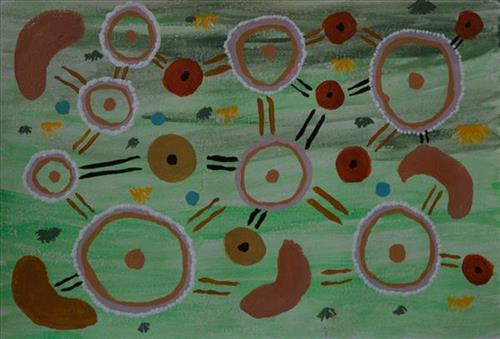
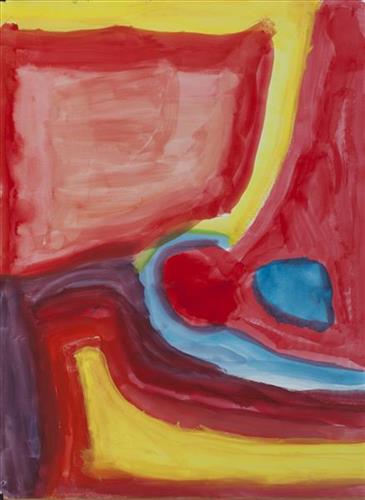
“When Martu paint, it’s like a map. Martu draw story on the ground and on the canvas, and all the circle and line there are the hunting areas and different waters and tracks where people used to walk, and [some you] can’t cross, like boundaries. So nowadays you see a colourful painting and wonder what it is, but that’s how Martu tell story long ago. It’s not just a lovely painting, it’s a story and a songline and a history and everything that goes with it.” 

– Ngalangka Nola Taylor and Joshua Booth

This work portrays an area of Country that can be interpreted in multiple ways. Firstly, the image may be read as an aerial representation of a particular location known to the artist- either land that they or their family travelled, from the pujiman (traditional, desert dwelling) era to now. During the pujiman period, Martu would traverse very large distances annually in small family groups, moving seasonally from water source to water source, and hunting and gathering bush tucker as they went. At this time, one’s survival depended on their intimate knowledge of the location of resources; thus physical elements of Country, such as sources of kapi (water), tali (sandhills), different varieties of warta (trees, vegetation), ngarrini (camps), and jina (tracks) are typically recorded with the use of a use of a system of iconographic forms universally shared across the desert. 

An additional layer of meaning in the work relates to more intangible concepts; life cycles based around kalyu (rain, water) and waru (fire) are also often evident. A thousands of year old practice, fire burning continues to be carried out as both an aid for hunting and a means of land management today. As the Martu travelled and hunted they would burn tracts of land, ensuring plant and animal biodiversity and reducing the risk of unmanageable, spontaneous bush fires. The patchwork nature of regrowth is evident in many landscape works, with each of the five distinctive phases of fire burning visually described with respect to the cycle of burning and regrowth.  

Finally, metaphysical information relating to a location may also be recorded; jukurrpa (dreaming) narratives chronicle the creation of physical landmarks, and can be referenced through depictions of ceremonial sites, songlines, and markers left in the land. Very often, however, information relating to jukurrpa is censored by omission, or alternatively painted over with dotted patterns.
111581935182


Untitled

“When Martu paint, it’s like a map. Martu draw story on the ground and on the canvas, and all the circle and line there are the hunting areas and different waters and tracks where people used to walk, and [some you] can’t cross, like boundaries. So nowadays you see a colourful painting and wonder what it is, but that’s how Martu tell story long ago. It’s not just a lovely painting, it’s a story and a songline and a history and everything that goes with it.” 

– Ngalangka Nola Taylor and Joshua Booth

This work portrays an area of Country that can be interpreted in multiple ways. Firstly, the image may be read as an aerial representation of a particular location known to the artist- either land that they or their family travelled, from the pujiman (traditional, desert dwelling) era to now. During the pujiman period, Martu would traverse very large distances annually in small family groups, moving seasonally from water source to water source, and hunting and gathering bush tucker as they went. At this time, one’s survival depended on their intimate knowledge of the location of resources; thus physical elements of Country, such as sources of kapi (water), tali (sandhills), different varieties of warta (trees, vegetation), ngarrini (camps), and jina (tracks) are typically recorded with the use of a use of a system of iconographic forms universally shared across the desert. 

An additional layer of meaning in the work relates to more intangible concepts; life cycles based around kalyu (rain, water) and waru (fire) are also often evident. A thousands of year old practice, fire burning continues to be carried out as both an aid for hunting and a means of land management today. As the Martu travelled and hunted they would burn tracts of land, ensuring plant and animal biodiversity and reducing the risk of unmanageable, spontaneous bush fires. The patchwork nature of regrowth is evident in many landscape works, with each of the five distinctive phases of fire burning visually described with respect to the cycle of burning and regrowth.  

Finally, metaphysical information relating to a location may also be recorded; jukurrpa (dreaming) narratives chronicle the creation of physical landmarks, and can be referenced through depictions of ceremonial sites, songlines, and markers left in the land. Very often, however, information relating to jukurrpa is censored by omission, or alternatively painted over with dotted patterns.
111581935180


Untitled

Mabel was born in the 1920s at Yirajarra, near Juntu Juntu [Well 30] on the Canning Stock Route. Her parents were both Warnman people, their country encompassing Tarl, Nyajarra and Juntu Juntu. Mabel grew up in the pujiman (desert dwelling) era until she, along with other family members decided to begin the long journey to Jigalong Mission, where many other desert families had already relocated. They walked through Karlamilyi (Rudall River) and Talawana.


Mabel, a prolific artist, paints her ngurra (home) and her warrarn (country) to teach the young so that they can learn to paint too. When Mabel first started painting she was living in Irrungadji Community in Nullagine with fellow Martumili Artists Lily Long and Amy French.

359709482083212


Floating By

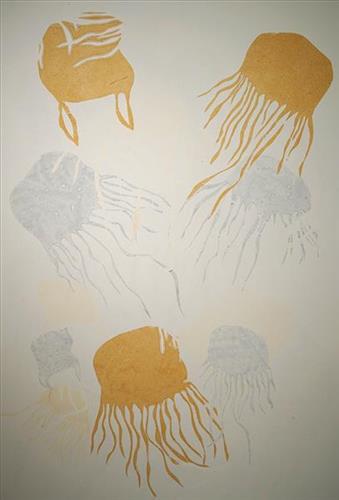
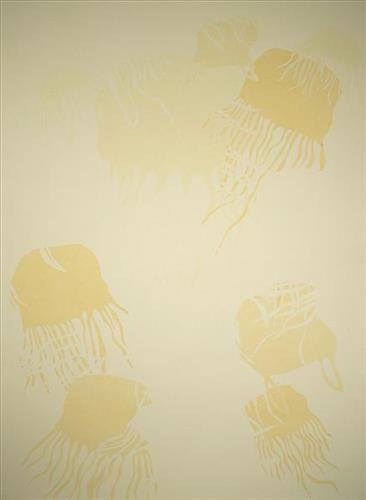
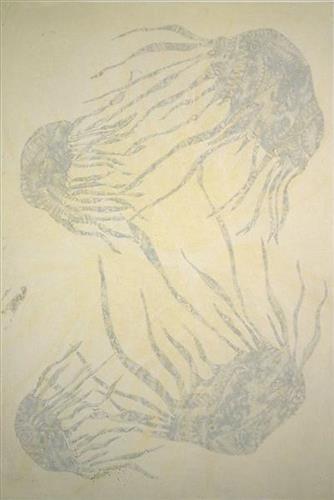
Jellyfish can be found in the waters throughout the Torres Strait Islands.

Art Centre notes: The artwork is a unique state print, or monotype, printed on BFK Rives paper (100% cotton rag with strong archival properties). The print covers the paper from edge to edge. Signed by the artist on the reverse.

Artist:Solomon Booth

Printer: Dian Darmansjah

Printed at Moa Arts October 2021


359709482083209


Drifting

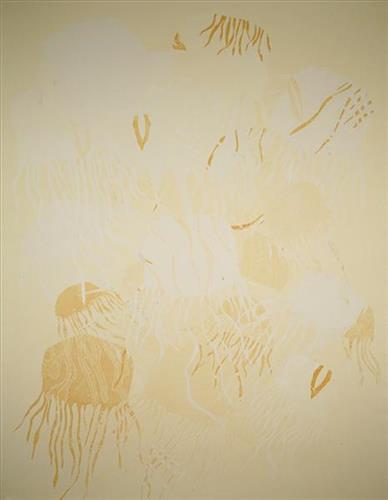
 Jellyfish can be found in the waters throughout the Torres Strait Islands.

Art Centre notes: The artwork is a unique state print, or monotype, printed on BFK Rives paper (100% cotton rag with strong archival properties). The print covers the paper from edge to edge. Signed by the artist on the reverse.

Artist:Solomon Booth

Printer: Dian Darmansjah

Printed at Moa Arts October 2021


359709482083208


Drifting with the Tide

 Jellyfish can be found in the waters throughout the Torres Strait Islands.

Art Centre notes: The artwork is a unique state print, or monotype, printed on BFK Rives paper (100% cotton rag with strong archival properties). The print covers the paper from edge to edge. Signed by the artist on the reverse.

Artist:Solomon Booth

Printer: Dian Darmansjah

Printed at Northsite Print Studio, Cairns Oct 2023


359709482084929


Jellyfish

Jellyfish can be found in the waters throughout the Torres Strait.

Art Centre notes: The artwork is a unique state print, or monotype, printed on BFK Rives paper (100% cotton rag with strong archival properties). The print covers the paper from edge to edge. Signed by the artist on the reverse.

Artist:Solomon Booth

Printer: Dian Darmansjah

Printed at Moa Arts