Dry waterholes
This painting shows the many waterholes you find in the Pilbara region. Some are well known, others are hidden amongst the hills.
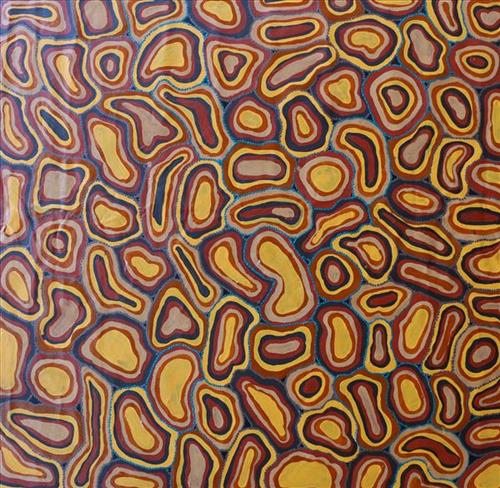
This painting shows the many waterholes you find in the Pilbara region. Some are well known, others are hidden amongst the hills.

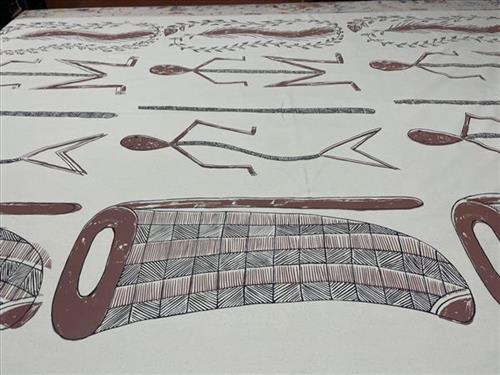
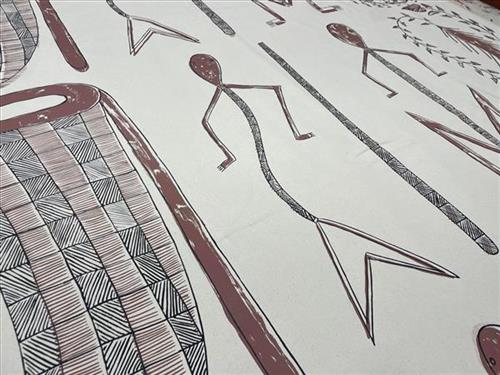
Yawkyawk (young woman spirit) and Kunmadj (dilly bag).
This 2007 design has been recently re-exposed from the screen print archive. It has not been printed in the studio for many years.
Ruth Bindebal is the sister to Abigail Namundja and daughter of Jennifer Wurrkidj.

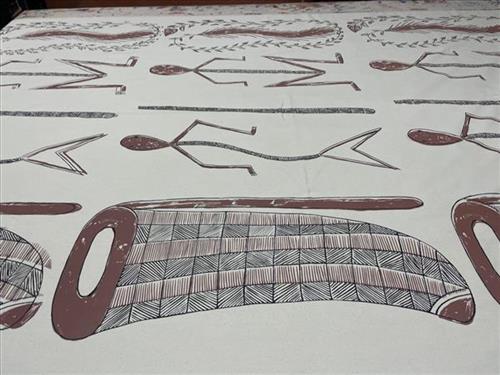
Yawkyawk (young woman spirit) and Kunmadj (dilly bag).
This 2007 design has been recently re-exposed from the screen print archive. It has not been printed in the studio for many years.
Ruth Bindebal is the sister to Abigail Namundja and daughter of Jennifer Wurrkidj.

Yawkyawk (young woman spirit) and Kunmadj (dilly bag).
This 2007 design has been recently re-exposed from the screen print archive. It has not been printed in the studio for many years.
Ruth Bindebal is the sister to Abigail Namundja and daughter of Jennifer Wurrkidj.

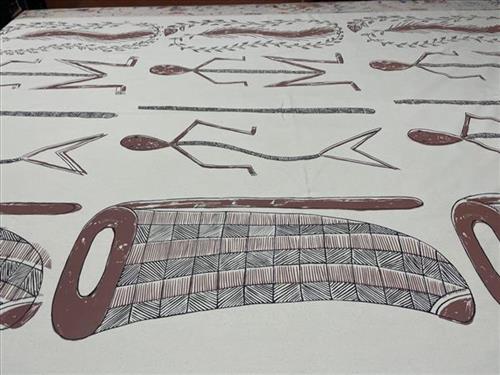
Yawkyawk (young woman spirit) and Kunmadj (dilly bag).
This 2007 design has been recently re-exposed from the screen print archive. It has not been printed in the studio for many years.
Ruth Bindebal is the sister to Abigail Namundja and daughter of Jennifer Wurrkidj.

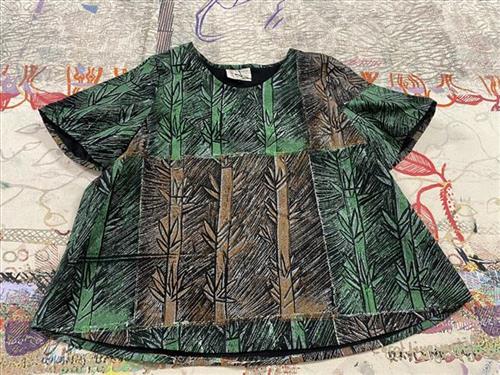
‘I see bamboo everywhere where i go in Maningrida. I see it at every house – it’s a common house plant. When i see bamboo i get excited because i feel at home. Bamboo makes me feel good.’ Belinda Kernan
This fabric was created using the linocut printing technique. The lino tile has been carved by the artist in Maningrida, and has been printed by hand using a variety of colours and layers. The linocut technique ensures each textile piece is a one-off, limited edition piece. Bábbarra Women’s Centre supports the economic independence of Indigenous women in the Arnhem Land community of Maningrida, Northern Territory, Australia. Designs created by the women at Bábbarra reflect strong cultural knowledge, which is passed down to younger generations through their textile design practice.

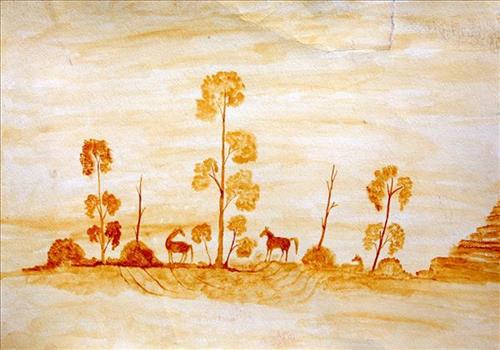
This work portrays an area known intimately to the artist, painted here in exquisite detail from memory. During the pujiman (traditional, desert dwelling) era one’s survival depended on their intimate knowledge of the location of resources; thus physical elements of Country, such as sources of kapi (water), tali (sandhills), and different varieties of warta (trees, vegetation) were carefully observed and remembered. Today, this relationship with Country remains equally strong, despite the movement of Martu out of the desert and into remote Aboriginal Communities, towns and cities.
Also visible may be traces of life cycles based around kalyu (rain, water) and waru (fire). A thousands of year old practice, fire burning continues to be carried out as both an aid for hunting and a means of land management today. As the Martu travelled and hunted they would burn tracts of land, ensuring plant and animal biodiversity and reducing the risk of unmanageable, spontaneous bush fires. The patchwork nature of regrowth is visible in many landscape works, with each of the five distinctive phases of fire burning visually described with respect to the cycle of burning and regrowth.
Finally, metaphysical information relating to a location may also be recorded; jukurrpa (dreaming) narratives chronicle the creation of physical landmarks, and can be referenced through depictions of ceremonial sites, songlines, and markers left in the land.

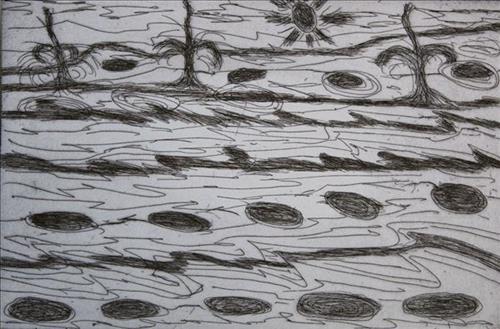
Pija was born in the desert, near Kunawarritji Community (also known as Well 33 on the Canning Stock Route). This artwork illustrates the sandhills and the vegetation that grows in the desert around Kunawarritji.

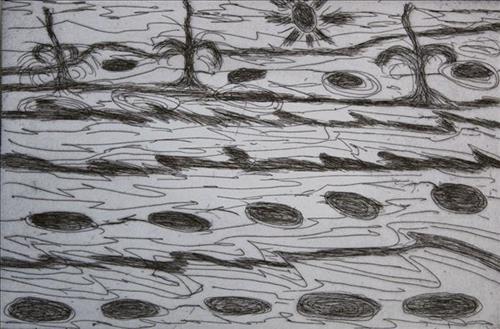
Pija was born in the desert, near Kunawarritji Community (also known as Well 33 on the Canning Stock Route). This artwork illustrates the sandhills and the vegetation that grows in the desert around Kunawarritji.

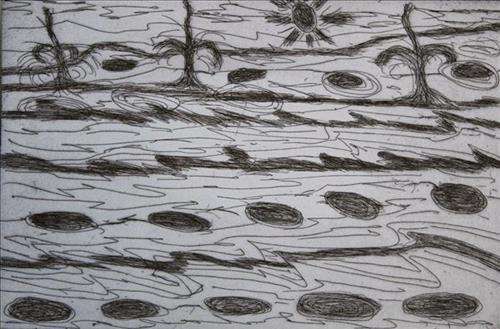
Pija was born in the desert, near Kunawarritji Community (also known as Well 33 on the Canning Stock Route). This artwork illustrates the sandhills and the vegetation that grows in the desert around Kunawarritji.