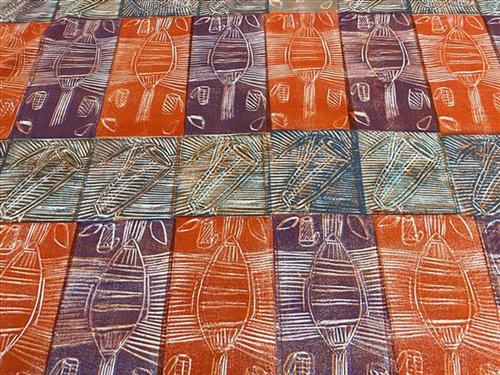
Screen print
Tamisha and Montana experimentation with screenprinting techniques as part of the artworker-training trip to Melbourne in 2019 at Negative Press studio.

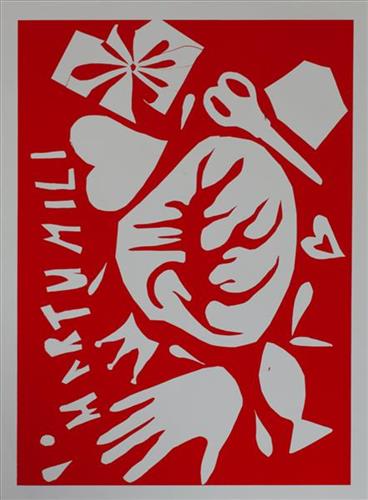
Tamisha and Montana experimentation with screenprinting techniques as part of the artworker-training trip to Melbourne in 2019 at Negative Press studio.
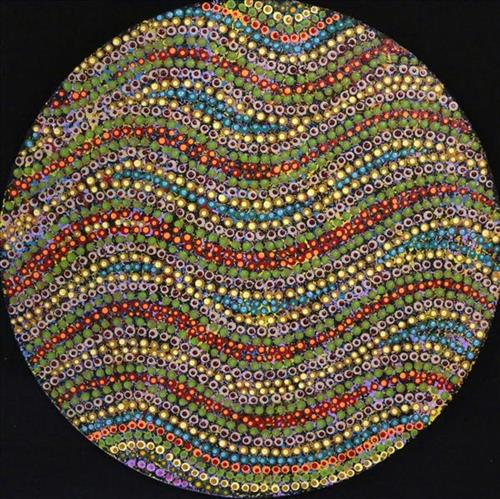
In Yindjibarndi country there are many different shaped rock formations. It looks like a truck has tipped a huge pile of rocks. At different times of the day, especially in the evening sunset, you will see the beautiful colours changing across the face of the rocks which compliments the soft spinifex growing through the country.
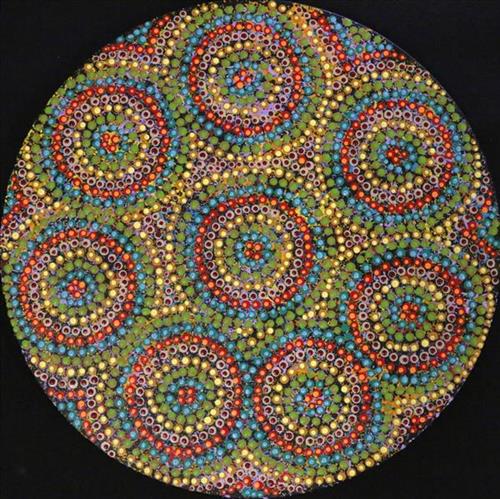
In Yindjibarndi country there are many different shaped rock formations. It looks like a truck has tipped a huge pile of rocks. At different times of the day, especially in the evening sunset, you will see the beautiful colours changing across the face of the rocks which compliments the soft spinifex growing through the country.

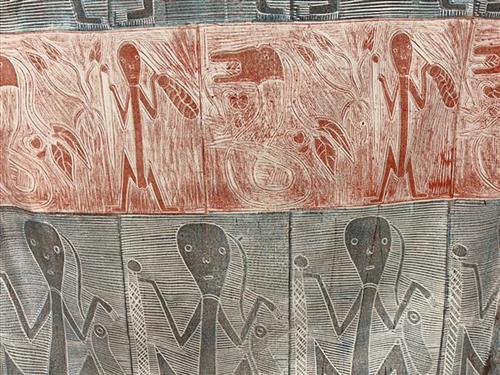
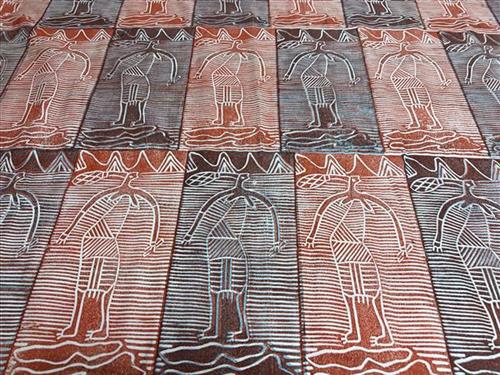
Abigail and her late mother, the renowned Kuninjku fibre and textile artist Jennifer Wurrkidj created this design together. Ruth said her mum was telling the story of Buluwana while they were sitting and drawing.
“She’s an old lady from our ancestor creation time, before mimih spirits roamed the land. Her skin name is Wamutjan– she is from the Dhuwa moiety. When the mimih came to our country, she turned into stone out Yikarrakkal and Manmoyi way.
She lives in a sacred place, where she turned to stone she lives there now forever. She is an important woman for my people.
I draw her because she my dreaming. I can’t tell the full story about Buluwana, because it’s a little bit secret, but it’s okay for me to paint her and share these parts. My people can know the full Buluwana story, and the djungkay (caretaker) can tell the full Buluwana story too.” J. Wurrkidj

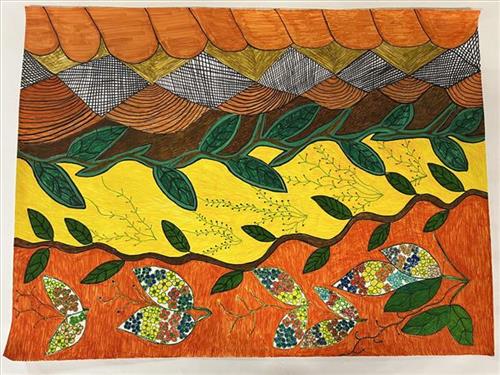
‘I wanted to create this drawing, telling my kids and husbands dreaming story. I want to keep the story alive for my grandchildren so when they grow up, they can learn their families stories. I always tell my granddaughter about the work i’m doing so she can know and keep it in her mind. She’s growing up now but still is always learning about my stories and asks me questions everyday about my work.
I call this design Welebme, giri-giri, & kono (flowers), this story comes from Bulukhaduru.
The giri-giri always rips our clothes and scratches our skin when we go our hunting. It’s really sharp and long, all the kids tell me they don’t like that thorne!’

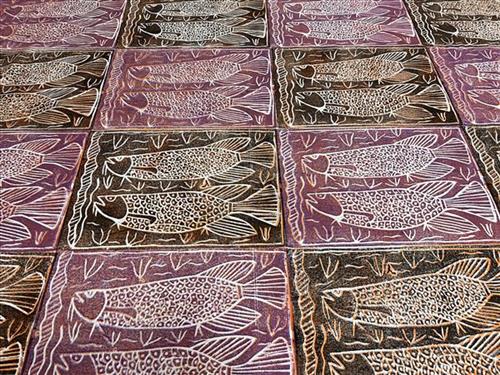
This design tells the story of Saratoga dreaming, a freshwater fish that swims on the edge of creeks and rivers. This design is the Saratoga dreaming from the Mularra songline. Where the Saratoga we call Murdulngu, Danguny travelled from Malmyangarnak billabong to Mirrigatja.
This Billabong was owned by Murdulngu (Saratoga) before the water was taken over by shark Barlangu he came all the way from east to north then to west. He was travelling when that water level was high he went up the stream but he couldn’t make it. This Barlangu came from Murruggun clan but really this shark came from long way all the way south. This story is connected through Mularra songline it represents many clans.
With permission from clan elders, Carol is able to pass on this family knowledge through her passion in textile and art.
‘I am proud of my first design, I want to keep this design for future, for my children and grandchildren so they remember this story, this story is a big part of the mularra songline’ Carol Liyawanga Campion



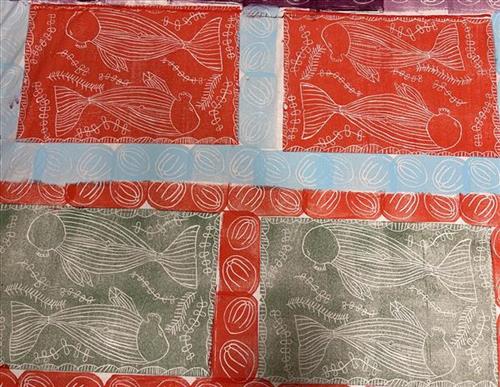
Dugong can be found in the waters around Maningrida They are a protected species but do form part of a traditional manme (bushfood) diet for some saltwater communities.