11151034136


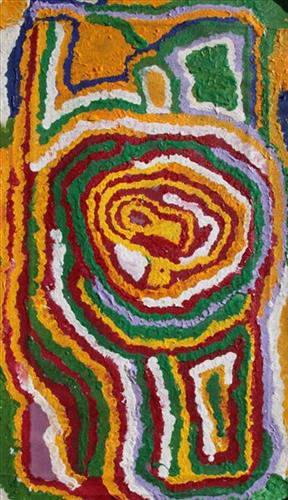
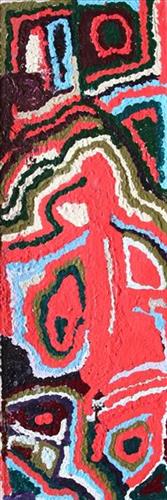
Yirrajarra

“Yirrajarra, it’s a yinta (permanent spring) in Warman Country. That’s my camp, that’s my place, that’s my Country. Home there,”

–  Mitutu Mabel Wakarta (dec.)

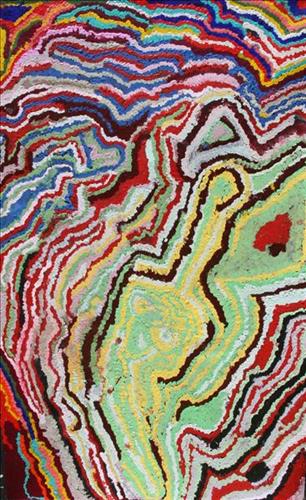
Yirrajarra comprises of two soaks situated near Lake Auld, and north of Tiwa (Canning Stock Route Well 26). As the site of a continuous source of good fresh water, surrounded by plentiful puri (shade), Yirrajarra was an important semi-permanent camping ground during the pujiman (traditional, desert dwelling) era. 

Yirrajarra is Mabel Mitutu’s birthplace, and as such an integral part of her ngurra (home Country, camp). Having walked all of this country with her family in her youth, Mabel Mitutu here depicts her knowledge of the region and its features in detail. Physical characteristics of the land and the location of its resources are portrayed alongside the Jukurrpa (Dreaming) narratives associated with this area.

During the pujiman period, Martu would traverse very large distances annually in small family groups, moving seasonally from water source to water source, and hunting and gathering bush tucker as they went. At this time knowledge of water sources was critical for survival, and today Martu Country is still defined in terms of the location and type of water. Each of the hundreds of claypans, rockholes, waterholes, soaks and springs found in the Martu desert homelands is known by name, location, quality and seasonal availability through real life experience and the recounting of Jukurrpa (dreaming) narratives.
11151027067


Parnngurr Community

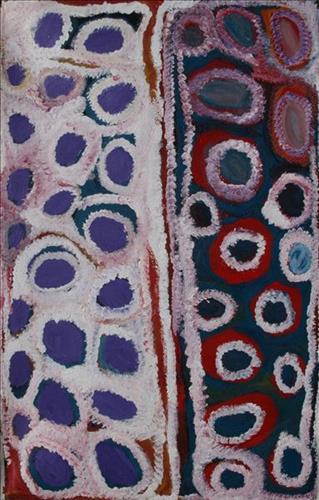
Parnngurr is an Aboriginal community located 370km east of Newman, at the Southern end of the Karlamilyi (Rudall River) area, and in the Pilbara region of Western Australia. Created during the return to Country movement of the 1980s, with the recognition of Aboriginal land rights and native title, the community was named after its’ original primary water source, a nearby rockhole and yinta (permanent spring). Until recently the community was widely known as Cotton Creek, after the European name for the ephemeral creek running alongside the community. Parnngurr and its surrounds are physically dominated by distinctively red tali (sandhills), covered sparingly with spinifex and low lying shrub.

Historically Parnngurr Rockhole was an important site for Aboriginal people during the pujiman (traditional, desert born) era. During this nomadic period families stopped and camped here depending on the seasonal availability of water and the corresponding cycles of plant and animal life on which hunting and gathering bush tucker was reliant. At Parnngurr and other similarly important camp sites, families would meet for a time before moving to their next destination. 

Parnngurr is also a site chronicled in the epic Jukurrpa (Dreaming) story of the Minyipuru (Jakulyukulyu, Seven Sisters), as they flee from the lustful old man, Yurla. The sisters stopped to rest on Parnngurr Hill before continuing on their long journey east. Minyipuru is a central Jukurrpa narrative for Martu, Ngaanyatjarra, Pitjantjatjara and Yankunytjatjara people that is associated with the seasonal Pleiades star constellation. Relayed in song, dance, stories and paintings, Minyipuru serves as a creation narrative, a source of information relating to the physical properties of the land, and an embodiment of Aboriginal cultural laws. Beginning in Roebourne on the west coast of Western Australia, the story morphs in its movement eastward across the land, following the women as they walk, dance, and even fly from waterhole to waterhole. As they travel the women camp, sing, wash, dance and gather food, leaving markers in the landscape and creating landforms that remain to this day, such as groupings of rocks and trees, grinding stones and seeds. During the entirety of their journey the women are pursued by a lustful old man, Yurla, although interactions with other animals, groups of men, and spirit beings are also chronicled in the narrative.

11151032426


Punmu Lake

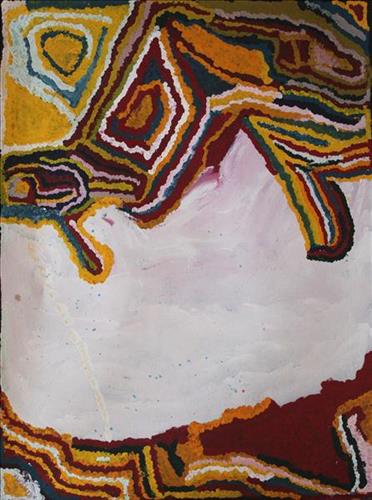
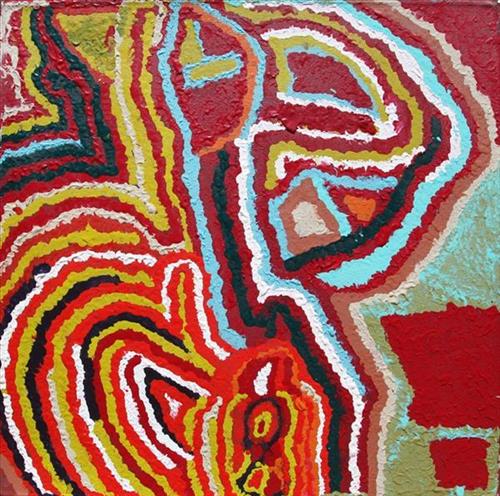
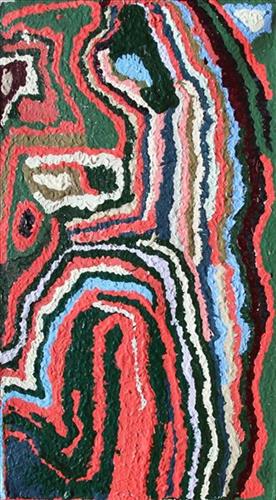
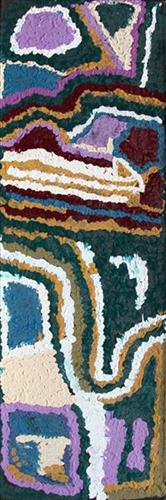
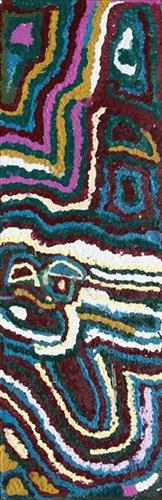
This is Mitutu’s Country- her ‘ngurra’ (home Country, camp). People identify with their ngurra in terms of specific rights and responsibilities, and the possession of intimate knowledge of the physical and cultural properties of one’s Country. Painting ngurra, and in so doing sharing the Jukurrpa (Dreaming) stories and physical characteristics of that place, has today become an important means of cultural maintenance. Mitutu’s ngurra encompasses her birthplace, Yirajarra soak, located close to Lake Auld and just north of Tiwa (Canning Stock Route Well 26), and the Country that her family walked in the pujiman (traditional, desert-dwelling) era, around the Karlamilyi (Rudall River) region.

Portrayed in this work are features of Mitutu’s family’s ngurra, such as the gorges and rivers, dominant permanent red tali (sandhills), warta (trees, vegetation), and the individually named water sources they camped at. Rock holes, waterholes, soaks and springs were all extremely important sites for Martu people during the pujiman period, and are generally depicted with circular forms. 

The encyclopaedic knowledge of the location, quality and seasonal availability of the hundreds of water bodies found in one’s Country sustained Martu as they travelled across their Country, hunting and gathering, visiting family, and fulfilling ceremonial obligations. They would traverse very large distances annually, visiting specific areas in the dry and wet season depending on the availability of water and the corresponding cycles of plant and animal life on which hunting and gathering bush tucker was reliant. As they travelled and hunted they would also burn areas of Country, generating a greater diversity of plant and animal life.

11151029508


Nyilangkur Claypan – Grandfather’s country

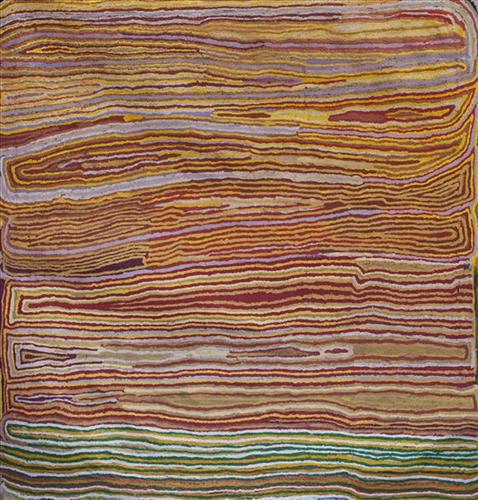
This painting depicts Nyilangkur lyinji Claypan this is the artist’s Grandfater’s country where her family lived traditionally during the pujiman (bush) days. The Martu lived very nomadically moving from water source to water source hunting and gathering bush tucker as they went. They would traverse very large distances visiting some areas in the dry and some in the wet season depending on the availability of water. As they travelled and hunted they would also burn areas of country creating a larger diversity of plant and animal life.

11152117537


Untitled

Mabel was born in the 1920s at Yirajara, which is near Jurntu Jurntu. Her parents were both Warnman people whose country encompassed Tarl and Nayijara. Mabel grew up in the pujiman (bush) way through her teens and as an adult, she walked into Jigalong Mission. She paints her ngurra (home) and her warrarn (country) to teach the young so that they can learn to paint, too.

111576230132


Untitled

Mabel was born in the 1920s at Yirajara, which is near Jurntu Jurntu. Her parents were both Warnman people whose country encompassed Tarl and Nayijara. Mabel grew up in the pujiman (bush) way through her teens and as an adult, she walked into Jigalong Mission. She paints her ngurra (home) and her warrarn (country) to teach the young so that they can learn to paint, too.

111576230127


Warla (lake)

This is Mitutu’s Country- her ‘ngurra’ (home Country, camp). People identify with their ngurra in terms of specific rights and responsibilities, and the possession of intimate knowledge of the physical and cultural properties of one’s Country. Painting ngurra, and in so doing sharing the Jukurrpa (Dreaming) stories and physical characteristics of that place, has today become an important means of cultural maintenance. Mitutu’s ngurra encompasses her birthplace, Yirajarra soak, located close to Lake Auld and just north of Tiwa (Canning Stock Route Well 26), and the Country that her family walked in the pujiman (traditional, desert-dwelling) era, around the Karlamilyi (Rudall River) region.

Portrayed in this work are features of Mitutu’s family’s ngurra, such as the gorges and rivers, dominant permanent red tali (sandhills), warta (trees, vegetation), and the individually named water sources they camped at. Rock holes, waterholes, soaks and springs were all extremely important sites for Martu people during the pujiman period, and are generally depicted with circular forms. 

The encyclopaedic knowledge of the location, quality and seasonal availability of the hundreds of water bodies found in one’s Country sustained Martu as they travelled across their Country, hunting and gathering, visiting family, and fulfilling ceremonial obligations. They would traverse very large distances annually, visiting specific areas in the dry and wet season depending on the availability of water and the corresponding cycles of plant and animal life on which hunting and gathering bush tucker was reliant. As they travelled and hunted they would also burn areas of Country, generating a greater diversity of plant and animal life.

111576230126


Untitled

This is Mitutu’s Country- her ‘ngurra’ (home Country, camp). People identify with their ngurra in terms of specific rights and responsibilities, and the possession of intimate knowledge of the physical and cultural properties of one’s Country. Painting ngurra, and in so doing sharing the Jukurrpa (Dreaming) stories and physical characteristics of that place, has today become an important means of cultural maintenance. Mitutu’s ngurra encompasses her birthplace, Yirajarra soak, located close to Lake Auld and just north of Tiwa (Canning Stock Route Well 26), and the Country that her family walked in the pujiman (traditional, desert-dwelling) era, around the Karlamilyi (Rudall River) region.

Portrayed in this work are features of Mitutu’s family’s ngurra, such as the gorges and rivers, dominant permanent red tali (sandhills), warta (trees, vegetation), and the individually named water sources they camped at. Rock holes, waterholes, soaks and springs were all extremely important sites for Martu people during the pujiman period, and are generally depicted with circular forms. 

The encyclopaedic knowledge of the location, quality and seasonal availability of the hundreds of water bodies found in one’s Country sustained Martu as they travelled across their Country, hunting and gathering, visiting family, and fulfilling ceremonial obligations. They would traverse very large distances annually, visiting specific areas in the dry and wet season depending on the availability of water and the corresponding cycles of plant and animal life on which hunting and gathering bush tucker was reliant. As they travelled and hunted they would also burn areas of Country, generating a greater diversity of plant and animal life.

111576230123


Untitled

This is Mitutu’s Country- her ‘ngurra’ (home Country, camp). People identify with their ngurra in terms of specific rights and responsibilities, and the possession of intimate knowledge of the physical and cultural properties of one’s Country. Painting ngurra, and in so doing sharing the Jukurrpa (Dreaming) stories and physical characteristics of that place, has today become an important means of cultural maintenance. Mitutu’s ngurra encompasses her birthplace, Yirajarra soak, located close to Lake Auld and just north of Tiwa (Canning Stock Route Well 26), and the Country that her family walked in the pujiman (traditional, desert-dwelling) era, around the Karlamilyi (Rudall River) region.

Portrayed in this work are features of Mitutu’s family’s ngurra, such as the gorges and rivers, dominant permanent red tali (sandhills), warta (trees, vegetation), and the individually named water sources they camped at. Rock holes, waterholes, soaks and springs were all extremely important sites for Martu people during the pujiman period, and are generally depicted with circular forms. 

The encyclopaedic knowledge of the location, quality and seasonal availability of the hundreds of water bodies found in one’s Country sustained Martu as they travelled across their Country, hunting and gathering, visiting family, and fulfilling ceremonial obligations. They would traverse very large distances annually, visiting specific areas in the dry and wet season depending on the availability of water and the corresponding cycles of plant and animal life on which hunting and gathering bush tucker was reliant. As they travelled and hunted they would also burn areas of Country, generating a greater diversity of plant and animal life.

111576230121


Untitled

This is Mitutu’s Country- her ‘ngurra’ (home Country, camp). People identify with their ngurra in terms of specific rights and responsibilities, and the possession of intimate knowledge of the physical and cultural properties of one’s Country. Painting ngurra, and in so doing sharing the Jukurrpa (Dreaming) stories and physical characteristics of that place, has today become an important means of cultural maintenance. Mitutu’s ngurra encompasses her birthplace, Yirajarra soak, located close to Lake Auld and just north of Tiwa (Canning Stock Route Well 26), and the Country that her family walked in the pujiman (traditional, desert-dwelling) era, around the Karlamilyi (Rudall River) region.

Portrayed in this work are features of Mitutu’s family’s ngurra, such as the gorges and rivers, dominant permanent red tali (sandhills), warta (trees, vegetation), and the individually named water sources they camped at. Rock holes, waterholes, soaks and springs were all extremely important sites for Martu people during the pujiman period, and are generally depicted with circular forms. 

The encyclopaedic knowledge of the location, quality and seasonal availability of the hundreds of water bodies found in one’s Country sustained Martu as they travelled across their Country, hunting and gathering, visiting family, and fulfilling ceremonial obligations. They would traverse very large distances annually, visiting specific areas in the dry and wet season depending on the availability of water and the corresponding cycles of plant and animal life on which hunting and gathering bush tucker was reliant. As they travelled and hunted they would also burn areas of Country, generating a greater diversity of plant and animal life.