115682253884
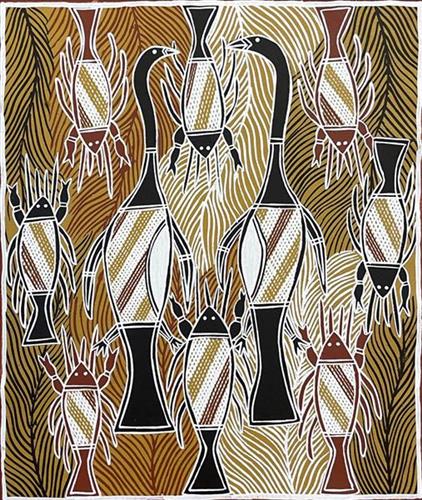
Burala (Diving Ducks]95
This painting depicts diving ducks, both realistically and symbolically. A particular clan group uses the object in the painting during a hollow log ceremony (traditional funeral ceremony). The rrark (cross hatching) is the water. One group will perform the catfish dance whilst another performs as diving ducks. The object is whirled above the head to make a noise that emulates the ducks “roar”. The dance crescendos into the catfish coming closer to the diving ducks allowing them to eat the catfish in a frenzy.

377810582253869
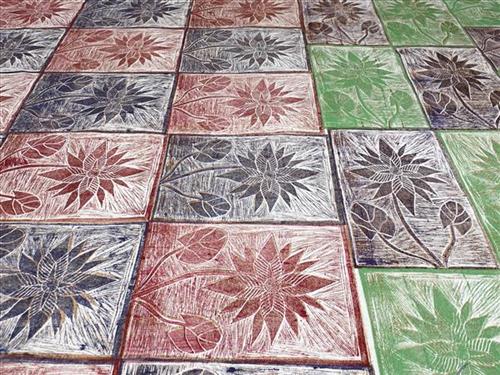
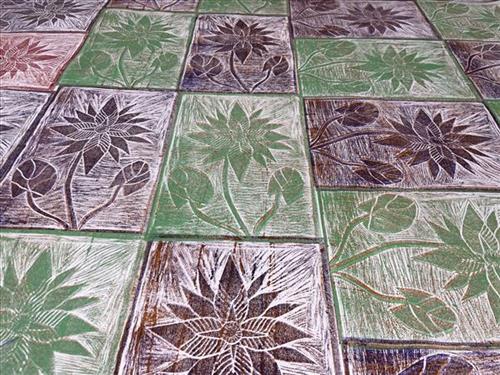
Manbirrbbirr (small bush flowers)
In Kuninjku the name manbirrbbirr is used for a number of densely flowering shrubs and small trees including Verticordia cunninghamii, yellow flowering Austromyrtus species and also Acacia platycarpa which also has dense white.
115682253682
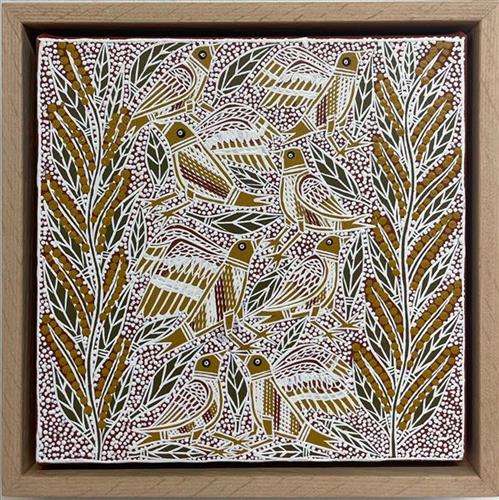
Lidji Lidji (Finch)
This artwork represents totemic finches. These birds herald the beginning of the dry season and are associated with the Ganalbingu clan. Lidji Lidji are also represented in ceremonial song and dance.
115682253681
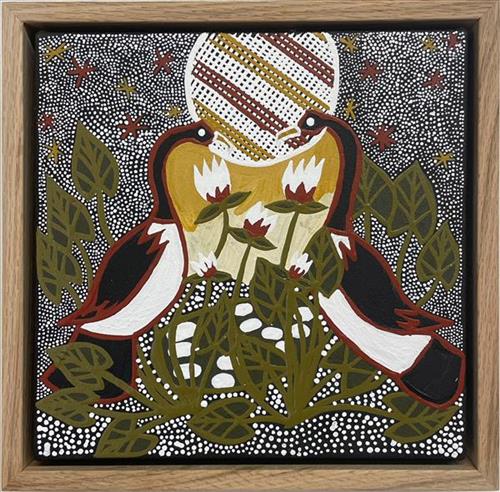
Gumang (Magpie Geese)
The Yolngu people of Arnhem Land originate from a spiritual source, fixed in a particular place in their land or the sea. These ‘Spiritual Reservoirs’ are often in the form of special waterholes made by Wangarr (Creative Beings) long ago close to the beginning of time.
The creator beings moved across the country side, shaping the land and implanting in each tract of country, the spiritual life force for the people who were to own it. These Creative Spirits took many forms. When they gave the land to each group they also gave songs, dances, ceremony, the associated laws and language. The Creation story for Ganalbingu people took place near the middle section of the Glyde River where it becomes the Goyder River. Their land, Ngaliyindi, sits astride the Arafura Swamp in Central Arnhem Land.
In this painting, the artist has depicted Gumang (magpie geese), which are sacred to the Ganalbingu people. To the east of the Arafura Swamp is a freshwater billabong which is said to have been made by the Goose Spirit and is in the shape of a goose nest. As a result, geese, their eggs and their nests are sacred.
115682253680
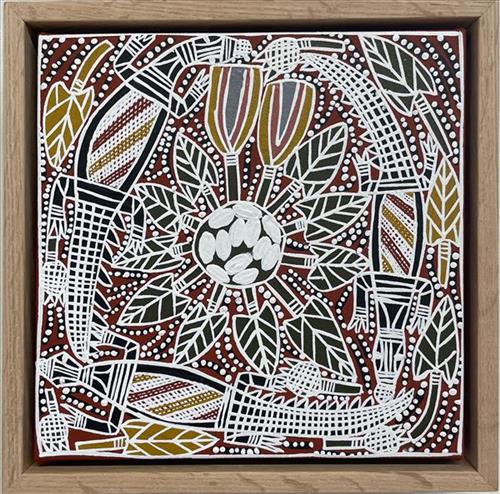
Baru Dhawu (Crocodile Story)
Baru (the crocodile man), was from the Gumatj clan. People usually call him Gurdu Gurdu or Baru which means crocodile. He lived his life at a place called Yirrkala. Living near him were other people, and when Baru didn’t have enough to eat he began to kill and eat these other people. After a while others noticed that some people were missing. When Baru went to the toilet, the people could smell this strong smell, so they knew that he ate the other people. Some men went to get help and they took message sticks to the other tribes. Some were sending smoke signals. When they came to Baru’s camp they started to spear him in the left side of his ribs. He dropped into the fire and burnt his left hand and maybe his right hand. He then ran into the bush and yelled to his countrymen – the animals, birds and fish that live on the land and in the sea. He stopped and he named the tribes and clans and also the places until he came to a place called Gamarru/Guyurru. There he took a rest and said to himself “This is where I stop and call this place Gamarru/Guyurru”. Baru, still in pain from the fire, then jumped into the water and turned himself into a crocodile. The fire left scars on his back. Baru paintings belong to Gumatj and Warrawarra and also the Marpi clan. This painting is used at death ceremonies or initiations and it normally is painted on the belly, which means the person the design is painted on is part of Gurdu Gurdu (the crocodile people).
115682253679
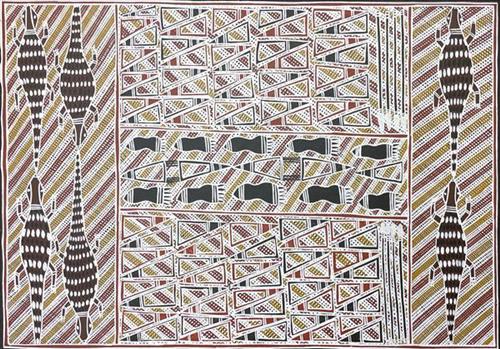
Wagilag ga Wititj Dhawu (Wagilag Sisters and Olive Python Story)
The Wagilag Sisters are central to the four important ceremonies of the Dhuwa moiety; the Djungguwan, the Gunabibi, the Ngulmarrk, and the Mandaialla.
The story is primarily an account of how, in the distant past, the two Wagilag Sisters came out of the southern interior and across the countryside to the Liyagalawumirr waterhole at Mirarrmina. There the younger sister profaned the pool of Wititj (the great Olive Python) by accidently allowing her blood to fall into the waterhole. Because of this, the women (and their children) were swallowed by Wititj.
All of the other sacred snakes stood up with their heads in the clouds and talked to each other with voices like thunder. The Pythons discovered that they had different languages and ‘skins’. Wititj confessed to eating the two women; his own moiety and fell to earth making a big depression in the ground. The big wind blew across the land making the first dry season. Wititj was ordered by the snakes to vomit the women and children back up. When he did this he also vomited up all the water from the waterhole, creating the monsoonal rains.
116482253862
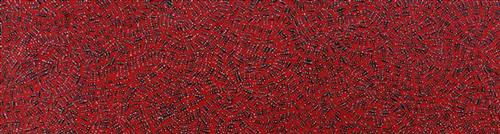
Sturt Pea
The Sturt Pea has a vibrant red flower. It has a succulent sweet juice that can be eaten. These flowers carpet the Pilbara and defy odds, blooming in the driest of conditions.
116482253805
Our Country (The Pilbara)
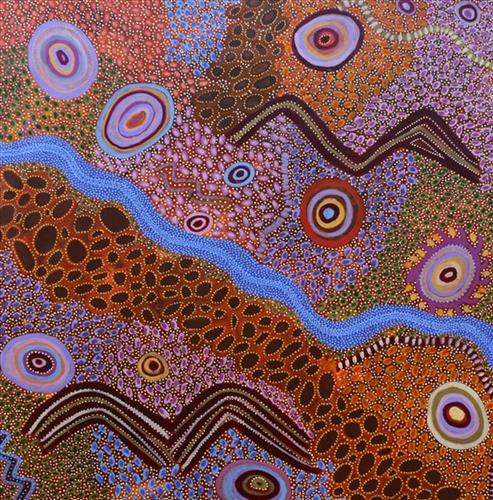
The Pilbara is the country where we the Yindjibarndi people live and share many of our Cultural stories and history that have been passed onto us by our ancestors, of how they used to walk through the flat country we call the (Table Lands) visiting family members at nearby stations. Our country has so much to offer. Bush foods and medicine as well as animals such as kangaroo, emu, goanna, and turkey. When the rains come our rivers are full and we all love to go out and spend the day fishing. We are also close to the ocean, so we often go fishing there as well. During the holidays many of our families go bush to enjoy what the country offers the beauty of our country we see through our eyes. Wildflowers bloom as nature takes its course and our country is still full of riches it always gives me joy to be a part of it, we are connected to our land it is a part of who we are.

377810582253868
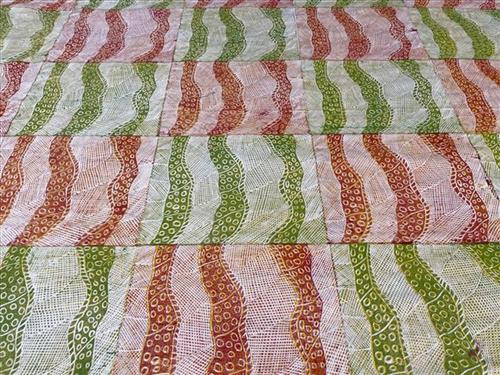
Kunkurra (Spiral Wind)
‘My designs, they are all alive living up in my head’- Janet Marawarr
Janet Marawarr has depicted kunkurra, the spiralling wind associated with several sites in the Kardbam clan. On one level, this design can be interpreted as a depiction of the kinds of mini-cyclones common during the wet season in Arnhem Land, where the artist lives. Kunkurra also relates specifically to a site called Bilwoyinj, near Mankorlod, on the artist’s clan estate.
At this site, two of the most important Kuninjku creation beings, a father and son known as na-korrkko, are believed to have hunted and eaten a goanna. They left some of the goanna fat behind at the site, which turned into the rock that still stands there today.
Bilwoyinj site is also a ceremonial ground for a ceremony called Yabbaduruwa, a major ceremony owned by the Yirridja patrimoiety. The Yabbaduruwa ceremony is primarily concerned with initiation, land ownership and promoting the cyclical regeneration of the human and natural worlds.