Earrings
Art Centre notes: These earrings are made from glass beads and fishing line following traditional colour palettes. The findings are nickel black.

Art Centre notes: These earrings are made from glass beads and fishing line following traditional colour palettes. The findings are nickel black.

Art Centre notes: These earrings are made from glass beads and fishing line following traditional colour palettes. The findings are gold plate.
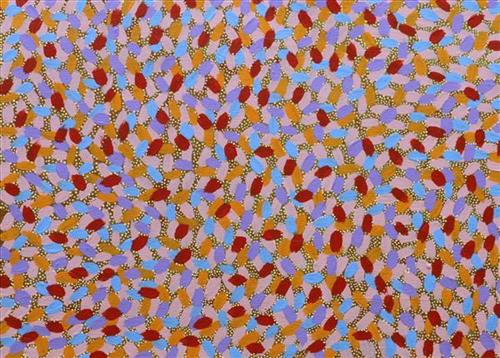
These are the Pilbara wildflower’s that grow on the ground they have a beautiful orange colour blending in the country during flower season.

Art Centre notes: These earrings are made from glass beads and fishing line following traditional colour palettes. The findings are gold plate.

Art Centre notes: These earrings are made from glass beads and fishing line following traditional colour palettes. The findings are gold plate.
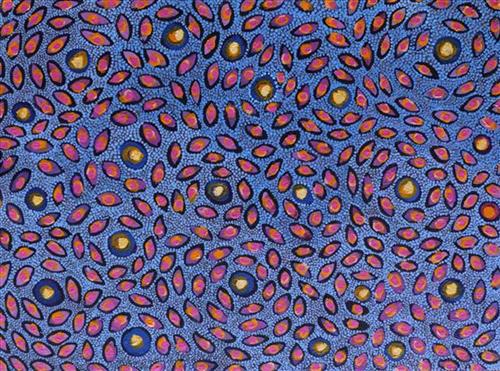
The Blue Gum Tree, gets its name because of its bluish leaves. In Yindjibarndi language it is called Ganyji, in English, Kanji Bush (Acacia pyrifolia). This painting depicts elements of the bush – its blue leaves and yellow flowers against the red and green of the earth. When the rain comes, or when there has been a heavy dew, the Blue Gum Tree just shimmers in the light. In September, when we are looking for gum from the Blue Gum Tree, we walk through the spinifex country. We pick the gum when it is crystal coloured, and we eat it, or put it into hot water and leave it out in the sun to make it like a toffee. We call it sugar lolly.
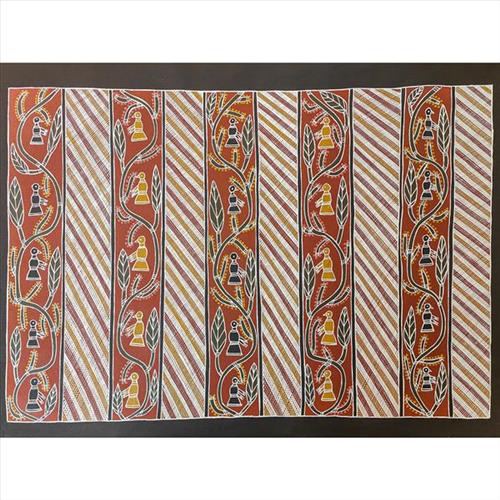
This artwork represents totemic finches. These birds herald the beginning of the dry season and are associated with the Ganalbingu clan. Lidji Lidji are also represented in ceremonial song and dance.
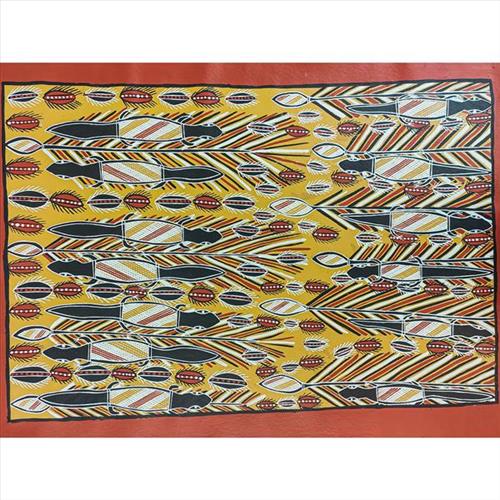
This painting depicts Damilipa (Blue Tongue Lizard) scouring the vast landscapes of Gurrwiliny, NE Arnhem Land. Damilipa can be seen across Arnhem Land all year around. Damilipa is the dreaming for this artist’s family.

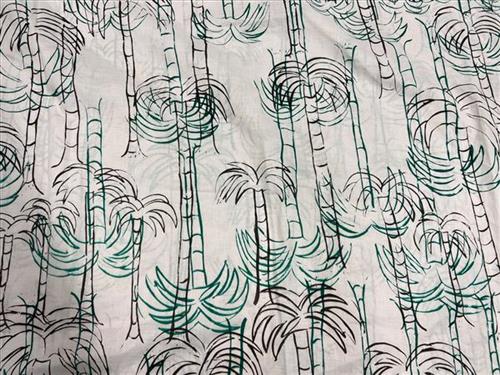
ngarndúma 1) a kind of tall palm tree with one straight trunk; Kentia palm. Gronophyllum ramsayi; Carpentaria acuminata. Gender: djíya; Moiety: Yírriddjanga. N A. Karlakkalóddjarra márdba ka-rénjdjeya. The new shoot is sweet. The growing tip of young palms eaten raw; large palms are not eaten. The fruits are toxic to people but eaten by fruit pigeons.

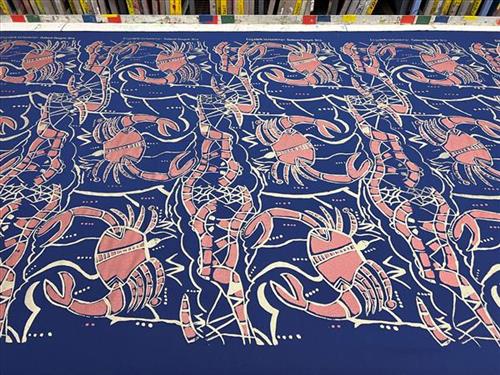
This design tells the story of Elizabeth’s homeland – a dreaming place, a good dreaming place with plenty of Barnkabarra (Mud Crabs). Elizabeth’s homeland lies east of Maningrida, at the mouth of Blyth river. This country is known for a large spiritual mud crab, which lives in the area.
Many families go and collect crabs to eat there with long sticks, or collect directly from the shores. Mud crabs hide in the muddy bottoms of estuaries and mangrove forests in areas surrounding Maningrida. After a king tide, a large cyclical tide which bring the crabs out from the mangroves, it is a good time to find crabs.
Barnkabarra (mud crabs) in Kuninjku language, or Rrugurrgurda (mud crabs) in the Burarra language, are good baladji (bush food in Burarra) and can be caught all year round. They are put on the fire to cook and they are ready when they turn a bright orange colour.