377810582238923


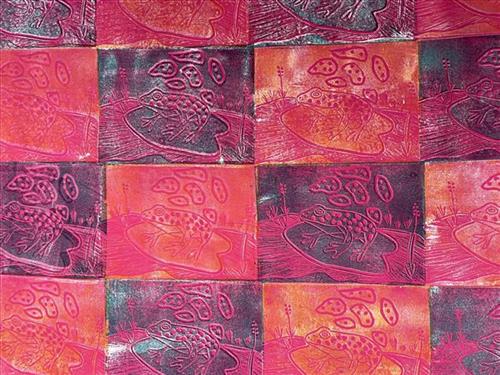
Romolo

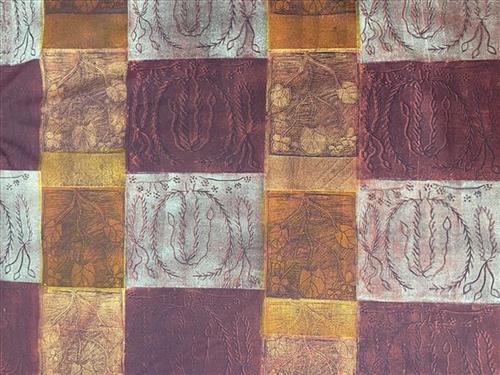
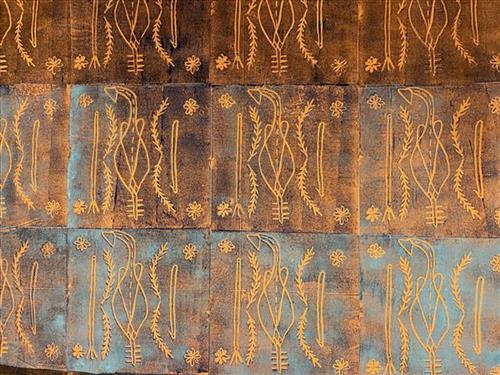
One of Lucy’s latest linocut designs, Romolo, green frog.

Lucy is an experienced textile artist at Bábbarra Women’s Centre. Lucy often references her ancestral stories in her textile work, including Bawaliba (Djinkarr spirit woman), with various lino and screen prints depicting this same narrative.

Lucy is from the Gurr.goni language group – one of the least commonly spoken languages in Arnhem Land. Lucy also speaks another eight Maningrida languages.
377810582238922


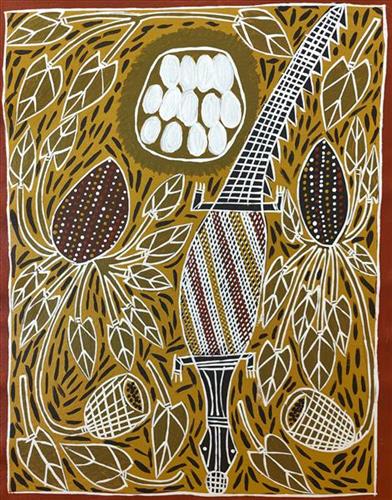
Djabayéna (conefish)

A sawfish or ‘conefish’ in Ndjébbana. 

The saw shaped snout of the fish is traditionally used as a rasp in working wood.

359709482236794


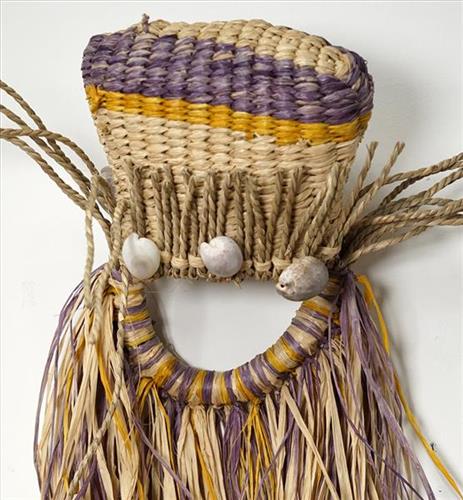
jelly fish basket

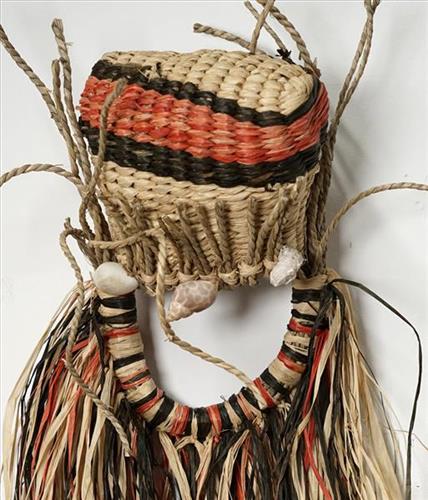
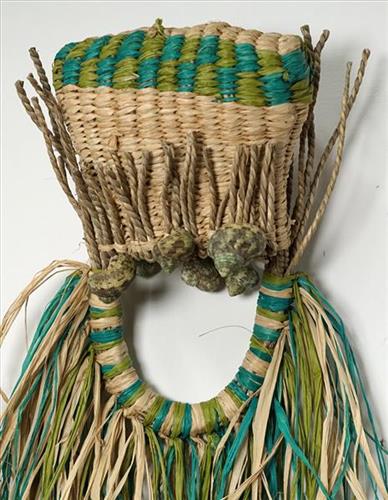
this woven piece is a set of my interpretation of jelly fish with its title as Jelly Fish Basket. its filled with beautiful colours and also travel in all sorts of sizes in which they float around into creeks or up to the beach shoreline when its the season

Art Centre notes: The basket  bag is made of natural raffia / sea chord / seeds / shells. It is made using a traditional ‘one twist’ method. The dyes are commercial and colour fast. 

359709482236791


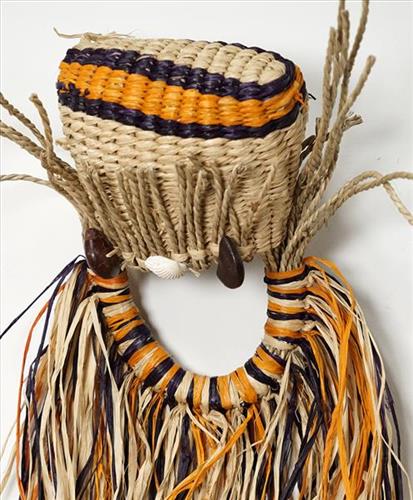
jelly fish basket

this woven piece is a set of my interpretation of jelly fish with its title as Jelly Fish Basket. its filled with beautiful colours and also travel in all sorts of sizes in which they float around into creeks or up to the beach shoreline when its the season

Art Centre notes: The basket  bag is made of natural raffia / sea chord / seeds / shells. It is made using a traditional ‘one twist’ method. The dyes are commercial and colour fast. 

359709482236790


jelly fish basket

this woven piece is a set of my interpretation of jelly fish with its title as Jelly Fish Basket. its filled with beautiful colours and also travel in all sorts of sizes in which they float around into creeks or up to the beach shoreline when its the season.

Art Centre notes: The basket  bag is made of natural raffia / sea chord / seeds / shells. It is made using a traditional ‘one twist’ method. The dyes are commercial and colour fast. 

359709482236789


jelly fish basket

this woven piece is a set of my interpretation of jelly fish with its title as Jelly Fish Basket. its filled with beautiful colours and also travel in all sorts of sizes in which they float around into creeks or up to the beach shoreline when its the season.

Art Centre notes: The basket  bag is made of natural raffia / sea chord / seeds / shells. It is made using a traditional ‘one twist’ method. The dyes are commercial and colour fast. 

114882236782


Kali ~ Boomerang


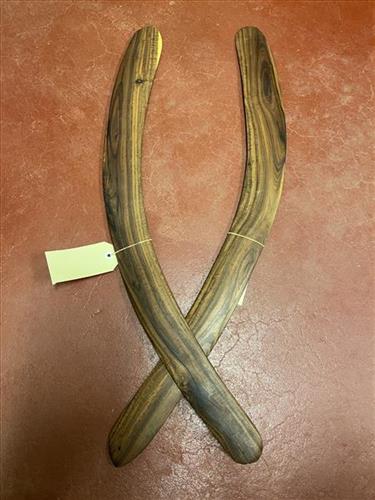
Known collectively as punu, the carvings of Anangu (Central and Western Desert Aboriginal people) have their beginnings in the Tjukurpa when the Creation Ancestors fashioned the first weapons and tools, setting down the laws and conventions of their design.

The Central and Western Desert kali or boomerang is a non-returning one and usually crafted from wanari, mulga wood. It is used for hunting and fighting and in pairs as a percussive instrument for inma or ceremony. Size and shape differ according to the individual craftsman.

Danny Fox created a powerful pair that is not only used for hunting but also as a traditional instrument in ceremony.


115682236883


Dupun (Hollow log)

Dupuns (hollow log coffins) were traditionally used by Yolngu people as a type of coffin. They are made from tree trunks which have been hollowed out by termites and painted by clan members of the deceased depicting totemic motifs and clan patterns relevant to the person. Many years ago, Yolngu people would move about the land seasonally, travelling to where the food was available. When a member of the clan passed, their body was ritually painted with relevant clan totemic designs and placed in a tree to decompose. When the clan travelled back through the same area the following year, the bones of the deceased would be placed in the dupun and taken to the deceased persons country where a hollow log ceremony would commence. It is Yolngu’s belief that in practising this hollow log ceremony it allows the spirit of the deceased to embark on the final journey of their existence and on to the dreamtime.

115682236800


Baru Dhawu (Crocodile Story)

Baru (the crocodile man), was from the Gumatj clan. People usually call him Gurdu Gurdu or Baru which means crocodile. He lived his life at a place called Yirrkala. Living near him were other people, and when Baru didn’t have enough to eat he began to kill and eat these other people. After a while others noticed that some people were missing. When Baru went to the toilet, the people could smell this strong smell, so they knew that he ate the other people. Some men went to get help and they took message sticks to the other tribes. Some were sending smoke signals. When they came to Baru’s camp they started to spear him in the left side of his ribs. He dropped into the fire and burnt his left hand and maybe his right hand. He then ran into the bush and yelled to his countrymen – the animals, birds and fish that live on the land and in the sea. He stopped and he named the tribes and clans and also the places until he came to a place called Gamarru/Guyurru. There he took a rest and said to himself “This is where I stop and call this place Gamarru/Guyurru”. Baru, still in pain from the fire, then jumped into the water and turned himself into a crocodile. The fire left scars on his back. Baru paintings belong to Gumatj and Warrawarra and also the Marpi clan. This painting is used at death ceremonies or initiations and it normally is painted on the belly, which means the person the design is painted on is part of Gurdu Gurdu (the crocodile people).