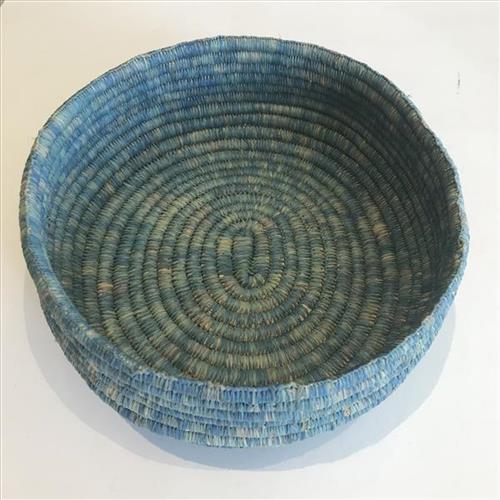
Uralcar Basket
Art Centre notes: This basket is made using a traditional weaving method over-and-under technique with a needle. The materials used are colour-fast.
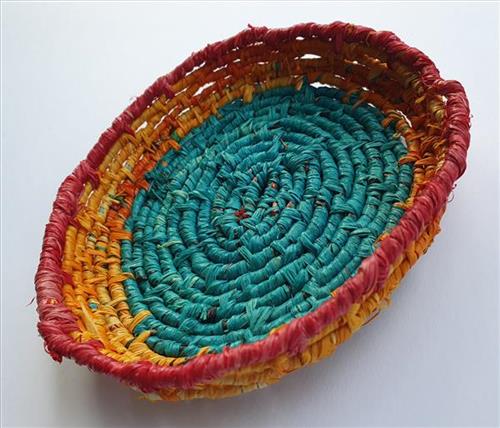
Art Centre notes: This basket is made using a traditional weaving method over-and-under technique with a needle. The materials used are colour-fast.
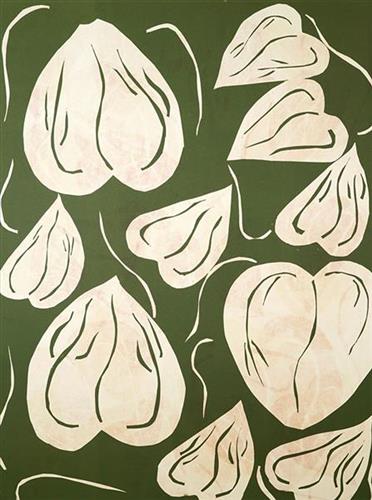
My print depicts plant leaves that have been identified to us by our parents, their parents, and theirs. This knowledge tells us that each leaf plays a role in our livelihood. These plant leaves are part of our lifestyle. We use them in different ways, such as: smoking ceremonies, medicine, mat, bed, food, drink water from, etc. We grew up understanding the teaching given to us by our Uncle and Aunties by identifying the leaves of either plant or tree. We understand leaves are used for, in the various seasons.
Art Centre notes: this artwork is a ‘pochoir’ print, or monoprint, printed on BFK Rives paper. 100% cotton rag with strong archival properties. The print covers the paper from edge to edge.
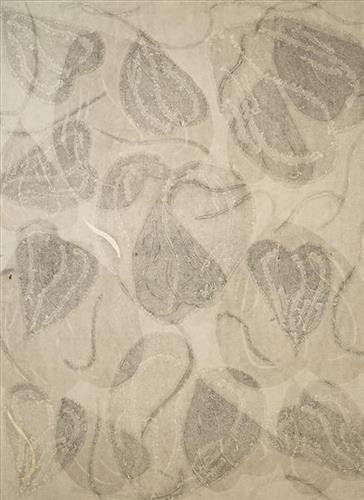
My print depicts plant leaves that have been identified to us by our parents, their parents, and theirs. This knowledge tells us that each leaf plays a role in our livelihood. These plant leaves are part of our lifestyle. We use them in different ways, such as: smoking ceremonies, medicine, mat, bed, food, drink water from, etc. We grew up understanding the teaching given to us by our Uncle and Aunties by identifying the leaves of either plant or tree. We understand leaves are used for, in the various seasons.
Art Centre notes: this artwork is a ‘pochoir’ print, or monoprint, printed on BFK Rives paper. 100% cotton rag with strong archival properties. The print covers the paper from edge to edge.
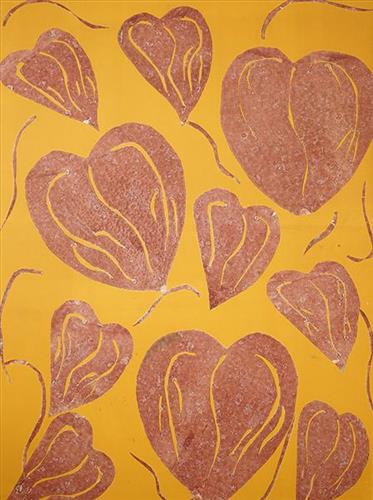
My print depicts plant leaves that have been identified to us by our parents, their parents, and theirs. This knowledge tells us that each leaf plays a role in our livelihood. These plant leaves are part of our lifestyle. We use them in different ways, such as: smoking ceremonies, medicine, mat, bed, food, drink water from, etc. We grew up understanding the teaching given to us by our Uncle and Aunties by identifying the leaves of either plant or tree. We understand leaves are used for, in the various seasons.
Art Centre notes: this artwork is a ‘pochoir’ print, or monoprint, printed on BFK Rives paper. 100% cotton rag with strong archival properties. The print covers the paper from edge to edge.
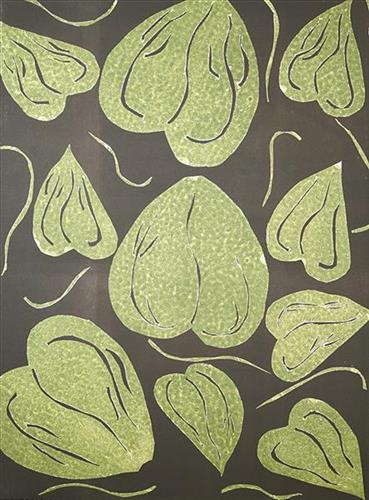
My print depicts plant leaves that have been identified to us by our parents, their parents, and theirs. This knowledge tells us that each leaf plays a role in our livelihood. These plant leaves are part of our lifestyle. We use them in different ways, such as: smoking ceremonies, medicine, mat, bed, food, drink water from, etc. We grew up understanding the teaching given to us by our Uncle and Aunties by identifying the leaves of either plant or tree. We understand leaves are used for, in the various seasons.
Art Centre notes: this artwork is a ‘pochoir’ print, or monoprint, printed on BFK Rives paper. 100% cotton rag with strong archival properties. The print covers the paper from edge to edge.
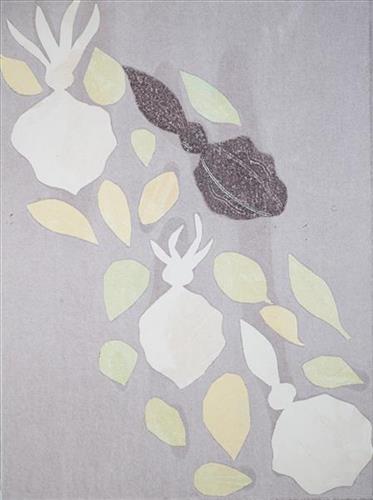
After a big rain passes the island my cousins and I would walk along Arkai Budhu, this is said to be the best time to go luring for squid when the sky looks dull and there is no wind.
The colours demonstrate the purple silky water after big rains and the leaves float from the creeks near the mangrove creating a passage for the squid to come out of hiding from predators.
Arkai Budhu: Kubin Sand Beach
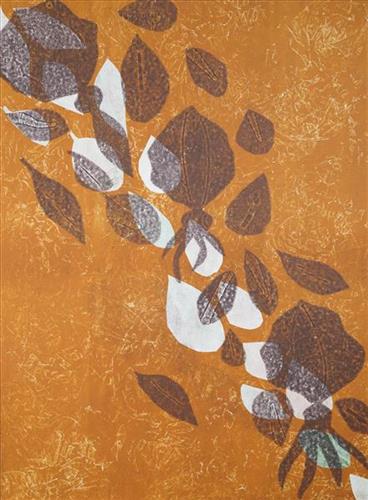
After a big rain passes the island the sun comes out and burn the island: my cousins and I would walk along Arkai Budhu, this is said to be the best time to go luring for squid when the sky looks dull and there is no wind.
The colours demonstrate the hot sun shining om the water after big rains and the leaves float from the creeks near the mangrove creating a passage for the squid to come out of hiding from predators.
Arkai Budhu: Kubin Sand Beach

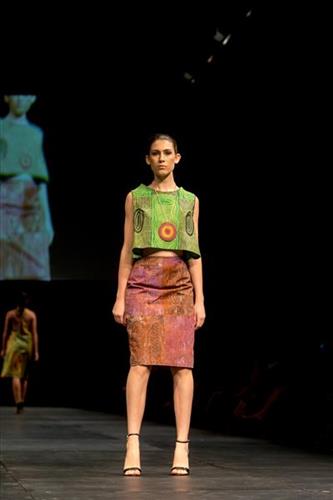
DAAF 2016 – Country to Couture
Deborah Wurrkidj is a Kuninjku artist from the Kurulk clan whose country lies around the outstation of Mumeka in central Arnhem Land. She is an accomplished artist working across mediums including painting, sculpture, weaving and textile design. For this design, Deborah Wurrkidj has depicted Marebu (woven pandanus mats).
Works in fibre from the Maningrida region are widely recognised as some of the finest in Australia. Artists confidently push the boundaries of fibre craft and cultural expression, adapting traditional techniques and forms to produce strikingly inventive and aesthetically exquisite artworks.
Artists weave many different kinds of mats. Conical mats were traditionally used to shield babies from mosquitoes. Long flat mats were used for blocking creeks so that fish would be diverted into fish traps. A small triangular mat made of pandanus fibre used to be worn by women during ceremonial gatherings, tied around their back and covering them at the front. Mats are also used for wrapping and rinsing food in water.
Artists usually use kundayarr, pandanus spiralis, to weave decorative round or oblong mats, as well as the less common triangular and conical shapes. Weaving is physically hard work, now done only by women. They colour the pandanus using natural dyes made from the roots, leaves or flowers of plants within the weaver’s clan estate.
The radial woven patterns of the finest round mats appear to vibrate with colour, sometimes regarded as an aesthetic manifestation of deep cultural meaning, as there is a significant spiritual dimension to pandanus mats.