111982221981


Wak Wak

This painting depicts a sacred site at ‘Kurrurldul’, an outstation south of Maningrida.

The ‘rarrk’, or abstract crosshatching, on this work represents the design for the crow totem ancestor called ‘Djimarr’. Today this being exists in the form of a rock, which is permanently submerged at the bottom of Kurrurldul Creek. The ‘Djimarr’ rock in the stream at Kurrurldul is said to move around and call out in a soft hooting tone at night. Both the stone itself and the area around it are considered sacred.

The imagery represents the rock mentioned above at the bottom of Kurrurldul creek, which is the final transmutation of the dreaming ancestor ‘Djimarr’. Finally, the pattern used here is also the crow design used in the sacred ‘Mardayin’ ceremony, which is a large regional patri-moiety ceremony now rarely conducted in central and eastern Arnhem Land.
111982221979


Mat

Mats can vary greatly. Artists commonly use a mix of naturally dyed and undyed fibre to create a striking variation of coloured bands. Some artists also incorporate different types of looping to produce different patterns and textured finishes. Each type of mat, fibre bag, basket and dilly bag has its own name in the various languages spoken in the Maningrida region.

111982221978


Mat

Mats can vary greatly. Artists commonly use a mix of naturally dyed and undyed fibre to create a striking variation of coloured bands. Some artists also incorporate different types of looping to produce different patterns and textured finishes. Each type of mat, fibre bag, basket and dilly bag has its own name in the various languages spoken in the Maningrida region.

377810582221977


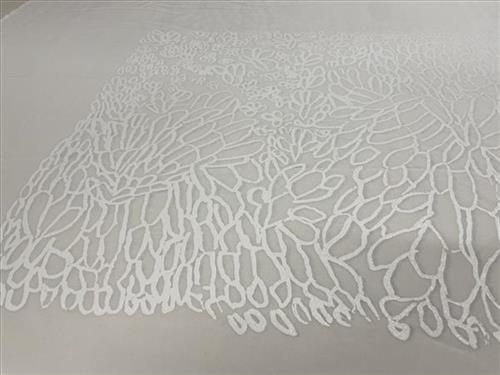
Kunkih (Mud Ripples)

This design depicts the patterns of the freshwater mud ripples, which emerge after strong monsoonal wet seasons on the Djinkarr and Nangak flood plains.

These ripples form on the earth’s surface in delicate repetitive and shifting patterns. The mud ripples move, crack, disappear and re-emerge in response to the changing wind, rains and new sun.

The mud ripples depicted in this design are on Elizabeth’s homeland, the Djinkarr and Nangak floodplains south of Maningrida in Arnhem Land.

377810582221976


Kunkih (Mud Ripples)

This design depicts the patterns of the freshwater mud ripples, which emerge after strong monsoonal wet seasons on the Djinkarr and Nangak flood plains.

These ripples form on the earth’s surface in delicate repetitive and shifting patterns. The mud ripples move, crack, disappear and re-emerge in response to the changing wind, rains and new sun.

The mud ripples depicted in this design are on Elizabeth’s homeland, the Djinkarr and Nangak floodplains south of Maningrida in Arnhem Land.

115682205229


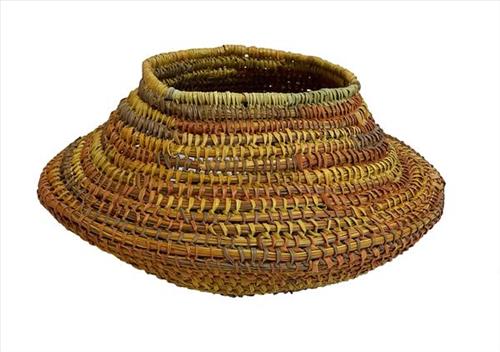
Bathi (Pandanus Basket)

Bathi are woven from the split leaves of the Screw Palm (Pandanus Spiralis). Coil weaving was introduced to Arnhem Land in the 1930s. It was adapted from techniques used by Indigenous women throughout South East Australia.

115682221641


Bathi (Pandanus Basket)

Bathi are woven from the split leaves of the Screw Palm (Pandanus Spiralis). Coil weaving was introduced to Arnhem Land in the 1930s. It was adapted from techniques used by Indigenous women throughout South East Australia.

115682221640


Bathi (Pandanus Basket)

Bathi are woven from the split leaves of the Screw Palm (Pandanus Spiralis). Coil weaving was introduced to Arnhem Land in the 1930s. It was adapted from techniques used by Indigenous women throughout South East Australia.

115682221851


JB Fisher – Pelican (Warbalulu)

JB paints stories from his Dhuwa homeland in northeast Arnhem Land. Stories are passed on either paternally or maternally, and JB would have learnt these stories from his ancestors. The cross-hatching style is a traditional painting style of this area and can represent elements such as water, air and wind.

His paintings often feature totemic animals of the fresh waters of north east Arnhem Land.

377810582221783


Mábbarla (Jelly Fish)

Mábbarla means Jelly Fish in Ndjébbana.

‘My homeland is Entrance island, Haulround island and Juda point. I really like Haulround island and that’s where we collect barruar (seagull egg). Entrance island is my favourite camping area, I go across with boat. Balanda (non-Aboriginal or European people) can’t go into those islands or Juda point without permission from me. We have a sacred totem ngaduma (palm tree) at those places and if people destroy it, we will have a strong wind and maybe a cyclone.’ Marilyn James 2021