111982220960
Nawarlah – Brown River Stingray
We hunt the Nawarlah (Brown River Stingray) during the wet season. There is a plant with a yellow flower that tells us that it is the right time. We know it will be fat.
It is well known that Aboriginal art often depicts images of sacred totems or dreamings of Aboriginal culture. However, the world of the non-sacred also provides a rich source of subject matter for Aboriginal art. Much of the rock art of western Arnhem Land for example features secular topics such as common food animals and plants, depicted because of their economic importance but also merely because of their existence in the environment.
111982220955
Nawarlah – Brown River Stingray
We hunt the Nawarlah (Brown River Stingray) during the wet season. There is a plant with a yellow flower that tells us that it is the right time. We know it will be fat.
It is well known that Aboriginal art often depicts images of sacred totems or dreamings of Aboriginal culture. However, the world of the non-sacred also provides a rich source of subject matter for Aboriginal art. Much of the rock art of western Arnhem Land for example features secular topics such as common food animals and plants, depicted because of their economic importance but also merely because of their existence in the environment.
111982220953
Nawarlah – Brown River Stingray
We hunt the Nawarlah (Brown River Stingray) during the wet season. There is a plant with a yellow flower that tells us that it is the right time. We know it will be fat.
It is well known that Aboriginal art often depicts images of sacred totems or dreamings of Aboriginal culture. However, the world of the non-sacred also provides a rich source of subject matter for Aboriginal art. Much of the rock art of western Arnhem Land for example features secular topics such as common food animals and plants, depicted because of their economic importance but also merely because of their existence in the environment.
111982220951
Nawarlah – Brown River Stingray
We hunt the Nawarlah (Brown River Stingray) during the wet season. There is a plant with a yellow flower that tells us that it is the right time. We know it will be fat.
It is well known that Aboriginal art often depicts images of sacred totems or dreamings of Aboriginal culture. However, the world of the non-sacred also provides a rich source of subject matter for Aboriginal art. Much of the rock art of western Arnhem Land for example features secular topics such as common food animals and plants, depicted because of their economic importance but also merely because of their existence in the environment.
111982220950
Nawarlah – Brown River Stingray
We hunt the Nawarlah (Brown River Stingray) during the wet season. There is a plant with a yellow flower that tells us that it is the right time. We know it will be fat.
It is well known that Aboriginal art often depicts images of sacred totems or dreamings of Aboriginal culture. However, the world of the non-sacred also provides a rich source of subject matter for Aboriginal art. Much of the rock art of western Arnhem Land for example features secular topics such as common food animals and plants, depicted because of their economic importance but also merely because of their existence in the environment.
111982220947
Nawarlah – Brown River Stingray
We hunt the Nawarlah (Brown River Stingray) during the wet season. There is a plant with a yellow flower that tells us that it is the right time. We know it will be fat.
It is well known that Aboriginal art often depicts images of sacred totems or dreamings of Aboriginal culture. However, the world of the non-sacred also provides a rich source of subject matter for Aboriginal art. Much of the rock art of western Arnhem Land for example features secular topics such as common food animals and plants, depicted because of their economic importance but also merely because of their existence in the environment.
111982220942
Nawarlah – Brown River Stingray
We hunt the Nawarlah (Brown River Stingray) during the wet season. There is a plant with a yellow flower that tells us that it is the right time. We know it will be fat.
It is well known that Aboriginal art often depicts images of sacred totems or dreamings of Aboriginal culture. However, the world of the non-sacred also provides a rich source of subject matter for Aboriginal art. Much of the rock art of western Arnhem Land for example features secular topics such as common food animals and plants, depicted because of their economic importance but also merely because of their existence in the environment.
111982220939
Nawarlah – Brown River Stingray
We hunt the Nawarlah (Brown River Stingray) during the wet season. There is a plant with a yellow flower that tells us that it is the right time. We know it will be fat.
It is well known that Aboriginal art often depicts images of sacred totems or dreamings of Aboriginal culture. However, the world of the non-sacred also provides a rich source of subject matter for Aboriginal art. Much of the rock art of western Arnhem Land for example features secular topics such as common food animals and plants, depicted because of their economic importance but also merely because of their existence in the environment.

377810582220890
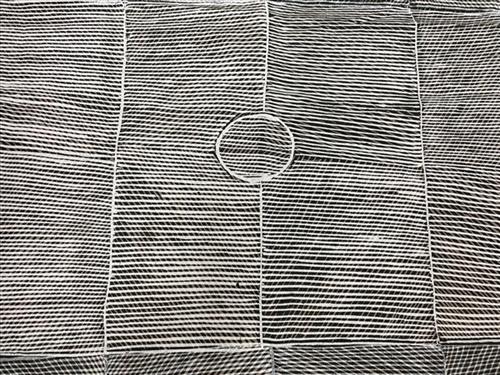
Wak
This screen print depicts a sacred site at Kurrurldul, an outstation south of Maningrida. The original screen print design was made in 2010 but continues to be printed at Babbarra Designs studio.
The ‘rarrk’, or abstract crosshatching, on this work represents the design for the crow totem ancestor called Djimarr. Today this being exists in the form of a rock, which is permanently submerged at the bottom of Kurrurldul Creek. The Djimarr rock in the stream at Kurrurldul is said to move around and call out in a soft hooting tone at night. Both the stone itself and the area around it are considered sacred.
The imagery represents the Djimarr rock at the bottom of Kurrurldul creek – the final transmutation of the Djimarr ancestor being. It also references the crow design used in the sacred Mardayin ceremony, a large regional patrimoiety ceremony now rarely conducted in central and eastern Arnhem Land.