115682219507


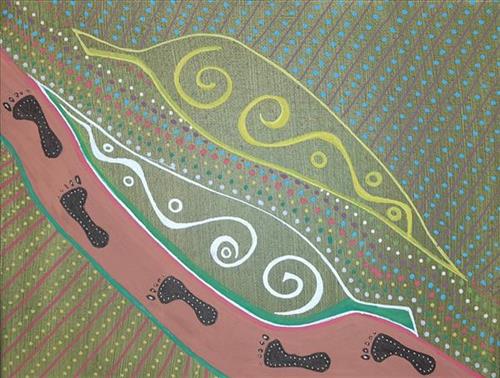
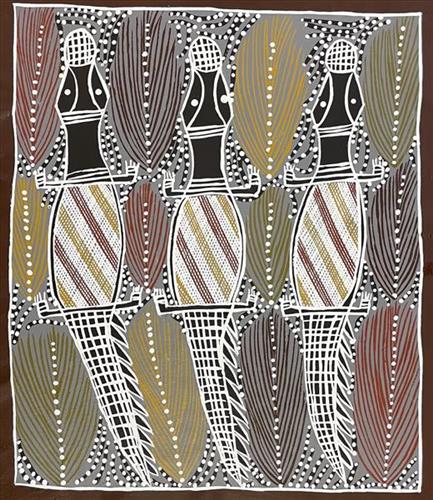
Baru Dhawu (Crocodile Story)

Baru (the crocodile man), was from the Gumatj clan. People usually call him Gurdu Gurdu or Baru which means crocodile. He lived his life at a place called Yirrkala. Living near him were other people, and when Baru didn’t have enough to eat he began to kill and eat these other people. After a while others noticed that some people were missing. When Baru went to the toilet, the people could smell this strong smell, so they knew that he ate the other people. Some men went to get help and they took message sticks to the other tribes. Some were sending smoke signals. When they came to Baru’s camp they started to spear him in the left side of his ribs. He dropped into the fire and burnt his left hand and maybe his right hand. He then ran into the bush and yelled to his countrymen – the animals, birds and fish that live on the land and in the sea. He stopped and he named the tribes and clans and also the places until he came to a place called Gamarru/Guyurru. There he took a rest and said to himself “This is where I stop and call this place Gamarru/Guyurru”. Baru, still in pain from the fire, then jumped into the water and turned himself into a crocodile. The fire left scars on his back. Baru paintings belong to Gumatj and Warrawarra and also the Marpi clan. This painting is used at death ceremonies or initiations and it normally is painted on the belly, which means the person the design is painted on is part of Gurdu Gurdu (the crocodile people).
115682219505


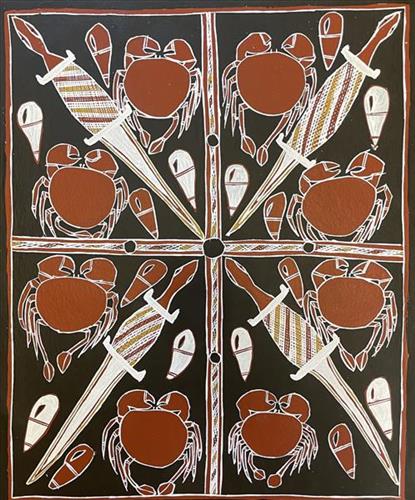
Djang’kawu sisters Creation Story featuring mud crabs longbums and lizards

This painting is part of the Djang’kawu sisters Creation Story. The details of this story can vary according to clan and/or country, but the central story is the same, which is one of fertility and procreation.

The Djang’kawu sisters gave birth to all the Dhuwa Moeity clans giving them language, land, law/lore, ceremony, songs and dances. As they travelled westward from Yirrkala, they travelled through all the dhuwa lands naming all the plants and animals and showed people how to use them. At the Glyde River, they hung their sacred dilly bags on a tree whilst they hunted. Men came and took the dilly bags and learnt all the songs and dnaces. Now the men condiuct all the ceremonies. The sisters decided to accept this as they (women) always retain their power as the bearer of children.

This painting is part of this story, it is a saltwater story featuring mud crabs, longbums and a water lizard and a drinking hole.

111982219627


Ngangiy (Mud-mussels)

This Painting depicts Ngangiy (Mud mussels) a type of shellfish; a mussel, a commonly gathered clam found in the mangrove mud and characteristically coated with coralline growth and stained partly black. Polymesoda coaxans (Corbiculidae). This plentiful shellfish is collected in the dried out floodplains, only a small sliver of the shell is exposed as it buries itself in mud, You need good eyes to find this delicious bush food.

222082219589


My Mob

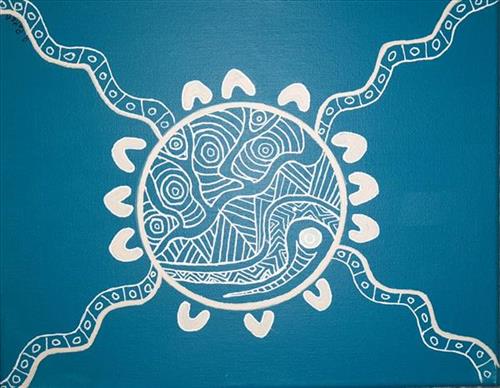
A collection of small works created by Kaiela Arts artists during a series of workshops. Artists have used Posca pens and acrylic paint to create colourful designs that represent Country, traditions and culture.

222082219586


Communities along the Dungala

A collection of small works created by Kaiela Arts artists during a series of workshops. Artists have used Posca pens and acrylic paint to create colourful designs that represent Country, traditions and culture.

222082219583


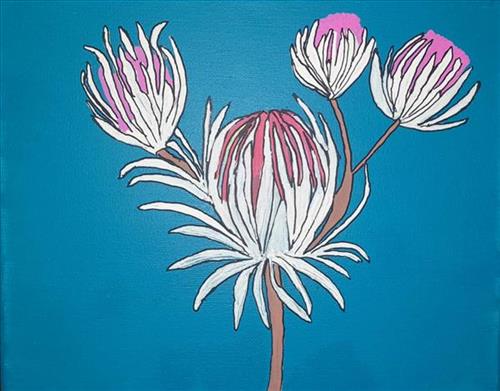
Waratah

A collection of small works created by Kaiela Arts artists during a series of workshops. Artists have used Posca pens and acrylic paint to create colourful designs that represent Country, traditions and culture.

222082219582


On Woka

A collection of small works created by Kaiela Arts artists during a series of workshops. Artists have used Posca pens and acrylic paint to create colourful designs that represent Country, traditions and culture.

115682219959


Shield

Shields were used as modesty shields for women, normally worn around the shoulders or around the waist.

115682219958


Mindirr (Pandanus Bag)

Miṉḏirr (dilly bags) are made from gunga (Pandanus spiralis), baḻgurr (kurrajong) and natural bush dyes. The body of the miṉḏirr is made from gunga, and the handles from baḻgurr. Once the gunga fronds and baḻgurr bark have been collected, they are stripped and prepared then boiled with the dyes.

Miṉḏirr were used traditionally for every day utilitarian purposes, particularly collecting bush foods such as bäḻtji (yam). Traditionally, the baḻgurr handles were worn across the forehead while the body of the miṉḏirr sat at the back, between the shoulder blades making it easily accessible when collecting ŋatha (food).