377810582218254


Kunred Kunkurra (Helen Kaminski)

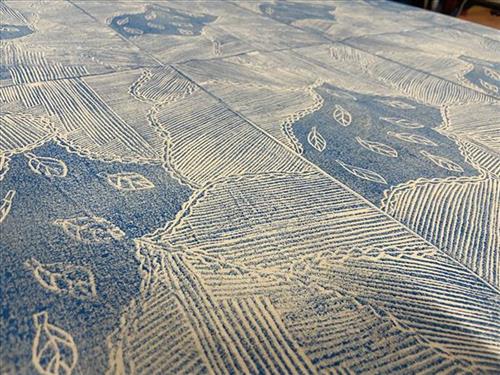
The artist, Janet Marawarr calls this design Kunred Kunkurra in her language, Kuninjku. Kunred means country, kunkurra refers the spiralling wind associated with the mini cyclones that occur around several sites in the Kardbam clan during the build up to the wet season. Marawarr often shares different versions of Kunkurra in her Lino print and Screen Print designs, the story or djang (dreaming) can be heard across the Kardbam clan groups  Eastern Kunwinjku and Kuninjku people  of the Yirridja moiety. This particular artwork describes the underground lightening that occurs during Kunkurra, in the build up to a storm in Mankorlod, Marawarr’s clan estate in West Arnhem Land. 

‘The round shapes in the design mean flashing lightening. The lines beside those shapes are foot tracks,  human foot tracks. When the rain falls it makes mud and underground lightening. When the sky is really red and black, we see the build up to a storm and we call that Kakodjngolbalabalahmen. That means that the clouds are forming.   So that’s the one you see in this artwork.  You can also see the leaves on top of the mud when the rain stops.’ Janet Marawarr 2023 
 

377810582218245


man-kurdudjumuk – yellow colour

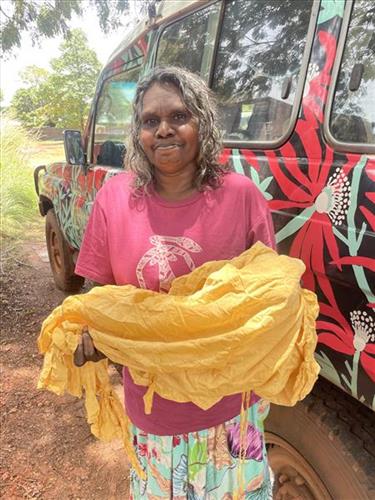
The striking yellow – gold hue comes from the root oft of the man-kurdudjumuk (coelospermum reticulatum) which has been harvested from the sandy country near the flood plains. This laborious and tiring process requires digging up the entire shrub. The root is shaven into a pot of water and the colour is released into waster through boiling. 

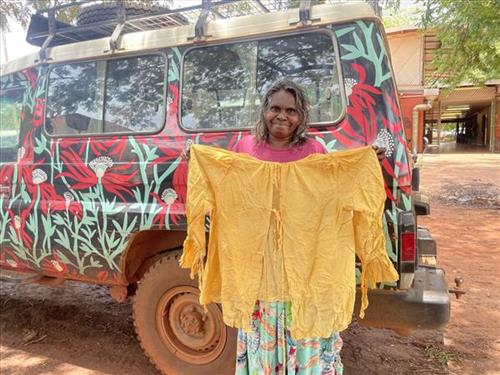
A soft silk bush dyed blouse designed by Sydney designer Jemimah Jemimah and dyed by Deborah Wurrkidj on her partners country in Arnhem Land. 

115682218241


Raypiny Dhawu (Fresh Water Story)

All Aboriginal people originate from a spiritual source, fixed in a particular place in their land or the sea. These ‘spiritual reservoirs’ are often in the form of special waterholes made by Wangarr (creative spirits) that were created long ago close to the beginning of time. These creator beings moved across the countryside, shaping the land and implanting in each tract of country, the spiritual life force for the people who were to own it. These creative spirits took many forms and when they gave the land to each group, they also gave songs, dances, ceremony, the associated laws and language.


The creation story for Ganalbingu people took place near the middle section of the Glyde River where it becomes the Goyder River. Their land, Ngaliyindi, sits astride the Arafura Swamp in Central Arnhem Land. Many Ganalbingu artists paint totemic species significant to their clan. These can include baru (crocodile), banda (long necked turtle), buliya (catfish), yalman (waterlilies), gumang (magpie geese), dakawa (fresh water yabby), ratjuk (barramundi), warrnyu (flying fox) and more.


115682218184


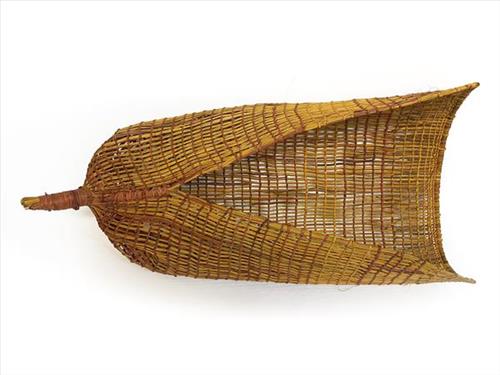
Mewana

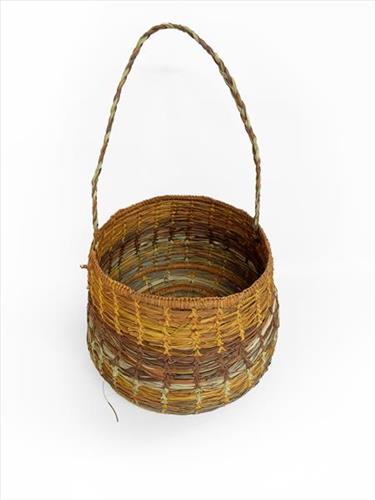
Mewana is a bush basket/scoop primarily made from mewana grass but sometimes from other fibres such as gunga (pandanus spiralis). Traditionally Yolngu made mewana baskets to carry bush foods such as baltji (yam) and warraga ngatha (cycad nuts). Sometimes mewana were used to scoop dhulumburrk (water lily) and other water reeds from the billabongs.

377810582218171


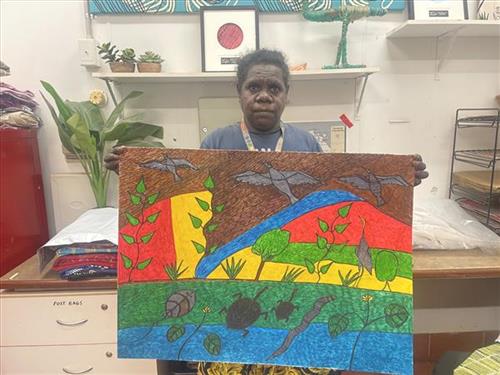
kulabbarl (billabong)

kulabbarl

billabong,swamp Billabong, swamp. Benewam kore kulabbarl.

* Kuninjku 

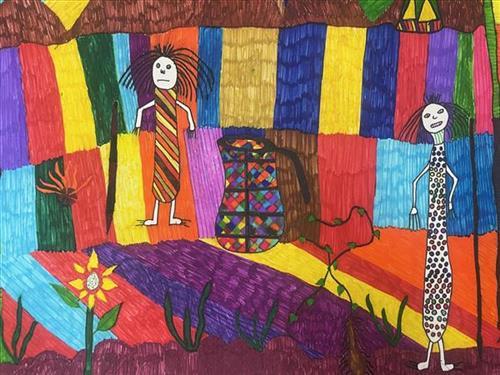
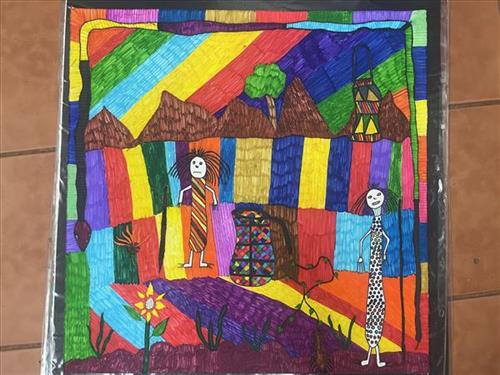
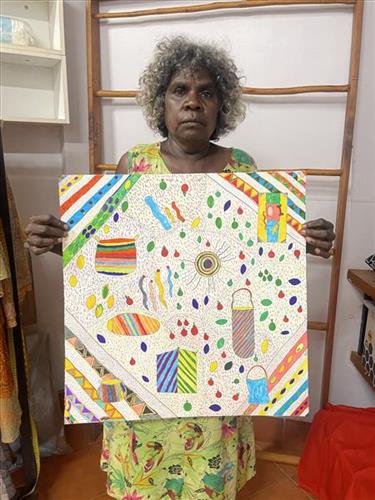
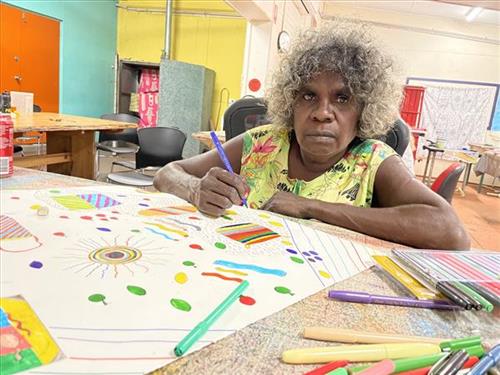
‘I am a freshwater woman from Kakodbebuldi where there is a big billabong. There are too many crocodiles, Komrdaw (long neck turtles), vile snakes and birds like ngalgordaw ( brolga) in the billabong.I like green and bright colours.’  Jocelyn 2023

115682218163


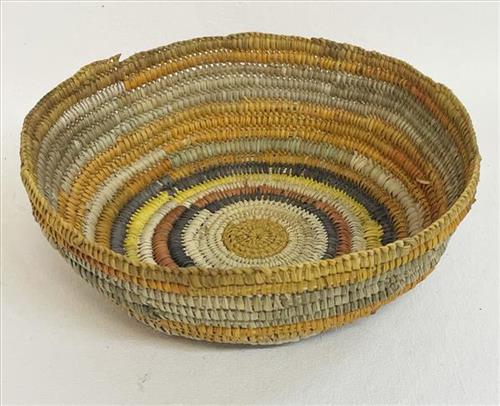
Bathi (Pandanus Basket)

Bathi are woven from the split leaves of the Screw Palm (Pandanus Spiralis). Coil weaving was introduced to Arnhem Land in the 1930s. It was adapted from techniques used by Indigenous women throughout South East Australia.

377810582218155


Warrangarla (bush caterpillar)

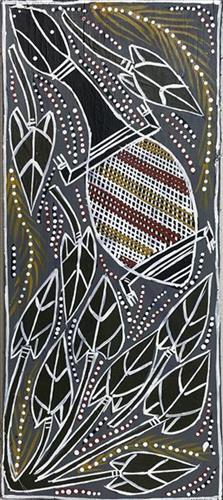
This design has lots of types of bush tucker including njanamaya(mud Muscle), kangodjbaya (mangrove worm) and warrangarla (caterpillar). The latter can be eaten cooked or raw. 

115682218138


Bathi (Pandanus Basket)

Bathi are woven from the split leaves of the Screw Palm (Pandanus Spiralis). Coil weaving was introduced to Arnhem Land in the 1930s. It was adapted from techniques used by Indigenous women throughout South East Australia.

115682218108


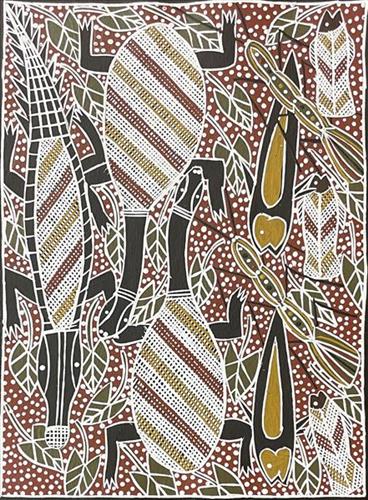
Ganalbingu – Banda (Long Necked Turtle)

The long necked turtle is a dreaming totem for the freshwater people, the Ganalbingu, whose country includes the World Heritage listed, Arafura Wetlands in Central Arnhem Land, Northern Territory

The Yolngu (people) of Arnhem Land originate from a spiritual source, fixed in a particular place in their land or the sea. These ‘Spiritual Reservoirs’ are often in the form of special waterholes made by Wangga (Creator Beings), long ago close to the beginning of time. These creator beings moved across the country side, shaping the land and implanting in each tract of country, the spiritual life force for the people who were to own it.

These creator spirits took many forms. When they gave the land to each group they also gave songs, dances, ceremony, the associated laws and language. The Creation story for Ganalbingu people took place near the middle section of the Glyde River where it becomes the Goyder River. Their land, Ngaliyindi, sits astride the Arafura Swamp in Central Arnhem Land. Some of their major Creative Beings include Banda (freshwater long neck turtle) and Yalman (water lilies).