377810582421529


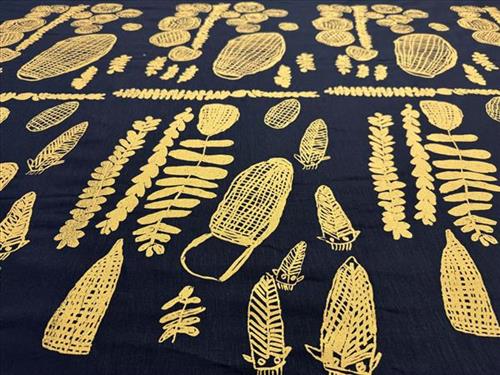
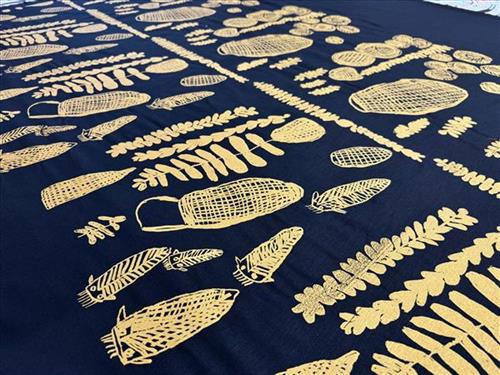
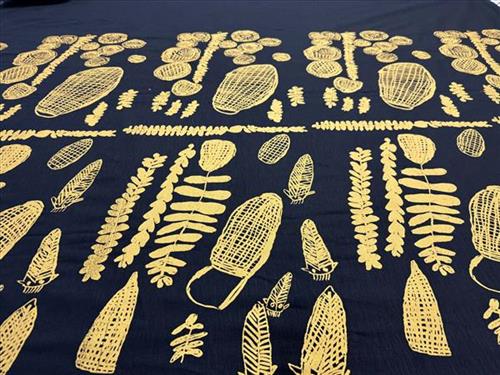
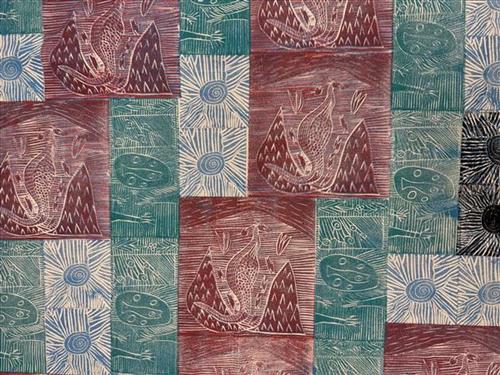
Manyawok (Cheeky Yam)

This design depicts the cheeky yam, which is found on the artist’s country, near the outstation of Mumeka in central Arnhem Land. Yams are an important bush food that are collected during the wet season.

Unlike other yams that can be eaten roasted, the cheeky yam can be poisonous if not properly prepared. The preparation process of the yam traditionally takes two days. Firstly, the yams are dug up with a digging stick and boiled over a fire. They are then peeled and sliced into thin strips, which are placed in a special dillybag woven by women from pandanus leaves. The yam-laden dillybag is then strung from an overhanging branch into a river, so the bag just touches the flowing fresh water. The cheeky yams are left like this overnight to allow the running water to remove the toxins. The next morning, people return and collect the dillybag, and leave the yam pieces in full sunlight to dry out. Finally, when the yam pieces have dried in the sun for a day, they are ready to eat.

220982422020


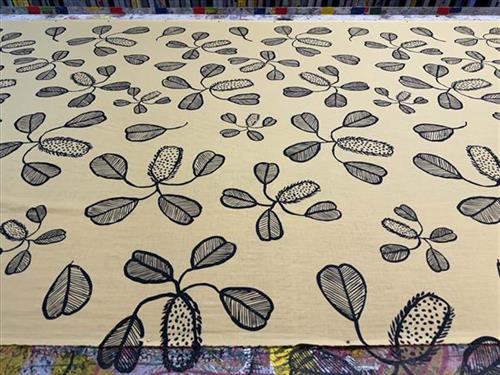
Nancy Pitjara Frank – Artna Alpeyt (Bush Flowers)

I was born in the bush at Ammaroo Station, along the Sandover.  I have never seen the ocean or a big city. My mother and father were strong healthy people who taught me and my younger sister Rita the traditional way to hunt for Kangaroo, Goanna and Porcupine. 

We know how to gather bush tucker (secrets of the earth) and bush medicine plants.  My mother used grinding stones to make seed damper.

When I paint I think about good memories, being a young girl and walking through the land.  My mother made paint from two stones and showed us ceremony painting and how to sing and dance for ceremonies.  I still sing and dance and collect the bush medicines, I like to make tea from the small purple flowers of Arreth (hill fuchsia).

Painting bush medicine stories is important because it helps to maintain a strong knowledge and culture for the community.

220982422018


Rita Pitjara Beasley – Alatyet Angketyarr (Spinifex Country)

“This is my Father’s country.

This place is our hunting place. I always go with my daughters and their children, I show them this place and teach them about the swampy country. We hunt for goannas, bush potato, bush tomato and after the big rain the bush medicine is picked and the roots are dug up to be used.

It is important as my mother taught me this and now I teach my family.”

377810582422000


Ngalyod (Rainbow Serpent)

The rainbow serpent is a powerful ancestral being for Aboriginal people throughout Australia. Characteristics of the rainbow serpent vary greatly from group to group and also depending on the site. Often viewed as a female generative figure, the rainbow serpent can sometimes also be male. She has both powers of creation and destruction and is most strongly associated with rain, monsoon seasons and of course the colour seen in rainbows which arc across the sky like a giant serpent. In Northern Australia, the rainbow serpent is said to be active during the wet season.

Known as Ngalyod in the Kuninjku language of western central Arnhem Land, the rainbow serpent is mostly associated with bodies of water such as billabongs, creeks, rivers and waterfalls where she resides. Therefore she is responsible for the production of most water plants such as water lilies, water vines, algae and palms, which grow near water. The roar of waterfalls in the escarpment country is said to be her voice. Large holes in stony banks of rivers and cliff faces are said to be her tracks. She is held in awe because of her apparent ability to renew her life by shedding her skin and emerging anew. Aboriginal creation stories about the rainbow serpent often describe her as a fearful creature that swallows humans only to regurgitate them, transformed by her blood. The white ochre used by artists to create the brilliant white paint for bark paintings, body decoration and in the past, rock art, is said to be the faeces of the rainbow serpent.

Aboriginal people today respect and care take sacred sites where the rainbow serpent is said to reside. Often certain activities are forbidden at these places for fear that the wrath of the great snake will cause sickness, accidents and even tempests. This is not always the case however and there are many rainbow serpent sites today where people may enter to hunt, fish or swim. Ngalyod has been the subject of art and ceremony for possibly thousands of years.


377810582421999


Ngalyod (Rainbow Serpent)

The rainbow serpent is a powerful ancestral being for Aboriginal people throughout Australia. Characteristics of the rainbow serpent vary greatly from group to group and also depending on the site. Often viewed as a female generative figure, the rainbow serpent can sometimes also be male. She has both powers of creation and destruction and is most strongly associated with rain, monsoon seasons and of course the colour seen in rainbows which arc across the sky like a giant serpent. In Northern Australia, the rainbow serpent is said to be active during the wet season.

Known as Ngalyod in the Kuninjku language of western central Arnhem Land, the rainbow serpent is mostly associated with bodies of water such as billabongs, creeks, rivers and waterfalls where she resides. Therefore she is responsible for the production of most water plants such as water lilies, water vines, algae and palms, which grow near water. The roar of waterfalls in the escarpment country is said to be her voice. Large holes in stony banks of rivers and cliff faces are said to be her tracks. She is held in awe because of her apparent ability to renew her life by shedding her skin and emerging anew. Aboriginal creation stories about the rainbow serpent often describe her as a fearful creature that swallows humans only to regurgitate them, transformed by her blood. The white ochre used by artists to create the brilliant white paint for bark paintings, body decoration and in the past, rock art, is said to be the faeces of the rainbow serpent.

Aboriginal people today respect and care take sacred sites where the rainbow serpent is said to reside. Often certain activities are forbidden at these places for fear that the wrath of the great snake will cause sickness, accidents and even tempests. This is not always the case however and there are many rainbow serpent sites today where people may enter to hunt, fish or swim. Ngalyod has been the subject of art and ceremony for possibly thousands of years.


220982421949


Elizabeth Ngwarraye Bonney – Tijamburra, My Homeland

My homeland is Tijamburra, Canteen Creek, I love that country, it is my Grandmother’s country and it is the only country that I paint. It is fresh country after the rain and it is always plentiful with bush tucker and bush medicine. There are many soakages (places to find water) and we have names for all of them. You can sit there in the shade of the big trees and I love to camp there, the little children in my family never want to leave and want to swim all day in the cool big swamps

220982421755


Sevania Kemarre Bonney – Atyenh Anyany Amper (My Great Grandmothers Country)

My Great Grandmothers Country is where we go hunting. We hunt arlewatyerr (goanna) and arwengerrp(bush turkey). After the big rains we swim in the river. We look for sweet alkwarrer (bush banana), anaty (bush potato) and akarley (wild oranges).

I am inspired by the beautiful wild flowers that grow there.   Being on my great grandmothers country makes me happy and content.

111582421964


Punmu Salt Lake

Punmu refers to a region and an Aboriginal community within its vicinity, located 670km North-East of Newman. Created during the return to Country movement of the 1980s, with the recognition of Martu land rights and native title, the community was named after a nearby Jukurrpa (Dreaming) story.

Punmu community sits on the edge of a large salt lake known as Nyayartakujarra, or Lake Dora. The lake runs south into Karlamilyi River (Rudall River). Surrounding Punmu are numerous fresh water soaks and the red tali (sandhills) typical of the area. The most frequently visited water sources around Punmu include Wirlarra, Rawa, Yilyara, Jila-jila, Tuu-tuu, Pirrkili, Jurnu, Wilurr, and Wala- Wala. Further south are Juturrpa, Wawul, and Tarl. 

During the pujiman (traditional, desert dwelling) period, Martu would traverse very large distances annually in small family groups, moving seasonally from water source to water source, and hunting and gathering bush tucker as they went. At this time knowledge of water sources was critical for survival, and today Martu Country is still defined in terms of the location and type of water. Each of the hundreds of claypans, rockholes, waterholes, soaks and springs found in the Martu desert homelands is known by name, location, quality and seasonal availability through real life experience and the recounting of Jukurrpa narratives.