225682216245


Bulnja

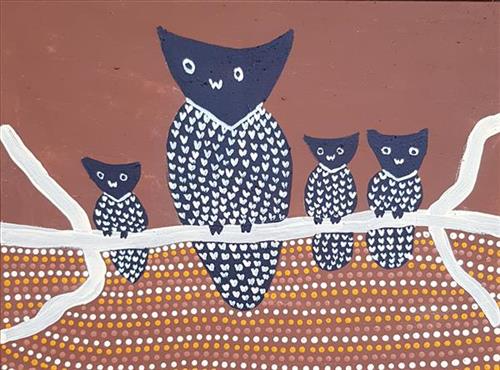
I am a Ngkugkul  woman from Shipton’s Flat, my mother’s Country.  My dad was a  Kaanju man from the Coen area.

When I was about 14 years old I started painting bulnja (owls).  I was still at school. I liked looking at bulnja in the rainforest.  I liked their colours and patterns in the feathers.  They are really good at camouflage and you need good eyes to see them!  You can find the bulnja when they sing out. It’s a funny noise!  Bulnja eat little insects, lizards and mice that live in the rainforest. The bulnja have important story but I can’t talk about it. 

I painted bulnja because they live in the rainforest.  They live up in the trees.  It’s the only place you can see them around here.  The rainforest, its plants, trees and animals means a lot to me.
225682216244


Baral – Tracks

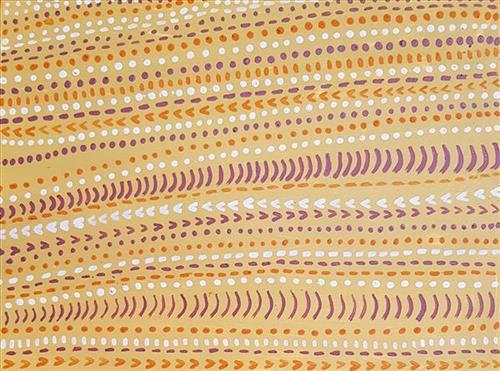
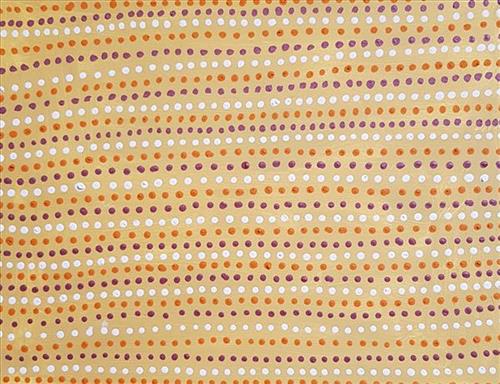
Our bubu (country) is like a storybook.  Baral (tracks) tell you what animal is travelling around. Some of the tracks we see are from the kurriyala (snake), walkarr (lizard) and kadar (wallaby). We can track the animals we hunt by following their tracks. The waybala (whitefella) has bought new tracks into our country, shoes and mudaka (motorcar) and plenty of bulki (cattle).

I’m painting the bird and animal tracks you find on the beach.  You can see them going this way and that way.  Everywhere!

225682216242


Baral – Tracks

Our bubu (country) is like a storybook.  Baral (tracks) tell you what animal is travelling around. Some of the tracks we see are from the kurriyala (snake), walkarr (lizard) and kadar (wallaby). We can track the animals we hunt by following their tracks. The waybala (whitefella) has bought new tracks into our country, shoes and mudaka (motorcar) and plenty of bulki (cattle).

I’m painting the bird and animal tracks you find on the beach.  You can see them going this way and that way.  Everywhere!

111982216445


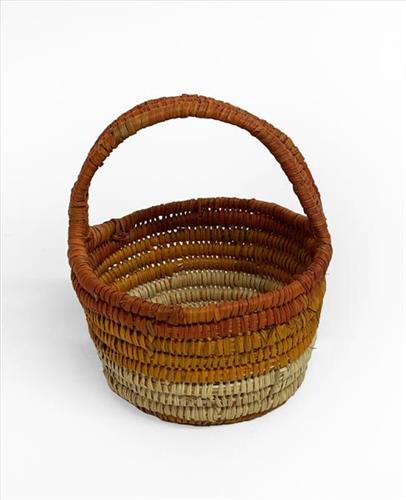
Coil Basket

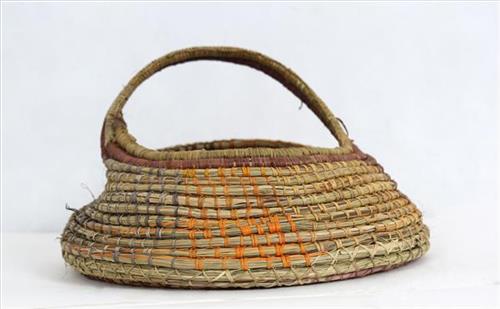
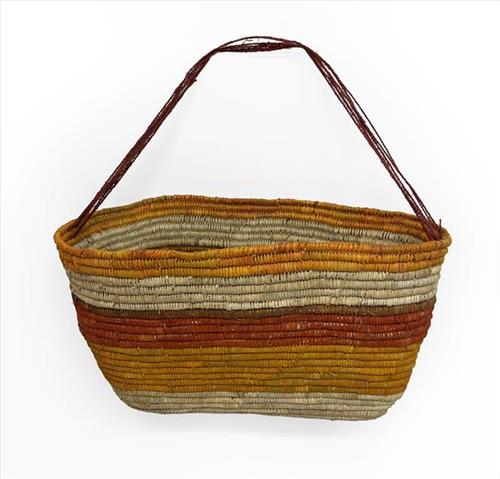
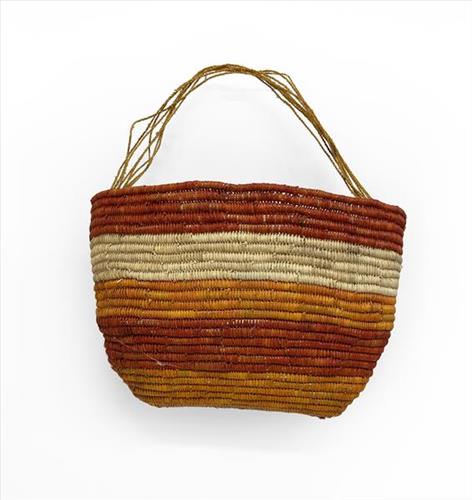
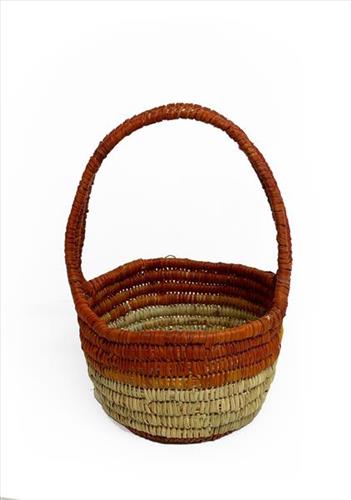
Coiling technique was introduced in the 1920s at Goulburn Island to the Maung people by missionaries and quickly spread to the mainland. Many artists produce coiled baskets of varied shapes, ranging from small round baskets to large oval baby baskets made from dyed pandanus. Artists combine colours and patterns to obtain intricate new graphic patterns.

115682216397


Bathi (Pandanus Basket)

Bathi are woven from the split leaves of the Screw Palm (Pandanus Spiralis). Coil weaving was introduced to Arnhem Land in the 1930s. It was adapted from techniques used by Indigenous women throughout South East Australia.

115682216395


Bathi (Pandanus Basket)

Bathi are woven from the split leaves of the Screw Palm (Pandanus Spiralis). Coil weaving was introduced to Arnhem Land in the 1930s. It was adapted from techniques used by Indigenous women throughout South East Australia.

115682216392


Bathi (Pandanus Basket)

Bathi are woven from the split leaves of the Screw Palm (Pandanus Spiralis). Coil weaving was introduced to Arnhem Land in the 1930s. It was adapted from techniques used by Indigenous women throughout South East Australia.

115682216391


Bathi (Pandanus Basket)

Bathi are woven from the split leaves of the Screw Palm (Pandanus Spiralis). Coil weaving was introduced to Arnhem Land in the 1930s. It was adapted from techniques used by Indigenous women throughout South East Australia.

115682216390


Bathi (Pandanus Basket)

Bathi are woven from the split leaves of the Screw Palm (Pandanus Spiralis). Coil weaving was introduced to Arnhem Land in the 1930s. It was adapted from techniques used by Indigenous women throughout South East Australia.

115682216389


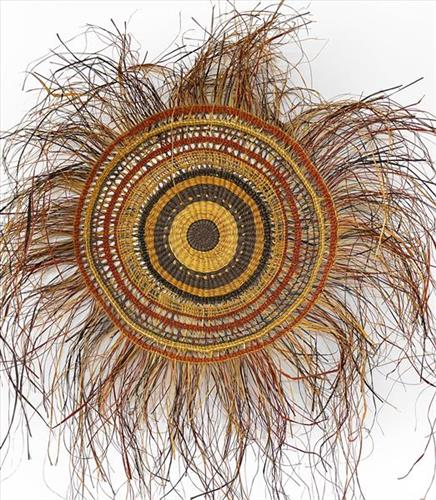
Woven Mat

Traditionally, Nganiyal (conical mats) were used as an insect screen when erected, and as a sitting mat when folded. They are used in Ceremony as well as a functional item. 

Nowadays, artists weave many different shapes including flat, round and oblong.