balgargal (sunlight)
The warth of sunlight
The warth of sunlight
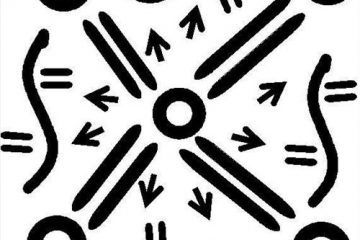
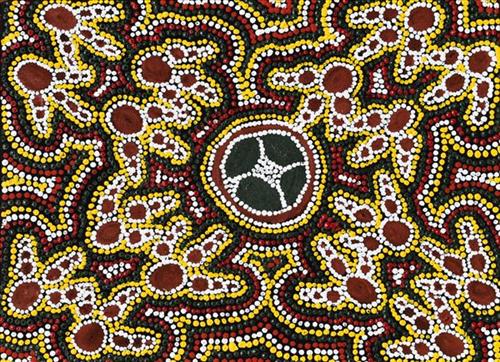
Emu Dreaming: Yankirri Jukurrpa, (Emu Dreaming [Dromaius novaehollandiae]) is at Warlukurlangu, near Yuendumu. This Jukurrpa story belongs to Jangala/Jampijinpa and Nangala/Nampijinpa. The emus travel all over our country, and find water along the way. The father emu sits on the nest and he teaches the children how to hunt for bush food. The families travel around. They run very fast and are hard to hunt. Before we eat them we cook them whole in the ashes. Water holes and foods – grasses, seeds and berry bushes are depicted in the painting in Warlpiri iconography.
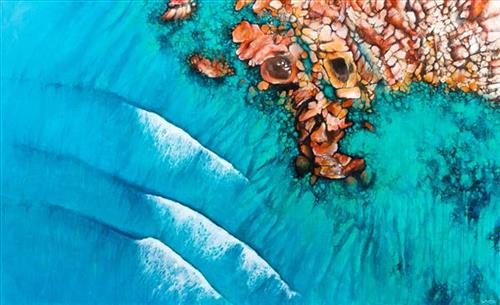
In the beginning, the Great Spirit of the Sea created the vast and endless ocean, a place of beauty and mystery. She painted the waters with her brush of foam and painted the sky with her brush of clouds. The waves became her canvas, and she used them to tell the stories of the Dreamtime.
The Dreamtime stories tell of the creation of the world and the adventures of the spirit beings. They are stories of magic and wonder, of love and loss, of joy and sorrow. And in my emotive abstract ocean painting, I have tried to capture the essence of these stories.
The swirling forms and vibrant colors are the spirits of the sea, dancing and singing on the waves. The brushstrokes are the trails they leave behind as they journey through the Dreamtime. And the emotions that the painting evokes are the feelings that the Great Spirit of the Sea wants to share with us, to remind us of the magic and mystery of the ocean, and of the Dreamtime stories that are told upon its waves.
The djamo (dog) holds special mythological as well as practical significance for people of Central Arnhem land, particularly women. The men used to go hunting with a spear and the women with a dog. If the men didn’t catch a kangaroo, the women would catch a goanna. If neither caught anything, then they could catch fish. If there was neither kangaroo nor goanna, then they would eat sugarbag. This is how it was long ago – sugarbag, lily root, yam, goanna, sand goanna, fish and more were part of the regular diet. “Don’t forget that long ago we didn’t know European food, we knew bush food. We used to grow from bush food.” Rembarrnga women have literally and metaphorically brought together strands from their country and the mythology of their heritage to produce three dimensional fibre creatures filled with mystical significance. Dog, mermaid, rainbow serpent, blue tongue and fish multiplication spirits: each creature plays an important role in the clan’s cultural landscape. Materials for this camp dog comes from the clan estate. Dayarr (pandanus) and rulk (grass) are the twines used for the creature’s bodies. Warlppurrunggu (bush turkey) and nganarrngh (black cockatoo) feathers provide bulkkan-na (hair). Marnarr (red), gamununggu (white), garlba (yellow) ochres and roerroe (black) ashes are then carefully mixed and applied for colour. The use of local materials provides an integral link between the mythological nature of the creatures, which inhabit the country and their physical form.
The djamo (dog) holds special mythological as well as practical significance for people of Central Arnhem land, particularly women. The men used to go hunting with a spear and the women with a dog. If the men didn’t catch a kangaroo, the women would catch a goanna. If neither caught anything, then they could catch fish. If there was neither kangaroo nor goanna, then they would eat sugarbag. This is how it was long ago – sugarbag, lily root, yam, goanna, sand goanna, fish and more were part of the regular diet. “Don’t forget that long ago we didn’t know European food, we knew bush food. We used to grow from bush food.” Rembarrnga women have literally and metaphorically brought together strands from their country and the mythology of their heritage to produce three dimensional fibre creatures filled with mystical significance. Dog, mermaid, rainbow serpent, blue tongue and fish multiplication spirits: each creature plays an important role in the clan’s cultural landscape. Materials for this camp dog comes from the clan estate. Dayarr (pandanus) and rulk (grass) are the twines used for the creature’s bodies. Warlppurrunggu (bush turkey) and nganarrngh (black cockatoo) feathers provide bulkkan-na (hair). Marnarr (red), gamununggu (white), garlba (yellow) ochres and roerroe (black) ashes are then carefully mixed and applied for colour. The use of local materials provides an integral link between the mythological nature of the creatures, which inhabit the country and their physical form.
The mimih spirit exists in a realm that runs parallel to and mirrors many facets of human life, also demonstrating the deep sense of time and place understood by Aboriginal and Torres Strait Islander people. Such spirits feature importantly in relation to Aboriginal spirituality, cosmology, social and moral tales as well as ritual. As is true with the multiple mediums employed by artists of West Arnhem Land, the development of artistic style and form is in line with an awareness by the artist that the work produced is predominantly made for a broader audience. Whether show in a national or international context these works communicate and exist in a particular space that is cross-cultural and simultaneously so particular to the Arnhem region.
The mimih sits within a complex and important pedagogical and religious body of knowledge which links Kuninjku people to their distinctive escarpment homelands. Young Kuninjku artists, or apprentices, employ the mimih as an important exercise for the practice of the rarrk technique, as it could be achieved on a smaller surface area before, being attempted in larger scale, on pieces of bark. The mimih serves a purpose for those young artists first learning to carve in a social space of sharing and innovating. The initial mimih manifestation was a large form that almost mirrored the anatomy of a human and at this stage the sculptures have been likened to morkuy carvings visible in eastern Arnhem Land. Contemporaneously, mimih are depicted in a refined, slender, even emaciated form with a broad range of facial expressions giving both individual character to, and denoting the potential volatility and humour that mimih spirits are notable for in their interaction with bininj (humans). The sculptures are frequently carved from the thin trunks of softwoods such as kapok (bombax ceiba or cottonwood) kurrajong, beach hibiscus or leichardt and are painted with earth pigments for their colouring and design.
A leading figure engaging the spirit in visual storytelling was Crusoe Kuningbal, a Kuninjku man, who while traveling was familiarised with carving styles from the east of Arnhem at the mission in Milingimbi pre-dating World War II. This showing a notable connection and interaction of different language groups across such space. As well as travel and the development of art forms being informed by cross cultural dialogues within northern Aboriginal language groups. The mimih became a valued inclusion in performance and public ceremony by Kuninjku people like Kuningbal. At times these ceremonies were performed for extended language groups in the local region.
Now a familiar and broadly depicted figure of iconography, it is important to acknowledge the development of this quite recent sculptural tradition. The depiction of this particular spirit being, once used as an addition to the sharing of song cycles and ceremony, has since been elevated to a prominent form and subject of contemporary sculpture. Variation in the creation of mimih acts as an indication of the individualism of each artist and their stylistic markers. Additionally significant to note is that in the space of the past thirty years the mimih has begun being produced by multiple language groups residing in the Maningrida area including the traditional owners of Maningrida, the Ndjébbana, speaking Kunibidji as well as Gurrgoni people who have strong ties to Kuninjku.
________
*Maningrida Arts & Culture acknowledge the work of many academic and non-academic voices when writing on this topic, it is important to note Luke Taylor, who’s broad research has informed this text.
The rainbow serpent is a powerful mythological figure for all Aboriginal people throughout Australia. Characteristics of the rainbow serpent vary greatly from group to group and also depending on the site. Often viewed as a female generative figure, the rainbow serpent can sometimes also be male. She has both powers of creation and destruction and is most strongly associated with rain, monsoon seasons and of course the colour seen in rainbows which arc across the sky like a giant serpent. For Aboriginal people in Northern Australia, the rainbow serpent is said to be active during the wet season.
Known as Ngalyod in the Kuninjku language of western central Arnhem Land, the rainbow serpent is mostly associated with bodies of water such as billabongs, creeks, rivers and waterfalls where she resides. Therefore she is responsible for the production of most water plants such as water lilies, water vines, algae and palms, which grow near water. The roar of waterfalls in the escarpment country is said to be her voice. Large holes in stony banks of rivers and cliff faces are said to be her tracks. She is held in awe because of her apparent ability to renew her life by shedding her skin and emerging anew. Aboriginal myths about the rainbow serpent often describe her as a fearful creature that swallows humans only to regurgitate them, transformed by her blood. The white ochre used by artists to create the brilliant white paint for bark paintings, body decoration and in the past, rock art, is said to be the faeces of the rainbow serpent.
Aboriginal people today respect and care take sacred sites where the rainbow serpent is said to reside. Often certain activities are forbidden at these places for fear that the wrath of the great snake will cause sickness, accidents and even tempests. This is not always the case however and there are many rainbow serpent sites today where people may enter to hunt, fish or swim. By painting this figure on bark today, Aboriginal people are carrying on the longest uninterrupted mythological tradition in the world, which has been the subject of art and ceremony for possibly thousands of years.
Coiling technique was introduced in the 1920s at Goulburn Island to the Maung people by missionaries and quickly spread to the mainland. Many artists produce coiled baskets of varied shapes, ranging from small round baskets to large oval baby baskets made from dyed pandanus. Artists combine colours and patterns to obtain intricate new graphic patterns.
Coiling technique was introduced in the 1920s at Goulburn Island to the Maung people by missionaries and quickly spread to the mainland. Many artists produce coiled baskets of varied shapes, ranging from small round baskets to large oval baby baskets made from dyed pandanus. Artists combine colours and patterns to obtain intricate new graphic patterns.
This is a depiction of Ngalkunburriyaymi or Yawkyawk, the fish-women spirit. Sometimes compared to the European notion of mermaids, they exist as spiritual beings living in freshwater streams, particularly those in the stone country. These water spirits are perhaps the most enigmatic, and are usually described and depicted with the tails of fish. Thus the Kuninjku people sometime call them ngalberddjenj which literally means ‘the woman who has a tail like a fish’. They have long hair which is associated with trailing blooms of green algae (man-bak in Kuninjku) found in freshwater streams and rock pools. At times they leave their aquatic homes to walk about on dry land, particularly at night.
Aboriginal people believe that at one time all animals were humans. During the time of the creation of landscapes and plants and animals, these ancestor heroes in human form changed into their animal forms via a series of various significant events now recorded as oral mythologies. Today the Kuninjku believe that ngalkunburriyaymi are alive and well and living in freshwater sites in a number of sacred locations. The Kuninjku also believe that ‘clever’ man (magicians with mystical powers called na-kordang) may take these spirits as wives. The father of Mandarrk, a well known artist who resided in the Central Arnhem area, is said to have had such a spirit as a wife. Unfortunately, it is said, she failed one day to return from being sent to fetch water from the river, and returned to her kin. The ngalkunburriyaymi also have husbands and children of their own kind. Their sites are usually shared with the rainbow serpent ngalyod. Some have ritual importance, for example in some depictions, the yawkyawk spirit holds ceremonial string, just like the lengths of string women hold between both hands today during certain public ceremonies.
There are at least three major ngalkunburriyaymi sacred sites that are well known in the area south and south-west of Maningrida. One site Bolerrhlerr is on the Mann River at a place near Yikarrakkal Outstation where there are rugged rocky banks and clefts beneath stone overhangs in the water. Another very similar site further west in the Kumadderr River district is surrounded by a number of small but very old rock art sites and has become known in English as ‘Dreaming Lady’. A third site is a major yawkyawk dreaming place which is so significant that the traditional Dangkorlo clan custodians have set up an outstation near the site. The identity of this group is very much related to their yawkyawk dreaming for which they have spiritual and practical responsibility.