115682204647


Yalman (waterlily)

Aboriginal art in Ramingining, Central Arnhem Land is commonly illustrated through designs and images of animals, plants, and landscape. These motifs commonly reflect the artists ancestral inheritance and their dreamings, and are referred to as totems.

This painting features a waterlily.

377810582204551


Bah-je (hunting bag)

Linda Gurawana is a Djinang speaker and she calls hunting bag or dilly bag bah-je.

This design was created in 2007 however Babbarra printers keep experimenting with colours and layers to make it fresh. 

115682204350


Woven Mat

Traditionally, Nganiyal (conical mats) were used as an insect screen when erected, and as a sitting mat when folded. They are used in Ceremony as well as a functional item. 

Nowadays, artists weave many different shapes including flat, round and oblong. 

115682204349


Woven Mat

Traditionally, Nganiyal (conical mats) were used as an insect screen when erected, and as a sitting mat when folded. They are used in Ceremony as well as a functional item. 

Nowadays, artists weave many different shapes including flat, round and oblong. 

115682204348


Woven Mat

Traditionally, Nganiyal (conical mats) were used as an insect screen when erected, and as a sitting mat when folded. They are used in Ceremony as well as a functional item. 

Nowadays, artists weave many different shapes including flat, round and oblong. 

115682204347


Gapamada (stone axe)

Gapamada are ground-edged stone axes that were used as weapons, chopping tools to chop wood, remove tree barks, butcher large animals, and during ceremonial practices. Designed over 60,000 years ago, gapamada are usually rounded or oval in shape and are made from hard types of stone, particularly basalt or greenstone and worn river pebbles. Typically designed with a handle, natural resins were used to bind the timber and stone together and also plant fibre and kangaroo sinew. 


115682204346


Bathi (Pandanus Basket)

Bathi are woven from the split leaves of the Screw Palm (Pandanus Spiralis). Coil weaving was introduced to Arnhem Land in the 1930s. It was adapted from techniques used by Indigenous women throughout South East Australia.

115682204345


Balgabalga (Hammerhead shark)

This painting depicts Balgabalga (Hammerhead shark) and Bula (Short sucker fish). Balgabalga is a significant totemic species for the Gupapuyngu people from Djiliwirri and is represented through songlines and storylines in which the Bula follows the Balgabalga like a shadow. 

115682204344


Banda (Long Necked Turtle)

The long necked turtle is a dreaming totem for the freshwater people, the Ganalbingu, whose country includes the World Heritage listed, Arafura Wetlands in Central Arnhem Land, Northern Territory

The Yolngu (people) of Arnhem Land originate from a spiritual source, fixed in a particular place in their land or the sea. These ‘Spiritual Reservoirs’ are often in the form of special waterholes made by Wangga (Creator Beings), long ago close to the beginning of time. These creator beings moved across the country side, shaping the land and implanting in each tract of country, the spiritual life force for the people who were to own it.

These creator spirits took many forms. When they gave the land to each group they also gave songs, dances, ceremony, the associated laws and language. The Creation story for Ganalbingu people took place near the middle section of the Glyde River where it becomes the Goyder River. Their land, Ngaliyindi, sits astride the Arafura Swamp in Central Arnhem Land. Some of their major Creative Beings include Banda (freshwater long neck turtle) and Yalman (water lilies).
22564002835


Status: Stock


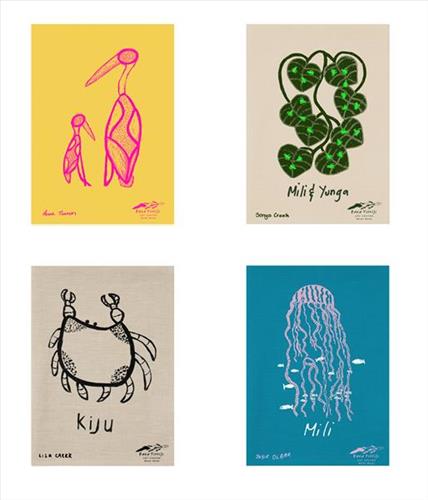
Various Artwork Designs – Tea Towel

These T towels have been designed by local Bana Yirriji Artists, using the beautiful images from Lila Creek – Kiju, Anne Nunn – Dikal, Sonya Creek – Mili & Yunga, and Josie Olbar, Mili.