377810582201417


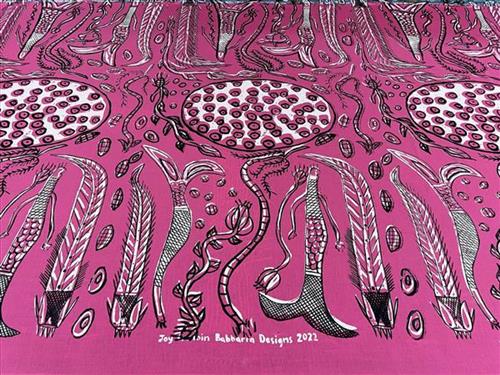
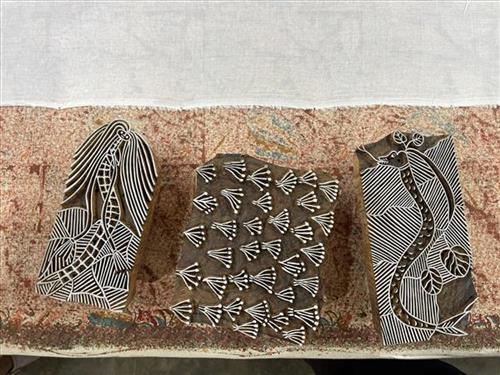
Yawkyawk dja Ngalyod

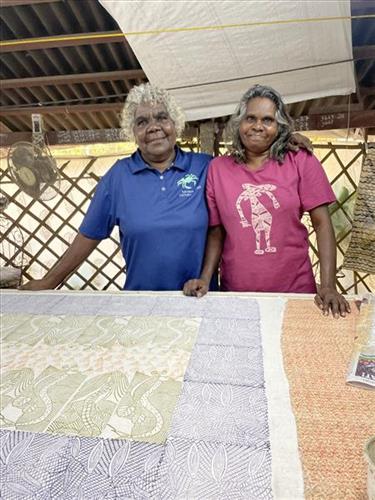
In 2023 Janet Marawarr and Deborah Wurrkidj journeyed to India as guests of honour to the Australian Consulate – Kolkata. They participated in a workshop with women owned studio Tharangini studio, Bangalore

The following is an extract from the press release:

https://timesofindia.indiatimes.com/entertainment/events/bangalore/a-cultural-exchange-programme-with-aboriginal-artists-from-maningrid-in-bengaluru/articleshow/97055614.cm

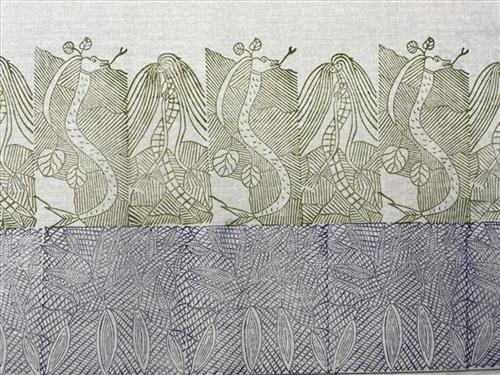
As part of the visit to India, the group visited Tharangini Studio, Bangalore’s oldest heritage textile studio. Established in 1977, Tharangini is woman-owned and specializes in organic, sustainable woodblock printed textiles. Tharangini’s skilled artisans will hand carve Babbarra artist designs into woodblocks. Babbarra’s  artisans will learn and co-create textiles using organic dyes and their vast library of vintage Indian woodblocks.

This initiative was funded by Kinaway Chamber of Commerce, Victoria. Bábbarra Designs hopes to develop a creative partnership that includes including some co-created woodblock fabrics in the upcoming Chennai and Bengaluru part of the Jarracharra -India tour. 

377810582201402


Freshwater

Kunbarinjku

(Sp. ? Kunwinjku)

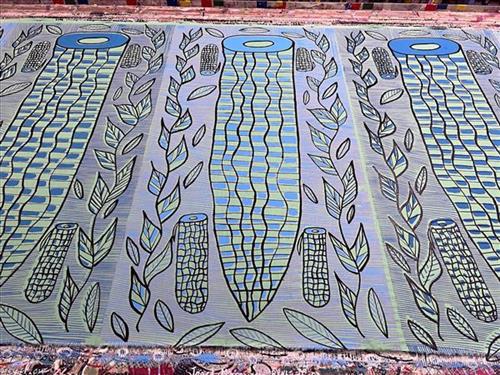
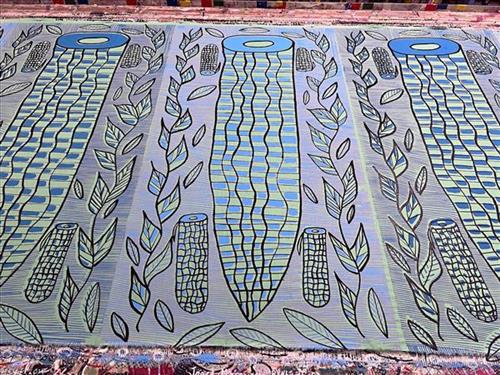
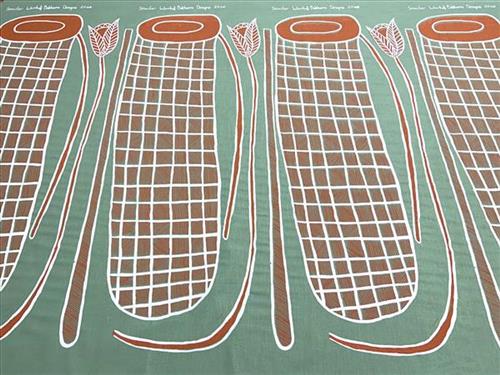
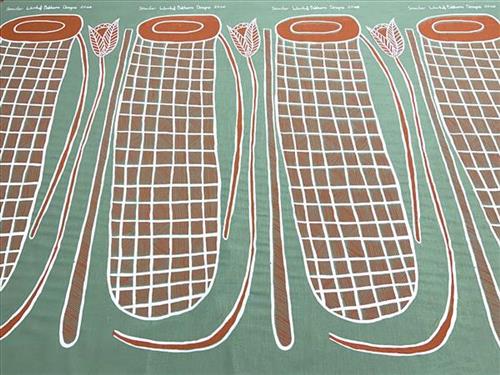
A new design from 2022 featuring a freshwater mandjabu (fish trap), Kunmadj (dilly bag) and weed. 

377810582201567


Wubbunj (Paperbark Canoe)

“Wubbunj is our traditional canoe. This design is the old history story of how people came to live in this place we call Maningrida. Two old people were staying on the other side of the saltwater, in Narlarrambarr area. The old people slept in a paper bark shelter and hunted on the water using their canoe.

A long time ago our people carved these canoes from the big paperbark trees. They had paddles with one person at the front, one at back, and other kids and passengers in the middle. Kunkot (paper bark) was used to make the sails which they would stand up and catch the wind.

One day these old people saw a new boat in their waters, which belonged to the Makassans (Indonesians). Those two old men saw the big Makassan boat coming in, and decided to paddle their canoe from Narlarrambarr to the other side (modern day Maningrida). We were scared of the Makassans, they gave us tobacco and tea, but they took many of our women.

When those two old people tasted that water at Maningrida from the Djomi spring, it was sweet freshwater and they decided to stay here. People here had no clothes in those time, we were just wearing string morkoi (loin cloths). Seven tribes were here then, but now in Maningrida there are lots more languages.” – Raylene Bonson

377810582201553


Collecting Manme (Bush Food)

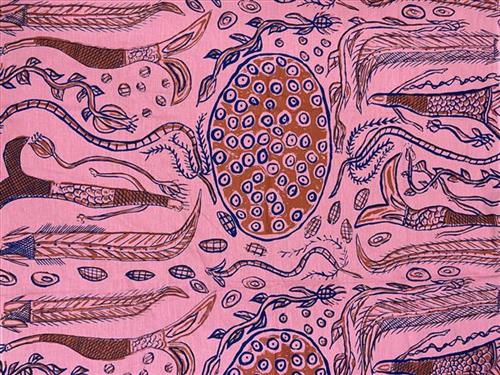
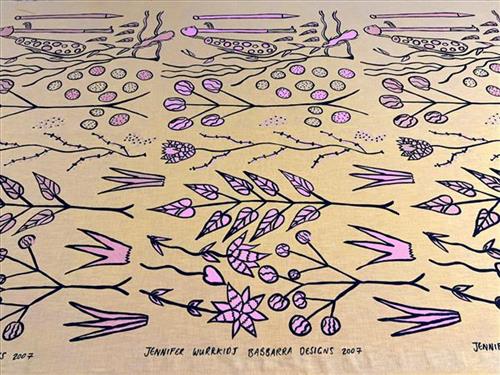
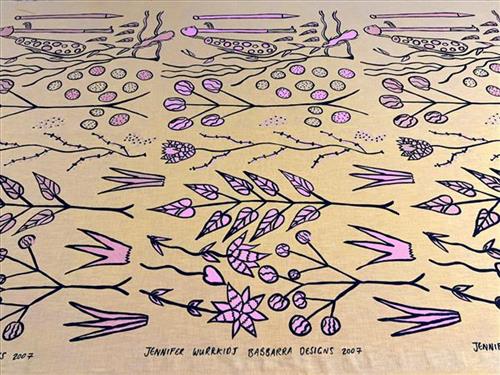
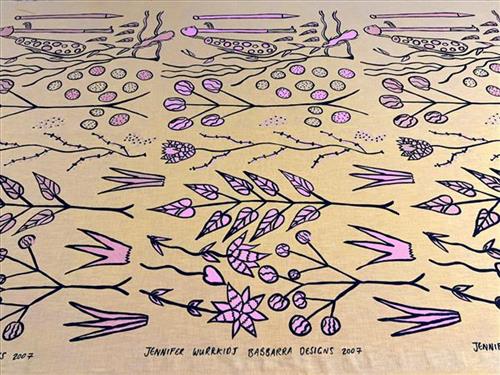
‘All that jungle around Mumeka, on the other side of the river.. that’s where we go looking for manme (bush food) like manyawok (cheeky yam) and karrbarda (long yam). The yawk yawk (young woman spirit) is holding a kunkaninj (digging stick), kun-madj (dilly bag) and all that manme.’ Jennifer Wurrkidj 2021

377810582201552


Collecting Manme (Bush Food)

‘All that jungle around Mumeka, on the other side of the river.. that’s where we go looking for manme (bush food) like manyawok (cheeky yam) and karrbarda (long yam). The yawk yawk (young woman spirit) is holding a kunkaninj (digging stick), kun-madj (dilly bag) and all that manme.’ Jennifer Wurrkidj 2021

377810582201551


Kunmadj

Kunmadj is the Kuninjku term for large woven collecting baskets, known as dillybags.

They are often made from the burney vine (Malaisia scandens), a strong, pliable plant that grows along the ground and into the canopy of monsoon vine thickets. The baskets are used to collect a variety of heavy foods, such as fish caught in conical fish traps or a good harvest of yams. As well as being of practical use, dillybags are of cultural significance to Arnhem Land people. Dillybags are totemic objects and they are associated with particular sites in the landscape.

377810582201550


Kunmadj

Kunmadj is the Kuninjku term for large woven collecting baskets, known as dillybags.

They are often made from the burney vine (Malaisia scandens), a strong, pliable plant that grows along the ground and into the canopy of monsoon vine thickets. The baskets are used to collect a variety of heavy foods, such as fish caught in conical fish traps or a good harvest of yams. As well as being of practical use, dillybags are of cultural significance to Arnhem Land people. Dillybags are totemic objects and they are associated with particular sites in the landscape.

377810582201547


Collecting Manme (Bush Food)

‘All that jungle around Mumeka, on the other side of the river.. that’s where we go looking for manme (bush food) like manyawok (cheeky yam) and karrbarda (long yam). The yawk yawk (young woman spirit) is holding a kunkaninj (digging stick), kun-madj (dilly bag) and all that manme.’ Jennifer Wurrkidj 2021