
Status: Stock
377810582200646
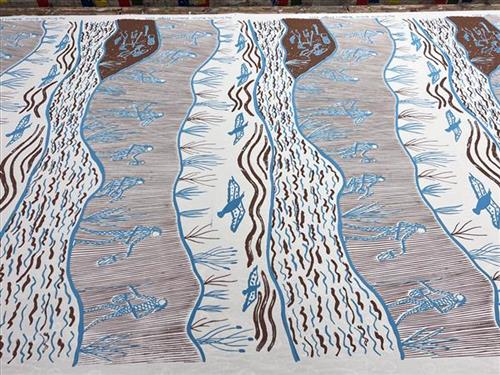
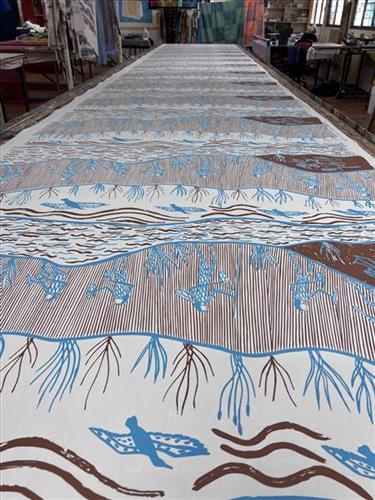
Namurre Boko
‘Bini-murreko means two brothers – big brother and little brother.
Two brothers were really strong leaders and good hunters, sharing animals with different tribes.
With those different tribe there were jealousy going on.
Little brother went walkabout and heard the different tribe was talking about his tribe.
They said ngarribin manre djed-djedme bokko
Meaning: will make spear for them
Ngarrbin danj-bun, ngarrbinbun
Meaning: will spear them kill them
little brother turn around went back tell his brother
Namurre bokko kadi marne djed-djedme Karre wonens, kardi-djal danjbun
Meaning: they making spear for us, they gonna spear us
Couple of months they saw different tribe
They changed their attitude
They been bringing lots of animals to them and start asking for women
And that tribe realise that’s how those brothers died.
They kill them
This Why? They got jealous because two brothers was a good hunter.
This story written on the rock art and it stays forever.’
377810582200642
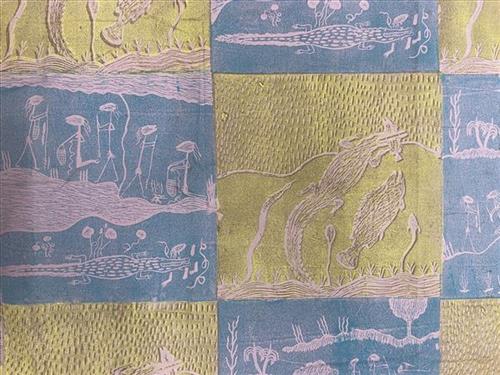
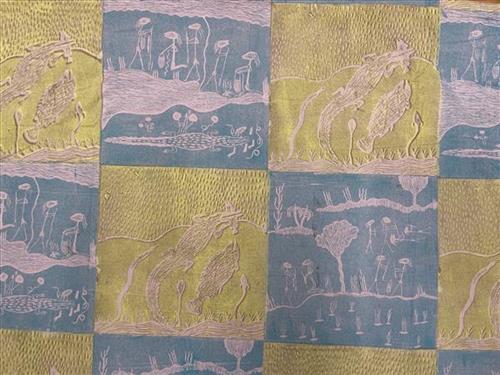
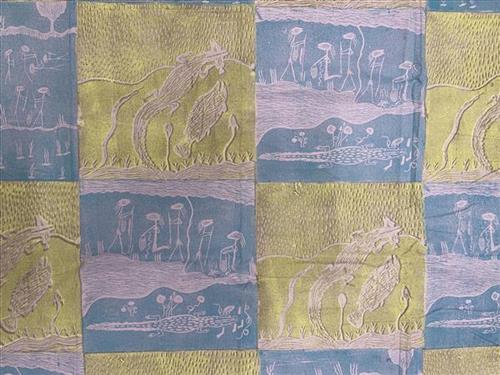
Modjarrkki (Freshwater Crocodile Story) – Archive
Modjarrkki (Freshwater Crocodile)
Kune language
‘This is a true story. My great great grandfather and my father told this story and I tell it to my children. It’s about a freshwater crocodile called Modjarrkki. One day an unmarried man who was camping with his brother and his brothers wife went walking by himself. He came to a creek where he found a crocodile. He went back to camp and said to his brother ‘hey I found a croc, lets go kill it!’. He tried to kill the crocodile but the crocodile bit his brother. He bit his guts, his hand, his legs and he died. Modjarrkki was an angry crocodile but today Modjarkki doesn’t bite people, he’s only a little crocodile and he eats barramundi. He is still alive and he lives in rock country, Karrabarda, which is in Gorlobidahdah.’ Jay Rostron Jurrupula
377810582200635
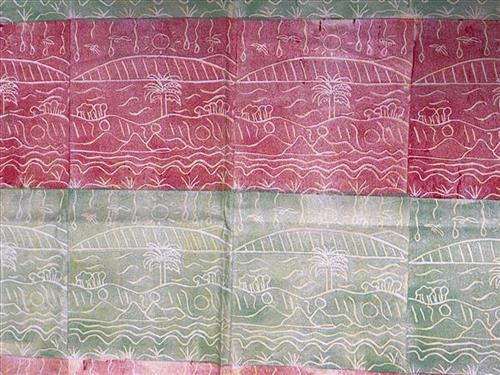
Ngarndúma (palm tree)
ngarndúma 1) a kind of tall palm tree with one straight trunk; Kentia palm. Gronophyllum ramsayi; Carpentaria acuminata. Gender: djíya; Moiety: Yírriddjanga. N A. Karlakkalóddjarra márdba ka-rénjdjeya. The new shoot is sweet. The growing tip of young palms eaten raw; large palms are not eaten. The fruits are toxic to people but eaten by fruit pigeons.
Marilyn has depicted ngarndúma on her island homeland.
377810582200593
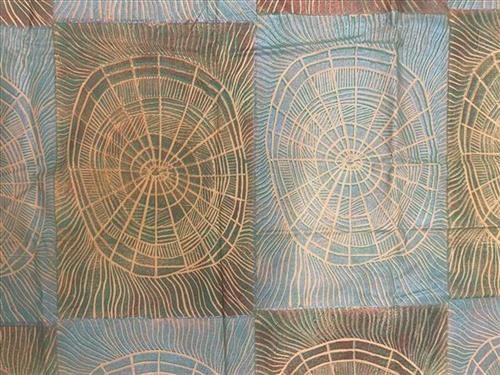
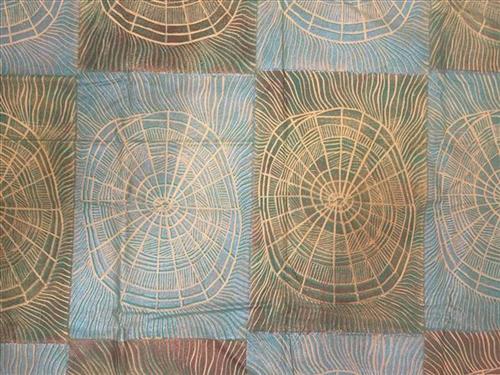
Marebu and Bush Dye – Archive
Deborah Wurrkidj is a Kuninjku artist from the Kurulk clan whose country lies around the outstation of Mumeka in central Arnhem Land. She is an accomplished artist working across mediums including painting, sculpture, weaving and textile design.
Deborah currently lives on Kakodbebuldi Outstaion where she is working from her home studio. Deborah has dyed silk using locally harvested plants cooked over an open fire.
The print design is Marebu (woven pandanus mats).
Artists usually use kundayarr, pandanus spiralis, to weave decorative round or oblong mats, as well as the less common triangular and conical shapes. Weaving is physically hard work, now done only by women. They colour the pandanus using natural dyes made from the roots, leaves or flowers of plants within the weaver’s clan estate.
The radial woven patterns of the finest round mats appear to vibrate with colour, sometimes regarded as an aesthetic manifestation of deep cultural meaning, as there is a significant spiritual dimension to pandanus mats.
This artwork was acquired by the art centre in 2021 as part of an ANKA supported artwork acquisition fund.
The artwork is not for sale.
115682200546
Woven Mat
Traditionally, Nganiyal (conical mats) were used as an insect screen when erected, and as a sitting mat when folded. They are used in Ceremony as well as a functional item.
Nowadays, artists weave many different shapes including flat, round and oblong.
115682200534
Bottles
Robyn Djunginy began weaving bottle sculptures in 1983, after the Curator Djon Mundine, suggested to Djunginy that she may like to encase an empty gin bottle in Pandanus fibre ‘Chianti-style’ for an exhibition he was organising. Using a local twining technique, the artist began producing multiple woven bottles of various sizes. The sculptural qualities and the high workmanship of these objects have led them to be become recognised as key contemporary Aboriginal fibre works.
A decade after making her first bottle artworks, Djunginy began producing two-dimensional renderings of the woven sculptures on canvas.
Robyn has been the only artist from this area to produce and paint bottles, but has passed the bottle story on to her daughters. Janice is one of her daughters.
115682200532
Bathi (Pandanus Basket)
Bathi are woven from the split leaves of the Screw Palm (Pandanus Spiralis). Coil weaving was introduced to Arnhem Land in the 1930s. It was adapted from techniques used by Indigenous women throughout South East Australia.
115682200531
Bathi (Pandanus Basket)
Bathi are woven from the split leaves of the Screw Palm (Pandanus Spiralis). Coil weaving was introduced to Arnhem Land in the 1930s. It was adapted from techniques used by Indigenous women throughout South East Australia.
115682200524
Woven Mat
Traditionally, Nganiyal (conical mats) were used as an insect screen when erected, and as a sitting mat when folded. They are used in Ceremony as well as a functional item.
Nowadays, artists weave many different shapes including flat, round and oblong.