377810582176982


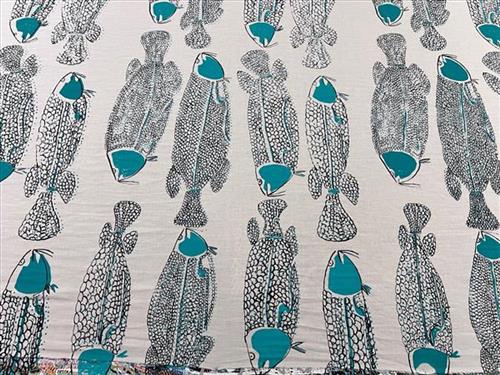
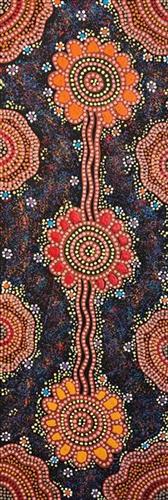
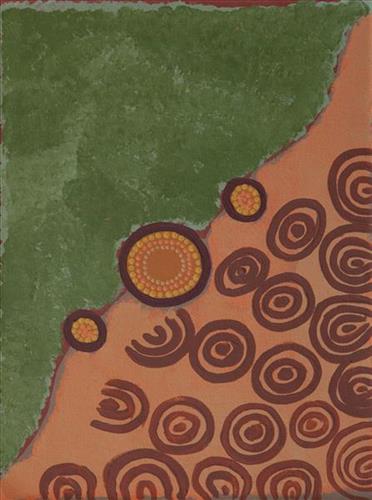
Ngaldadmurrng (Saratoga)

This design tells the story of Saratoga dreaming,  a freshwater fish that swims on the edge of creeks and rivers. This design is the Saratoga dreaming from the Mularra songline. Where the Saratoga we call Murdulngu, Danguny travelled from Malmyangarnak billabong to Mirrigatja.

This Billabong was owned by Murdulngu (Saratoga) before the water was taken over by shark Barlangu he came all the way from east to north then to west. He was travelling when that water level was high he went up the stream but he couldn’t make it. This Barlangu came from Murruggun clan but really this shark came from long way all the way south. This story is connected through Mularra songline it represents many clans.

With permission from clan elders, Carol is able to pass on this family knowledge through her passion in textile and art.


‘I am proud of my first design, I want to keep this design for future, for my children and grandchildren so they remember this story, this story is a big part of the mularra songline’ Carol Liyawanga Campion

377810582176967


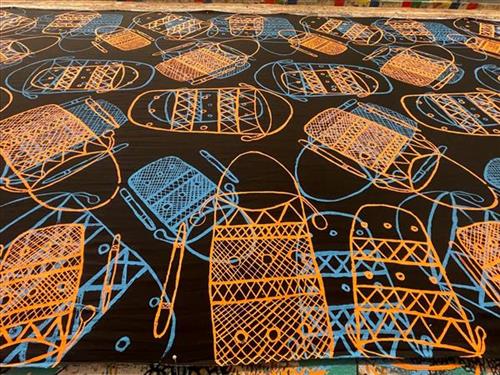
Dedded Wongkorr

This design depicts a ‘wongkorr’ sacred dilly bag woven with brightly coloured orange parrot feathers called ‘dedded’. It is depicted alongside a digging stick. Wongkorr are used in a number of public ceremonial contexts, and are sacred objects for the Bininj Kunwok speaking people of Western Arnhem Land.

‘This is a really special kind of dillybag for us, not like a normal dillybag.

This story was from a long time ago, when my great great grandfather was alive. He’s the one that was a medicine man for our people.
We are not supposed to see that sacred spirit dillybag that lives below the saltwater. If we ever see that site, it might drag us under and drown us. When the tide goes out he floats and when the tide comes in he goes under to hide.

This story is about fresh water and salt water mixing and our ancient law. There are strings of the Wongkorr hold it under the water. The Wongkorr is made with lorikeet parrot feathers and Kurrajong bark string.

I remember having a ceremony at that outstation Bolkjam when I was only 16 years old, near Ji Bal-bal homeland, and my father would tell me the story of the Wongkorr sacred site. My two sisters taught me to paint, and my Dad was a famous painter. Some balanda (non-Indigneous) know my father’s painting, it is about digging sticks, sharks and wongkorr.

This story links to mixed water, plant life and animals living at the artist’s country, and following the lessons and knowledge of the ancestors.’ Elizabeth Kala Kala

377810582176965


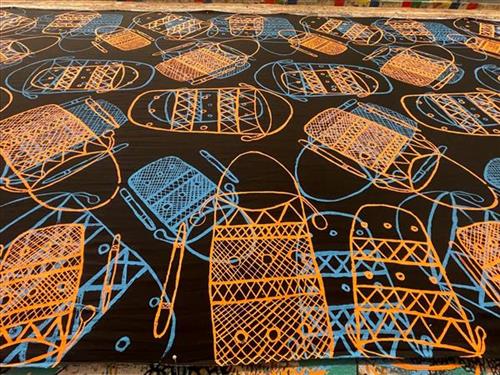
Dedded Wongkorr

This design depicts a ‘wongkorr’ sacred dilly bag woven with brightly coloured orange parrot feathers called ‘dedded’. It is depicted alongside a digging stick. Wongkorr are used in a number of public ceremonial contexts, and are sacred objects for the Bininj Kunwok speaking people of Western Arnhem Land.

‘This is a really special kind of dillybag for us, not like a normal dillybag.

This story was from a long time ago, when my great great grandfather was alive. He’s the one that was a medicine man for our people.
We are not supposed to see that sacred spirit dillybag that lives below the saltwater. If we ever see that site, it might drag us under and drown us. When the tide goes out he floats and when the tide comes in he goes under to hide.

This story is about fresh water and salt water mixing and our ancient law. There are strings of the Wongkorr hold it under the water. The Wongkorr is made with lorikeet parrot feathers and Kurrajong bark string.

I remember having a ceremony at that outstation Bolkjam when I was only 16 years old, near Ji Bal-bal homeland, and my father would tell me the story of the Wongkorr sacred site. My two sisters taught me to paint, and my Dad was a famous painter. Some balanda (non-Indigneous) know my father’s painting, it is about digging sticks, sharks and wongkorr.

This story links to mixed water, plant life and animals living at the artist’s country, and following the lessons and knowledge of the ancestors.’ Elizabeth Kala Kala

377810282175902


Puli Mankurpa (Uluru, Kata Tjuta & Atila)

Nyangatja puli Ulurunya, nganampa ngura Tjukurpa pulka tjara. Kala painting tjuta palyalpai-amilapai Culture Centre-ngka, minga tjuta nganampa nguraku nintiringkula kulintjaku.’

 ‘This is the rock known as Uluru, our home with its powerful law. We do our paintings at the Culture Centre so tourists can learn about our country, understand and respect it.’

In this painting the artist has painted the three prominent land formations of the central desert region; Uluru (Ayers Rock), Kata Tjuta (The Olgas) and Atila (Mt Conner). They are puli mankurpa (three rocks). The artist has described the land forms, similar to a map from an aerial perspective, demonstrating their intricate knowledge of the land walked by the Ancestors.

From a very young age children learn from their grandparents and parents as they talk and tell their stories using the fine red sand of the desert as a canvas to illustrate and explain their teachings. These stories and images now inspire their art and Anangu are proud to not only make a living for themselves and their families through it but to educate in turn their own children.

Within the traditions of Tjukurpa or Creation Law are coded life survival skills. There is inma (ceremony) associated with each of the stories which are to teach and celebrate; for people to learn where they fit within both the environmental and social systems. Anangu feel strongly about continuing to teach and learn Tjukurpa, and their art is important and vital work. It sustains them economically, physically and culturally. It keeps the stories and traditions alive.

Walkatjara Art is the Aboriginal owned and governed art centre belonging to Mutitjulu community, located in the Uluru-Kata Tjuta national Park, NT.

www.facebook.com/walkatjara   @ walkatjara   www.walkatjara.com

377810282175901


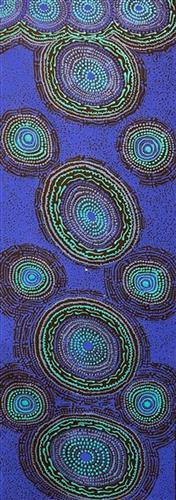
Kungkarangkalpa (Seven Sisters)

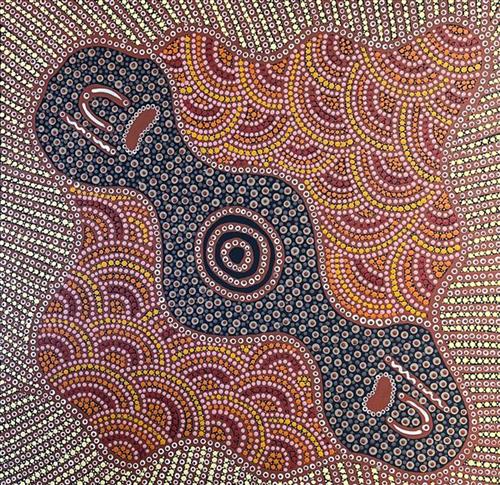
The Seven Sisters Creation Story is of great significance to the Pitjantjatjara and Yankunytjatjara people. The sisters travelled a long time ago through the artist’s traditional country in South Australia’s North West and the south west corner of the Northern Territory. 

A man called Wati Nyiru was chasing the sisters trying to court one of them. He used all kinds of trickery in pursuit of them but through the skill of the eldest, they always managed to keep one step ahead of him. The sisters finally escaped to a far away place so they could stay together safe from the clutches of Wati Nyiru. 

To this day the seven stars of the sisters followed by the bright star of Wati Nyiru following can be seen in the night sky in the constellations known as the Pleiades and Orion. 

Within the traditions of Tjukurpa or Creation Law are coded life survival skills. There is inma or ceremony for the Kungkarangkalpa in order to teach and celebrate; for people to learn where they fit within both the environment and social systems. 

Anangu feel strongly about continuing to teach and learn Tjukurpa and their art is important and vital work. It sustains them economically, physically and culturally. It keeps the stories and traditions alive. 

Walkatjara Art is the Aboriginal owned and governed art centre belonging to Mutitjulu community, located in the Uluru-Kata Tjuta National Park, NT.

www.facebook.com/walkatjaraart        www.walkatjara.com

377810282175900


Nyanu Watson – Tjulpu (Birds)

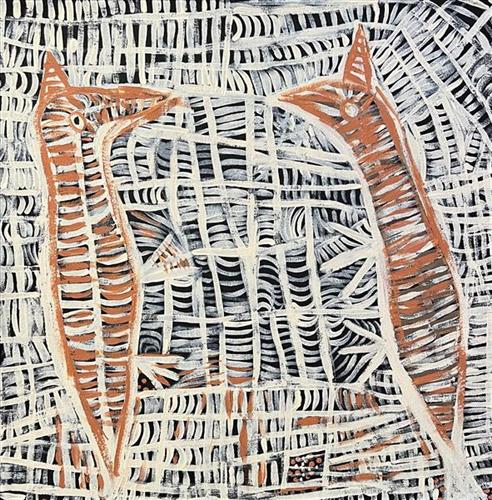
Nyanu Watson loves to paint Tjulpu (birds). Nyanu depicts birds found in the Pipalyatjara and Kalka area and important to local Tjukurpa dreaming. Nyanu creates stories for the characters in her work, they are families, husbands, wives and tjitji (children). As she paints she tells the stories of family life, sharing food, looking for water, caring for young ones. This painting shows two tjulpu, husband and wife.

377810282175899


Nyanu Watson – Tjulpu (Birds)

Nyanu Watson loves to paint Tjulpu (birds). Nyanu depicts birds found in the Pipalyatjara and Kalka area and important to local Tjukurpa dreaming. Nyanu creates stories for the characters in her work, they are families, husbands, wives and tjitji (children). As she paints she tells the stories of family life, sharing food, looking for water, caring for young ones. This painting shows two tjulpu, husband and wife.

377810282175896


Tali (Sand Dune)

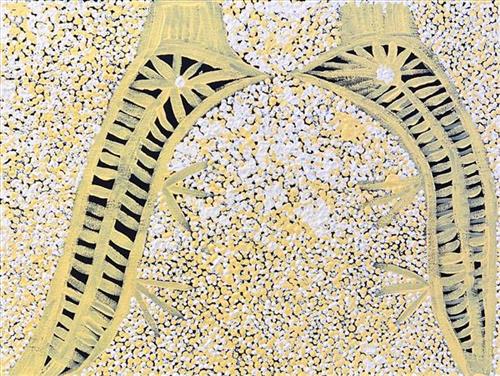
In this painting the artist has depicted tali (sand dunes); the fluid lines tell the story of the land.

Tjanpi (spinifex) and green vegetation such as mangata (desert quondong) grow here. This habitat is very fragile. In the mornings you can see networks of tracks on the sand dunes. Anangu use these markings in the tali to track animals. Generally, small mammals are found in the tali and many protect themselves by burrowing into the sand. Itjaritjari, a marsupial mole that is very rarely sighted, is likely to come to the surface after rain.

Walkatjara Art is the Aboriginal owned and governed art centre belonging to Mutitjulu community, located in the Uluru-Kata Tjuta national Park, NT.

www.facebook.com/walkatjaraart

www.walkatjara.com  

@walkatjara

111582176251


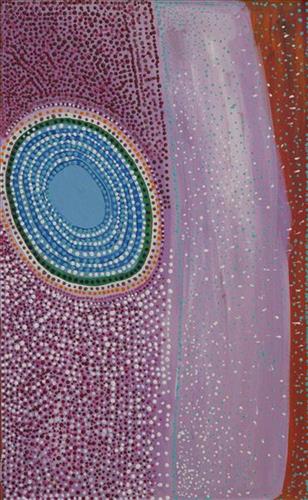
Two Countries: Kun-Kun and Nganjirr

“Grandfather’s Country- not far from Well 33 called Nganjirr. Not far, [you] can go up by car. Go camping there. When it rains, fills up, then is dry.

Two Country’s Nganjirr and Kun-Kun (Kuny-Kuny), Marlene’s Country. [You] can just go out for the day- lovely and quiet. Go hunting and get some jinyjwirrily (wild gooseberry, or desert raisins)”

– Kara Patch

Nganjirr and Kun-Kun are both significant parts of Kara’s ‘ngurra’ (home Country, camp). Nganjirr is amain importaint place for the Patch family through two brothers Nganjirrmarta and Wirrulypa. Nganjirr refers to three rock holes South-east of Kinyu (Canning Stock Route Well 35). The rock holes are approximately 1.5m deep, with the biggest one spanning 1.5m in diameter. A large marntila/tarntulu (Acacia pruinocarpa) sitting on rocky outcrop marks the location of Nganjirr rock hole. Martu locate Nganjirr by this tree. The tree is on elevated rocky outcrop 50-100 metres from Nganjirr.

Kun Kun (Kuny-kuny) is a soak accessing a large body of underground water, located southeast of Kunawarritji (Canning Stock Route Well 33). The site is sacred for its association with the marlu (kangaroo) Jukurrpa (Dreaming), and was an important ceremonial site during the pujiman (traditional, desert dwelling) period. Soaks, or soakwaters, derive their name from the manner in which their waters generally seep into the sand from below stores, sometimes as part of an ephemeral river or creek. Soaks were an especially important source of water during the pujiman era, being the most dependable water source in times of drought. Water was obtained from soaks by scooping away the sand with a piti (timber bowls used for carrying food and water) until clear water gathered at the base of the hole, sometimes at a depth of several metres.

In the Pujiman time, Martu would traverse very large distances annually in small family groups, moving seasonally from water source to water source, and hunting and gathering bush tucker as they went. Knowledge of water sources was critical for survival, and today Martu Country is still defined in terms of the location and type of water. Each of the hundreds of claypans, rockholes, waterholes, soaks and springs found in the Martu desert homelands is known by name, location, quality and seasonal availability through real life experience and the recounting of Jukurrpa narratives.

 

111582176250


Kunawarritji (Canning Stock Route Well 33)

Kunawarritji is an important site in the Great Sandy Desert where multiple stories and histories intersect. Originally a spring water and major Martu pujiman (traditional, desert dwelling) camping site, at the turn of the 20th century Kunawarritji was converted into a well along the Canning Stock Route. Each year throughout the 1930-50s, the well became a site of contact between the drovers, their cattle, and desert families. 

Long before colonial history entered this Country, however, other stories dominated the site. Primarily, Kunawarritji features in the Minyipuru (Jakulyukulyu, Seven Sisters) Jukurrpa (Dreaming). Minyipuru is a central Jukurrpa narrative for Martu, Ngaanyatjarra, Pitjantjatjara and Yankunytjatjara people that is associated with the seasonal Pleiades star constellation. Beginning in Roebourne on the west coast of Western Australia, the story morphs in its movement eastward across the land, following a group of women as they walk, dance, and even fly from waterhole to waterhole. As they travelled the women left markers in the landscape and create landforms that remain to this day. During the entirety of their journey the women are pursued by a lustful old man, Yurla, although interactions with other animals, groups of men, and spirit beings are also chronicled in the narrative.

The Minyipuru travelled to Kunawarritji from Nyipily (Nyipil, Nibil, Canning Stock Route Well 34), and transformed themselves into a distinctive group of trees that remain in the area between these two sites. From Kunawarritji Yurla followed the sisters to Pangkapirni, where he finally caught one of the women. 

Today, Kunawarritji is a site of return, a place where people came back to continue their life in the desert with the formation of Kunawarritji Aboriginal community in the early 1980s. The community’s cultural significance endures, with the population swelling up to 1000 during cultural business.