377810582152797


Kunmadj – Deborah Wurrkidj

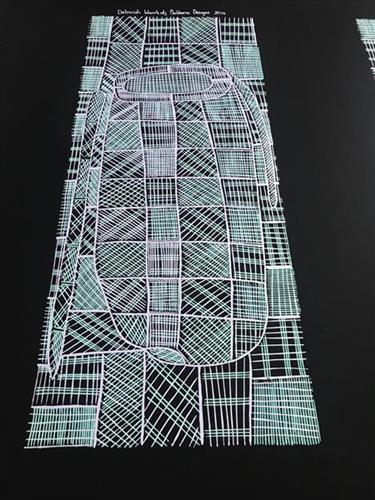
Deborah has depicted kunmadj (dillybag), which is a large woven collecting basket. These large bags are often made from the burney vine (Trophis scandens), a strong, pliable plant that grows along the ground and into the canopy of monsoon vine thickets. The bags are used to collect heavy foods, such as fish caught in conical fish traps, or yams. They can also be made from kun-dayarr (Pandanus spiralis), a palm that grows in many areas of Arnhem Land. Tightly woven dillybags are used to collect sugarbag, the native honey.

As well as being of practical use, dillybags are of cultural significance to Arnhem Land people. They are totemic objects associated with particular sites in the landscape.

A single panel with space to stretch onto a canvas.
111982152638


Djamo (dog)

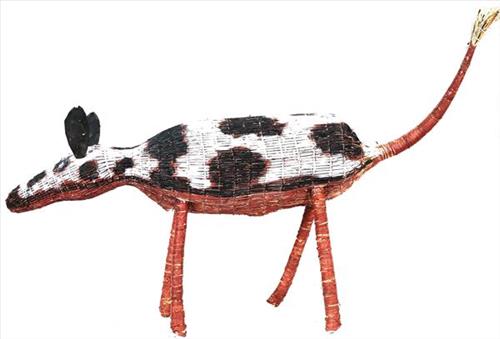
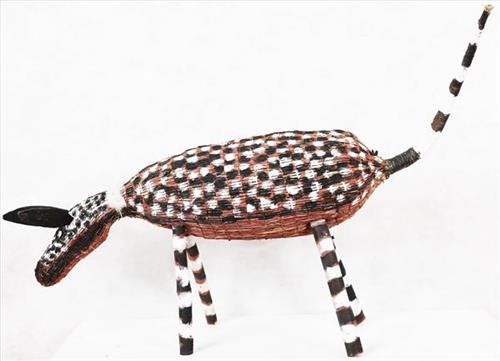
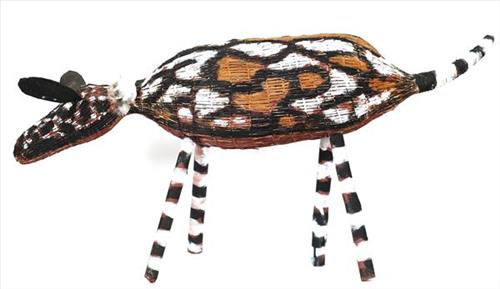
The djamo (dog) holds special mythological as well as practical significance for people of Central Arnhem land, particularly women. The men used to go hunting with a spear and the women with a dog. If the men didn’t catch a kangaroo, the women would catch a goanna. If neither caught anything, then they could catch fish. If there was neither kangaroo nor goanna, then they would eat sugarbag. This is how it was long ago – sugarbag, lily root, yam, goanna, sand goanna, fish and more were part of the regular diet. “Don’t forget that long ago we didn’t know European food, we knew bush food. We used to grow from bush food.” Rembarrnga women have literally and metaphorically brought together strands from their country and the mythology of their heritage to produce three dimensional fibre creatures filled with mystical significance. Dog, mermaid, rainbow serpent, blue tongue and fish multiplication spirits: each creature plays an important role in the clan’s cultural landscape. Materials for this camp dog comes from the clan estate. Dayarr (pandanus) and rulk (grass) are the twines used for the creature’s bodies. Warlppurrunggu (bush turkey) and nganarrngh (black cockatoo) feathers provide bulkkan-na (hair). Marnarr (red), gamununggu (white), garlba (yellow) ochres and roerroe (black) ashes are then carefully mixed and applied for colour. The use of local materials provides an integral link between the mythological nature of the creatures, which inhabit the country and their physical form.

111982152636


Djamo (dog)

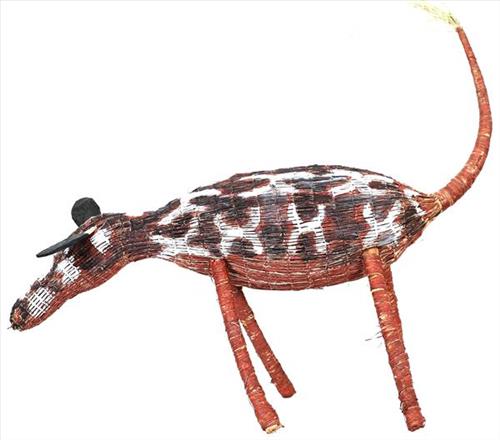
The djamo (dog) holds special mythological as well as practical significance for people of Central Arnhem land, particularly women. The men used to go hunting with a spear and the women with a dog. If the men didn’t catch a kangaroo, the women would catch a goanna. If neither caught anything, then they could catch fish. If there was neither kangaroo nor goanna, then they would eat sugarbag. This is how it was long ago – sugarbag, lily root, yam, goanna, sand goanna, fish and more were part of the regular diet. “Don’t forget that long ago we didn’t know European food, we knew bush food. We used to grow from bush food.” Rembarrnga women have literally and metaphorically brought together strands from their country and the mythology of their heritage to produce three dimensional fibre creatures filled with mystical significance. Dog, mermaid, rainbow serpent, blue tongue and fish multiplication spirits: each creature plays an important role in the clan’s cultural landscape. Materials for this camp dog comes from the clan estate. Dayarr (pandanus) and rulk (grass) are the twines used for the creature’s bodies. Warlppurrunggu (bush turkey) and nganarrngh (black cockatoo) feathers provide bulkkan-na (hair). Marnarr (red), gamununggu (white), garlba (yellow) ochres and roerroe (black) ashes are then carefully mixed and applied for colour. The use of local materials provides an integral link between the mythological nature of the creatures, which inhabit the country and their physical form.

377810582152590


Kunngol (clouds)

This design depicts certain Kun-ngol (clouds) that signal to people of central Arnhem Land that the end of the wet season is approaching. After months of daily monsoonal rain in Arnhem Land, these clouds are light and fluffy, not like the dark, heavy clouds of the monsoonal sky. At the time of the kun-ngol clouds, people know the country will soon dry up and the cold season (dry season) will arrive. When the kun-ngol clouds appear, all of the billabongs are already filled, the rivers are high and the country is brimming with life and fresh new growth after months of fresh water pouring from the sky.

377810582152585


Kunwardde dja Karrbarda (Rocks and Yam Vine)

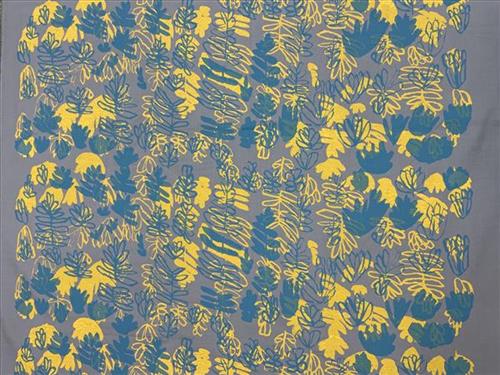
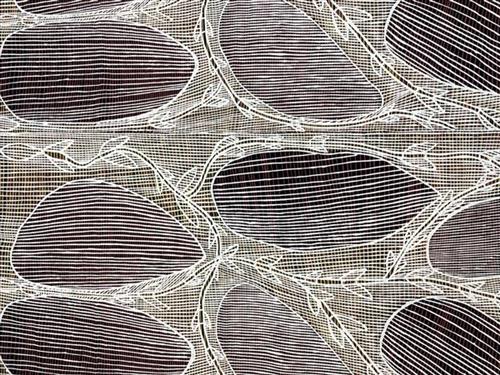
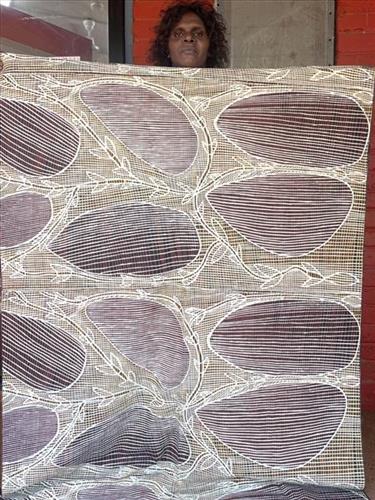
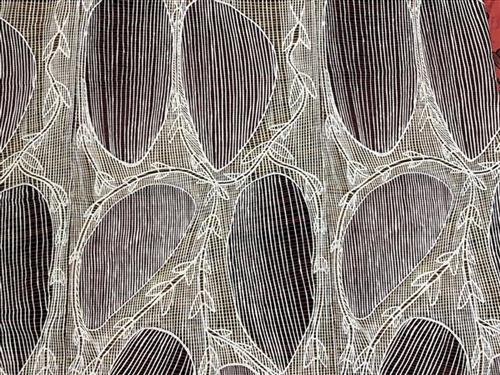
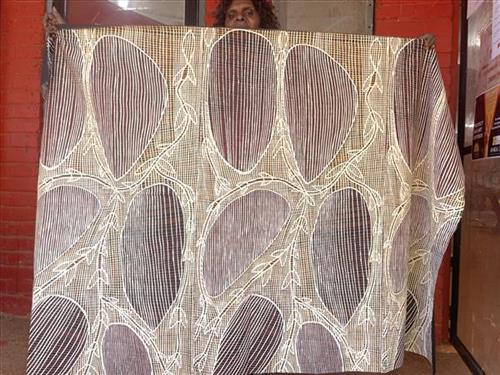
Susan Marawarr is a Kuninjku artist from the Kurulk clan whose country lies around the outstation of Mumeka in central Arnhem Land. In this design, she has depicted karrbarda (long yam) on her traditional country, the kunwardde (stone country).

The large stones represent the kunwardde rocky outcrops, which are elevated above the flat floodplains. The vines creeping around the large rocks are from the karrbarda. Women dig up karrbarda with kungarrndutj (digging sticks) and they are then cooked in the ashes of the fire to be eaten.

These yams are purple on the saltwater side of country and on inland freshwater country they are white. Karrbarda are an important manme (bush food) that are collected during the wet and dry seasons.

Printed by Publisher Textiles, Sydney

377810582152584


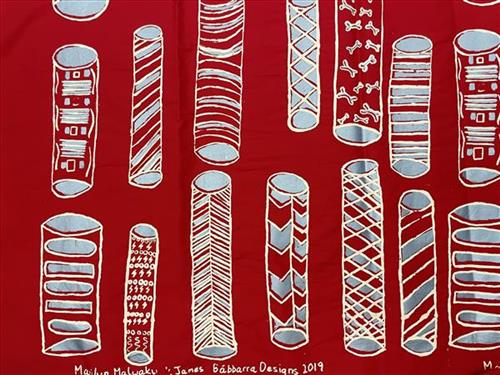
Lorrkkon – Marilyn James

Marilyn’s first screen print design depicts the story of lorrkkon (hollow funeral logs). This the story of her great, great grandfather and grandmother who were bark painters, as well as also sacred lorrkkon painters.

When designing this screen print, Marilyn was remembering her childhood living in a small house on Liverpool river Ngar-wunja (Thompson hole) with other families.

Through the painting process, Marilyn remembered and relived the times when people still lived permanently on remote homelands, living off the land before balanda (non-indigenous people) arrived.

Marilyn recalls “it makes me think back, we did lots of things, some people was hunting, some was weaving, some was painting barks and lorrkkon. As my great, great grandfather and grandmother was painters, I painted this my story for them.”

377810582152581


Manyawok (Cheeky Yam)

This design depicts the cheeky yam, which is found on the artist’s country, near the outstation of Mumeka in central Arnhem Land. Yams are an important bush food that are collected during the wet season.

Unlike other yams that can be eaten roasted, the cheeky yam can be poisonous if not properly prepared. The preparation process of the yam traditionally takes two days. Firstly, the yams are dug up with a digging stick and boiled over a fire. They are then peeled and sliced into thin strips, which are placed in a special dillybag woven by women from pandanus leaves. The yam-laden dillybag is then strung from an overhanging branch into a river, so the bag just touches the flowing fresh water. The cheeky yams are left like this overnight to allow the running water to remove the toxins. The next morning, people return and collect the dillybag, and leave the yam pieces in full sunlight to dry out. Finally, when the yam pieces have dried in the sun for a day, they are ready to eat.

111982152580


Djamo (dog)

The djamo (dog) holds special mythological as well as practical significance for people of Central Arnhem land, particularly women. The men used to go hunting with a spear and the women with a dog. If the men didn’t catch a kangaroo, the women would catch a goanna. If neither caught anything, then they could catch fish. If there was neither kangaroo nor goanna, then they would eat sugarbag. This is how it was long ago – sugarbag, lily root, yam, goanna, sand goanna, fish and more were part of the regular diet. “Don’t forget that long ago we didn’t know European food, we knew bush food. We used to grow from bush food.” Rembarrnga women have literally and metaphorically brought together strands from their country and the mythology of their heritage to produce three dimensional fibre creatures filled with mystical significance. Dog, mermaid, rainbow serpent, blue tongue and fish multiplication spirits: each creature plays an important role in the clan’s cultural landscape. Materials for this camp dog comes from the clan estate. Dayarr (pandanus) and rulk (grass) are the twines used for the creature’s bodies. Warlppurrunggu (bush turkey) and nganarrngh (black cockatoo) feathers provide bulkkan-na (hair). Marnarr (red), gamununggu (white), garlba (yellow) ochres and roerroe (black) ashes are then carefully mixed and applied for colour. The use of local materials provides an integral link between the mythological nature of the creatures, which inhabit the country and their physical form.

111982152576


Djamo (dog)

The djamo (dog) holds special mythological as well as practical significance for people of Central Arnhem land, particularly women. The men used to go hunting with a spear and the women with a dog. If the men didn’t catch a kangaroo, the women would catch a goanna. If neither caught anything, then they could catch fish. If there was neither kangaroo nor goanna, then they would eat sugarbag. This is how it was long ago – sugarbag, lily root, yam, goanna, sand goanna, fish and more were part of the regular diet. “Don’t forget that long ago we didn’t know European food, we knew bush food. We used to grow from bush food.” Rembarrnga women have literally and metaphorically brought together strands from their country and the mythology of their heritage to produce three dimensional fibre creatures filled with mystical significance. Dog, mermaid, rainbow serpent, blue tongue and fish multiplication spirits: each creature plays an important role in the clan’s cultural landscape. Materials for this camp dog comes from the clan estate. Dayarr (pandanus) and rulk (grass) are the twines used for the creature’s bodies. Warlppurrunggu (bush turkey) and nganarrngh (black cockatoo) feathers provide bulkkan-na (hair). Marnarr (red), gamununggu (white), garlba (yellow) ochres and roerroe (black) ashes are then carefully mixed and applied for colour. The use of local materials provides an integral link between the mythological nature of the creatures, which inhabit the country and their physical form.

377810582152572


Kunwardde dja Karrbarda (Rocks and Yam Vine)

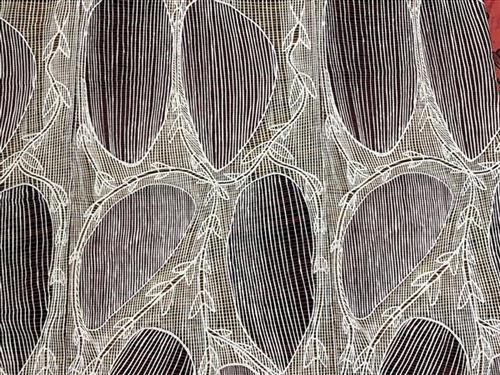
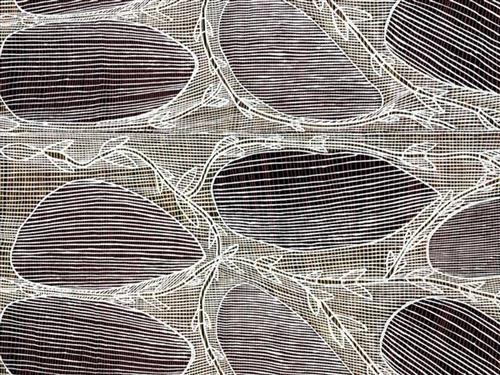
Susan Marawarr is a Kuninjku artist from the Kurulk clan whose country lies around the outstation of Mumeka in central Arnhem Land. In this design, she has depicted karrbarda (long yam) on her traditional country, the kunwardde (stone country).

The large stones represent the kunwardde rocky outcrops, which are elevated above the flat floodplains. The vines creeping around the large rocks are from the karrbarda. Women dig up karrbarda with kungarrndutj (digging sticks) and they are then cooked in the ashes of the fire to be eaten.

These yams are purple on the saltwater side of country and on inland freshwater country they are white. Karrbarda are an important manme (bush food) that are collected during the wet and dry seasons.

Printed by Publisher Textiles Sydney.