377810582153492


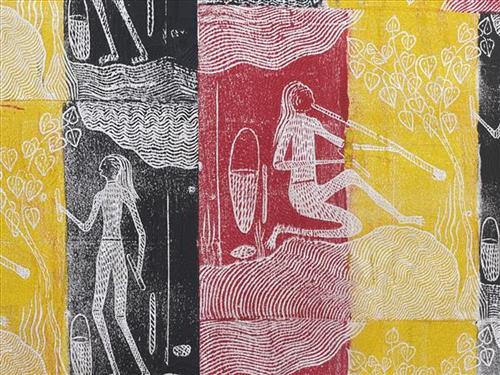
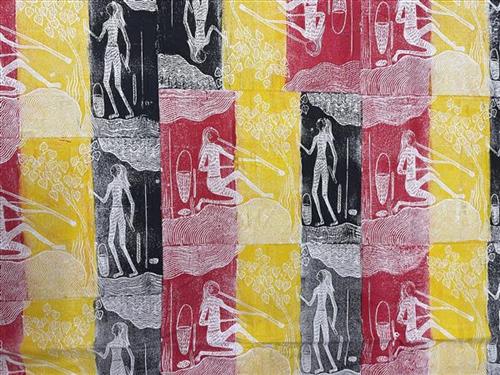
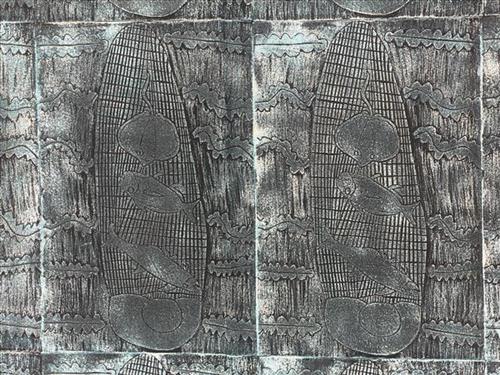
Au-gujechiya (fishtrap)

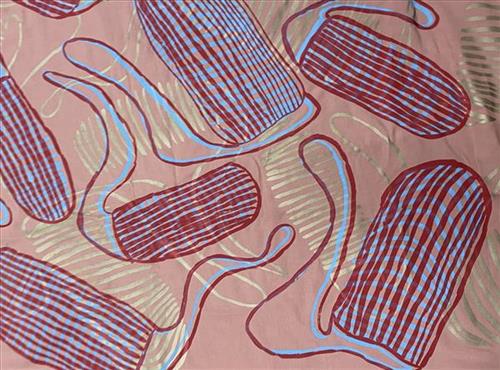
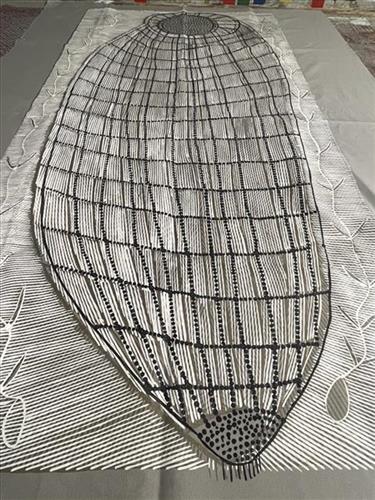
A detailed linocut design portraying a large Au-gujechiya (fishtrap) with an-maka (cowtail stingray), rajarra (barramundi) and other fish inside. 

Elizabeth is from the Burrarra language group and her homeland is Gupanga, Arnhem Land.  

377810582153491


Bah-je (hunting bag)

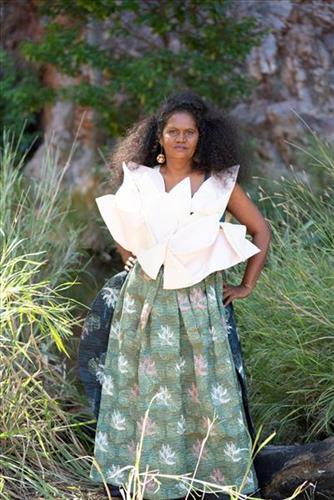
Linda Gurawana is a Djinang speaker and she calls hunting bag or dilly bag bah-je.

This design was created in 2007 however Babbarra printers keep experimenting with colours and layers to make it fresh. 

377810582153489


Mandjabu – discounted

Kuninjku people traditionally make two sorts of conical fish traps. One is called mandjabu and is made from a strong, durable vine called milil, and a smaller one is called manylik mandjabu, and made from the grass manylik. The mandjabuconical fish trap is bigger and stronger and used in tidal reaches of creeks to catch large fish. The smaller, lighter manyliktrap is used in freshwater flowing creeks to catch smaller fish and freshwater prawns. In earlier times, only men were involved in the construction of the large fish traps, but children would often crawl inside and assist.

To make mandjabu, weavers firstly harvest milil (burney vine, Malaisia scandens) and put it in water overnight to make it soft. Then they start weaving it; they make rings for the inside to keep the fish trap’s shape. People also make string from the bark of burdaga (kurrajong) to attach the bardainy (hibiscus) rings and to tie the conical end of the fish trap. It’s hard work and it can take three or four weeks to make a fish trap. People also use fish-net fences called kunkarlewabe. They would put the kunkarlewabe  across rivers and creeks. In the middle they would place the mandjabu. They also used small things like sticks, rocks, mud and grass to block the fish from going through. This way we would catch fish such as saltwater barramundi rajarra, ngaldadmurrng (freshwater barramundi), small black freshwater catfish (buliya), bonefish (an-guwirrpiya), and sand bass (dalakan) in the mandjabu.

22174002199


Status: Stock


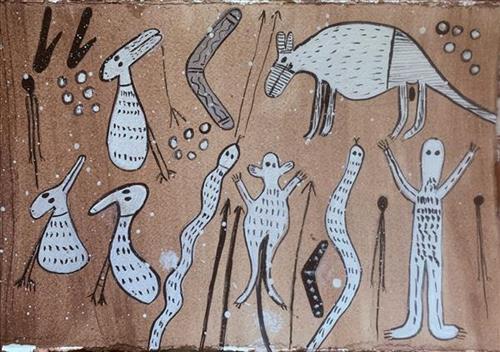
Night Herons

Our ancestors did paintings in caves that show these animals. The Night Herons cry at night to keep warm. The round circles are the eggs. Wungurr is the water snake that is the protector of the river and creeks so they won’t get dry. The dots represent the rain. There are hunting tools such as spears and boomerangs used for hunting kangaroo and digging sticks for roots and the yam plant. Aboriginal people painted these things long time ago. The water snake is good for eating, so are the yams.

11594002130


Status: Stock


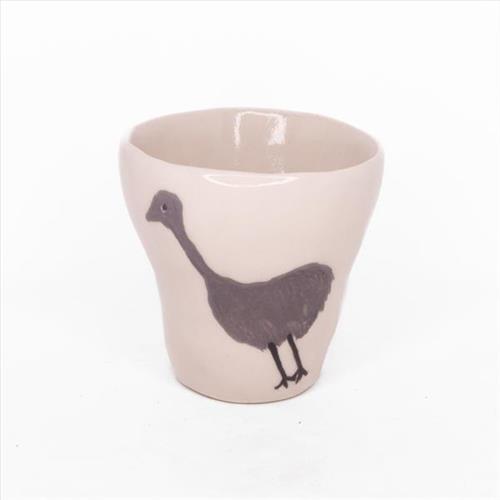
Ntaria Cup – Ilia (Emu)

STORY 
_____________________________________________________________________________________

This cup has travelled all the way from our pottery studio in the community of Ntaria (Hermannsburg), Western Aranda Country, to you.

Ilia means Emu in Western Aranda. Thepa ilia itja alkiraka-errama – the emu does not fly.

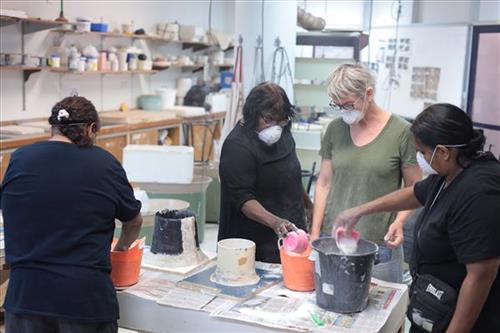
Hermannsburg Potters is an Aboriginal owned art centre located at the remote foothills of the MacDonnell Ranges, 130 kilometres west of Alice Springs in the Northern Territory. Taking inspiration from Country, culture, history and day to day life activities the Potters depict family, birds, animals, bush tucker, mission days, stories of Country and current life in Ntaria (Hermannsburg). 

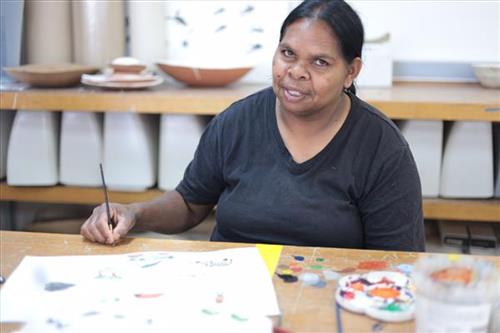
Our new range of homewares was designed by the Potters in a series of workshops at Charles Darwin University in Alice Springs, then produced by hand out here at our pottery studio in Ntaria. Each form and painting was created by one of our artists – keep reading to find out more about the artists who made your cup.  


ARTISTS
__________________________________________________________________________________________


FORM DESIGN: Andrea Rontji Pungkarta

Andrea Rontji joined the potters in 2017. Andrea comes from a big family of potters and is the niece of prominent potters Lindy and Carol Rontji and is the Grandaughter of Virginia Rontji and Irene Entata.

Andrea draws her inspiration from the landscape, flora, fauna and community surrounding Hermannsburg. She has a fine attention to detail in her brushwork and is a skilled hand builder with clay.

Andrea has a very positive and gentle approach and is an exciting emerging artist at Hermannsburg Potters.

Andrea is also a Director and Art Worker for Hermannsburg Potters. 

PAINTING DESIGN: Stephanie Ratara Ngala

Stephanie was born in Hermannsburg and then spent her early years of childhood at MutiTjulu, Uluru. Stephanie returned to Hermannsburg with her family at age 9. Stepahnie is the niece of  senior artist Anita Ratara and cousin to prominent artist Hayley Coulthard.

Stephanie draws on the landscape of Palm Valley, her fathers country. Stephanie is a strong emerging artist and dedicated member of Hermannsburg potters.

377810582151546


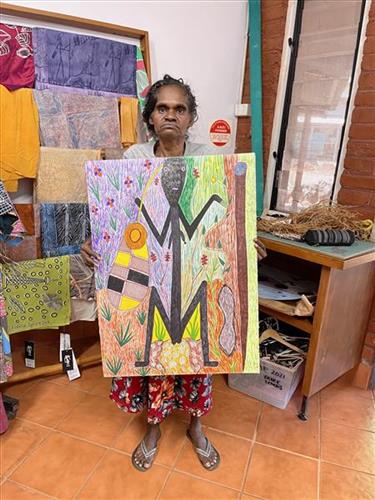
Mimih Dancing

This is an artwork about a dancing Mimih. It’s based on a song line from Korlobididah. My fathers eldest brother used to sing this song line and Unkle Dennis he was a dancer. My real father, Jacky was a dancer as well and he was from Korlobididah.

Jay Jurrupula 2022 

377810582151545


Wak (Black Crow Dreaming)

This screen print depicts a sacred site at Kurrurldul, an outstation south of Maningrida. The original screen print design was made in 2010 but continues to be printed at Babbarra Designs studio. 

The ‘rarrk’, or abstract crosshatching, on this work represents the design for the crow totem ancestor called Djimarr. Today this being exists in the form of a rock, which is permanently submerged at the bottom of Kurrurldul Creek. The Djimarr rock in the stream at Kurrurldul is said to move around and call out in a soft hooting tone at night. Both the stone itself and the area around it are considered sacred.

The imagery represents the Djimarr rock at the bottom of Kurrurldul creek – the final transmutation of the Djimarr ancestor being. It also references the crow design used in the sacred Mardayin ceremony, a large regional patrimoiety ceremony now rarely conducted in central and eastern Arnhem Land.

377810582151552


Yawkyawk (young woman spirit)

Yawkyawk is a word from the Aboriginal Kunwinjku language, meaning ‘young woman’ and ‘young woman spirit being’.

Sometimes compared to the European notion of mermaids, yawkyawks are usually depicted with the tails of fish. They have long hair, associated with trailing blooms of algae, typically found in Arnhem Land streams and rock pools.

377810582151551


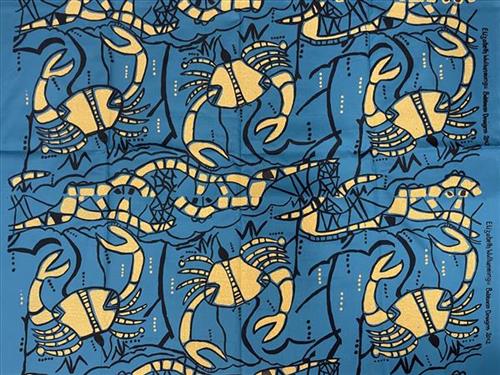
Rrugurrgurda (Mud Crab)

This design tells the story of Elizabeth’s homeland – a dreaming place, a good dreaming place with plentiful mud crabs. Elizabeth’s homeland lies east of Maningrida, at the mouth of Blyth river. This country is known for a large spiritual mud crab, which lives in the area.

Many families go and collect crabs to eat there with long sticks, or collect directly from the shores. Mud crabs hide in the muddy bottoms of estuaries and mangrove forests in areas surrounding Maningrida. After a king tide, a large cyclical tide that bring the crabs out from the mangroves, it is a good time to find crabs.

Rrugurrgurda (mud crabs) is pronounced Ahh-rewg-gurd-gurda in the Burarra language. Rrugurrgurda are good baladji (bush food in Burarra) and can be caught all year round. They are put on the fire to cook and they are ready when they turn a bright orange colour.

22174002198


Status: Stock


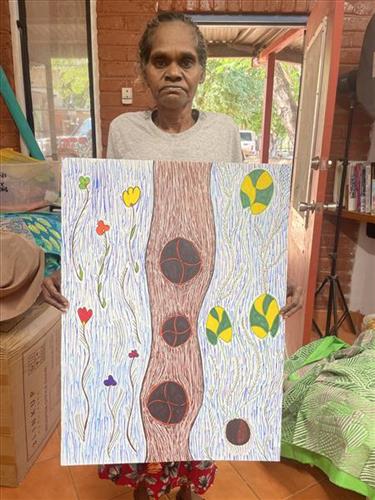
History Beneath the Beauty

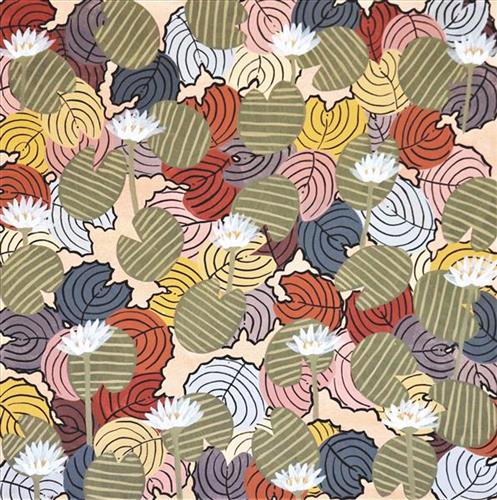
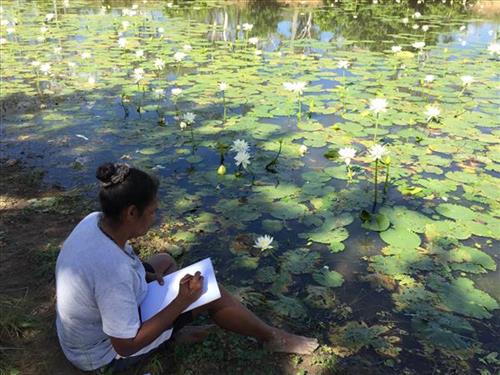
Woorrilbem holds a history. A blast from my grandmother’s past as a child she went to this billabong to collect the lily flowers, its bulb, mussels and other edible bush food to take back to her family. One particular day on a usual walk she saw two strange men way off in the distance. A manager on horse back and a black tracker leading a donkey with a sack on its back.  They were tracking Aboriginal, Miriwoong people to work for the manager at the station.  As the men came closer, my grandmother slipped into the billabong to hide until the men were out of sight.  My grandmother then got out and started running as fast as she could back to her family, but it was too late as the strange men were already approaching the camp. With mixed emotions my grandmother spoke and pointed at the same time to the strange men, but the black tracker spoke in Miriwoong language and said they were friendly people looking for workers to work at the station for sugar, tea and tobacco as rations and brought flour to make bread as a peace offering,  Some Miriwoong people did go to work for the strange manager man. My grandmother and her family stayed on country.  If we don’t carry this story and tell our children the history of Woorrilbem and its beauty will take over and my grandmother’s Country will be lost and forgotten forever.

The different coloured lily pads are my grandmothers emotions flowering through the billabong. The green lily pads are the original colours covering the history of my grandmother’s story.  The straight lines represents the calm relaxing billabong before my grandmother entered the water.