Yíbarda
yíbarda – meaning a kind of fish in Ndjébbana

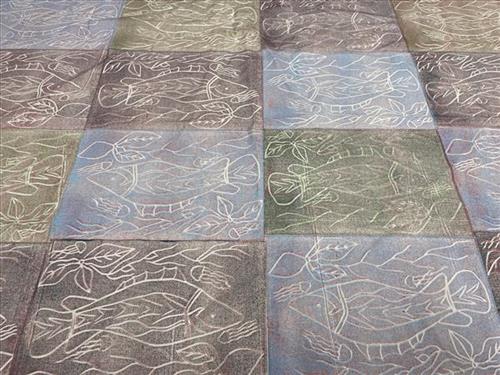
yíbarda – meaning a kind of fish in Ndjébbana

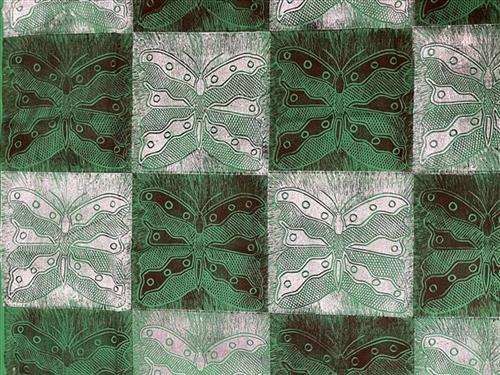
Butterfly




The ceremony known throughout Arnhem Land generically as Marradjiri is a ceremony of diplomacy given by one group to another to establish good relations and to strengthen kinship (for example by marriage) and economic ties (for example the sharing of clan estate resources).
The central object in the Marradjiri ceremony is a decorated polepainted with clan designs. The work on the pole is undertaken as part of the ceremony and is accompanied by the associated song series.
Often the ceremony commences when one group invites another and the people invited perform the Marradjiri. When a child finds their first bush food or object of value it is taken as a sign that the Marradjiri ceremony should be performed and an invitation is sent out sometimes in the form of a lock of hair from this child or in the form of some other token, sometimes encased in beeswax and wrapped in cloth. The token is delivered to the invited performers who then prepare to give the ceremony to their hosts at the residence of the host group.
Each evening before sunset the performance begins and continues for two or three hours. In the early stages of the ceremony the dancers perform with body clan designs which become progressively more elaborate as the time approaches the end of the ceremony. Usually this may take two or three weeks.
In the Marradjiri, the pole is said to represent a mast of a Makassan prau. There exists many loan words (over three hundred in total) in North Australian Aboriginal languages and one of these is the Makassan word for mast of a ship ‘palayarrang’ which has changed in some Maningrida languages to ‘bulayarrang’ and a few other variations.
It is possible that the name of this ceremony has its origins in the Makassan word for mast. The Marradjiri ceremony is influenced heavily by Makassan themes.
On the final night of the ceremony the pole appears out of the darkness on the edge of the camp decorated with feathered tassles and long ropes which represent the rigging of the prau. Dancers hold these ropes and move the pole back and forth in the fashion of a prau rolling in rough sea as depicted. The dancers bring the pole down and dance with it until it is finally presented to the host group with great ritual and the pole is set into the ground to the accompaniment of the head song man chanting through a long list of clan names associated with the travels of creation ancestors.
When the dancers part with the pole they break into mourning as they may have done at the end of each Makassan trepanging season when their Makassan visitors returned to Sulawesi on the new early dry season winds. The pole is then kept by the host group, often being hung from the roof of a dwelling. Text taken from Maningrida Arts and Culture

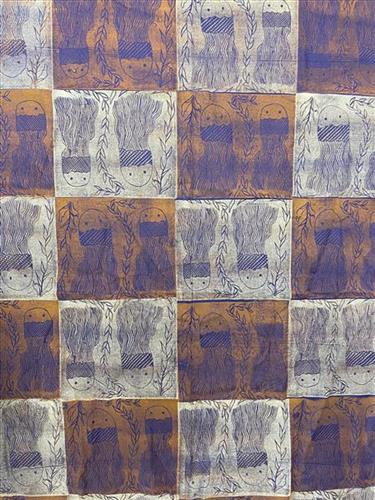
Mábbarla means Jelly Fish in Ndjébbana.

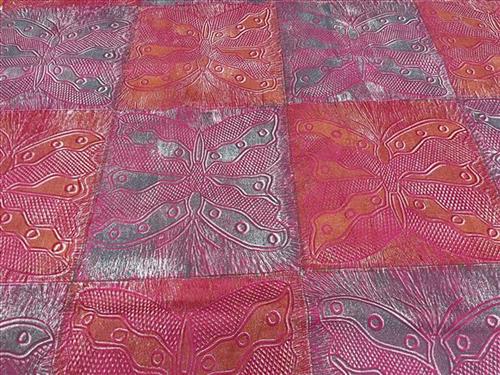
Butterfly

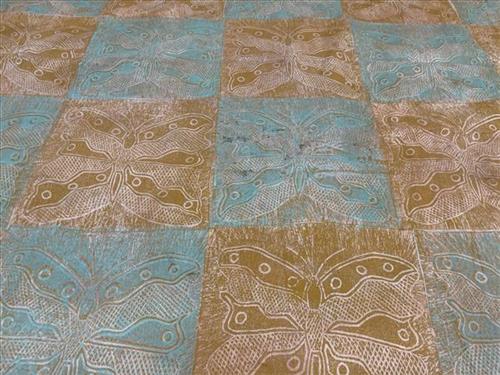
Butterfly
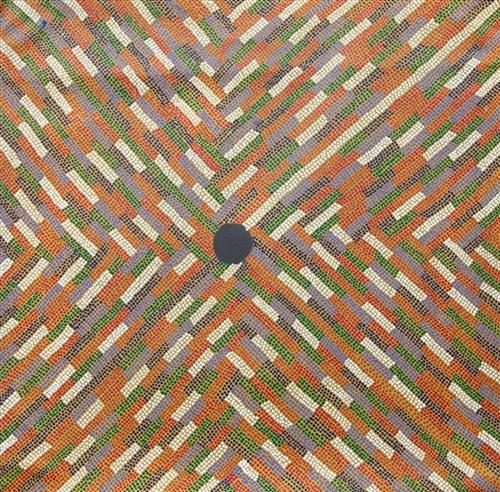
“This area here is our Country. It’s our Country right here. We returned to our Country with a Toyota and a grader that made the road. A grader right up to here. Punmu is a good place. It’s a happy place to live. My spirit feels good living here. In pujiman (traditional, desert dwelling) time we lived in this area now. I’m happy with this life now, happy because I feel grounded by my Country. It’s important to hold onto the legacy of the ancestors. It’s up to the young people to carry it on now. For the ancestors past and present.”
– Minyawe Miller as translated by Kanyirninpa Jukurrpa
Punmu refers to a region and an Aboriginal community within its vicinity, located 670km North-East of Newman. Created during the return to Country movement of the 1980s, with the recognition of Martu land rights and native title, the community was named after a nearby Jukurrpa (Dreaming) story.
Punmu Aboriginal community sits on the edge of a large salt lake known as Nyayartakujarra, or Lake Dora. The lake runs south into Karlamilyi River (Rudall River). Surrounding Punmu are numerous fresh water soaks and the red tali (sandhills) typical of the area. The most frequently visited yinta (permanent springs) around Punmu include Wirlarra, Rawa, Yilyara, Jila-jila and Tuu-tuu.
The Country around Punmu features in several Jukurrpa stories. Of particular importance is the story of the Jila Kujarra (Two Snakes), one of the key Jukurrpa narratives for the Martu. Though the story belongs to Warnman people, it is shared across the Western Desert with several other language groups. The narrative centres on the travels of two snakes as they are pursued by the Niminjarra, spiritual ancestors of the Warnman people.
Before transforming themselves into snakes, the Jila Kujarra were young brothers. As snakes, they began travelling home to their mother, but were intercepted by the Niminjarra, who tracked the Jila Kujarra to Paji, east of Nyayartakujarra (Lake Dora). Though the Jila Kujarra eluded their pursuers here by escaping under the lake at Paji, they were soon after speared and injured by two Pukurti (initiates with bundled hair) at Nyayartakujarra, who returned with the Niminjarra to cook the snakes at the site of Kumpupirntily (Kumpupintily, Lake Disappointment). As the Niminjarra cut down the length of the Jila Kujarra, the snake’s bladders were pierced, causing an explosion of scalding hot urine in which the Niminjarra all perished and became black rocks at the site. The spirits of the Jila Kujarra returned to their mother at Nyayartakujarra, where the mother and her sons entered the ground below Nyayartakujarra and remain to this day.
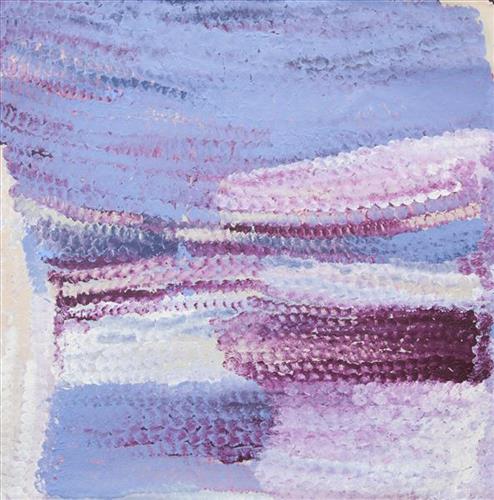
“We were climbing Parnngurr hill; we were frightened. Kartiya (Europeans) would walk around, trying to catch Martu people. We would run up the hill and hide. We watched them catch people. We were eating flour that white people gave us. It was horrible. From [Parnngurr rockhole], we got in the truck and went with the white people to Jigalong. Kumpaya [Girgirba], Jakayu [Biljabu] and Ngamaru [Bidu], we were all on top of the hill looking at the white people.”
– Bugai Whyoulter
Parnngurr rockhole is located 370km east of Newman. This site lies within Bugai’s ngurra (home Country, camp), the area which she knew intimately and travelled extensively with her family in her youth. For many Martu, including Bugai, Parnngurr also signifies the location at which their nomadic bush life came to an end. Poignantly described here by Bugai, it was here that a group of 29 Martu were picked up by the Native Welfare Department to be taken to Jigalong Mission in 1963. Collectively the group had come to the decision to move to the mission as a result of an extended drought, which had caused a scarcity in food and water resources. The group also wanted to join their families, who had already moved to Jigalong.
At the junction of three linguistic groups; Manyjilyjarra, Kartujarra, and Warnman, Parnngurr rockhole was a critical and permanent source of water during the pujiman (traditional, desert born) era, supporting many ritual large gatherings. During this nomadic period families stopped and camped here depending on the seasonal availability of water and the corresponding cycles of plant and animal life on which hunting and gathering bush tucker was reliant. At Parnngurr and other similarly important camp sites families would meet for a time before moving to their next destination. Parnngurr rockhole and its surrounds are physically dominated by distinctively red tali (sandhills), covered sparingly with spinifex and low lying shrub.
Parnngurr community, just north of Parnngurr rockhole, was created during the Return to Country movement of the 1980s, coinciding with the recognition of Aboriginal land rights and native title. The community was named after its’ original primary water source. Until recently the community was widely known as Cotton Creek, after the European name for the ephemeral creek running alongside the community.
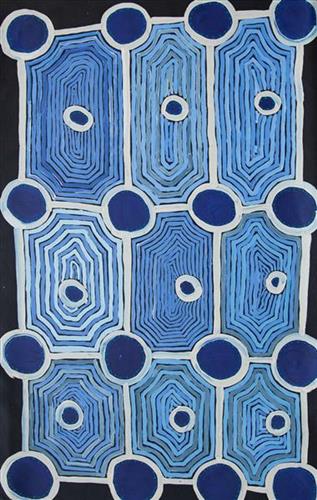
“These are the rockholes around Kunawarritji (Canning Stock Route Well 33). My mum [Jugarda Dulcie Gibbs] painted the same. It’s my father’s Country; he was born at Well 33. I’m painting Well 35, Kinyu, all the way to Well 38, Wajaparni. This is a big place for us. It’s important. I went on a trip with Kanyirninpa Jukurrpa [ranger group] last year [2018] to visit all these rockholes.”
– Pauline Williams
Kunawarritji is an important site in the Great Sandy Desert where multiple stories and histories intersect. The area forms part of Pauline’s ngurra (home Country, camp) through her family. Originally a spring water and major Martu pujiman (traditional, desert dwelling) camping site, at the turn of the 20th century Kunawarritji was converted into a well along the Canning Stock Route. Each year throughout the 1930-50s, the well became a site of contact between the drovers, their cattle, and desert families.
Long before colonial history entered this Country, however, other stories dominated the site. Primarily, Kunawarritji features in the Minyipuru (Jakulyukulyu, Seven Sisters) Jukurrpa (Dreaming). Minyipuru is a central Jukurrpa narrative for Martu, Ngaanyatjarra, Pitjantjatjara and Yankunytjatjara people that is associated with the seasonal Pleiades star constellation. Today, Kunawarritji is a site of return, a place where people came back to continue their life in the desert with the formation of Kunawarritji Aboriginal community in the early 1980s. The community’s cultural significance endures, with the population swelling up to 1000 during cultural business.
As Pauline states in her account, this work depicts the waterholes and tali (sandhills) in the area surrounding Kunawarritji, typically represented with circular forms. During the pujiman period, knowledge of water sources was critical for survival, and today Martu Country is still defined in terms of the location and type of water. Each of the hundreds of claypans, rockholes, waterholes, soaks and springs found in the Martu desert homelands is known through real life experience and the recounting of Jukurrpa narratives by name, location, quality and seasonal availability.
Transfer of cultural knowledge through visual arts is an important way for Martu artists to keep their culture strong. Younger Martu artists like Pauline typically begin painting with their parents, grandparents and extended family, thus fostering an organic process of learning, not only about painting techniques, but also specific locations, family histories, traditional ways of life, bush tucker and Jukurrpa.