

377810582122707
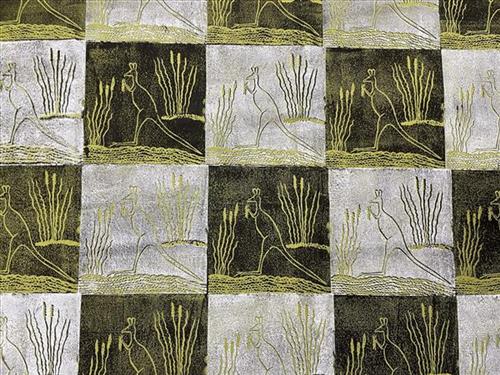
Kangaroo

377810582122626
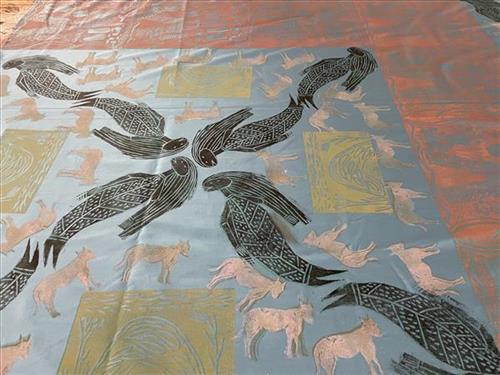
Yawkyawk and the Eiffel Tower

377810582122622
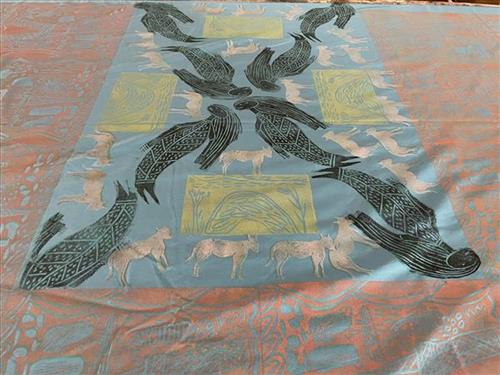
Yawkyawk and the Eiffel Tower
Yawkyawk (young women spirit) and the Eiffel Tower

377810582122652
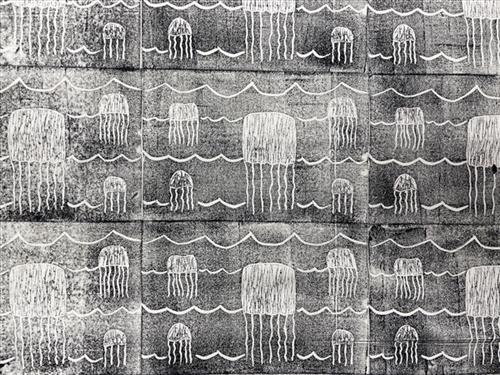
Mábbarla
Mábbarla (jelly fish) *Ndjebbana
111982122630
Ngalkodjek Yawkyawk
This artwork depicts the Ngalkodjek Yawkyawk of Barrihdjowkkeng country.
“This story is very old. That old man [my father Crusoe Kuningbal] when he was alive, told that story to me, to all of us. He told us about the yawkyawk (mermaid) spirit women called Ngalkodjek who lives in the billabong on my country. He told us how they call out loudly, how they call out as they walk along.
That is what they do, calling out. They walked around eating bush foods like those little bush yams. They would pound the yams into a pulp and eat them. That is their traditional food which they eat.
When they walk down from the bush, they follow a set path that belongs to them and they walk along calling out. That is their path which they take. It is an old traditional route.
They placed a woman’s breast into the country. That rock was not there originally, but it was a woman’s breast. It is the breast of those women.
They put that djang [sacred place] there, and then at the time when non-Aboriginal people arrived in the region, then the breast turned to stone. Now it has turned solid into rock.”
– Owen Yalandja
111982122629
Ngalkodjek Yawkyawk
This artwork depicts the Ngalkodjek Yawkyawk of Barrihdjowkkeng country.
“This story is very old. That old man [my father Crusoe Kuningbal] when he was alive, told that story to me, to all of us. He told us about the yawkyawk (mermaid) spirit women called Ngalkodjek who lives in the billabong on my country. He told us how they call out loudly, how they call out as they walk along.
That is what they do, calling out. They walked around eating bush foods like those little bush yams. They would pound the yams into a pulp and eat them. That is their traditional food which they eat.
When they walk down from the bush, they follow a set path that belongs to them and they walk along calling out. That is their path which they take. It is an old traditional route.
They placed a woman’s breast into the country. That rock was not there originally, but it was a woman’s breast. It is the breast of those women.
They put that djang [sacred place] there, and then at the time when non-Aboriginal people arrived in the region, then the breast turned to stone. Now it has turned solid into rock.”
– Owen Yalandja

377810582122149
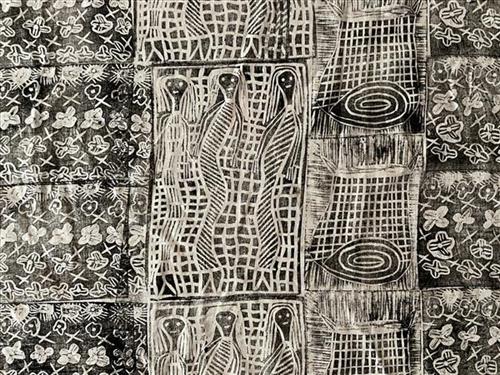
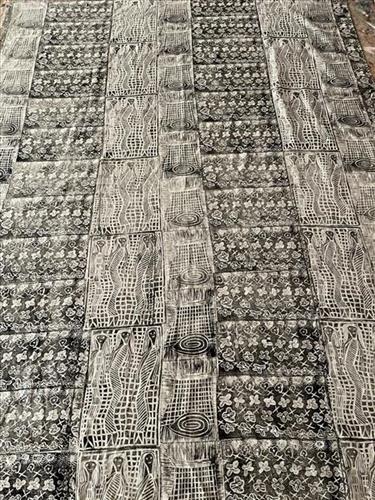
Yawkyawk and bush flowers

377810582122142
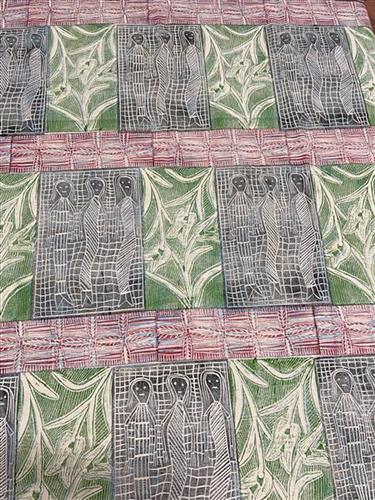
Yawkyawk (young woman spirit)
Yawkyawk is a word from the Aboriginal Kunwinjku language, meaning ‘young woman’ and ‘young woman spirit being’.
Sometimes compared to the European notion of mermaids, yawkyawks are usually depicted with the tails of fish. They have long hair, associated with trailing blooms of algae, typically found in Arnhem Land streams and rock pools.

377810582122138
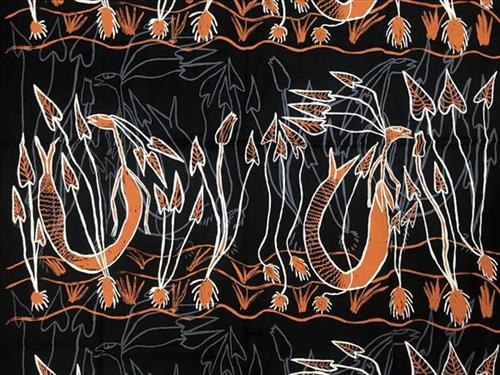
Yawkyawk dja Wayuk (Young Woman Spirit and Water Lily)
Deborah Wurrkidj is a Kuninjku artist from the Kurulk clan whose country lies around the outstation of Mumeka in central Arnhem Land. This image depicts a female water spirit, or yawkyawk, from a creek in the rock country near Yikkarakal. The Yawkyawk is a story of the Duwa moiety that Deborah learnt to paint from her father.
Yawkyawk are water spirits (mermaids) and also young women. This design is yawkyawk in the billabong near Yikkarakal. Yawkyawk move like women, the one on the left is the old woman and on the right is the young woman. They are mother and daughter.
“Sometimes you can hear yawkyawk talking at night. My grandmother told me a story that they heard those yawkyawk and when they looked out with their torch at night, all the women saw the yawkyawk tails flapping and disappearing in the water. The water is very cold in that billabong and the sand is soft, you might fall down there in the mud. There are also wayuk (water lilies) in this design, and other grasses. Sometimes when they are cold, the yawkyawk get out of the water to lie in the sun, but when they hear our footsteps they quickly jump back in.
when wer were on the outstation our elders would tell us this story of the Yawkyawk. They look after my place. They also give a babay to you.” – Deborah Wurrkidj
Beautiful black linen with slight stretch, grey white and ochre ink.
Hand Screen Printed by Publisher, Sydney Australia