
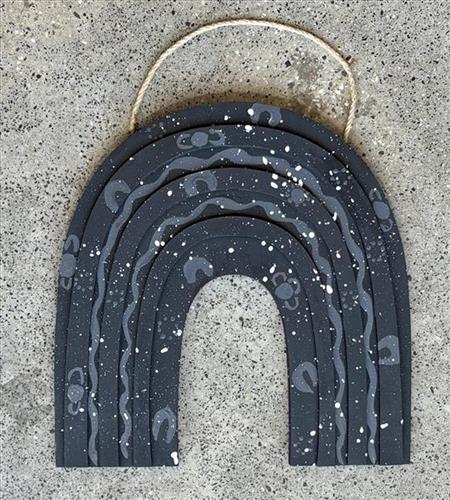

377816082411589
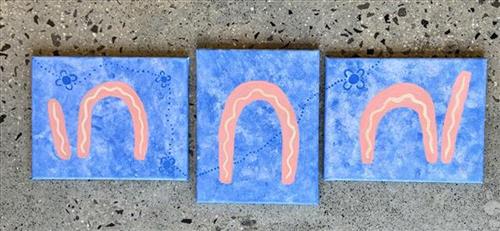
Woman, Person, Man
Three panels, Three energies- Connected, equal, whole

377816082411629
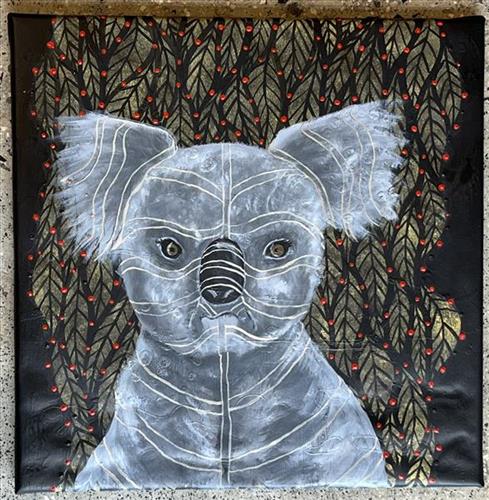
Threatened
She sits high up in the Manna Gum Tree. Overlooking her country she can see, patches of bushland sparsely spread apart. The trees she needs for survival and safety are across the pastures, and the busy roads. Over their on the other side. Living isolated, does not help her kind, Survival needs diversity in her tribe. A koala living up in her tree, waiting for her mate in a different place Hoping to bridge the divides in place.
225182411500
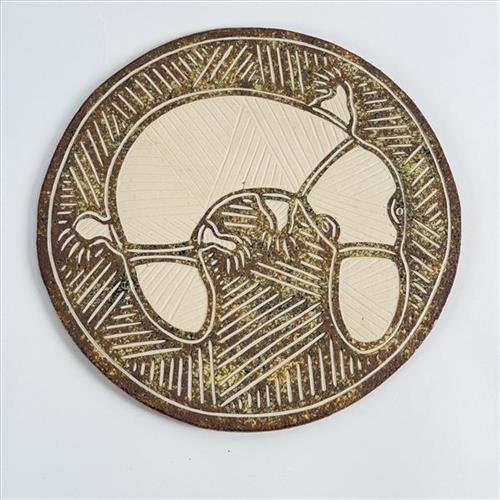
Wambiji (Platypus)
377815582411534
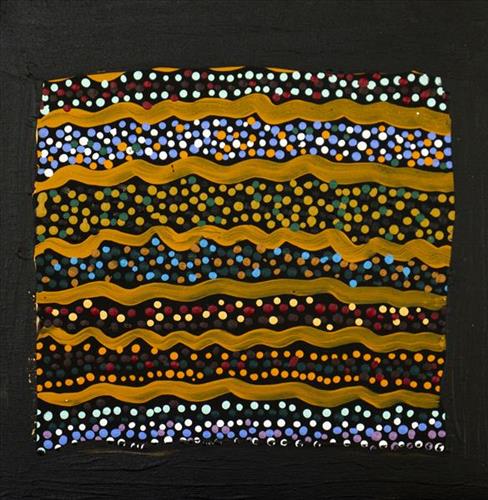
Desert to the Sea
“I know it’s Karajarri land. We got Karajarri rock — three of them. There’s a salt place. There’s Bidyadanga. That’s called Black Rock. Did they tell you the story for that place?”
– Bernadette Thomas
This artwork reflects the artist’s connection to Bidyadanga, a place where the desert meets the sea. Through colour, pattern, and texture, the painting captures important themes that shape the identity of the community and Art Centre.
Bidyadanga sits on Karajarri Country, where desert Country meets saltwater Country. The community is home to Karajarri people and to desert families who travelled from the Great Sandy Desert to La Grange Mission in the 1960s and 70s, during a time when drought and changing conditions dried desert water sources. The first five language groups to build the community together were Nyangumarta, Mangala, Yulparija, Juwaliny and Karajarri. Today, Bidyadanga continues to grow, welcoming families from across the Kimberley, Pilbara and beyond, creating a strong and diverse cultural community.
Artists draw on stories of place, family, movement, and survival — caring for both land and sea, hunting and fishing, and living between two immense environments. Patterns, marks, and flowing forms echo desert dunes, waterholes, tidal flats, reefs, bushfoods, and sea life, honouring the knowledge held across generations.
In this work, the artist celebrates the beauty of Country and community, offering a glimpse into the rich histories, cultural strength, and enduring connection to land, sea, and way of life.
377815582411533
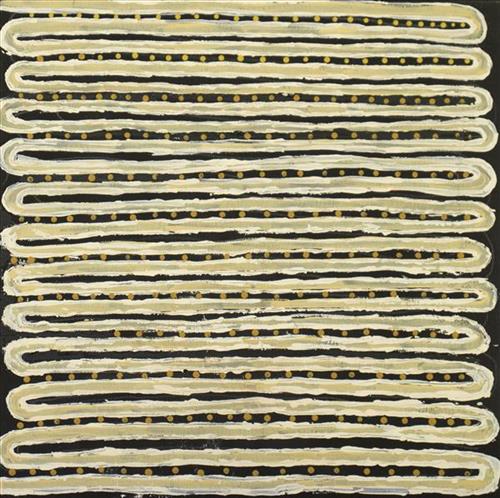
What I Capture
“What I capture is my inner belief as a Native Aboriginal Australian woman — a feeling of belonging to something bigger than myself. My work reflects that sense of connection. What inspires your belief?”
“Women coming together as one — sharing knowledge, wisdom and kinship through activities, caring, storytelling and culture, passed down from our grandmothers to their grandmothers. These practices are our stronghold, bringing warmth, safety and structure for women.”
— Erlina Thomas
This artwork reflects the artist’s connection to Bidyadanga, a place where the desert meets the sea. Through colour, pattern, and texture, the painting captures important themes that shape the identity of the community and Art Centre.
Bidyadanga sits on Karajarri Country, where desert Country meets saltwater Country. The community is home to Karajarri people and to desert families who travelled from the Great Sandy Desert to La Grange Mission in the 1960s and 70s, during a time when drought and changing conditions dried desert water sources. The first five language groups to build the community together were Nyangumarta, Mangala, Yulparija, Juwaliny and Karajarri. Today, Bidyadanga continues to grow, welcoming families from across the Kimberley, Pilbara and beyond, creating a strong and diverse cultural community.
Artists draw on stories of place, family, movement, and survival — caring for both land and sea, hunting and fishing, and living between two immense environments. Patterns, marks, and flowing forms echo desert dunes, waterholes, tidal flats, reefs, bushfoods, and sea life, honouring the knowledge held across generations.
In this work, the artist celebrates the beauty of Country and community, offering a glimpse into the rich histories, cultural strength, and enduring connection to land, sea, and way of life.
377815582411531
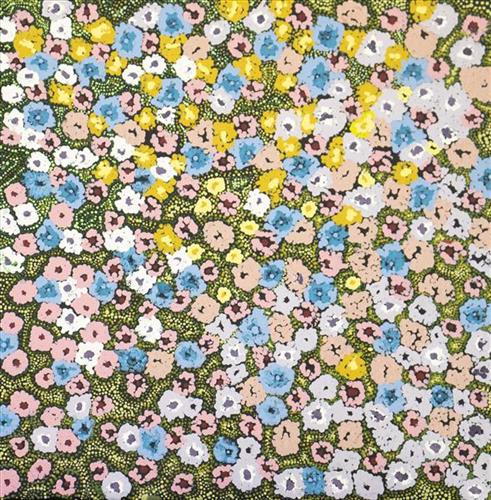
What I Capture
“What I capture is my inner belief as a Native Aboriginal Australian woman — a feeling of belonging to something bigger than myself. My work reflects that sense of connection. What inspires your belief?”
“Women coming together as one — sharing knowledge, wisdom and kinship through activities, caring, storytelling and culture, passed down from our grandmothers to their grandmothers. These practices are our stronghold, bringing warmth, safety and structure for women.”
— Erlina Thomas
This artwork reflects the artist’s connection to Bidyadanga, a place where the desert meets the sea. Through colour, pattern, and texture, the painting captures important themes that shape the identity of the community and Art Centre.
Bidyadanga sits on Karajarri Country, where desert Country meets saltwater Country. The community is home to Karajarri people and to desert families who travelled from the Great Sandy Desert to La Grange Mission in the 1960s and 70s, during a time when drought and changing conditions dried desert water sources. The first five language groups to build the community together were Nyangumarta, Mangala, Yulparija, Juwaliny and Karajarri. Today, Bidyadanga continues to grow, welcoming families from across the Kimberley, Pilbara and beyond, creating a strong and diverse cultural community.
Artists draw on stories of place, family, movement, and survival — caring for both land and sea, hunting and fishing, and living between two immense environments. Patterns, marks, and flowing forms echo desert dunes, waterholes, tidal flats, reefs, bushfoods, and sea life, honouring the knowledge held across generations.
In this work, the artist celebrates the beauty of Country and community, offering a glimpse into the rich histories, cultural strength, and enduring connection to land, sea, and way of life.
377815582411530
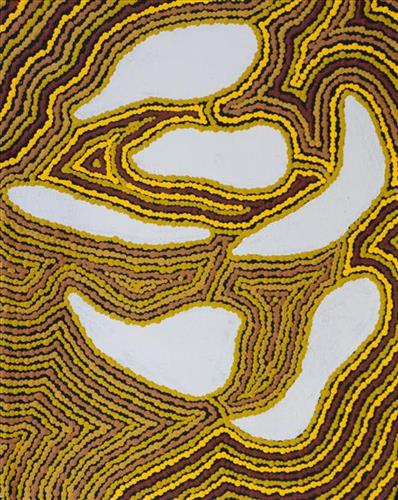
Claypans and Spinifex
“This painting is about the claypans and spinifex in the dry season time, when spinifex, the native plants and the Country gets dry. When the rain comes it makes the Country green again. Some animals love dry season for hunting. Sometimes we go hunting for animals for our families.
We pull out the whole plant, roots and all and then we twist it around to make a flat basket (jitatu) like a donut ring. Then this sits on the head and you can carry water for example. The water is in a kapara like a shallow bowl which you make from the hard wood of a tree like parntal (Owenia reticulata, desert walnut).”
– Edward Badal
This artwork honours Nyangumarta Country — from the long sweep of Eighty Mile Beach and coastal flats to the rolling sand dunes and salt lakes of the Great Sandy Desert. It holds the movement between saltwater and desert: tides, reefs and mangroves to the west; dunes, claypans and waterholes to the east.
Lines flow like wind across spinifex and waves in the ocean; dots gather where waters sit after rain; colours shift from deep blues to desert reds and whites of saltpan. The painting also reflects the ongoing work of Nyangumarta families and rangers to look after Country — sea and land — guided by community plans and Indigenous Protected Area management.
377815582411529
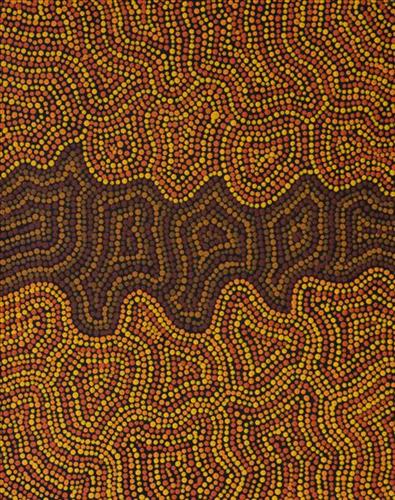
Dry Season
“This painting is about the dry, when spinifex, the native plants and the Country gets dry. When the rain comes it makes the Country green again. Some animals love dry season for hunting. Sometimes we go hunting for animals for our families.”
– Edward Badal
This artwork reflects the changing seasons across Country, showing how life shifts with the dry and wet. In Bidyadanga and the surrounding desert and coastal lands, the rhythm of the year guides movement, gathering, hunting, and time spent with family on Country.
As the dry season arrives, the land opens up again — red dunes, salt flats, and long beaches shining in the heat. Winds change, tides get bigger, and rangers burn Country to look after it, clearing grass, making space for new growth, and keeping the land healthy. Bush turkeys, goannas, fish, stingray, turtle, and shellfish are hunted, and families camp, share stories, and travel between desert and coast.
When the wet season return, big clouds roll in, storms build over the sea, and lightning cracks across the land. Country comes alive — water fills the waterholes and claypans, flowers and grasses grow, and birds, bush foods, and animals become abundant.
Through colour, pattern, and rhythm, the artist captures the cycle of seasons and the knowledge passed down — knowing when to gather certain foods, when animals are fat, when storms are coming, and how to care for Country through fire and everyday living. The work celebrates the constant relationship between people, weather, land, and sea, honouring the strength and continuity of cultural life.
377815582411528
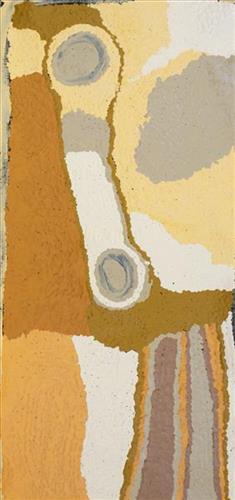
My Ngurra (Country), Jupurr
“My ngurra (home), Juwaliny — my language. My Country Jukurrpa, Yirnpa, Yimiri, Yulpu, Kupankurlu, Lyinjalung, and Lungkarung. Big one warla — that’s the area where the old people belong, ngurra. They been come here and pass away. We come here, Bidyadanga — mummy, daddy, all here. I came from the desert — I sat down in Jigalong, Punmu, Parnngurr, 33 (Kunawarritji), Newman, and I came back here (Bidyadanga).”
– Yikartu Bumba
This painting shows the artist’s Country in the Percival Lakes region. Yikartu’s daughter, Bali Bumba, was born in this area when they lived a traditional pujiman (desert-born) life. The painting includes lyinji (claypan), jurnu (waterhole), kurru (river), and a big warla (lake).
This artwork depicts Country in and around the Great Sandy Desert — an immense area stretching from the edges of the Kimberley near Bidyadanga and Eighty Mile Beach, east through Walyarta (Mandora Marsh) and Percival Lakes, and down toward Kulyakartu, Kunawarritji (Well 33) and the Canning Stock Route. It is a vast landscape of dunes, claypans, salt lakes and waterholes.
For many families connected to Bidyadanga, this is ancestral land and holds places and significant sites where the old people lived pujiman (traditional desert-dwelling) lives before travelling to the coast.
The Great Sandy Desert is not empty — it is full of life, memory and movement. Soft sandhills rise and fall like waves, spinifex shimmers in the wind, flowers bloom after rain, and jila (living waterholes) lie hidden beneath the surface. People hunted goanna, bush turkey and small animals, dug for water, gathered bush foods, and camped beside claypans. Families walked long distances between soaks, teaching others how to read the land, follow tracks and travel safely.
In painting, the desert becomes a map of belonging — circles showing water and camps, lines following walking tracks and dunes, and soft patterns recalling plants, sand ridges and the glow of sunsets across wide skies. Colours shift between deep reds, ochres, warm sand tones and the greens that come after rain.