225182411492


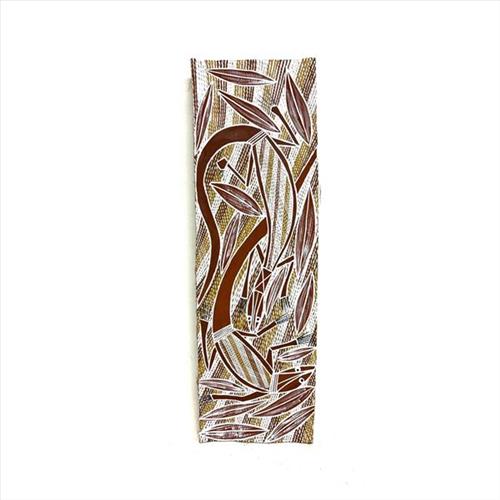
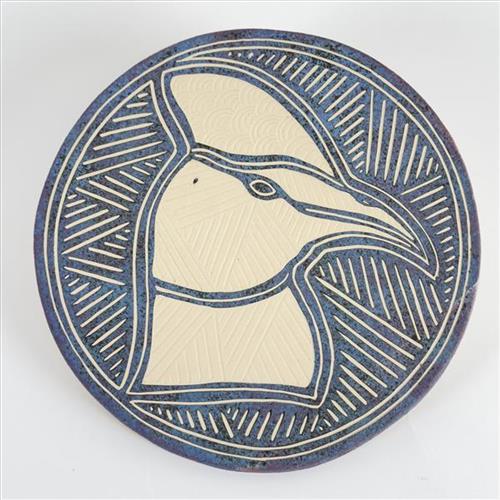
Kurranji (Cassowary)

Long time ago, the cassowary was a precious food source for our ancestors. They ate the meat and the eggs, used the feathers for ceremonies and weaving, and the skins for blankets.  The Cassowary is a powerful Totem for us because it helps growing many plants that were important for food, medicine and tool making. The Cassowary can walk wide distances and spread the seeds of the fruits he eats everywhere. Plants grow also out of his dung.

220982394224


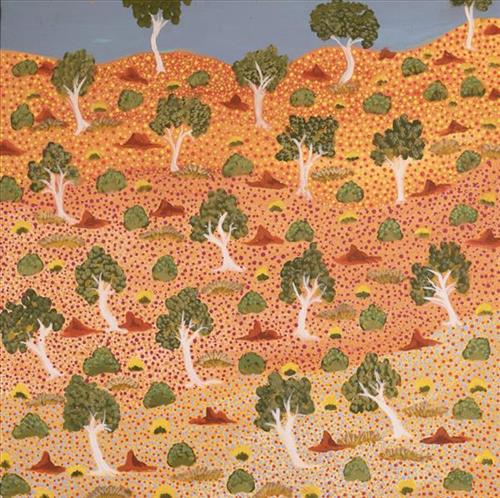
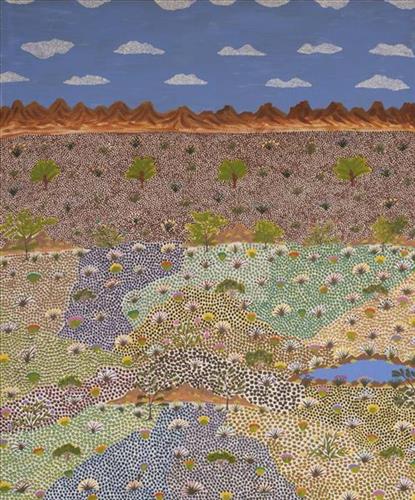
Gunderson Kemarre Lewis – Great Grandmothers Country

I paint my Great Grandmothers country around Canteen Creek. Long time ago she hunted around this soakage in this country. When I paint, I paint that country, the soakage the bushflowers the sandhills and the distant mountains.

I hunt this country now.

220982379353


Valerie Kemarre Lewis – My Mothers Country

My mothers country is flowers, trees and mountains. I love to paint them. We see springs, the water from the springs is like rainwater, fresh and clean. We hunt goanna and turkeys, we roast them in the fire and the flesh is strong and sweet.

When we hunt we sleep at night next to the fire, the skies are big and the stars are beautiful, it makes me feel good.

115682410902


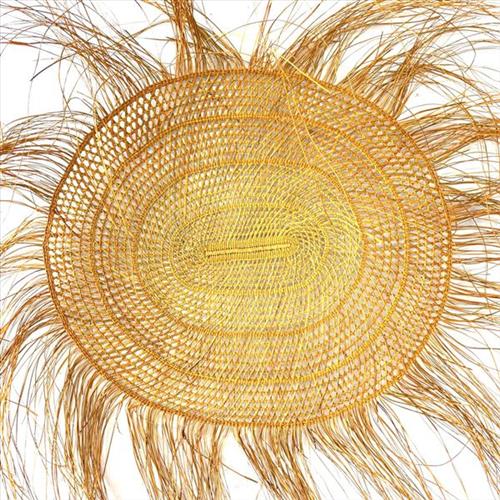
Woven Mat

Yolŋu weavers of Arnhem Land create utilitarian, ceremonial, and decorative pieces using naturally sourced materials. This mat is made from young Pandanus spiralis leaves, harvested with a wooden hook, stripped of prickles, and dried to create strong, resilient fibres. These fibres are then twisted, coiled, or woven using traditional techniques to produce both functional and decorative mats.

Bula’bula weavers exclusively use natural dyes, derived from locally sourced roots, leaves and grasses. These pigments are extracted and infused into pandanus fibres by boiling over an open fire, producing the rich, vibrant colours characteristic of contemporary Yolŋu weavings.

Traditionally, Nganiyal (conical mats) functioned as insect screens when erected and as seating mats when folded, playing an important role in both daily life and ceremonial practices. Today, Yolŋu artists create a variety of shapes, including flat, round, and oblong mats. These non-traditional styles and the use of bright colours became more common after Missionaries began commissioning pieces in this style.
115682410862


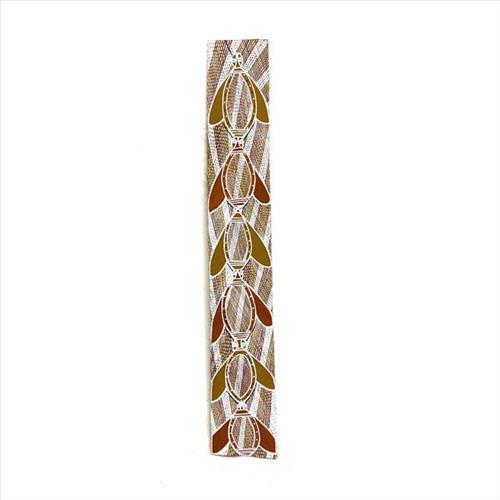
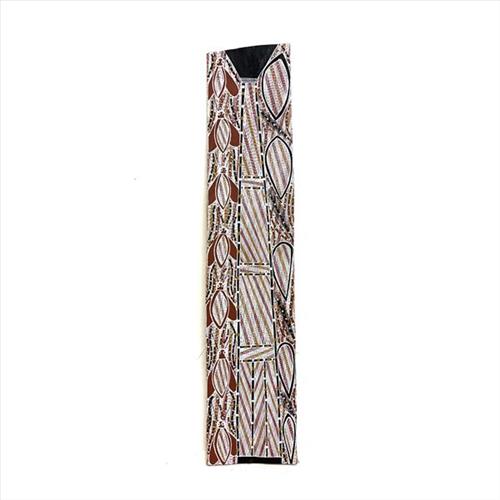
JB Fisher – Sugar bag (honey) Story

JB Fisher often paints subjects related to the Sugar Bag story, a story he has inherited. Sugarbags, or Gulka as it is locally known, are the native honeys found in the bush surrounding Ramingining. 

In this painting, JB paints the spoons made from natural materials that people use to eat scoop up the honey and eat it. 

Sugarbag story is related to the Mewal place, a significant area represented by the special shaped rock, situated in JB Fisher’s Father’s Country, just outside of Ramingining Community in north east Arnhem Land.

115682410860


JB Fisher – Sugar bag (honey) Story

JB Fisher often paints subjects related to the Sugar Bag story, a story he has inherited. Sugarbags, or Gulka as it is locally known, are the native honeys found in the bush surrounding Ramingining. 

In this painting, JB paints the spoons made from natural materials that people use to eat scoop up the honey and eat it. 

Sugarbag story is related to the Mewal place, a significant area represented by the special shaped rock, situated in JB Fisher’s Father’s Country, just outside of Ramingining Community in north east Arnhem Land.

115682410859


JB Fisher – Djanda (lizard)

JB paints stories from his Dhuwa homeland in northeast Arnhem Land. Stories are passed on either paternally or maternally and JB would have learnt these stories from his ancestors. The cross-hatching style (Rrark) is a traditional painting style of this area and can represent elements such as water, air and wind.

His paintings often feature totemic animals of the fresh waters of North East Arnhem Land.

115682410858


JB Fisher – Sugar bag (honey) Story

JB Fisher often paints subjects related to the Sugar Bag story, a story he has inherited. Sugarbags, or Gulka as it is locally known, are the native honeys found in the bush surrounding Ramingining. 

In this painting, JB paints the spoons made from natural materials that people use to eat scoop up the honey and eat it. 

Sugarbag story is related to the Mewal place, a significant area represented by the special shaped rock, situated in JB Fisher’s Father’s Country, just outside of Ramingining Community in north east Arnhem Land.