359709482409664


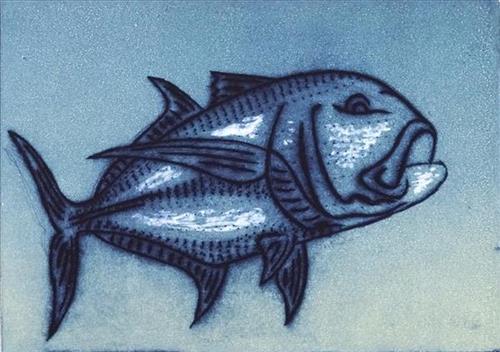
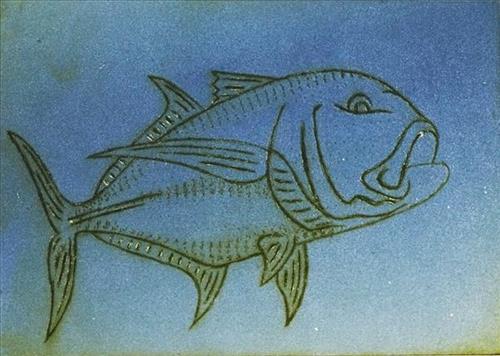
Gaigai

A large, powerful, fast swimming predatory marine fish, the biggest of the travally family, found in the Indo-pacific waters, known as an apex predator that hunts in schools or alone using speed and ambush tactics.

Art centre notes:

Paper Size: 27 x 39cm

Image Size: 15 x 21cm

The artwork is an Drypoint method printed on Hahnamule paper 100% cotton rag with strong archival properties.

359709482409662


Caranx Ignobilis

A large, powerful, fast swimming predatory marine fish, the biggest of the travally family, found in the Indo-pacific waters, known as an apex predator that hunts in schools or alone using speed and ambush tactics.

Art centre notes:

Paper Size: 27 x 39cm

Image Size: 15 x 21cm

The artwork is an Drypoint method printed on Hahnamule paper 100% cotton rag with strong archival properties.

115682409719


Djerrk (Bush String Bag)

Djerrk (Bush String Bag) is a flexible, open weave bag made from the bark of Balgurr (red-flowered Kurrajong) but can also be made using Banyan Tree or the Cocky Apple Tree.

The bark is harvested by cutting sections of the tree from the trunk. Depending on the size of the tree, this can involve removing small sections or the whole trunk. The inner bark is then softened by being beaten or chewed, then dyed.

Bula’bula weavers exclusively use natural dyes, derived from locally sourced roots, leaves and grasses. These pigments are extracted and infused into dried balgurr fibres by boiling over an open fire, producing the rich, vibrant colours characteristic of contemporary Yolŋu weavings.

Once dyed, the fibre is separated into fine strips the rolled on the thigh to create a rope, otherwise known as bush string. The bush string is woven and knotted to create the Djerrk (String Bag). This bag was used for every day utilitarian purposes, particularly collecting bush foods.

115682409718


Djerrk (Bush String Bag)

Djerrk (Bush String Bag) is a flexible, open weave bag made from the bark of Balgurr (red-flowered Kurrajong) but can also be made using Banyan Tree or the Cocky Apple Tree.

The bark is harvested by cutting sections of the tree from the trunk. Depending on the size of the tree, this can involve removing small sections or the whole trunk. The inner bark is then softened by being beaten or chewed, then dyed.

Bula’bula weavers exclusively use natural dyes, derived from locally sourced roots, leaves and grasses. These pigments are extracted and infused into dried balgurr fibres by boiling over an open fire, producing the rich, vibrant colours characteristic of contemporary Yolŋu weavings.

Once dyed, the fibre is separated into fine strips the rolled on the thigh to create a rope, otherwise known as bush string. The bush string is woven and knotted to create the Djerrk (String Bag). This bag was used for every day utilitarian purposes, particularly collecting bush foods.

115682409661


Matjka (Ceremonial Body Wear)

Matjka are ceremonial body adornments made from balgurr (Kurrajong).  The string is put over the arms and crossed at the chest, the thick are goes down the spine. Bark is stripped from the tree, smashed with a rock to soften then boiled, sometimes with natural bush dyes. The balgurr is then rolled in the a rope then used to create ceremonial wear. 

The essence of Yolngu ceremonies lies in the reenactment of the ancestral beings’ actions that shaped the land and established the laws that govern it. These ceremonies are conveyed through an intricate blend of songs, dances, paintings, objects, and carefully choreographed sequences of action. 

For Yolngu, these elements are more than mere expressions; they embody the very essence of the ancestral beings. They serve as a vital link to the ancestral world, bridging the past with the present. Each clan holds a unique collection of songs, paintings, and sacred objects known collectively as the clan’s “madayin” or sacred Law, which is intimately tied to the deeds and legacies of the ancestral beings who forged the clan’s land.

The sacred Law of each clan is not isolated but interconnected with the Laws of other clans within the same moiety. This interconnection stems from the ancestral beings’ journeys, which often traversed the lands of multiple clans, creating a shared foundation of Law and tradition.
115682409660


JB Fisher – Narrgi’ṉarrgi (possum- sugar glider)

JB paints stories from his Dhuwa homeland in northeast Arnhem Land. Stories are passed on either paternally or maternally, and JB would have learnt these stories from his ancestors. The cross-hatching style is a traditional painting style of this area and can represent elements such as water, air and wind.

His paintings often feature totemic animals of the fresh waters of north east Arnhem Land.

115682409659


JB Fisher – Wuldulbal/badju (bream)

JB paints stories from his Dhuwa homeland in northeast Arnhem Land. Stories are passed on either paternally or maternally, and JB would have learnt these stories from his ancestors. The cross-hatching style is a traditional painting style of this area and can represent elements such as water, air and wind.

JB’s paintings often feature totemic animals of the fresh waters of north east Arnhem Land.

111982409872


Wak Wak

This painting depicts a sacred site at ‘Kurrurldul’, an outstation south of Maningrida.

The ‘rarrk’, or abstract crosshatching, on this work represents the design for the crow totem ancestor called ‘Djimarr’. Today this being exists in the form of a rock, which is permanently submerged at the bottom of Kurrurldul Creek. The ‘Djimarr’ rock in the stream at Kurrurldul is said to move around and call out in a soft hooting tone at night. Both the stone itself and the area around it are considered sacred.

The imagery represents the rock mentioned above at the bottom of Kurrurldul creek, which is the final transmutation of the dreaming ancestor ‘Djimarr’. Finally, the pattern used here is also the crow design used in the sacred ‘Mardayin’ ceremony, which is a large regional patri-moiety ceremony now rarely conducted in central and eastern Arnhem Land.

111982409714


Saratoga

It is well known that Aboriginal art often depicts images of sacred totems or dreamings of Aboriginal culture. However, the world of the non-sacred also provides a rich source of subject matter for Aboriginal art. Much of the rock art of western Arnhem Land for example features secular topics such as common food animals and plants, depicted because of their economic importance but also merely because of their existence in the environment.

This is a painting of two ngaldadmurrng saratoga fish [Scleropages jardini] sometimes also called the Northern Spotted Barramundi. Saratoga are commonly found in creeks, rivers and billabongs around the artist’s clan estate. The animals depicted are on one level easy to recognize and their meaning is easily accessible. On a deeper level the animals are depicted with intense rarrk – cross-hatched – infill which creates a reference to Mardayin ceremonial mysticism. Saratogas make their nests on the bottom of river beds in the sand by digging with their tails and fins and lay eggs into these depressions. During mortuary rituals the Kuninjku imitate these nests in sand sculpture. At the end of funerals all those who have attended the funeral are required to stand in the ‘saratoga’s nest’ and they are doused with water to be cleansed from the polluting effects of the deceased. A large meteorite crater near Mumeka in the Liverpool River district is said to be the nest of the saratoga which now stands in the landscape as djang – a sacred site.