111582396382


Untitled

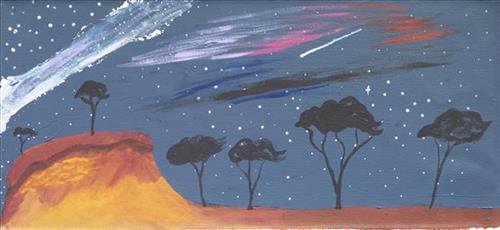
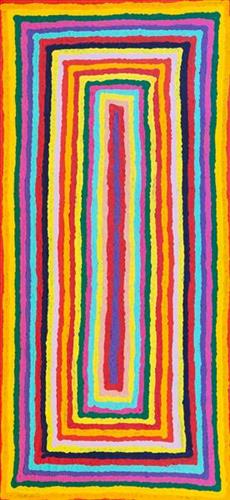
Martumili Artists work with over three hundred artists from remote Martu Aboriginal communities, including Punmu, Parnngurr, Kunawarritji, Jigalong, Irrungadji (Nullagine), and Warralong, as well as from the Parnpajinya (Newman) gallery and studio spaces. Known for their diverse, energetic, and unmediated painting styles, their works reflect the dramatic geography and scale of their homelands. Each artist, however, brings a unique approach to their craft.

Younger Martu artists often start painting alongside their parents, grandparents, and extended family, which fosters an organic learning process. This not only involves mastering painting techniques but also understanding specific locations, family histories, traditional ways of life, bush tucker, and Jukurrpa (Dreaming). Over time, with encouragement from their peers, they develop their own distinct styles and explore unique painting techniques and subject matter. In this work the artist brings a contemporary, evolving perspective to their work.

111582396361


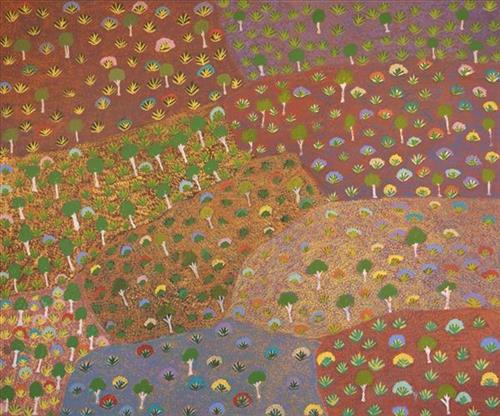
Untitled

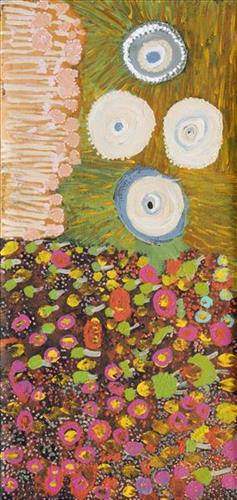
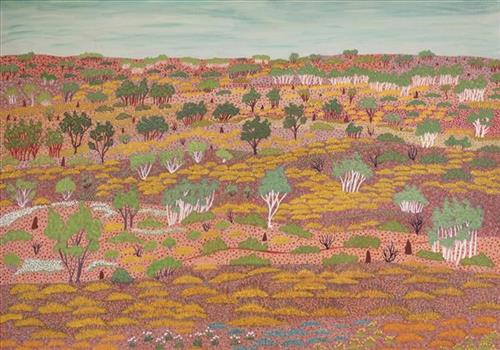
This work portrays an area known to the artist, painted here from memory. During the pujiman (traditional, desert dwelling) era one’s survival depended on their intimate knowledge of the location of resources; thus physical elements of Country, such as sources of kapi (water), tali (sandhills), and different varieties of warta (trees, vegetation) were carefully observed and remembered. Today, this relationship with Country remains equally strong, despite the movement of Martu out of the desert and into remote Aboriginal communities, towns and cities.

Also visible may be traces of life cycles based around kalyu (rain, water) and waru (fire). A thousands of year old practice, fire burning continues to be carried out as both an aid for hunting and a means of land management today. As the Martu travelled and hunted they would burn tracts of land, ensuring plant and animal biodiversity and reducing the risk of unmanageable, spontaneous bush fires. The patchwork nature of regrowth is visible in many landscape works, with each of the five distinctive phases of fire burning visually described with respect to the cycle of burning and regrowth.  

Finally, metaphysical information relating to a location may also be recorded; Jukurrpa (Dreaming) narratives chronicle the creation of physical landmarks, and can be referenced through depictions of ceremonial sites, songlines, and markers left in the land. 

111582396346


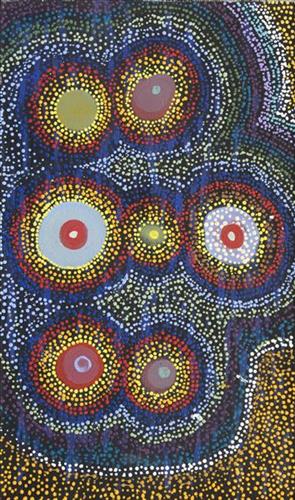
Puntawarri – Helen Dale Samson

“All around is sandhills and lakes on every side. You can see the grass, but the lakes are all dry. In the middle is Puntawarri waterhole. That’s the jila (snake) place, two jila. They nyupa (spouses), they darlings, man and woman. They sleeping near to Puntawarri. It’s a hole in the ground- that jila will come out of the ground and all the dust will go everywhere. All the dust going everywhere, the dust that flies up when the jila flies up out of its hole. The jila isn’t in that place anymore. It’s gone now but that jila used to stop there.” 

 – Helen Dale Samson

Puntawarri is an important cultural area located on the middle stretches of the Canning Stock Route and east of the Jigalong Mission (now Jigalong Aboriginal community). It is also the site of an abandoned community, a waterhole, creek and lake. Puntawarri’s close proximity to Jigalong Mission made it a popular site for Martu to visit during the ‘mission days’. Dale was born at Jigalong Mission, and continues to live in the community now located there today. Though she grew up in the dormitory at Jigalong, she spent her weekends and holidays in the bush, camping at sites such as Puntawarri with her extended family. Once married, she lived around Puntawarri, walking and hunting in the surrounding Country.

For many Martu, like Dale’s family, Jigalong Mission was the site where their pujiman (traditional, desert dwelling) lifestyle came to an end from the late 1940s as they transitioned to a life as stockmen and women working in cattle stations in the Pilbara region and beyond. In the wake of the extreme and prolonged drought of the 1960s, the last of the remaining pujimanpa (desert dwellers) were forced to move to missions like Jigalong, where a supply of food and water was assured. There, many Martu were reunited with family members that had already moved in from the desert.

The waterhole at Puntawarri is said to be populated by several kinds of ancestral jila, as referred to by Dale in her account. However the site is best known for its association with the Ngayurnangalku, fearsome ancestral cannibal beings. During the Jukurrpa (Dreaming) the Ngayurnangalku came together from all over the desert, first stopping near Puntawarri on their travels to Kumpupirntily (Kumpupintily, Lake Disappointment). At Kumpupirntily, they had a big meeting to debate whether or not they would continue to live as cannibals, and eventually came to the decision to stop eating people. That night, a female baby cannibal was born to the eastern Ngayurnangalku on the red sandhills at Puntawarri, where she continues to live today as the ‘big mummy’ Ngayurnangalku. Following protocol, the baby also had to be consulted by the group. She determined that the Ngayurnangalku should continue to eat people. Her decision divided the group, and from this point the group from the east continued to live as ‘bad’ cannibals at Kumpupirntily, while the group from the west became ‘good’, thereafter consuming only animals.
220982396470


Rita Pitjara Beasley – My Father’s Country

“This is my Father’s country.

This place is our hunting place. I always go with my daughters and their children, I show them this place and teach them about the swampy country. We hunt for goannas, bush potato, bush tomato and after the big rain the bush medicine is picked and the roots are dug up to be used.

It is important as my mother taught me this and now I teach my family.”

The community of Ampilatwatja made a conscious decision not to paint altyerr (dreaming stories). The artists paint their country where those stories sit.

220982396469


Beverly Pula Luck – My Mother’s Country

Beverly paints her Mother’s country. When Beverly was a child her mother took her all around her country and showed her the bush medicine and bush tucker.

The knowledge of the bush plants has been handed down through generation to generation and Beverly still spends time hunting and collecting bush medicine plants to use in everyday life.  Taught by her mother and grand mother, Beverly also sings the songs of the bush medicine plants. 

Beverly’s paintings are joyous and full of information regarding bush medicine plants.

The artists of Ampilatwatja made a conscious decision not to paint altyerr (dreaming stories). The artists paint their country where those stories sit.

220982396464


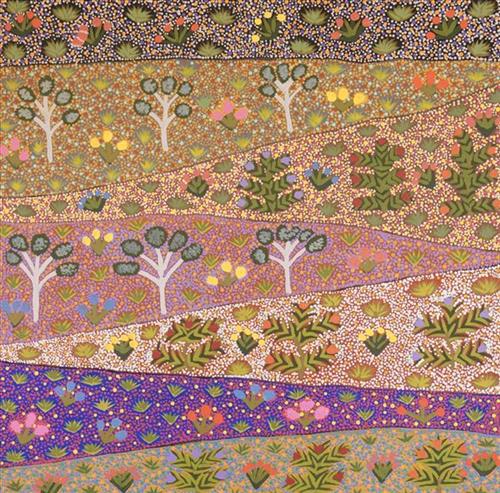
Levina Pitjara Morton – My Country

When I paint, I think of the stories my Grandmother Lilly tells me of how she and her family used to live. Where they lived on her country as she was growing up and how they followed their mothers and their grandmothers.

When I go hunting with family for bush tucker and bush medicine it makes me think of Lilly’s stories, the way they used to live off the land, traditionally.
I paint those places my Grandmother tells me about, I paint how I imagine they were and the life they used to lead.

Levina’s fine dot technique requires a lot of time and patience, communicates the pride and passion she has for her paintings and her country.

The community of Ampilatwatja made a conscious decision not to paint altyerr (dreaming stories). The artists paint their country where those stories sit.

377810582396983


Ngalyod (Rainbow Serpent)

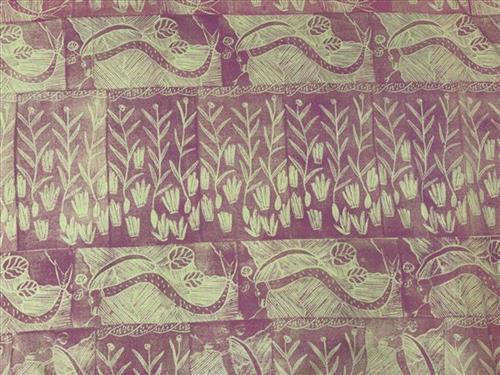
The third part of the story is Ngalyod. Kuninjku people say there are two Rainbow serpents. One is Yingarna, who is said to have been the original creator of all ancestral beings, the ‘first mother’. Yingarna’s first born is Ngaloyd. Yingarna, or her son Ngalyod, are a common subject on contemporary Kuninjku bark paintings. 


Ngalyod is very important in Kuninjku cosmology and is associated with the creation of all sacred sites, djang, in Kuninjku clan lands. For example, ancestral stories relate how creator, or ancestral beings, had travelled across the country and had angered Ngalyod who swallowed them and returned to the earth to create the site. Today, Ngalyod protects these sites, and its power is present in each one. 

Ngalyod has both powers of creation and destruction and is most strongly associated with rain, monsoon seasons and rainbows, which are a manifestation of Ngalyod’s power and presence. Ngalyod is associated with the destructive power of the storms and with the plenty of the wet season, being both a destroyer and a giver of life. Ngalyod’s power controls the fertility of the country and the seasons.

111582397059


Dreamtime

Martumili Artists work with over three hundred artists from remote Martu Aboriginal communities, including Punmu, Parnngurr, Kunawarritji, Jigalong, Irrungadji (Nullagine), and Warralong, as well as from the Parnpajinya (Newman) gallery and studio spaces. Known for their diverse, energetic, and unmediated painting styles, their works reflect the dramatic geography and scale of their homelands. Each artist, however, brings a unique approach to their craft.

Younger Martu artists often start painting alongside their parents, grandparents, and extended family, which fosters an organic learning process. This not only involves mastering painting techniques but also understanding specific locations, family histories, traditional ways of life, bush tucker, and Jukurrpa (Dreaming). Over time, with encouragement from their peers, they develop their own distinct styles and explore unique painting techniques and subject matter. In this work the artist brings a contemporary, evolving perspective to their work.

377810582397137


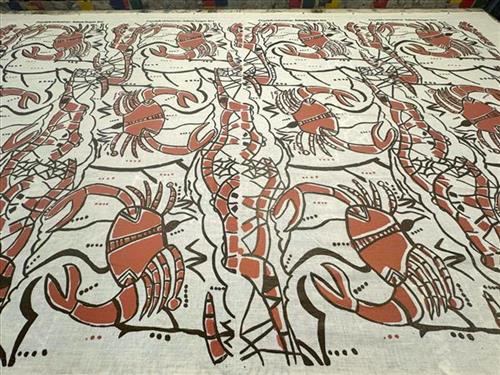
Rrugurrgurda (mud crab) * Burarra

This design tells the story of Elizabeth’s homeland – a dreaming place, a good dreaming place with plenty of mud crabs. Elizabeth’s homeland lies east of Maningrida, at the mouth of the Blyth river. This country is known for a large spiritual mud crab, which lives in the area.

Many families collect crabs to eat there with long sticks, or collect directly from the shores. Mud crabs hide in the muddy bottoms of estuaries and mangrove forests surrounding Maningrida. After a king tide, a large cyclical tide that brings the crabs out from the mangroves, it is a good time to find crabs.

Rrugurrgurda (mud crabs) is pronounced Ahh-rewg-gurd-gurda in the Burarra language. Rrugurrgurda are good baladji (bush food in Burarra) and can be caught all year round. They are put on the fire to cook, and they are ready when they turn a bright orange colour.
 

111582397414


Jartuti

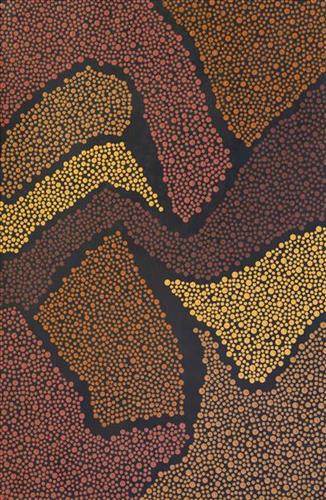
“Jartuti water place east of Parnngurr. In pujiman (traditional, desert dwelling) days old people walked and hunted there, we went there recently with KJ (Kanyirninpa Jukurrpa) ranger mob, lovely place.” 

 – Beverley Rogers

Jartuti is a water source located close to Parnngurr Aboriginal Community (otherwise known as Cotton Creek), and is part of Beverley’s father’s ngurra (home Country, camp). The site is near to the home of the jangara (cannibal devil), spiritual beings from the Jukurrpa (Dreaming) era.