111582405149


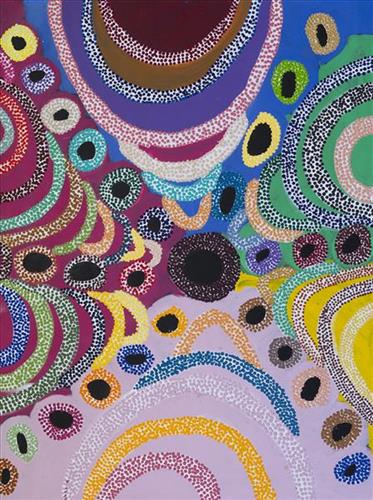
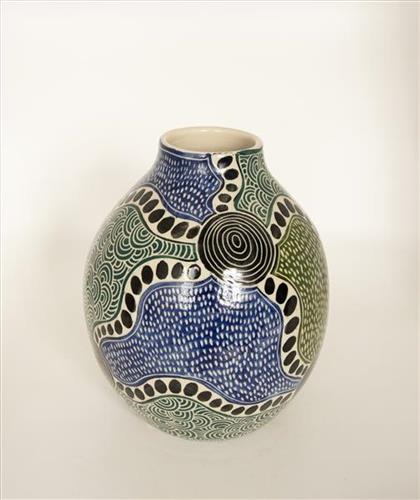
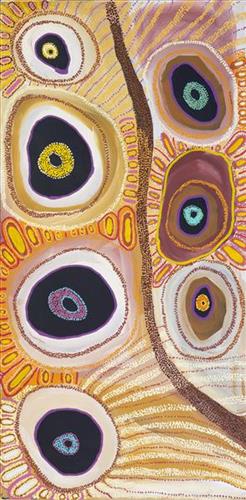
Kaalpa (Kalypa, Canning Stock Route Well 23)

“Kaalpa (Kalypa, Canning Stock Route Well 23) is my grandfather’s Country. There’s a waterhole there, Kaalpa waterhole. It’s my two pops’ Country. They been walking around, hunting around Kaalpa. You can see a yapu (rock), warla (lake), claypans, karru (creek) and tuwa (sandhills) there. It’s on the [Canning] Stock Route, it’s Well 23. One walypala One walypala (whitefella) well, and a real kalyu (water) there, jurnu. The Seven Sisters landed there, Jukurrpa (Dreaming). That man Yurla yapu (hill, stone, rock) there.” [Yurla, who chased the Seven Sisters during the Jukurrpa remains at Kaalpa in the form of a rock]) 

In pujiman (traditional, desert dwelling) days, pujimanpa (desert born people) walking around all this Country. My pops told me about that place, a big flat area, parlkarra (flat country) good for hunting parnajarrpa (goanna), lunki (witchetty grub), lungkurta (blue tongue lizard), wamurla (bush tomato), jinyjiwirrilyi (wild gooseberry). Kaalpa is a busy place for emus getting a drink. 

The old people were telling me “Kaalpa’s your grandfather’s Country, you gotta paint it.” I went [to Kaalpa] for the first time [in 2018] on a Martumili KJ [Kanyirninpa Jukurrpa] trip. We went out there when we were looking for the [Greater] Bilby. They took me and [my sister] Tamisha, they showed us our grandfather’s Country, Well 23. I went out there, had a good look, walked around, and went back to Wantili (Warntili, Canning Stock Route Well 25), Parnngurr, and I started painting it. Now it’s my mind, now I know what Kaalpa looks like. When I went there, I was pukurlpa (happy). It made you open up your spirit, it feels like home.”

 – Corban Clause Williams

Kaalpa is a permanent water source located northeast of Kumpupirntily (Kumpupintily, Lake Disappointment). This site is a place of great cultural significance, and is also known for good hunting. Adjacent to the waterhole is a hill of the same name. The landscape around Kaalpa is parlkarra (flat country), bordered by tali (sandhills) stretching as far as Windy Corner, northeast and towards the border of Western Australia and the Northern Territory. The large and dangerous Jukurrpa (Dreamtime) mosquito and fly beings partially created the landforms in this area and continue to live underground here.

Kaalpa also features in the Minyipuru (Jakulyukulyu, Seven Sisters) Jukurrpa, a central creation narrative for Martu, Ngaanyatjarra, Pitjantjatjara and Yankunytjatjara people that is associated with the seasonal Pleiades star constellation. At Kaalpa the Minyipuru met a group of men; it was the first time either group had seen members of the opposite sex. The men tried to grab the women, but the Minyipuru chased them, hitting them with their digging sticks and leaving them lying there as they continued travelling east.

Relayed in song, dance, stories and paintings, Minyipuru serves as a creation narrative, a source of information relating to the physical properties of the land, and an embodiment of Aboriginal cultural laws. Beginning in Roebourne on the west coast of Western Australia, the story morphs in its movement eastward across the land, following the women as they walk, dance, and even fly from waterhole to waterhole. As they travel the women camp, sing, wash, dance and gather food, leaving markers in the landscape and creating landforms that remain to this day, such as groupings of rocks and trees, grinding stones and seeds. During the entirety of their journey the women are pursued by a lustful old man, Yurla, although interactions with other animals, groups of men, and spirit beings are also chronicled in the narrative.

The intersection of the Canning Stock Route with Kaalpa also made this a site of early contact with Europeans for many Martu then living a pujiman life in the desert. Following the route’s construction, Martu encountered Europeans and other Martu working as cattle drovers as they would travel up and down the Stock Route from water source to water source. Increasingly, pujimanpa followed the route to newly established ration depots, mission and pastoral stations. They were drawn to the route in search of food, by a sense of curiosity, or by loneliness. By the late 1950s and early 1960s, most of the desert family groups had left the desert. Eventually, these factors combined with an extreme and prolonged drought in the 1960s to prompt the few remaining pujimanpa to move in from the desert.
111582405148


Jartuti

Jartuti is a water source located close to Parnngurr Aboriginal Community (otherwise known as Cotton Creek). The site is near to the home of the jangara (cannibal devil), spiritual beings from the Jukurrpa (Dreaming) era.

111582405146


Untitled

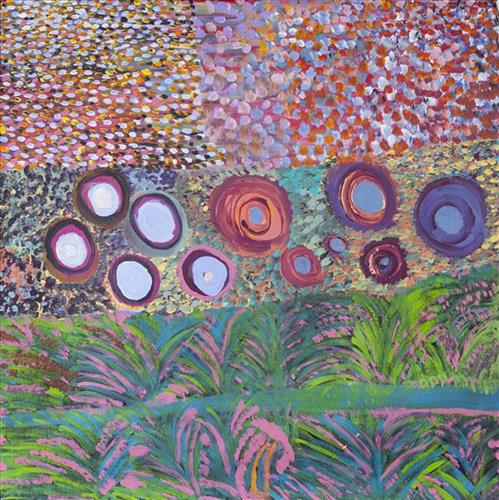
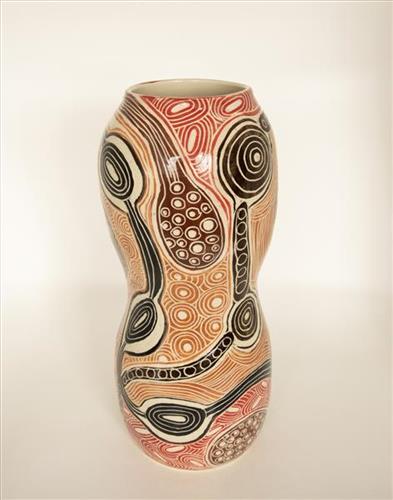
This is Dale’s Country- her ‘ngurra’ (home Country, camp). People identify with their ngurra in terms of specific rights and responsibilities, and the possession of intimate knowledge of the physical and cultural properties of one’s Country. Painting ngurra, and in so doing sharing the Jukurrpa (Dreaming) stories and physical characteristics of that place, has today become an important means of cultural maintenance. Dale’s ngurra encompasses her birthplace, Jigalong, and the Country that her family walked in the pujiman (traditional, desert-dwelling) era, including Puntawarri, Raarki (Canning Stock Route Well 27), Kularti, Kumpupirntily , Mirtikanya, (Kumpupintily, Lake Disappointment), and Mukurtu.

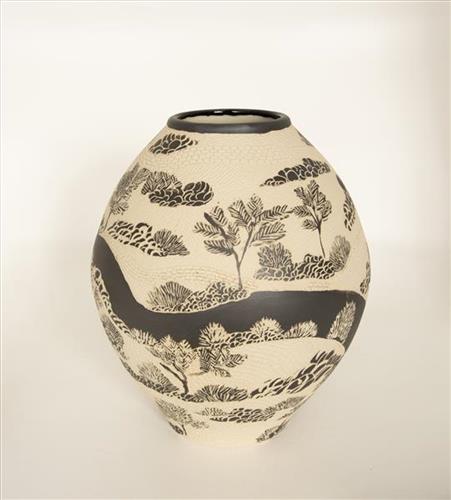
Portrayed in this work are features of Dale’s family’s ngurra, such as the striking salt lakes, dominant permanent red tali (sandhills), warta (trees, vegetation), and the individually named water sources they camped at. Rock holes, waterholes, soaks and springs were all extremely important sites for Martu people during the pujiman period, and are generally depicted with circular forms. 

The encyclopaedic knowledge of the location, quality and seasonal availability of the hundreds of water bodies found in one’s Country sustained Martu as they travelled across their Country, hunting and gathering, visiting family, and fulfilling ceremonial obligations. They would traverse very large distances annually, visiting specific areas in the dry and wet season depending on the availability of water and the corresponding cycles of plant and animal life on which hunting and gathering bush tucker was reliant. As they travelled and hunted they would also burn areas of Country, generating a greater diversity of plant and animal life.

221282405088


Putipulawa Putitja – Wildflowers

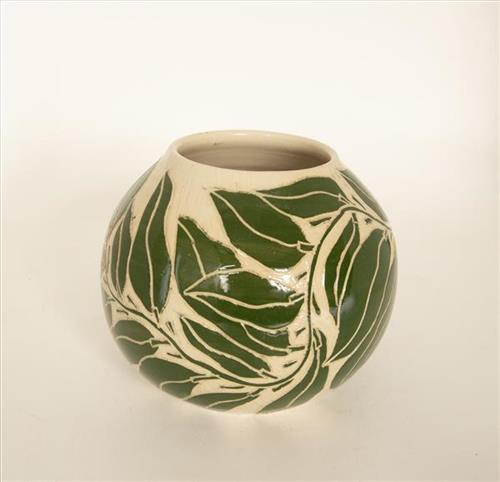
This design is based on the many native flowers that grow locally in Pukatja and through the Musgrave Ranges. When we go out to the bush, we see all the different colours from many plants growing.  Flowers are important to the women and the health of the land, and much excitement is felt as they burst into life.

221282405087


Strong Family Connection

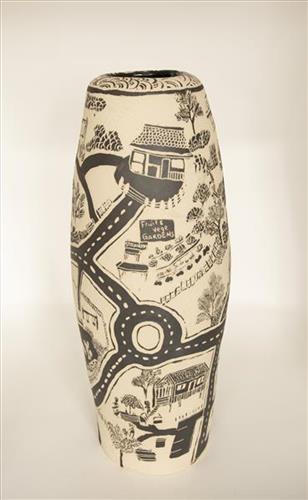
This is a story of how life was before. It’s a beautiful landscape without problems like we have today. There were no problems then, people were happy. They were connected as families. It shows what life was like for our people in the past before we had houses. Everything was silent, and all the animals were close by to the people. Everyone looked after the animals and the environment. People don’t have that life anymore.

221282405086


Ngayuku Walka / My Design

Walka means design or pattern. Artists use this title to describe artworks that are pattern based rather than descriptive or telling a story.

221282405084


Ngayuku Walka / My Design

Walka means design or pattern. Artists use this title to describe artworks that are pattern based rather than descriptive or telling a story.

221282405083


Strong Family Connection

This is a story of how life was before. It’s a beautiful landscape without problems like we have today. There were no problems then, people were happy. They were connected as families. It shows what life was like for our people in the past before we had houses. Everything was silent, and all the animals were close by to the people. Everyone looked after the animals and the environment. People don’t have that life anymore.

222082405077


Unseen Country 40/50

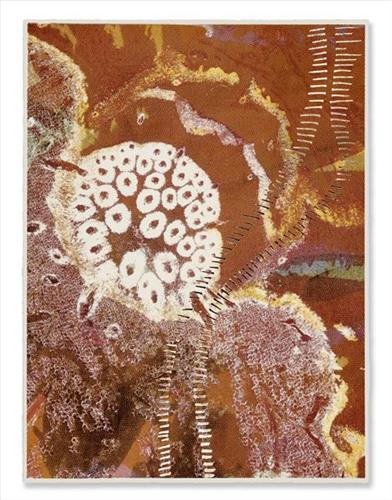
This artwork created in collaboration with Kaiela Arts, Vivien Anderson Gallery, and Spacecraft Studio, represents a powerful meeting of practice, place, and community. Working on Yorta Yorta Country, I wanted to honour the connections between river systems, cultural materials, and the stories that continue to flow through this landscape and its people. These limited-edition prints are more than artworks — they are visual conversations about belonging, memory, and cultural continuity. Throughout my career, I have worked to reclaim and revitalise southeast Aboriginal art forms that were interrupted by colonisation. My practice often involves researching historical collections, reviving cultural materials, and bringing these ancestral techniques into contemporary contexts. Working with Kaiela Arts and the local community offered a meaningful opportunity to extend this approach on Yorta Yorta Country, where the river — the Goulburn, or Kaiela — holds both spiritual and cultural significance. It’s a place where stories, trade routes, and cultural practices have always intertwined. The collaboration with Spacecraft Studio allowed the making process to become another form of dialogue. Their printmaking expertise and respect for material experimentation aligned beautifully with my focus on process and texture — on transforming natural materials and microscopic imagery into works that speak of Country and connection. The printing process itself became ceremonial, with each layer, pigment, and impression reflecting the rhythm of our rivers and the knowledge embedded within them. Kaiela Arts has long been a place where cultural and creative knowledge is nurtured. To create these editions alongside emerging Yorta Yorta artists and community members was to be part of something collective and grounded. Each print carries that spirit — a sense of shared purpose and intergenerational knowledge exchange. This limited-edition of 52 prints, 12 on glass and 40 on paper stands as a celebration of collaboration, cultural resilience, and ongoing connection to Country. It acknowledges the importance of creative partnerships that respect both contemporary artistic practice and deep cultural heritage. Through this project, I hope to highlight the strength of our communities, the importance of working together across generations and disciplines, and the enduring vitality of southeast Aboriginal art. These works are a tribute to the land, the people, and the knowledge that continues to sustain us all.

222082405075


Unseen Country 39/50

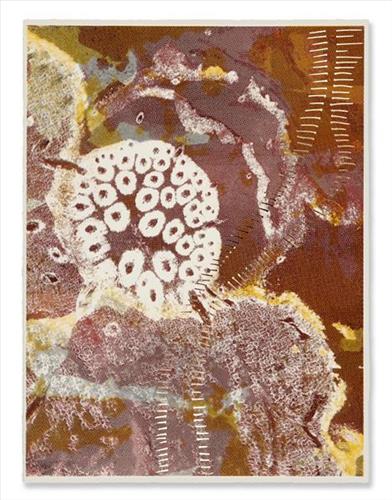
This artwork created in collaboration with Kaiela Arts, Vivien Anderson Gallery, and Spacecraft Studio, represents a powerful meeting of practice, place, and community. Working on Yorta Yorta Country, I wanted to honour the connections between river systems, cultural materials, and the stories that continue to flow through this landscape and its people. These limited-edition prints are more than artworks — they are visual conversations about belonging, memory, and cultural continuity. Throughout my career, I have worked to reclaim and revitalise southeast Aboriginal art forms that were interrupted by colonisation. My practice often involves researching historical collections, reviving cultural materials, and bringing these ancestral techniques into contemporary contexts. Working with Kaiela Arts and the local community offered a meaningful opportunity to extend this approach on Yorta Yorta Country, where the river — the Goulburn, or Kaiela — holds both spiritual and cultural significance. It’s a place where stories, trade routes, and cultural practices have always intertwined. The collaboration with Spacecraft Studio allowed the making process to become another form of dialogue. Their printmaking expertise and respect for material experimentation aligned beautifully with my focus on process and texture — on transforming natural materials and microscopic imagery into works that speak of Country and connection. The printing process itself became ceremonial, with each layer, pigment, and impression reflecting the rhythm of our rivers and the knowledge embedded within them. Kaiela Arts has long been a place where cultural and creative knowledge is nurtured. To create these editions alongside emerging Yorta Yorta artists and community members was to be part of something collective and grounded. Each print carries that spirit — a sense of shared purpose and intergenerational knowledge exchange. This limited-edition of 52 prints, 12 on glass and 40 on paper stands as a celebration of collaboration, cultural resilience, and ongoing connection to Country. It acknowledges the importance of creative partnerships that respect both contemporary artistic practice and deep cultural heritage. Through this project, I hope to highlight the strength of our communities, the importance of working together across generations and disciplines, and the enduring vitality of southeast Aboriginal art. These works are a tribute to the land, the people, and the knowledge that continues to sustain us all.