37781464009082


Status: Stock


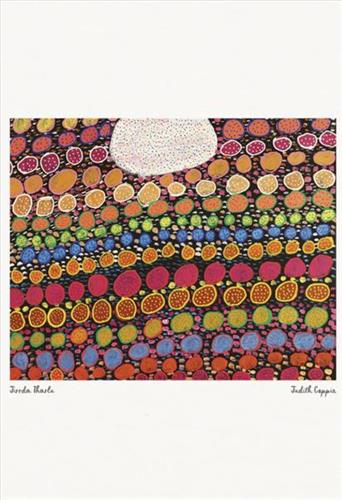
Jirrda Thalu , Judith Coppin

Jirda is an important and beautiful sacred site on Yindjiarndi Ngurra (Country). It is a Thalu (Increase) site for seeds, meaning it has strong laws, songs and customs about how to protect it, from Creation Times. 

About the Artist:

Judith is an Yindjibarndi Elder and Cultural Custodian, highly respected artist and community worker. Since 2010, Judith has been creating beautiful acrylic paintings on canvas. In the past three years she has extended her art practices to her very beautiful yarranga marni (carved boards), her artworks are highly valued and selected for major Perth-based exhibitions. Judith’s artworks are intricately constructed, bold, deeply cultural, evolving from her passionate love of her Ngurra (country) and creation stories from Ngurra Nyujunggamu (when the world was soft). Yarranga Marni artworks by Judith have sold to the WA Department of Arts and Culture Collection, and her work featured on the cover of the 2019 Rio Tinto Colours of our Country Catalogue more recently they were exhibited in The Track We Share Exhibition at The Art Gallery of Western Australia.

37781464009081


Status: Stock


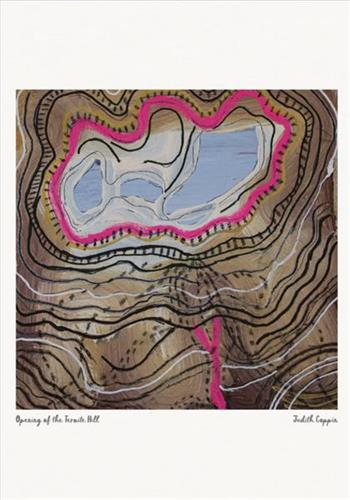
Opening of the Termite Hill , Judith Coppin

“This work is about Yindjibarndi Munda (rocky hills) on the tablelands, on my Ngurra (country). My ancestors walked the land. The old ladies would get the seeds from the grass and grind it down to make flour. The ladies would sit at the bottom of the hill while some of the old men would be carving pictures in the rock.  They tell stories with their carving, wirjuna (hill kangaroo), emu, lizard. They are still there today. We go there sometimes when we go out camping, nobody can touch it. Keep it safe. Makes our spirit happy seeing it again.”

– Judith Coppin

About the Artist:

Judith is an Yindjibarndi Elder and Cultural Custodian, highly respected artist and community worker. Since 2010, Judith has been creating beautiful acrylic paintings on canvas. In the past three years she has extended her art practices to her very beautiful yarranga marni (carved boards), her artworks are highly valued and selected for major Perth-based exhibitions. Judith’s artworks are intricately constructed, bold, deeply cultural, evolving from her passionate love of her Ngurra (country) and creation stories from Ngurra Nyujunggamu (when the world was soft). Yarranga Marni artworks by Judith have sold to the WA Department of Arts and Culture Collection, and her work featured on the cover of the 2019 Rio Tinto Colours of our Country Catalogue more recently they were exhibited in The Track We Share Exhibition at The Art Gallery of Western Australia.

37781464009080


Status: Stock


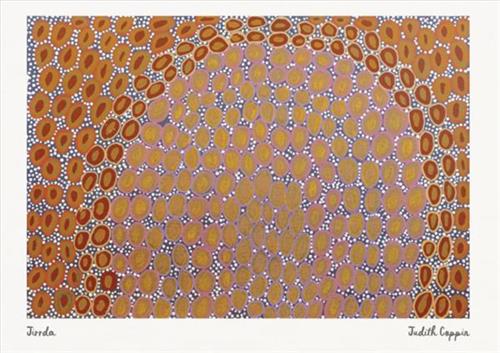
Jirrda , Judith Coppin

Jirda is an important and beautiful sacred site on Yindjiarndi Ngurra (Country). It is a Thalu (Increase) site for seeds, meaning it has strong laws, songs and customs about how to protect it, from Creation Times. 

About the Artist:

Judith is an Yindjibarndi Elder and Cultural Custodian, highly respected artist and community worker. Since 2010, Judith has been creating beautiful acrylic paintings on canvas. In the past three years she has extended her art practices to her very beautiful yarranga marni (carved boards), her artworks are highly valued and selected for major Perth-based exhibitions. Judith’s artworks are intricately constructed, bold, deeply cultural, evolving from her passionate love of her Ngurra (country) and creation stories from Ngurra Nyujunggamu (when the world was soft). Yarranga Marni artworks by Judith have sold to the WA Department of Arts and Culture Collection, and her work featured on the cover of the 2019 Rio Tinto Colours of our Country Catalogue more recently they were exhibited in The Track We Share Exhibition at The Art Gallery of Western Australia.

37781464009079


Status: Stock


Seven Sisters , Judith Coppin

Before the first Burndud was sung, Mingkala sang the seven Gurdigurdi sisters, the Mayalarri (Pleiades) into the night sky.  

About the Artist

Judith is an Yindjibarndi Elder and Cultural Custodian, highly respected artist and community worker. Since 2010, Judith has been creating beautiful acrylic paintings on canvas. In the past three years she has extended her art practices to her very beautiful yarranga marni (carved boards), her artworks are highly valued and selected for major Perth-based exhibitions. Judith’s artworks are intricately constructed, bold, deeply cultural, evolving from her passionate love of her Ngurra (country) and creation stories from Ngurra Nyujunggamu (when the world was soft). Yarranga Marni artworks by Judith have sold to the WA Department of Arts and Culture Collection, and her work featured on the cover of the 2019 Rio Tinto Colours of our Country Catalogue more recently they were exhibited in The Track We Share Exhibition at The Art Gallery of Western Australia.

37781464009078


Status: Stock


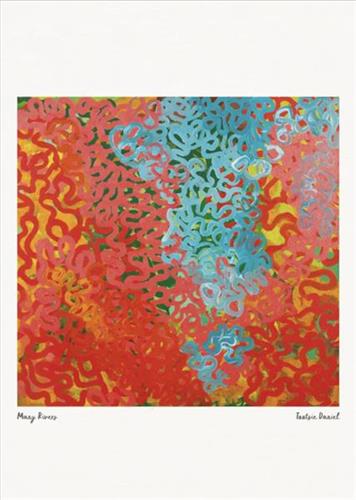
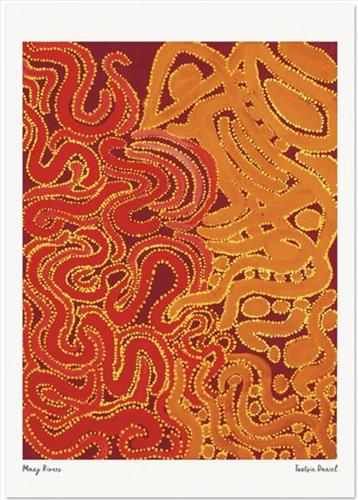
Many Rivers – Aunty T

Size: A3

“When I started making art, I found it very healing. Art is an expression of how you are. I suppose I like bright colours, it reflects a brighter future. The colours brighten you up. New life and new beginnings. The blue is the deep waters, the red is strength and courage, the pink is new beginnings.” – Tootsie says of her Swirly Works as she fondly calls this body of work. 

About Mum T:

Mum T (dec.) was born at Yarraloola Station near Pannawonica and grew up in Onslow, living at the Old Reserve and the Onslow Hostel. After attending high school at the United Aboriginal Mission Hostel in Derby, she returned to Onslow and worked as a domestic cleaner at the Hostel and later at Yarraloola Station and Nanutarra Station with her extended family. Tootsie has lived in Roebourne since 1970 and is a committed contributor to the Roebourne community. Tootsie is a founding member of Juluwarlu Art Group, is a board member and broadcaster at Ngaarda Media, is involved in song, video and performance arts with Big hART, and holds a Graduate Diploma in Aboriginal Community Development from Curtin University. Tootsie began painting 10 years ago as a means of healing after the death of her son, and depicts Yindjibarndi stories, rivers, plants and seasons.

37781464009077


Status: Stock


Many Rivers, Aunty D

“When I started making art, I found it very healing. Art is an expression of how you are. I suppose I like bright colours, it reflects a brighter future. The colours brighten you up. New life and new beginnings. The blue is the deep waters, the red is strength and courage, the pink is new beginnings.” – Tootsie says of her Swirly Works as she fondly calls this body of work. 

About Mum T:

Mum T (dec.) was born at Yarraloola Station near Pannawonica and grew up in Onslow, living at the Old Reserve and the Onslow Hostel. After attending high school at the United Aboriginal Mission Hostel in Derby, she returned to Onslow and worked as a domestic cleaner at the Hostel and later at Yarraloola Station and Nanutarra Station with her extended family. Tootsie has lived in Roebourne since 1970 and is a committed contributor to the Roebourne community. Tootsie is a founding member of Juluwarlu Art Group, is a board member and broadcaster at Ngaarda Media, is involved in song, video and performance arts with Big hART, and holds a Graduate Diploma in Aboriginal Community Development from Curtin University. Tootsie began painting 10 years ago as a means of healing after the death of her son, and depicts Yindjibarndi stories, rivers, plants and seasons.

11154009072


Status: Stock


Kaalpa (Kalypa, Canning Stock Route Well 23)- Corban Clause Williams

“Kaalpa (Kalypa, Canning Stock Route Well 23) is my grandfather’s Country. There’s a waterhole there, Kaalpa waterhole. It’s my two pops’ Country. They been walking around, hunting around Kaalpa. You can see a yapu (rock), warla (lake), claypans, karru (creek) and tuwa (sandhills) there. It’s on the [Canning] Stock Route, it’s Well 23. One walypala One walypala (whitefella) well, and a real kalyu (water) there, jurnu. The Seven Sisters landed there, Jukurrpa (Dreaming). That man Yurla yapu (hill, stone, rock) there.” [Yurla, who chased the Seven Sisters during the Jukurrpa remains at Kaalpa in the form of a rock]) 

In pujiman (traditional, desert dwelling) days, pujimanpa (desert born people) walking around all this Country. My pops told me about that place, a big flat area, parlkarra (flat country) good for hunting parnajarrpa (goanna), lunki (witchetty grub), lungkurta (blue tongue lizard), wamurla (bush tomato), jinyjiwirrilyi (wild gooseberry). Kaalpa is a busy place for emus getting a drink. 

The old people were telling me “Kaalpa’s your grandfather’s Country, you gotta paint it.” I went [to Kaalpa] for the first time [in 2018] on a Martumili KJ [Kanyirninpa Jukurrpa] trip. We went out there when we were looking for the [Greater] Bilby. They took me and [my sister] Tamisha, they showed us our grandfather’s Country, Well 23. I went out there, had a good look, walked around, and went back to Wantili (Warntili, Canning Stock Route Well 25), Parnngurr, and I started painting it. Now it’s my mind, now I know what Kaalpa looks like. When I went there, I was pukurlpa (happy). It made you open up your spirit, it feels like home.”

 – Corban Clause Williams

Kaalpa is a permanent water source located northeast of Kumpupirntily (Kumpupintily, Lake Disappointment). This site is a place of great cultural significance, and is also known for good hunting. Adjacent to the waterhole is a hill of the same name. The landscape around Kaalpa is parlkarra (flat country), bordered by tali (sandhills) stretching as far as Windy Corner, northeast and towards the border of Western Australia and the Northern Territory. The large and dangerous Jukurrpa (Dreamtime) mosquito and fly beings partially created the landforms in this area and continue to live underground here.

Kaalpa also features in the Minyipuru (Jakulyukulyu, Seven Sisters) Jukurrpa, a central creation narrative for Martu, Ngaanyatjarra, Pitjantjatjara and Yankunytjatjara people that is associated with the seasonal Pleiades star constellation. At Kaalpa the Minyipuru met a group of men; it was the first time either group had seen members of the opposite sex. The men tried to grab the women, but the Minyipuru chased them, hitting them with their digging sticks and leaving them lying there as they continued travelling east.

Relayed in song, dance, stories and paintings, Minyipuru serves as a creation narrative, a source of information relating to the physical properties of the land, and an embodiment of Aboriginal cultural laws. Beginning in Roebourne on the west coast of Western Australia, the story morphs in its movement eastward across the land, following the women as they walk, dance, and even fly from waterhole to waterhole. As they travel the women camp, sing, wash, dance and gather food, leaving markers in the landscape and creating landforms that remain to this day, such as groupings of rocks and trees, grinding stones and seeds. During the entirety of their journey the women are pursued by a lustful old man, Yurla, although interactions with other animals, groups of men, and spirit beings are also chronicled in the narrative.

The intersection of the Canning Stock Route with Kaalpa also made this a site of early contact with Europeans for many Martu then living a pujiman life in the desert. Following the route’s construction, Martu encountered Europeans and other Martu working as cattle drovers as they would travel up and down the Stock Route from water source to water source. Increasingly, pujimanpa followed the route to newly established ration depots, mission and pastoral stations. They were drawn to the route in search of food, by a sense of curiosity, or by loneliness. By the late 1950s and early 1960s, most of the desert family groups had left the desert. Eventually, these factors combined with an extreme and prolonged drought in the 1960s to prompt the few remaining pujimanpa to move in from the desert.

22204009070


Status: Stock


Family Lines Screen print

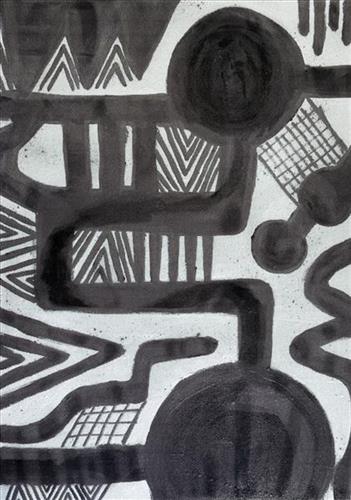
Family Lines was part of a small series of work I produced earlier this year called Cultural Echoes. Using abstracted forms and mark making of traditional linear and xx-ray styles of Victorian, south-east Yorta Yorta peoples. It speaks to the interconnectedness of our many mobs but also the ways in which we see and understand this new world we live in. All my work often draws on my own lived experiences and my own understandings of the relational and the colonial. A never-ending dance, a dance I’ve been doing from my very existence.

37781064008876


Status: Stock


Man-galagun (Crab Creek) on Birch Linen – Martha Lee

Lengths of handprinted screen printed fabric on linen (birch) fabric 135cm wide

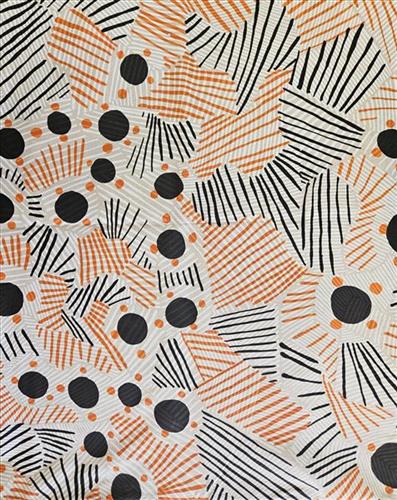
The base fabric is ‘natural’ colour and it is a three-colour print with orange, black and white details.

Martha says of this design “Man-galagun (Crab Creek) Country is where our family used to take us to when we were small. It is everyone’s favourite fishing spot. People gather there and catch up with one another yelling out- ‘Aye, you get any fish? Did you catch any langga (catfish), walgawalga (salmon) gungunbiny (grunter) or any wangaja (mud crab)?!’ Then we all sit down around the fire and cook up our beautiful feed that we just caught and drink smokey tea from the fire, sharing our catch with everyone. Country always gives us plenty of nagula mayi (seafood).

22024006426


Status: Stock


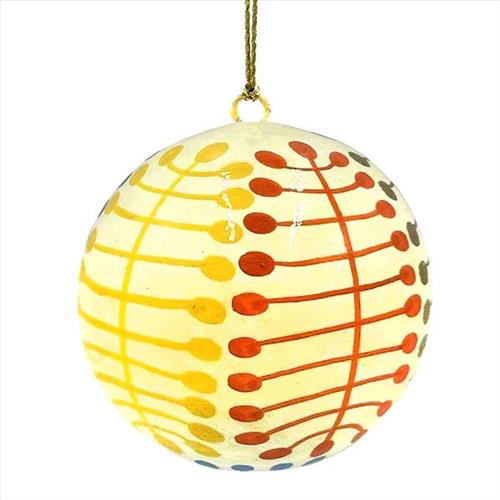
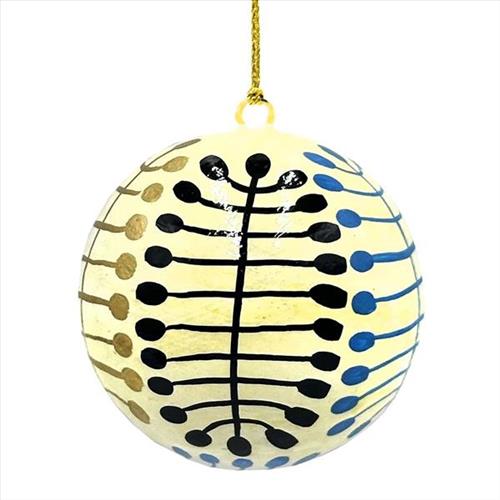
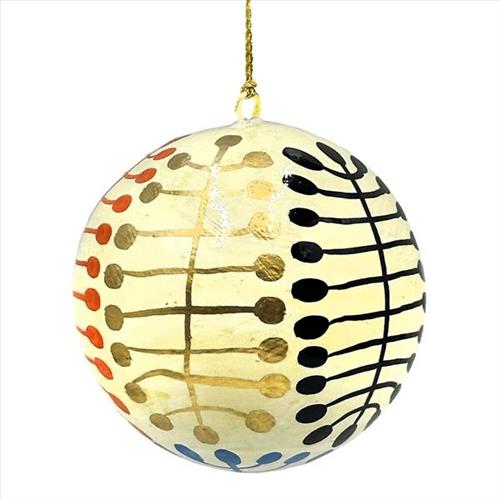
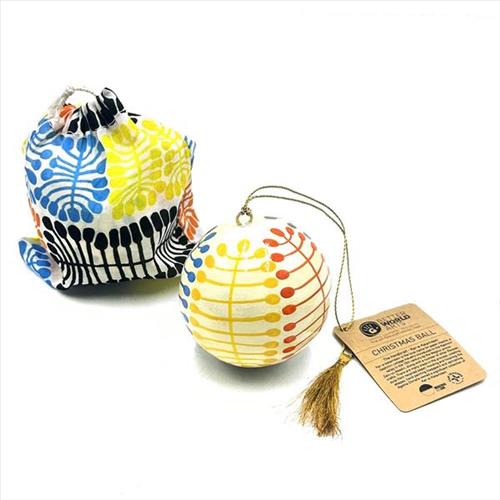
Xmas/Christmas decoration ball, Watiya Tjuta in blue/organge/yellow/black

In this design Mitjili Napurrula depicts her fathers Tjukurrpa, the ceremonial spear straightening in Uwalkari country (Gibson desert region). The Watiya Tjuta (Acacia Trees) are the trees that are used to make these spears. Uwalkari country is abundant with Watiya Tjuta, as well as sand hills and other plants. Mitjili paints the motif of the Watiya Tjuta, carrying on the recurring motif as her mother used to draw in the sand. Her mother passed on this Dreaming to her.