221282403456


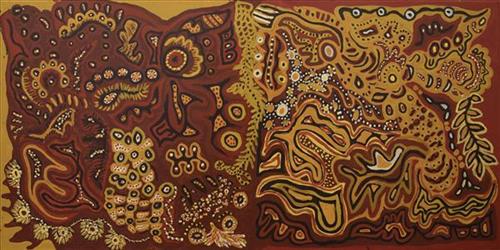
Kungkarangkalpa / Seven Sisters

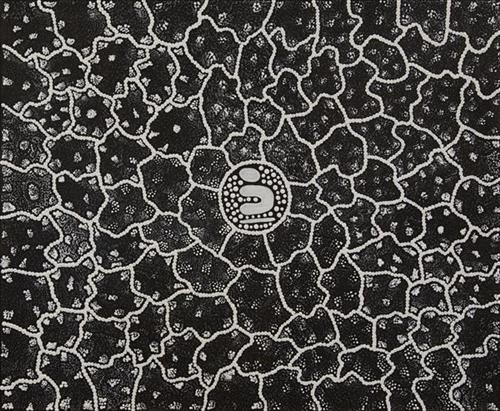
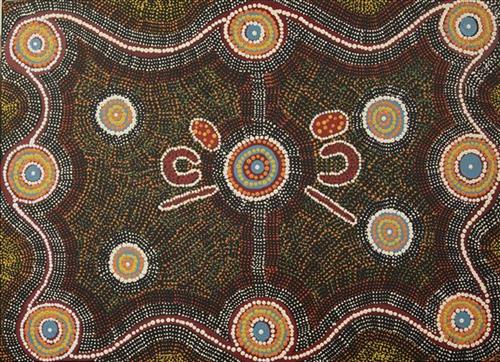
Kungkarangkalpa means the Seven Sisters. This is an extensive creation story that relates to the Pleiades constellation in the southern hemisphere. The story traverses Australia taking on different forms, however local women are privy to the part of the story which takes place in the country near Ernabella. For this part of the story, the man called Nyiru is chasing the sisters as he wants to sleep with the oldest sister. All the younger sisters are deeply afraid of him. As Nyiru is chasing the sisters, he tries to catch them by using magic to turn himself into the most tempting bush tomatoes for the sisters to eat and the most beautiful ili (fig) tree for the sisters to camp under. However, the sisters are aware of his magic and go hungry and run through the night rather than be caught by Nyiru. Eventually, to escape Nyiru, the sisters fly into the sky where they turn into stars and form the constellation.
221282403452


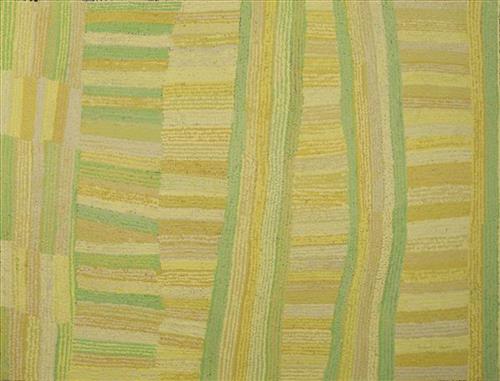
Anumara – Caterpillar

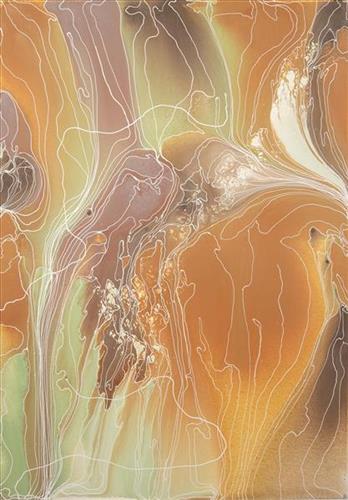
Yurpiya is painting a place called Anumara, which is a place near Irrunytju (Wingellina) in WA. This is Yurpiya’s family’s country. Anumara is also the name for a kind of caterpillar and Anumara is the tjukurpa (dreaming) place for this caterpillar. This caterpillar lives in the grass and can be eaten if the grass it eats is removed. The place shares the same colours of the caterpillar – brown, yellow and pale green. Keeping this place safe will ensure that the caterpillars multiply.

221282403449


Pantu (Salt lake)

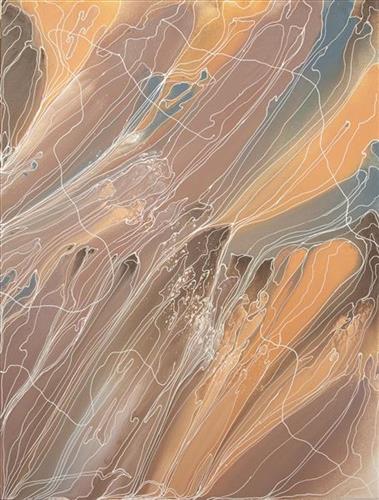
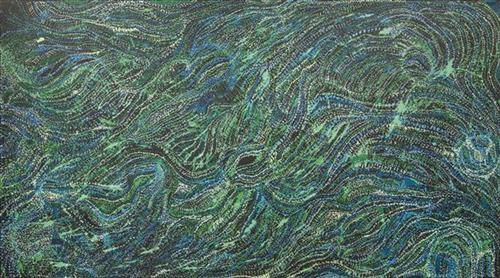
A very significant tjurkurpa (story) to Anangu is Kungkarangkalpa (Seven Sisters) which is an extensive creation story relating to the Pleiades constellation. The story traverses Australia taking different forms, and local women are privy to the part of the story which takes place in the country near Ernabella.

In her paintings Janice is depicting a salt-lake near Attila (Mt Connor) a landmark in the Seven Sisters story. This story has been passed down to her by senior artist and aunt Renita Stanley. In this part of the story the sisters are walking and traveling south through this country. The Salt Lake that is a part of this arid county comes alive after rain. As the kapi (water) moves across the land it transforms the colour and light on the land and Janice is painting this change and movement.

221282403448


Pantu (Salt lake)

A very significant tjurkurpa (story) to Anangu is Kungkarangkalpa (Seven Sisters) which is an extensive creation story relating to the Pleiades constellation. The story traverses Australia taking different forms, and local women are privy to the part of the story which takes place in the country near Ernabella.

In her paintings Janice is depicting a salt-lake near Attila (Mt Connor) a landmark in the Seven Sisters story. This story has been passed down to her by senior artist and aunt Renita Stanley. In this part of the story the sisters are walking and traveling south through this country. The Salt Lake that is a part of this arid county comes alive after rain. As the kapi (water) moves across the land it transforms the colour and light on the land and Janice is painting this change and movement.

221282403447


Tali / Sand dune

This design is inspired by the red sand dunes that are found throughout the central desert. There is a large red sand dune near Ernabella named Wamikata which is a popular place for looking for maku (witchetty grubs) and for teaching Milpatjunanyi (telling stories in the sand) to children.

221282403397


Tjanmata – Bush Onion

Tanmata or bush onions are found near creek beds on the Aṉangu Pitjantjatjara Yankunytjatjara (APY) Lands in the remote northwest of SA. Aṉangu bake the small bulbs in hot ashes and then remove the outer papery covering (nyiri) before eating them.

Until comparatively recently, bush foods were the primary source of sustenance for Aṉangu Pitjantjatjara. Many bush foods are still gathered regularly, almost exclusively by women, and they therefore feature strongly in women’s mark making. Women learn the art of gathering each of the foods from a young age and much inma (ceremony) relates to these practices and the maintenance of supply.

221282403396


Minyma Kutjara

There is a story of deep significance to women which contains metaphorical references to female cycles. It tells of two women travelling north. The pair meet with a group of women, including Kutungu, who are caring for a man who then passes away. They then travel to the area known as Mantaruta, near Uluru, where they chase a curious wanampi (serpent) deep into the ground while trying to catch him. They burn their body hair to attract him and hit him on the head and run away. From afar they throw a manguri/traditional head-ring for carrying which also hits him. He then comes and hits the women who travel on bleeding and hurt.

221282403394


Ngayuku Ngura – My Country

Artists use this title when they are depicting their Country. It might be a representation of a particular place or of different aspects of that area. The artist uses a combination of colour and design to indicate variations in the landscape. Inspiration is drawn from all elements of Country and might include bush tucker, water holes, meeting places, rock formation, birds or animals.

221282403393


Waru – Black-Footed Rock Wallaby

Waru used to live all across central Australia but now they are only found in two small areas near Pukatja and Kalka on the APY Lands. Jeffrey has long been known for his paintings of local birds and in 2025 he has started depicting waru.

221282403348


Tjukula/Waterhole

For the Pitjantjatjara people living in the desert, knowledge of their water sources was critical to their survival. This resulted in an intimate understanding of the landscape which continues today. Water is an essential element in the desert. These rock holes were particularly important during the dry season when most of the water holes and creeks dried up.  Deep familiarity with the topography of their country and the way rain would interact with the land ensured constant sources of water could be found. Knowledge of rock hole sites is passed on from generation to generation and revered by all Anangu (people).

Tjukula means rock-hole, which are found with surprising frequency in the Musgrave Ranges and country around Ernabella.  Between visits, Anangu would use a construction of rocks and spinifex to guard these important water sources from spoilage by feral and stock animals such as cattle, camels, horses and donkeys.