377816382400739


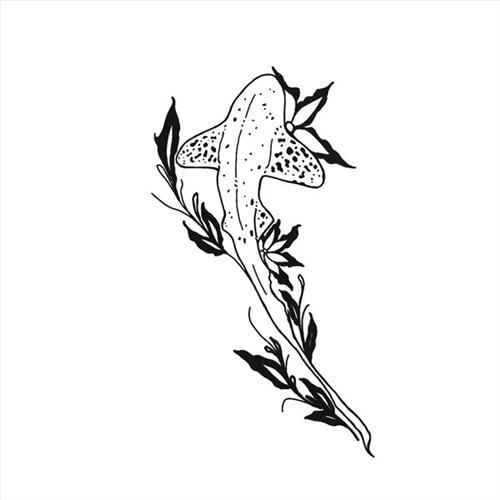
Marrgaliny -Hammerhead

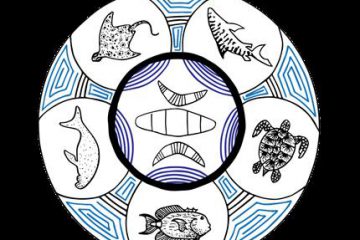
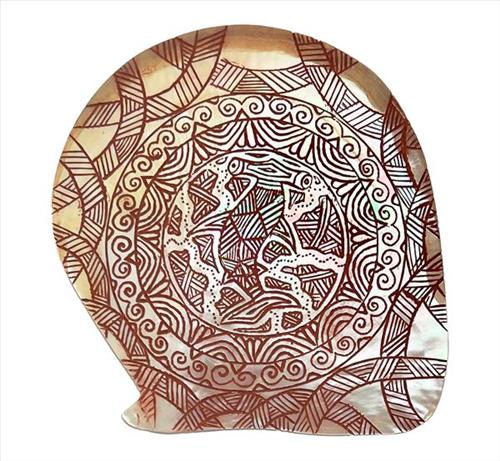
This depicts Gardamon creation story and how the Hammerhead became a shark and got his head shape. So, the hammerhead was a man and his name was Marrgaliny. As he was walking along the beach toward Gardamon, he came across Loolool and he saw he was by himself.  He asked Loolool if he could stay there because it was beautiful and looked like a nice place to live.  So they became friends and went hunting together. One day they had an argument, Loolool caught a turtle but didn’t tell Marrgaliny he had fresh water pools with female turtles and male turtles. When Marrgaliny got a taste of the female turtle he thought it tasted good and asked Loolool to get him another one.  Loolool then gave him a male turtle which was tough and hard not very tasty, so they started arguing and they had a fight. They got out their weapons and Loolool had a shield in his hand and threw the shield and it got stuck in Marrgaliny’s forehead. With the marrgar stuck in his head and the boomerang in his side Marrgaliny became dizzy, he stumbled and he fell into the ocean. He sank into the water and as Lool Lool washed his face of blood he saw the hammerhead shark swimming away.  Lool Lool was exhausted and had a boomerang stuck in his side. So he jumped into the ocean where the boomerang turned into a dorsal fin and he turned into a beautiful shark that swam in the water near his old home. Lool Lool would help people if they were ever drowning or had fallen from their boats.

Loolool and Marrgaliny is a very important creation story for Gardamon. The Pearl shell has been carved using traditional techniques but in a contemporary way to tell this story.
377816382400730


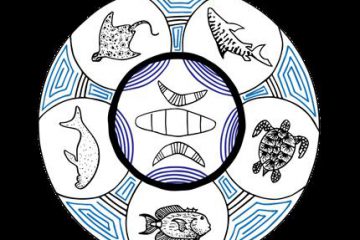
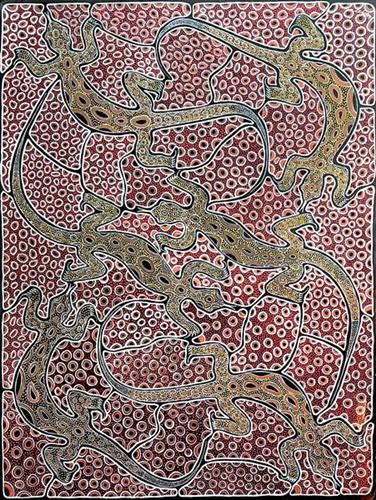
Miyall- Island Lizard

When Miyall are born, they stay close to the mother for the first day and then she sends them off hunting by themselves. The background show the pattern of the mother’s skin, the babies are clinging to her before they leave. When they return, they will stay near the mother but are now independent.

Framed

111582400881


Bush Tucker

Depicted in this work are traditional types of bush tucker, their habitats, and their related hunting and gathering methods. During the pujiman (traditional, desert dwelling) period, Martu would traverse very large distances annually in small family groups, moving seasonally from water source to water source, and hunting and gathering bush tucker as they went. Whilst desert life has moved away from mobile hunter-gatherer subsistence throughout the course of the twentieth century, bush tucker continues to be a significant component of the modern Martu diet. Hunting and gathering bush tucker remains equally valuable as an important cultural practice that is passed on intergenerationally. Though hunting and gathering implements have been modernised, methods of harvesting, tracking and the use of fire burning to drive animals from their retreats are still commonly practiced today. 

Typically, animals hunted for their kuwiyi (meat) include kirti-kirti (euro kangaroo) and marlu (plains kangaroo), parnajarrpa (sand goanna), kipara (Australian bustard, bush turkey) and karlaya (emu). Lunki (witchetty grub) and wuukurta (honey ants) are dug from tree and bush trunks, or from underground nests. Popular mayi (plant food) includes minyarra (bush onion), collected from small, grass like plants; root vegetables dug from underground such as kulyu and mata (types of bush potato); and seeds such as kalaru (samphire, salt bush), yuwinyji, and marnkalpa (spinifex species). Jawirli (quondong), wamurla (bush tomatoes), jinyjiwirrily (wild gooseberry), ngaputa (melon), and karlkula (bush banana) are some of the most popular bush fruits. These are often collected in the wantajarra (cool season) and tuulpara (spring) months, along with juri (sweet) botanical gums and wama (nectar), obtained from various plant species. 

Traditional tools used for hunting and gathering bush tucker were carved from wanari (mulga), mulunturu (desert oak), yurungkura (river red gum) and mijarrpa (bloodwoods), and included kurlata (spears), jurna (hitting stick), karli (boomerangs), wana (digging-sticks), piti (timber bowls used for carrying food and water), and jiwa (grinding stones for grinding seeds into flour). While carved objects retain enormous social and ceremonial importance in Martu life, they are no longer used for hunting and gathering.

111582400879


Wuukurta (Honey Ants)

Wuukurta (honey ants) are found in a variety of arid or semiarid environments, with nests of up to two metres deep and more than two metres across. Wuukurta are a highly sought after bush tucker, known otherwise as ‘bush lollies’ due to their sweet, honey like taste. They are eaten whilst still alive by holding the head and legs between two fingers and biting off the thorax. Martu dig for wuukurta nests through the seasons, but they are known to be especially abundant following the rains.

During the pujiman (traditional, desert dwelling) period, Martu would traverse very large distances annually in small family groups, moving seasonally from water source to water source, and hunting and gathering bush tucker as they went. Whilst desert life has moved away from mobile hunter-gatherer subsistence throughout the course of the twentieth century, bush tucker continues to be a significant component of the modern Martu diet. Hunting and gathering bush tucker remains equally valuable as an important cultural practice that is passed on intergenerationally. Though hunting and gathering implements have been modernised, methods of harvesting, tracking and the use of fire burning to drive animals from their retreats are still commonly practiced today.

111582400878


Ladies Gathering

“These are the ladies gathering and learning [teaching] young girls. We learn from the oldest and pass it down to the younger generation. These are the ladies in the scrub and around are the dry claypans.

We take them out and show the younger girls to hunt and prepare food and bush medicine, to make fire, and collect bush tucker. We show them how to find water, where to walk for the waterhole. We learn them to paint and collect weaving grass for the elders to weave.”

– Roxanne Anderson


In this artwork Roxanne illustrated the transfer of knowledge from elders to younger Martu generations. During the pujiman (traditional, desert dwelling) period, Martu would traverse vast distances annually in small family groups, moving seasonally from water source to water source and hunting and gathering bush tucker as they went. Although desert life has moved away from mobile hunter-gatherer subsistence throughout the course of the twentieth century, bush tucker remains a significant component of the modern Martu diet and continues to play a crucial role in passing down cultural knowledge.

While hunting and gathering implements have been modernised, methods of harvesting, tracking and the use of fire burning to drive animals from their retreats are still commonly practiced today.

Visual arts also play a vital role in preserving Martu culture. Younger Martu artists typically begin painting with their parents, grandparents and extended family, creating an organic learning process that encompasses not only painting techniques but also knowledge of specific locations, family histories, traditional ways of life, bush tucker and Jukurrpa (Dreaming).

111582400877


Waterhole

This work depicts a waterhole within the artists’ ngurra (home Country, camp), typically represented with circular forms. Waterholes are sites that require maintenance, including digging to increase flow, clearing out surrounding growth, and cleaning up after sullying by camels or cattle.

During the pujiman (traditional, desert dwelling) period, knowledge of water sources was critical for survival, and today Martu Country is still defined in terms of the location and type of water. Each of the hundreds of claypans, rockholes, waterholes, soaks and springs found in the Martu desert homelands is known through real life experience and the recounting of Jukurrpa (Dreaming) narratives by name, location, quality and seasonal availability. This encyclopedic knowledge extends even to the nature and movement of arterial waterways, and sustained Martu as they travelled across their Country, hunting and gathering, visiting family, and fulfilling ceremonial obligations. They would traverse very large distances annually, visiting specific areas in the dry and wet season depending on the availability of water and the corresponding cycles of plant and animal life on which hunting and gathering bush tucker was reliant.

111582400876


Waterhole

This work depicts a waterhole within the artists’ ngurra (home Country, camp), typically represented with circular forms. Waterholes are sites that require maintenance, including digging to increase flow, clearing out surrounding growth, and cleaning up after sullying by camels or cattle.

During the pujiman (traditional, desert dwelling) period, knowledge of water sources was critical for survival, and today Martu Country is still defined in terms of the location and type of water. Each of the hundreds of claypans, rockholes, waterholes, soaks and springs found in the Martu desert homelands is known through real life experience and the recounting of Jukurrpa (Dreaming) narratives by name, location, quality and seasonal availability. This encyclopedic knowledge extends even to the nature and movement of arterial waterways, and sustained Martu as they travelled across their Country, hunting and gathering, visiting family, and fulfilling ceremonial obligations. They would traverse very large distances annually, visiting specific areas in the dry and wet season depending on the availability of water and the corresponding cycles of plant and animal life on which hunting and gathering bush tucker was reliant.