220982440780


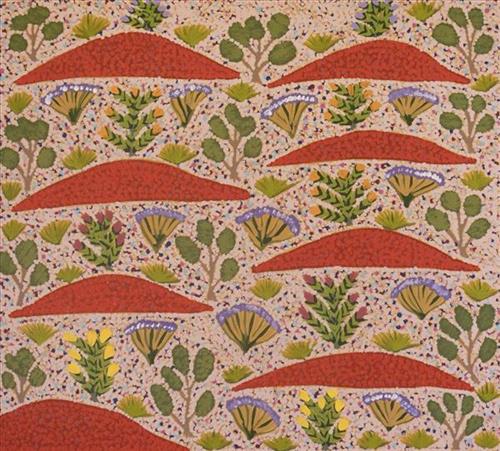
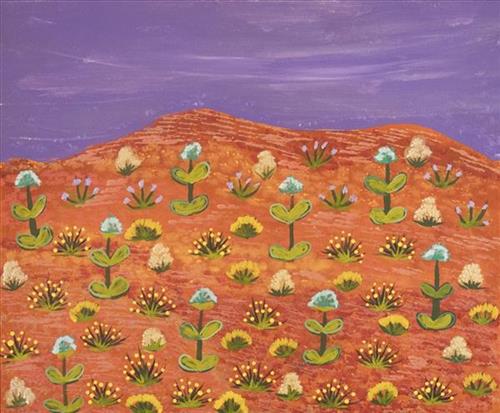
Dakota Ngwarraye Petrick – Artna Alpeyt (Bush Flowers)

These bush flowers grow seasonly in Alyawarr country, some of which are also used in bush medicine remedies.

My twin sister Lotoya and I have just started painting, our grandmother Elizabeth Ngwarraye Bonney has been teaching us, she tells us all about the bush Flowers and bush medicine.

The artists of Ampilatwatja made a conscious decision not to paint altyerr (dreaming stories). The artists paint their country where those stories sit.

220982440765


Kiara Pula Ladd – Apmer (Land)

I am new to painting. I am a singer and I love to perform, I have a music video. My mum Robina Pitjara Jones and my dad Kelvin Kemarre Ladd are both great painters, and my dad is a singer too. I really like their work but I have my own style. I want to paint landscapes and I want to paint the colours that I see in my land.

220982440755


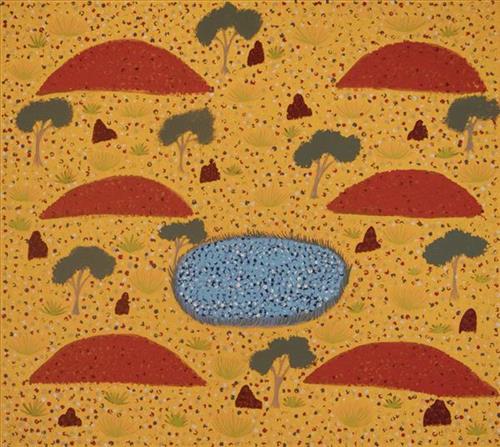
Robina Pitjara Jones – Atyenh Amper (My Country)

This is my country out in Utopia an outstation called Soapy Bore it’s  my Father’s country, there’s  big soakage, hills, bush medicine and bush tucker. All my family paint, my grandmother, my mother and aunties. I like to paint, I think about my country, the colours and my family who have gone.

The community of Ampilatwatja made a conscious decision not to paint altyerr (dreaming stories). The artists paint their country where those stories sit.

221382441678


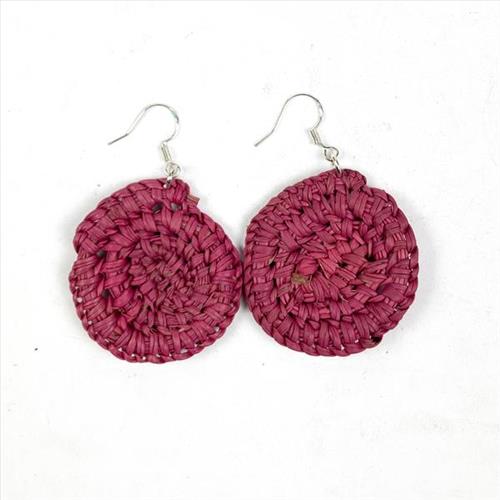
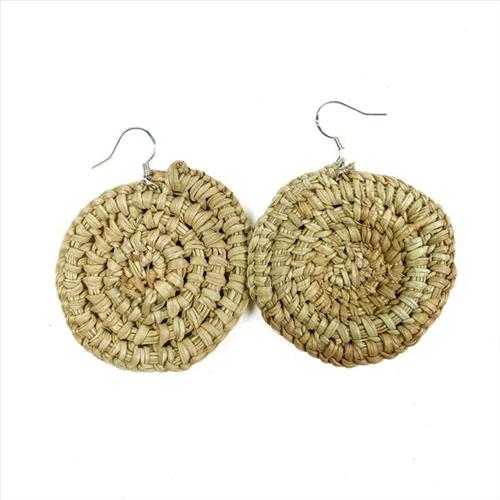
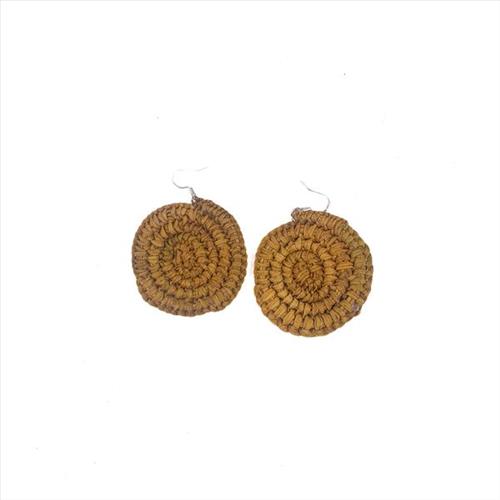
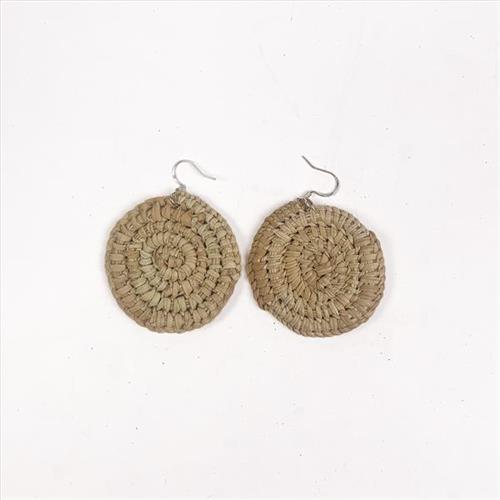
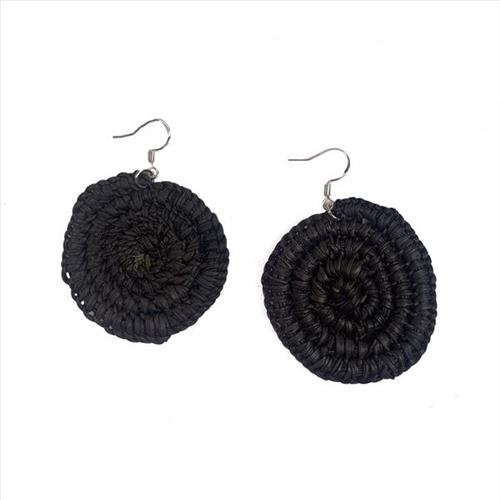
Woven Pandanus Earrings

Fibre Art is an ancient Aboriginal women’s craft that is still made today using the same techniques as their ancestors. Making fibre art is labour intensive and much care and fine needlework is required to ensure the finished object is both functional and beautiful. Fibre art from Ghunmarn Culture Centre includes dilly bags, floor mats, bush fans, woven creatures found in the landscape, plants such as yams (bush potato), baskets, place mats, and spirit figures such as mermaids and Mukuys. Natural pandanus fibre (Mukarra), is used to make much of the fibre art produced by the artists of Djilpin Arts. Women collect the pandanus by pulling from the top of the pandanus tree, then stripping and drying the leaves before they are dyed with natural bush colour collected from the Beswick surrounds.

111982441770


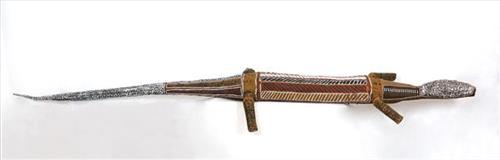
Kalawan (Goanna)

Throughout the 1990s, artists Lena Yarinkura and her mother Lena Djammarrayku (now deceased) diverged from the more conventional fibre work of their contemporaries, extending traditional weaving techniques and materials to make new ambitious and innovative sculptural forms. Yarinkura applied the dilly bag, fish trap and coil basket weaving techniques to make the body of new forms, such as djamo (dog), yok (bandiboot) and yawkyawk (female water spirit), which she then filled with paperbark and painted with ochre. Yarinkura and her husband Bob Burruwal have also become renowned for their distinctive spirit figures, including wurum and wyarra, which are often displayed as part of large installations. In using her weaving skills to make three-dimensional representations, Yarinkura has adapted a traditional weaving technique to explore new narrative possibilities for expressing important cosmological themes or illustrating stories from her homeland. Yarinkura and Burruwal’s children, grandchildren and extended family, including Yolanda Rostron, Philimena Kelly, Vera Cameron and Gloreen Campion, continue this legacy.

221382441720


Fibre ArtWoven Pandanus Earrings

Fibre Art is an ancient Aboriginal women’s craft that is still made today using the same techniques as their ancestors. Making fibre art is labour intensive and much care and fine needlework is required to ensure the finished object is both functional and beautiful. Fibre art from Ghunmarn Culture Centre includes dilly bags, floor mats, bush fans, woven creatures found in the landscape, plants such as yams (bush potato), baskets, place mats, and spirit figures such as mermaids and Mukuys. Natural pandanus fibre (Mukarra), is used to make much of the fibre art produced by the artists of Djilpin Arts. Women collect the pandanus by pulling from the top of the pandanus tree, then stripping and drying the leaves before they are dyed with natural bush colour collected from the Beswick surrounds.

111982442015


Lorrkon (Hollow Log)

The Lorrkon or bone pole coffin ceremony is the final ceremony in a sequence of mortuary rituals celebrated by the people of Arnhem Land. This ceremony involves the placing of the deceased’s bones into a hollow log decorated with painted clan designs and ceremonially placed into the ground where it remains until it slowly decays over many years.


The log is made from a termite hollowed Stringybark tree (Eucalyptus tetradonta) and is decorated with totemic emblems. The western Arnhem Land version of the Lorrkon ceremony involves the singing of sacred songs to the accompaniment of karlikarli, a pair of sacred boomerangs used as rhythm instruments. During the final evening of the ceremony, dancers decorate themselves with kapok down, or today, cotton wool and conduct much of the final segments of the ceremony in the secrecy of a restricted men’s camp. The complete ceremony may stretch over a period of two weeks, but on the last night the bones of the deceased, which have been kept in bark or wrapped in cloth, are taken out, painted with red ochre and placed inside the hollow log. This ceremony may take place many years after the person has died.


At first light on the final morning of the Lorrkon ceremony, the men appear, coming out of their secret bush camp carrying the pole towards the women’s camp. The two groups call to each other using distinct ceremonial calls. The women have prepared a hole for the pole to be placed into and when it is stood upright, women in particular kinship relationships to the deceased dance around the pole in a jumping/shuffling motion. The Lorrkon is then often covered with a tarpaulin and left to slowly decay.
221382441927


Woven Pandanus Earrings

Fibre Art is an ancient Aboriginal women’s craft that is still made today using the same techniques as their ancestors. Making fibre art is labour intensive and much care and fine needlework is required to ensure the finished object is both functional and beautiful. Fibre art from Ghunmarn Culture Centre includes dilly bags, floor mats, bush fans, woven creatures found in the landscape, plants such as yams (bush potato), baskets, place mats, and spirit figures such as mermaids and Mukuys. Natural pandanus fibre (Mukarra), is used to make much of the fibre art produced by the artists of Djilpin Arts. Women collect the pandanus by pulling from the top of the pandanus tree, then stripping and drying the leaves before they are dyed with natural bush colour collected from the Beswick surrounds.

221382441926


Woven Pandanus Earrings

Fibre Art is an ancient Aboriginal women’s craft that is still made today using the same techniques as their ancestors. Making fibre art is labour intensive and much care and fine needlework is required to ensure the finished object is both functional and beautiful. Fibre art from Ghunmarn Culture Centre includes dilly bags, floor mats, bush fans, woven creatures found in the landscape, plants such as yams (bush potato), baskets, place mats, and spirit figures such as mermaids and Mukuys. Natural pandanus fibre (Mukarra), is used to make much of the fibre art produced by the artists of Djilpin Arts. Women collect the pandanus by pulling from the top of the pandanus tree, then stripping and drying the leaves before they are dyed with natural bush colour collected from the Beswick surrounds.

221382441925


Woven Pandanus Earrings

Fibre Art is an ancient Aboriginal women’s craft that is still made today using the same techniques as their ancestors. Making fibre art is labour intensive and much care and fine needlework is required to ensure the finished object is both functional and beautiful. Fibre art from Ghunmarn Culture Centre includes dilly bags, floor mats, bush fans, woven creatures found in the landscape, plants such as yams (bush potato), baskets, place mats, and spirit figures such as mermaids and Mukuys. Natural pandanus fibre (Mukarra), is used to make much of the fibre art produced by the artists of Djilpin Arts. Women collect the pandanus by pulling from the top of the pandanus tree, then stripping and drying the leaves before they are dyed with natural bush colour collected from the Beswick surrounds.