377815582389436


Collecting Shells

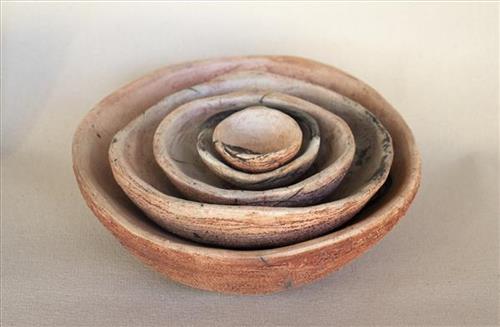
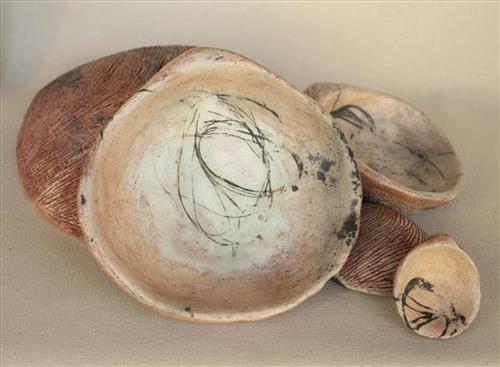
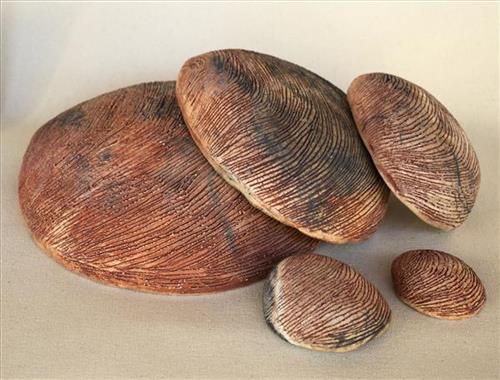
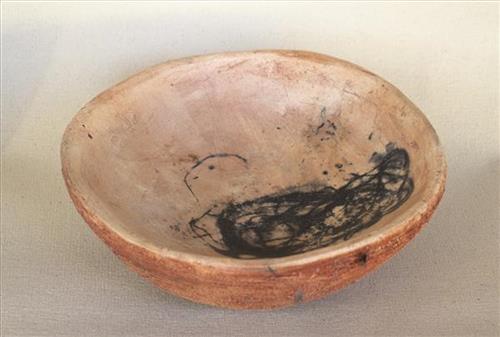
Collecting Shells by Bidyadanga artist Jessica Jadai (JR) is inspired by her deep connection to the coastline around her home. Walking the beach is part of JR’s rhythm of daily life, a quiet, grounding practice of noticing and collecting.

“When I go out to the beach, I like collecting shells to get my mind off things,” she says. “Anything I see that catches my eye, I just pick it up and put it in my pocket.”

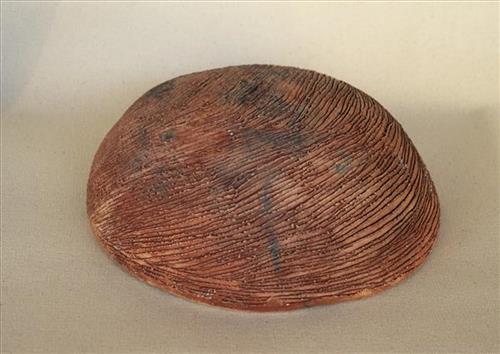
These shell-shaped vessels celebrate that process of gathering and remembering, bringing the calm and beauty of the shoreline into this body of work. Hand built from white raku clay using the pinch pot technique, the works are saggar fired using seaweed collected by the artist and other combustibles. This firing method creates works with coloured surfaces that change across each form in experimental mark making.

Grounded in connection to Country and community, Collecting Shells reflects Jadai’s love of making meaningful things by hand. Each form carries the textures of the coast; soft curves, organic lines, and natural variations that mirror the individuality of the shells that inspire them.

This exhibition marks one of JR’s first forays into ceramics, developed through lessons at the local school and supported by the Bidyadanga Artists community. Learning to shape and glaze clay has opened new creative pathways, complementing her established practice as a painter.

377815582389435


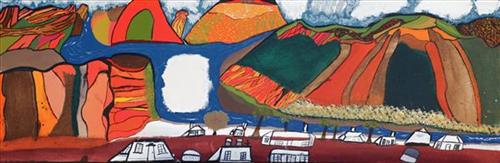
Nyangumarta Warrarn (Country)

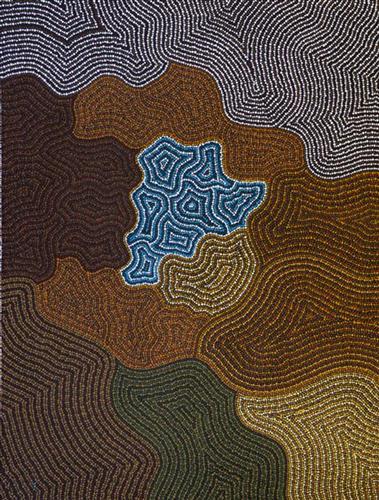
This painting represents the rocky outcrop and all the different areas of claypans, and the dark area represents all the jurnga (sands) in the cool time, warri (translation needed). All the light yellowish colour represents the paru (spinifex).


I like to go out working with the rangers and all the elders, I go out Country with them and they show me all the places, all mapped out with GPS. We mark out all the other places for next time. Sometimes I go out in the rangers vehicle and walk around the country and look around for goanna holes. We try to keep an eye on the animals, [monitoring them,] look out for all the bilby and skinks and everything with the Nyangumarta rangers. I go in my spare time because I’m busy you know, I’m busy with my artwork and council meetings.


In the cool dry time, when it’s a little bit warm, and cool in the morning, that’s when we do the fire patch burning. When we doing it also depends on the wind, the warngal, which way its blowing. We do that because it’s a big part of controlled fired. Wild fires, we don’t want them, they destroy the animals and their living area, destroy the Country. We do it too for the regrowth. When I went back to Country a couple of weeks ago, all the burned up area had a little bit of regrowth after a little bit of rain.

11154008523


Status: Stock


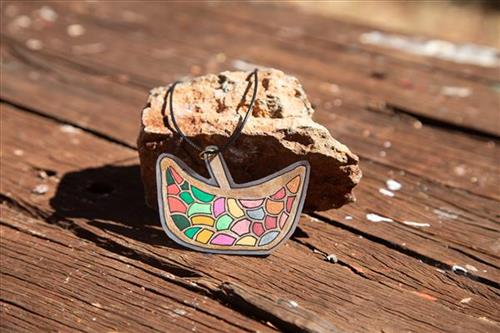
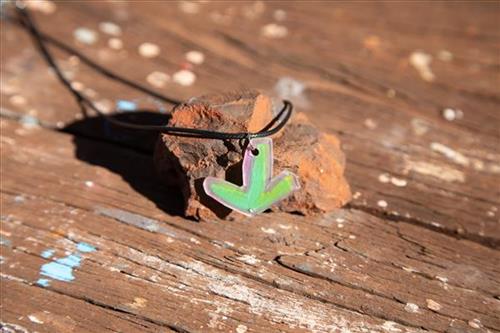
Hand painted polymer Necklace

Hand painted necklace made with oven set polymer and acrylic paint or posca pen. Note that necklaces will vary in colour and design as this item is individually handmade.


11154008345


Status: Stock


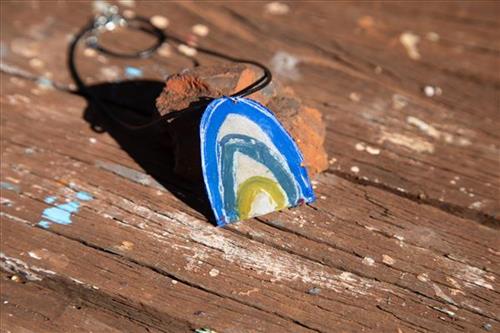
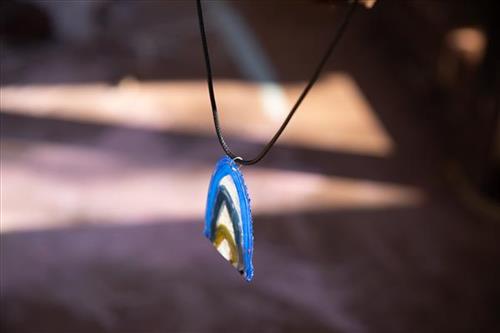
Hand Painted Polymer Necklace

Hand painted necklace made with oven set polymer and acrylic paint or posca pen. Note that necklaces will vary in colour and design as this item is individually handmade.

“Emu go to the springs to have a drink of water and then move on to the next one.”

– Judith Anya Samson

Puntawarri is an important cultural area, as well as the site of a now abandoned community, a waterhole, creek and lake. Puntawarri is located on the middle stretches of the Canning Stock Route and east of the Jigalong Aboriginal Community, where Judith grew up with her grandmother and senior Martumili Artist Dadda Samson. Both artists continue to live there today.

Puntawarri lies within Judith’s ngurra (home Country, camp) through her mother’s family, and as a young girl she frequently travelled and hunted with her family in this area, learning the stories for this Country. Depicted in this work are the tracks of a group of emus on their way to Puntawarri waterhole, searching for kapi (water). 

Karlaya (emu) were traditionally hunted during the pujiman (traditional, desert dwelling) era, and they continue to be a favoured bush tucker for Martu today. During the pujiman (traditional, desert dwelling) period, Martu would traverse very large distances annually in small family groups, moving seasonally from water source to water source, and hunting and gathering bush tucker as they went. Jina (tracks, footprints) are used by Martu people when tracking bush tucker. In the absence of an actual animal sighting, tracks act as an identifier that an animal was present, which can then be followed to the animal’s present location. Besides providing information on location, Martu are able to interpret from tracks the passage of time since the tracks were imprinted, as well as the corresponding animal species and its size.

The softer and more extensive the ground surface, the easier it is to locate and follow tracks, thus certain conditions are favoured for tracking. Tuulparra (spring) and yalijarra (hot time) are preferred over wantajarra (winter), when south easterly tradewinds blow strongly to obscure tracks. Tracks and burrows are also more readily visible in early growth lands, such as nyurnma (freshly burnt Country) and waru-waru (growth of new shoots and young plants). For this reason, fire burning is an important tool in animal tracking. Small burns are lit to clear vegetation, expose burrows, and to allow for access to walk and track readily in exposed sands, while simultaneously providing diverse regenerating habitats.

11594008079


Status: Stock


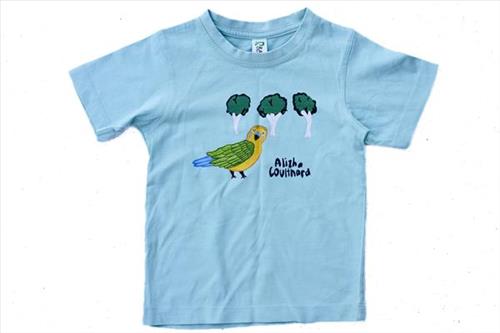
Lyerrtjina (budgerigar)

Lyerrtjina urlpara kwaarnala nama. Budgerigars nest in hollow trees.

22024001710


Status: Stock


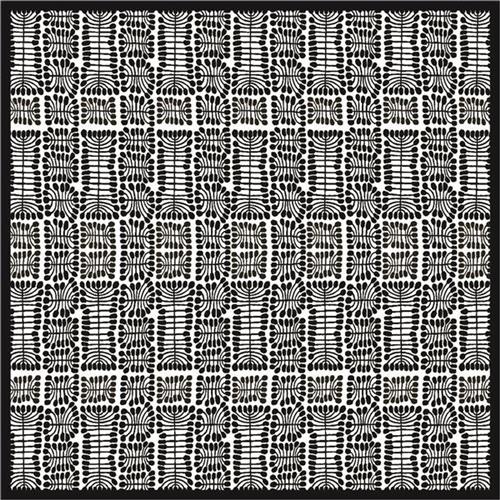
Watiya Tjuta Square Tablecloth (Black on White)

Watiya (tree) Tjuta (many) is the artist’s iconic rendering of her late father’s Tjukurrpa (Dreaming). In this design, the artist depicts the ceremonial spear straightening in Uwalkari country (Gibson desert region). The spear straightening is part of restricted men’s business. Mitjilli was given the right to depict the source of the spears by her father, however, the ceremony cannot be revealed in her works. Uwalkari is abundant with Watiya Tjuta and other plants that grow in a landscape dominated by sandhills. Mitjilli came from an acclaimed family of artists and the imagery of Watiya Tjuta is a recurring motif in her artwork. 

22013972653


Status: Stock


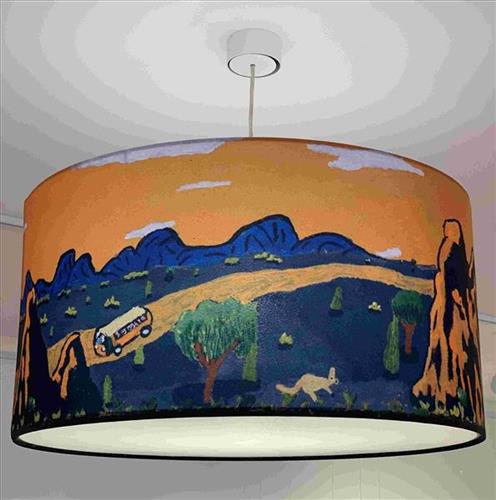
Billy Tjampijinpa Kenda Pendant Light Shade

Goin’ to take Photos of the Wallabies Near West of Jay Creek.

‘I think about memories and I paint my Countryside”

Comes as both a pendant and floor Shade:

Pendant Shade 610 W x 300 H mm – $680
Floor Stand Shade 610 W x 300 H mm – $580

Pendant shades come with a diffuser and electrics.
Floor Shades are sold shade only.