22024002661


Status: Stock


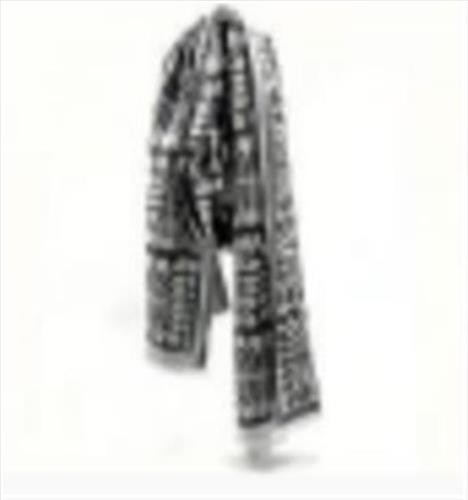
Watiya Tjuta Modal Scarf (Grey)

This exquisite Lenzing Modal scarf is the result of a fair trade project between Better World Arts, Ikuntji Artists and artisans in India. Beautifully made in fine modal a fibre derived from nature, LENZING™ Modal fiber types have been certified as compostable and biodegradable under industrial, home, soil and marine conditions, thus they can fully revert back to nature.

Artwork Story:

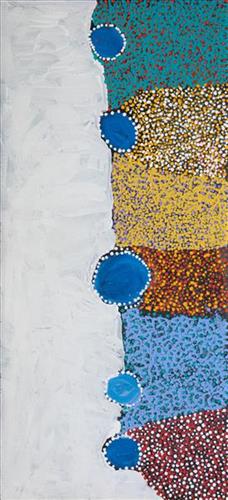
‘Watiya Tjuta’ Napurrula’s father, Tupa Tjakamarra gave her the right to paint works related to Ilyingaungau in the Gibson Desert. This site, south of Walungurru (Kintore), some 520 kilometres west of Mparntwe (Alice Springs), is where the artist’s Mutikatjirri ancestors assembled their kulata (spears) for a conflict with the Tjukula men. Allusive works that refer to the straightening of kulata by Tjupurrula are among the landmark paintings of the Ikuntji Artists movement’s 30-year history.

The paintings of Napurrula and her husband, Long Tom Tjapanangka, have come to be understood as archetypical of Ikuntji art since they began to work with the arts centre in 1993. Napurrula remembers, ‘ … After I got married, my mother taught me my father’s Tjukurrpa in the sand, that’s what I’m painting on the canvas’. The white pigment eddies around abstract forms that refer to the spearwood trees. The tightly structured patterning of the key motifs and bold use of colour demonstrates the artist’s confidence in her individual artistic vision within a family of superlative artists – and the cultural heritage that continues to inform the myriad expressions of Western Desert artists.

Mitjili paints the Watiya Tjuta tree. Mitjili’s style is unique and recognisable. The Watiya Tjuta in Mitjili’s paintings is her father’s Tjukurrpa (dreaming) in Ilyingaungau country (Gibson Desert). This was passed down to her by her mother, Tjunkayi Napaltjareri when story telling, using the same to draw the story as it is told in the traditional way. She remembers “…After I got married, my mother taught me my father’s Tjukurrpa in the sand, that’s what I’m painting on the canvas”, a women’s interpretation.

Better World Arts has been operating for over two decades. They work with traditional artisans from remote regions in Kashmir, Peru, West Bengal, Uttar Pradesh and Nepal (Tibetan refugees). They work with Australian Aboriginal artists from remote communities across Australia, from Arnhem Land to Central and the Western Desert regions, from rural locations and from cities.

Better World Arts are endorsed members of the Fair Traders Association of Australia and New Zealand.
111582384359


Kulyakartu

“My Country, Kulyakartu. I grew up there, from little boy to big boy grew up there.”

 – Muuki Taylor

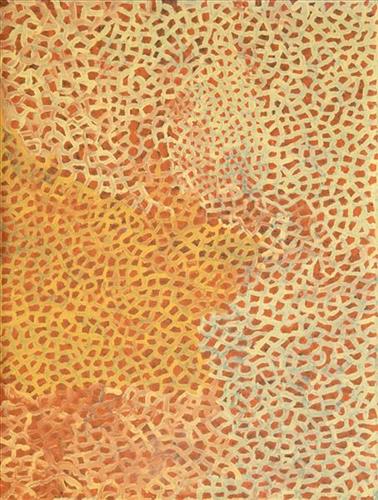
This painting depicts Kulyakartu, Muuki’s ngurra (home Country, camp). Kulyakartu is located in the far north of the Martu homelands, near the Percival Lakes region of Western Australia’s Great Sandy Desert. Muuki has extensive knowledge of the Country in this region, where he grew up living traditionally during the pujiman (traditional, desert dwelling) days with his family. Kulyakartu is mostly grass Country where there is very good hunting. In particular parnajarrpa (goanna), wild cats, and lunki (witchetty grub) are found in abundance here. There is no permanent water source in Kulyakartu, so Muuki’s family would walk here annually following the wantajarra (wet season). During the yalijarra (hot, dry season) they would head south again to more permanent water.

Muuki paints Kulyakartu in all its different seasonal stages. Often visible in his work is the patchwork nature of regrowth subsequent to the practice of waru (fire) burning that assists with hunting, regenerates growth, and encourages greater diversity in plant and animal life. This mosaic patterning is aligned with the five distinct Martu cyclical phases of burning and regrowth. First is nyurnma (freshly burnt Country) when Muuki is “making waru”. Following nyurnma are the rains and subsequent waru-waru, when young, bright green plants start to grow. Nyukura occurs between one and three years after burning, when plants have matured and are fruiting and seeding. Manguu is “when him finished”, four to six years post burning, and when spinifex has matured to the point that it can be burned once again. Finally, kunarka signifies the time when spinifex and other plant species have become old growth, and pose a risk of destructive bushfires.

111582384358


Wirlarra (Wilarra)

Wirlarra, the site depicted in this painting, lies on the eastern edge of a large salt lake, Nyayartakujarra (Lake Dora), near Punmu Aboriginal community. A distinctive group of small salt water pools are clustered together here. The water from these pools is known for its’ powerful healing properties, and the pools are still visited today by Martu to bathe cuts and sores. 

Wirlarra is also a term for ‘moon’ in Manyjilyjarra, and through the site’s Jukurrpa (Dreaming) narrative, the site is united with the moon in significance. It is said that at Wirlarra, the moon called to a family of dingoes; a mother, father and their large litter of dingo pups. The dingoes gathered at Wirlarra, where the moon cared for them and created a windbreak for the family to shelter. Here the dingoes scratched at the surface of the salt lake and created the cluster of salt water pools located there today. They lay down there. After a time, the dingoes continued travelling eastward toward the rising moon until they reached Kinyu (Well 35 on the Canning Stock Route), where they remained until all of the dingo pups had grown up. From Kinyu the family travelled further east with the moon.

111582384357


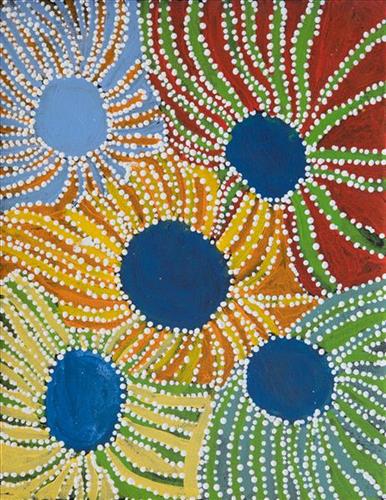
Flowers

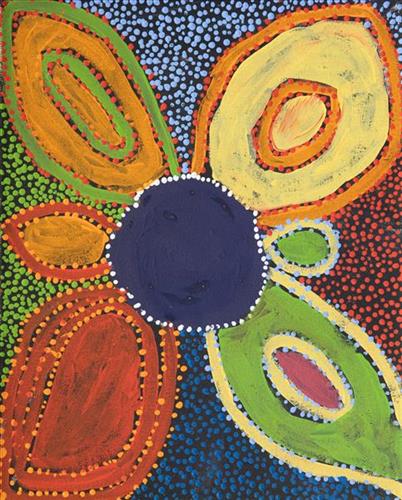
This work depicts the remarkably diverse flora found through Martu Country. These plants are not only vital as significant food sources, but also celebrated for their aesthetic splendour. In the context of the often harsh and arid environments in which desert flowers bloom, their vibrancy, delicacy, and variation become even more spectacular. 

111582384356


Wirlarra (Wilarra)

Wirlarra, the site depicted in this painting, lies on the eastern edge of a large salt lake, Nyayartakujarra (Lake Dora), near Punmu Aboriginal community. A distinctive group of small salt water pools are clustered together here. The water from these pools is known for its’ powerful healing properties, and the pools are still visited today by Martu to bathe cuts and sores. 

Wirlarra is also a term for ‘moon’ in Manyjilyjarra, and through the site’s Jukurrpa (Dreaming) narrative, the site is united with the moon in significance. It is said that at Wirlarra, the moon called to a family of dingoes; a mother, father and their large litter of dingo pups. The dingoes gathered at Wirlarra, where the moon cared for them and created a windbreak for the family to shelter. Here the dingoes scratched at the surface of the salt lake and created the cluster of salt water pools located there today. They lay down there. After a time, the dingoes continued travelling eastward toward the rising moon until they reached Kinyu (Well 35 on the Canning Stock Route), where they remained until all of the dingo pups had grown up. From Kinyu the family travelled further east with the moon.

225182384341


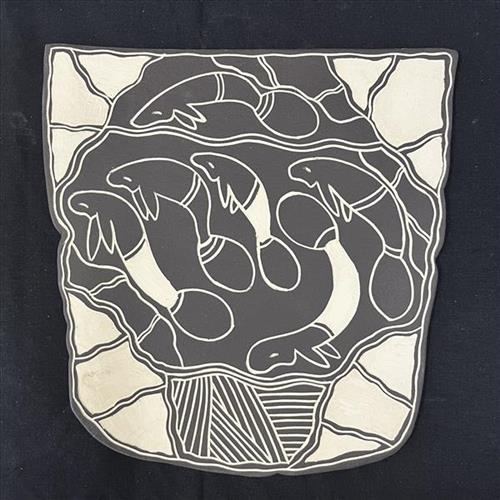
Kirbaji (Dugong)

Kirbaji (Dugong) is an Ancestral Spirit Being (Totem) that I inherited it from my mother’s side.  It is my Totem. The dugong was also an important food source for my ancestors. Only men were allowed to hunt them, and only men had the right to cook and distribute the meat to all the families. My uncles and cousins showed me how to hunt dugongs and they passed down to me the cultural knowledge about them.

My ancestors used to wrap the dugong meat in ginger leaves for flavour, close the wraps with a vine and cook them in the ground oven. Dugongs were only hunted on special occasions such as births, weddings and funerals to provide food for large family gatherings.Dugong fat was also melted to make oil which was used as a medicine for skin and hair ailments or as ointment to treat an upset stomach.

37781064008605


Status: Stock


Crab Bandhini – Cecelia Tigan

This garment is a collaboration between the artists at Nagula Jarndu Designs and the Saheli Women in Rajasthan, India. A social enterprise centered on traditional craft and textiles practices in Jodhpur founded to create opportunities and financial independence for women. Collaborating with Saheli meant that we have more transparency in the production our garments, in ways that are both environmentally sustainable and ethically sound. It also supports jarndunil (women) like us! Designs by seven Nagula Jarndu artists were developed into either wood blocks or interpreted into an embroidery pattern by the makers in Jodhpur.

The Bhandini Dyed Cotton dress features an embroidered crab design. This design was created by artist Cecelia Tigan.

 Description:

  • relaxed fit
  • Ruched elasticated waist band with lots of give
  • Hem finishes at ankle
  • Ample side seam pockets

*Please note that the pattern placement will vary slightly on each garment. these are also hand printed with natural dyes. You might notice slight flecks of colour on the garment which are not a flaw but part of the hand woodblock printing process

Size and fit guide:

These garments run true to size and are designed to be both generous and comfortable. 

Measurements: waist / waist stretched to max/ length waistband to ankle hem

S: 72cm / 92cm / 97cm 
M: 78cm / 96cm / 99cm 
L: 86cm / 112cm / 100cm 

Care and washing guide:

Handwashing your garment in cold water and ironing from the inside-out, will ensure that it is a part of your wardrobe for years to come.

11414008597


Status: Stock


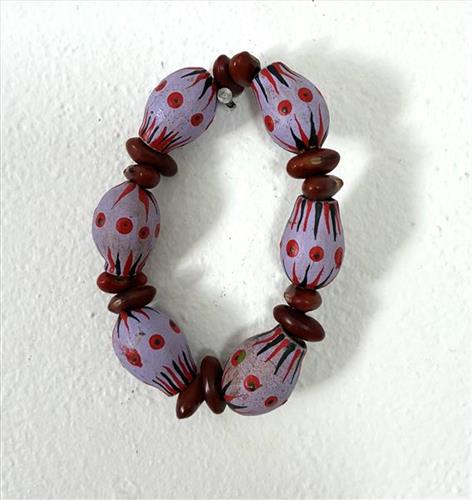
Locally collected painted tatu/gumnut, ininti seed or quondong seed, pieced with a hot poker.

37781064008596


Status: Stock


Scrunchies

This garment is a collaboration between the artists at Nagula Jarndu Designs and the Saheli Women in Rajasthan, India. A social enterprise centered on traditional craft and textiles practices in Jodhpur founded to create opportunities and financial independence for women. Collaborating with Saheli meant that we have more transparency in the production our garments, in ways that are both environmentally sustainable and ethically sound. It also supports jarndunil (women) like us! Designs by seven Nagula Jarndu artists were developed into either wood blocks or interpreted into an embroidery pattern by the makers in Jodhpur.

The soft pastel colours of this collection are the result of choosing natural dyes to create the repeat prints.

There are five (5) designs

  • Bandhini – Saheli Women – Natural Dyed cotton
  • Fan Coral by Rowena Morgan – 100% Egyptian Cotton
  • Mala (Trumpet Shell) by Lorraine Hunter – 100% Egyptian Cotton
  • Pale Pink – Saheli Women – Natural Dyed Cotton
  • Wattle by Mareeya Pigram – 100% Egyptian Cotton

 Description:

  • relaxed fit
  • Ruched elasticated band with lots of give

*Please note that some fabrics are hand printed with natural dyes. You might notice slight flecks of colour on the garment which are not a flaw but part of the hand woodblock printing process