377810582127233


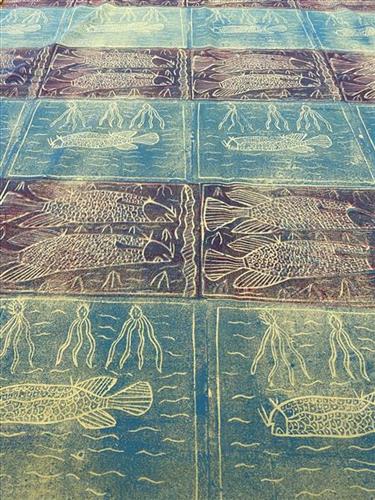
(Saratoga Fish)

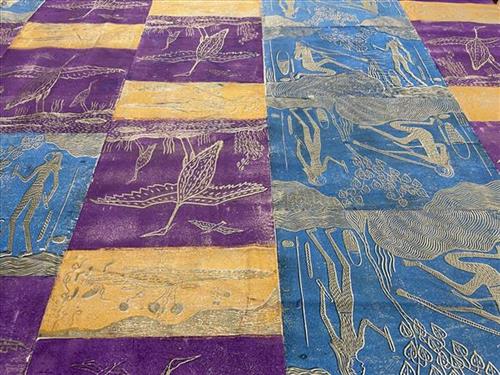
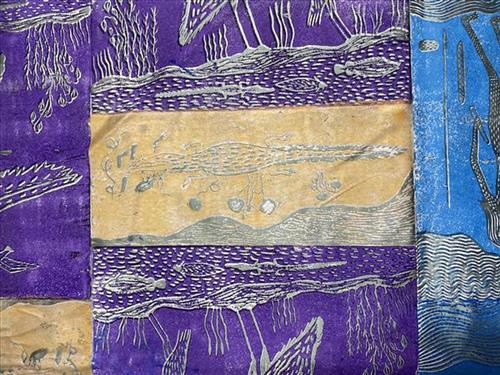
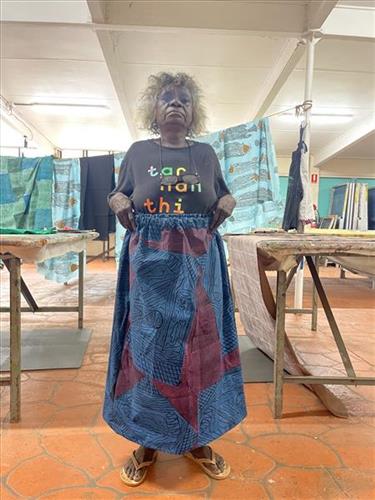
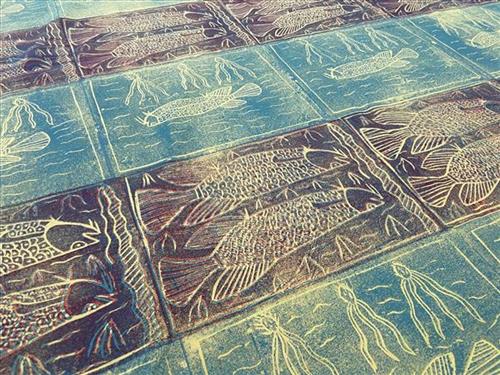
This design tells the story of Saratoga dreaming a freshwater fish that swims on the edge of creeks and rivers. This design is the Saratoga dreaming from the Mularra songline. Where the Saratoga we call Murdulngu, Danguny travelled from Malmyangarnak billabong to Mirrigatja.

This Billabong was owned by Murdulngu (Saratoga) before the water was taken over by shark Barlangu he came all the way from east to north then to west. He was travelling when that water level was high he went up the stream but he couldn’t make it. This Barlangu came from Murruggun clan but really this shark came from long way all the way south. This story is connected through Mularra songline it represents many clans.

With permission from clan elders, Carol is able to pass on this family knowledge through her passion in textile and art.
‘I am proud of my first design, I want to keep this design for future, for my children and grandchildren so they remember this story, this story is a big part of the mularra songline’

Black linen with pink and antique gold metallic ink

377810582127230


Namurre Boko

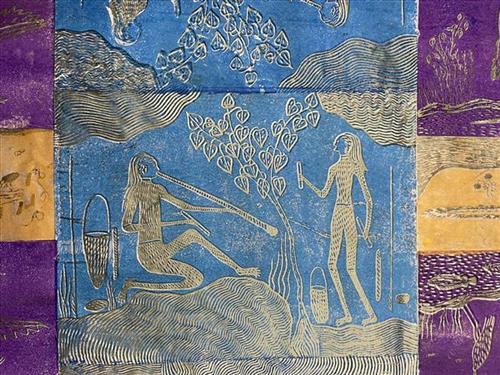
‘Bini-murreko means two brothers – big brother and little brother.

Two brothers were really strong leaders and good hunters, sharing animals with different tribes.
With those different tribe there were jealousy going on.
Little brother went walkabout and heard the different tribe was talking about his tribe.
They said ngarribin manre djed-djedme bokko
Meaning: will make spear for them
Ngarrbin danj-bun, ngarrbinbun
Meaning: will spear them kill them
little brother turn around went back tell his brother
Namurre bokko kadi marne djed-djedme Karre wonens, kardi-djal danjbun
Meaning: they making spear for us, they gonna spear us
Couple of months they saw different tribe
They changed their attitude
They been bringing lots of animals to them and start asking for women
And that tribe realise that’s how those brothers died.
They kill them
This Why? They got jealous because two brothers was a good hunter.

This story written on the rock art and it stays forever.’

377810582127223


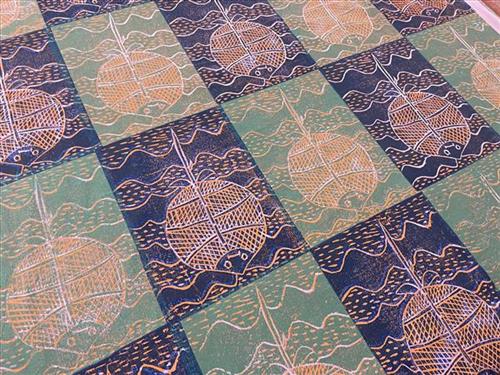
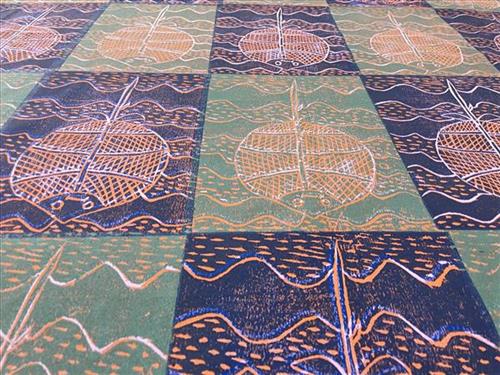
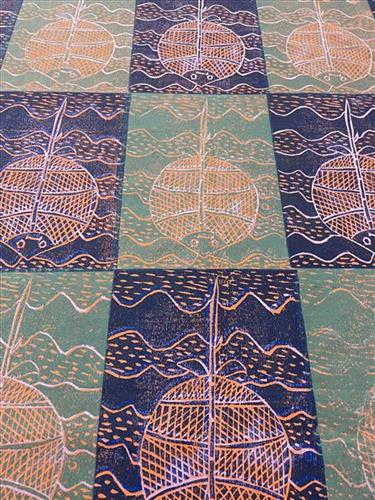
Morning Star

The ceremony known throughout Arnhem Land generically as Marradjiri is a ceremony of diplomacy given by one group to another to establish good relations and to strengthen kinship (for example by marriage) and economic ties (for example the sharing of clan estate resources).

The central object in the Marradjiri ceremony is a decorated polepainted with clan designs. The work on the pole is undertaken as part of the ceremony and is accompanied by the associated song series.

Often the ceremony commences when one group invites another and the people invited perform the Marradjiri. When a child finds their first bush food or object of value it is taken as a sign that the Marradjiri ceremony should be performed and an invitation is sent out sometimes in the form of a lock of hair from this child or in the form of some other token, sometimes encased in beeswax and wrapped in cloth. The token is delivered to the invited performers who then prepare to give the ceremony to their hosts at the residence of the host group.

Each evening before sunset the performance begins and continues for two or three hours. In the early stages of the ceremony the dancers perform with body clan designs which become progressively more elaborate as the time approaches the end of the ceremony. Usually this may take two or three weeks.

In the Marradjiri, the pole is said to represent a mast of a Makassan prau. There exists many loan words (over three hundred in total) in North Australian Aboriginal languages and one of these is the Makassan word for mast of a ship ‘palayarrang’ which has changed in some Maningrida languages to ‘bulayarrang’ and a few other variations.

It is possible that the name of this ceremony has its origins in the Makassan word for mast. The Marradjiri ceremony is influenced heavily by Makassan themes.

On the final night of the ceremony the pole appears out of the darkness on the edge of the camp decorated with feathered tassles and long ropes which represent the rigging of the prau. Dancers hold these ropes and move the pole back and forth in the fashion of a prau rolling in rough sea as depicted. The dancers bring the pole down and dance with it until it is finally presented to the host group with great ritual and the pole is set into the ground to the accompaniment of the head song man chanting through a long list of clan names associated with the travels of creation ancestors.

When the dancers part with the pole they break into mourning as they may have done at the end of each Makassan trepanging season when their Makassan visitors returned to Sulawesi on the new early dry season winds. The pole is then kept by the host group, often being hung from the roof of a dwelling. Text taken from Maningrida Arts and Culture

377810582127123


Namurre Boko

‘Bini-murreko means two brothers – big brother and little brother.

Two brothers were really strong leaders and good hunters, sharing animals with different tribes.
With those different tribe there were jealousy going on.
Little brother went walkabout and heard the different tribe was talking about his tribe.
They said ngarribin manre djed-djedme bokko
Meaning: will make spear for them
Ngarrbin danj-bun, ngarrbinbun
Meaning: will spear them kill them
little brother turn around went back tell his brother
Namurre bokko kadi marne djed-djedme Karre wonens, kardi-djal danjbun
Meaning: they making spear for us, they gonna spear us
Couple of months they saw different tribe
They changed their attitude
They been bringing lots of animals to them and start asking for women
And that tribe realise that’s how those brothers died.
They kill them
This Why? They got jealous because two brothers was a good hunter.

This story written on the rock art and it stays forever.’

377810582127213


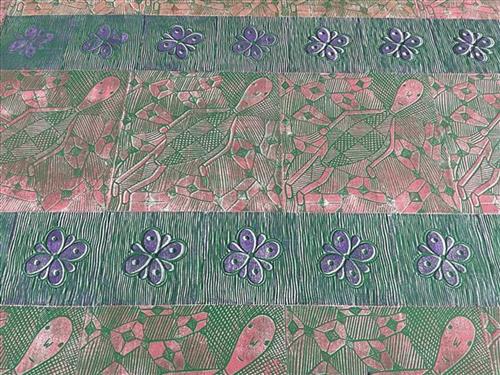
Yawkyawk and Bush Flower

Yawkyawk is a word from the Aboriginal Kunwinjku language, meaning ‘young woman’ and ‘young woman spirit being’.

Sometimes compared to the European notion of mermaids, yawkyawks are usually depicted with the tails of fish. They have long hair, associated with trailing blooms of algae, typically found in Arnhem Land streams and rock pools.

377810582126641


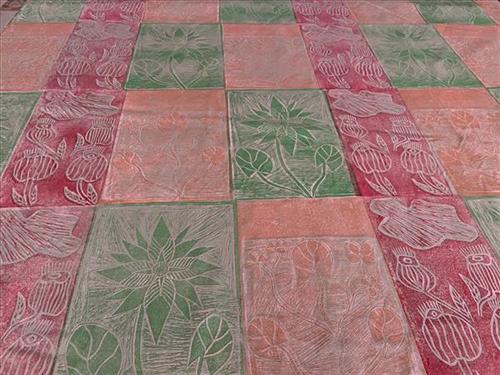
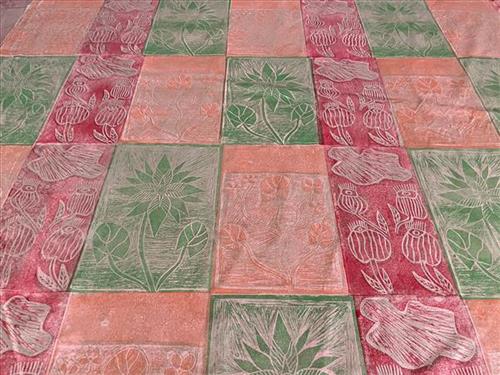
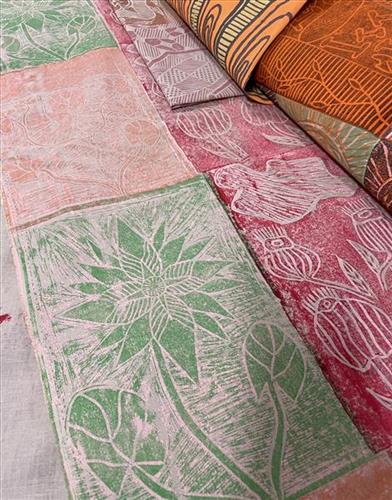
Wayuk & Budbalk

Wayuk (Waterlily) Nymphaea violacea. 

The stem of wayuk is a popular bushfood and the beautiful flower is enjoyed across Arnhem Land.