377810582115924


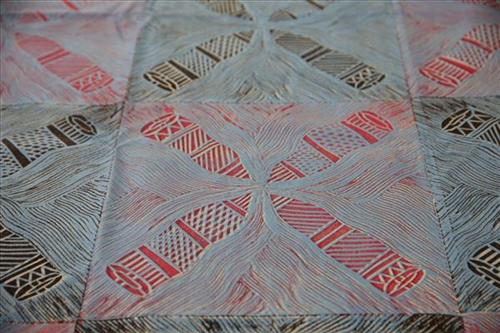
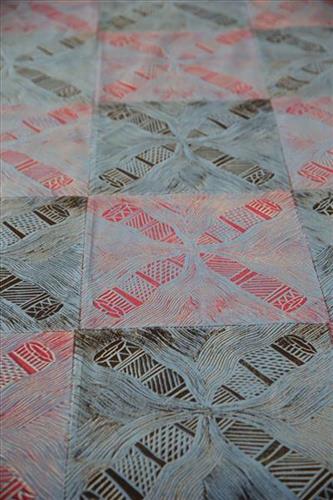
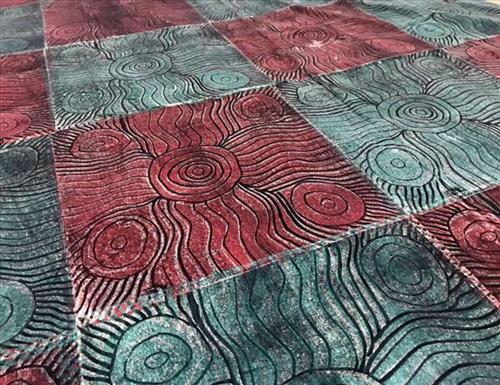
Waterhole

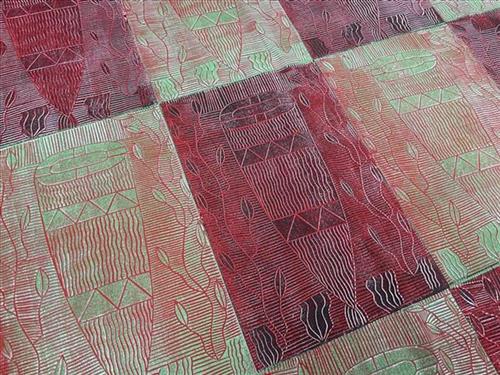
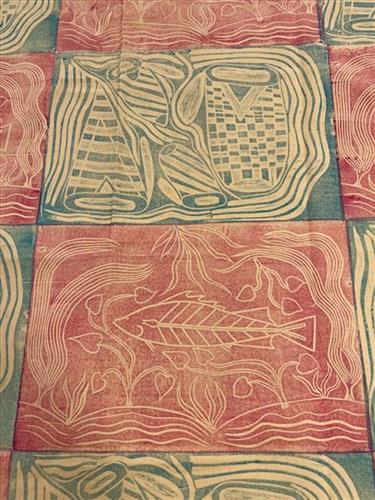
This fabric was created using the linocut printing technique. The lino tile has been carved by the artist in Maningrida, and has been printed by hand using a variety of colours and layers. The linocut technique ensures each textile piece is a one-off, limited edition piece. Bábbarra Women’s Centre supports the economic independence of Indigenous women in the Arnhem Land community of Maningrida, Northern Territory, Australia. Designs created by the women at Bábbarra reflect strong cultural knowledge, which is passed down to younger generations through their textile design practice. Raylene Bonson is a talented textile artist, specialising in linocut technique. She has been working with Bábbarra Designs since 2012. Raylene was mentored by her late mother, Nancy Gununwanga, a senior textile artist at Bábbarra Designs and a founding member of Bábbarra Women’s Centre. Raylene is well known for her designs depicting ancestral stories and ceremonial objects, in particular lorrkkon (hollow log for burial ceremony), kunmadj (dillybag) and mandjabu (conical fishtrap). Teal and red ink on black cotton
377810582115921


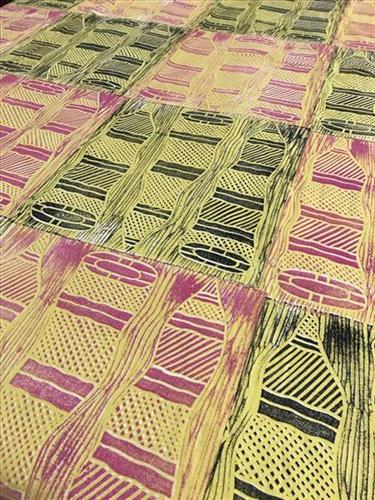
Mandjabu (fish trap)

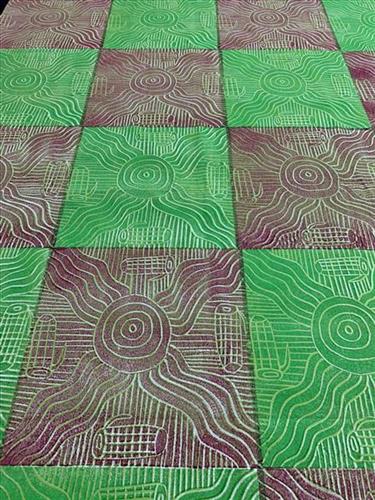
This fabric was created using the linocut printing technique. The lino tile has been carved by the artist in Maningrida, and has been printed by hand using a variety of colours and layers. The linocut technique ensures each textile piece is a one-off, limited edition piece. Bábbarra Women’s Centre supports the economic independence of Indigenous women in the Arnhem Land community of Maningrida, Northern Territory, Australia. Designs created by the women at Bábbarra reflect strong cultural knowledge, which is passed down to younger generations through their textile design practice. Beautiful piece of yellow cotton with black, pink and white Lino print

377810582115918


Wubbunj (paperbark canoe)

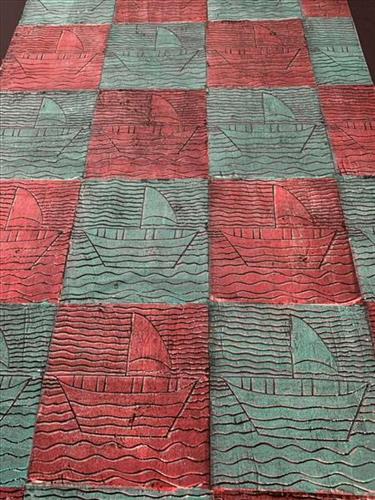
This fabric was created using the linocut printing technique. The lino tile has been carved by the artist in Maningrida, and has been printed by hand using a variety of colours and layers. The linocut technique ensures each textile piece is a one-off, limited edition piece. Bábbarra Women’s Centre supports the economic independence of Indigenous women in the Arnhem Land community of Maningrida, Northern Territory, Australia. Designs created by the women at Bábbarra reflect strong cultural knowledge, which is passed down to younger generations through their textile design practice.

377810582115915


Mandjabu (fish trap)

“In old times people would make these mandjabu (fish traps) to go fishing. They are made with vine we find in the jungle. That old man, Anchor Gulunba, he showed me how to make these fish traps. I would sit there and watch him making them. We catch barramundi, catfish, all kinds of fish.” – Helen Lanyinwanga Hand printed linocut fabric featuring a new fish trap design by Raylene Bonson. This red fabric os printed with white, black and green.

377810582115895


Mandjabu (fishtrap)

This fabric was created using the linocut printing technique. The lino tile has been carved by the artist in Maningrida, and has been printed by hand using a variety of colours and layers. The linocut technique ensures each textile piece is a one-off, limited edition piece. Bábbarra Women’s Centre supports the economic independence of Indigenous women in the Arnhem Land community of Maningrida, Northern Territory, Australia. Designs created by the women at Bábbarra reflect strong cultural knowledge, which is passed down to younger generations through their textile design practice.

377810582115893


Mandjabu (Fish Trap)

This fabric was created using the linocut printing technique. The lino tile has been carved by the artist in Maningrida, and has been printed by hand using a variety of colours and layers. The linocut technique ensures each textile piece is a one-off, limited edition piece. Bábbarra Women’s Centre supports the economic independence of Indigenous women in the Arnhem Land community of Maningrida, Northern Territory, Australia. Designs created by the women at Bábbarra reflect strong cultural knowledge, which is passed down to younger generations through their textile design practice.

377810582115785


Mimih

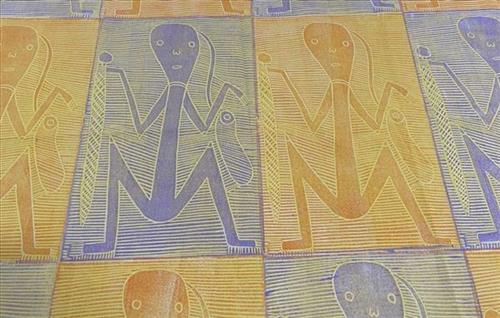
Abigail Namunjdja has been working with Bábbarra Designs since 2012. She comes from a strong line of talented artists, her mother being Jennifer Wurrkidj and her grandmother Helen Lanyinwanga. Three generations of women from Abigail’s family frequently work together at Bábbarra Women’s Centre, sharing knowledge and creating new designs together. Abigail is a gifted linocut artist in her own right. Her newest design is a large mimih spirit with long hair. Holding a spear on one side, this design is testament to Abigail’s strength and above all connection to country. Buttercup fabric with mauve and orange ink

377810582115601


Mimih

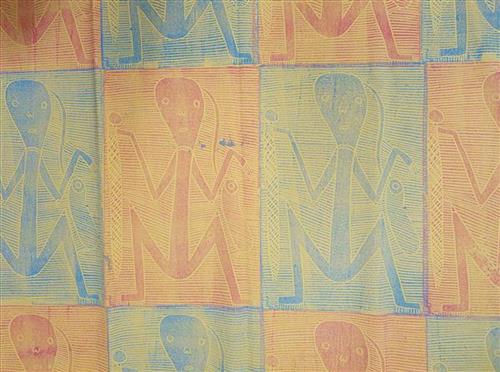
Abigail Namunjdja has been working with Bábbarra Designs since 2012. She comes from a strong line of talented artists, her mother being Jennifer Wurrkidj and her grandmother Helen Lanyinwanga. Three generations of women from Abigail’s family frequently work together at Bábbarra Women’s Centre, sharing knowledge and creating new designs together. Abigail is a gifted linocut artist in her own right. Her newest design is a large mimih spirit with long hair. Holding a spear on one side, this design is testament to Abigail’s strength and above all connection to country. Buttercup fabric with mauve and orange ink

377810582115592


Kunmadj (dillybag) and Birlmu (Barra)

Kun-madj is the Kuninjku term for large woven collecting baskets, known as dillybags. They are often made from the burney vine (Malaisia scandens), a strong, pliable plant that grows along the ground and into the canopy of monsoon vine thickets. The baskets are used to collect a variety of heavy foods, such as fish caught in conical fish traps or a good harvest of yams. As well as being of practical use, dillybags are of cultural significance to Arnhem Land people. Dillybags are totemic objects and they are associated with particular sites in the landscape.

377810582115797


Marebu dja Mandjabu (Pandanus mat and fishtrap)

By Raylene Bonson This fabric was created using the linocut printing technique. The lino tile has been carved by the artist in Maningrida, and has been printed by hand using a variety of colours and layers. The linocut technique ensures each textile piece is a one-off, limited edition piece. Bábbarra Women’s Centre supports the economic independence of Indigenous women in the Arnhem Land community of Maningrida, Northern Territory, Australia. Designs created by the women at Bábbarra reflect strong cultural knowledge, which is passed down to younger generations through their textile design practice. Raylene Bonson is a talented textile artist, specialising in linocut technique. She has been working with Bábbarra Designs since 2012. Raylene was mentored by her late mother, Nancy Gununwanga, a senior textile artist at Bábbarra Designs and a founding member of Bábbarra Women’s Centre. Raylene is well known for her designs depicting ancestral stories and ceremonial objects, in particular lorrkkon (hollow log for burial ceremony), kunmadj (dillybag) and mandjabu (conical fishtrap).