Birlmu (Barramundi)
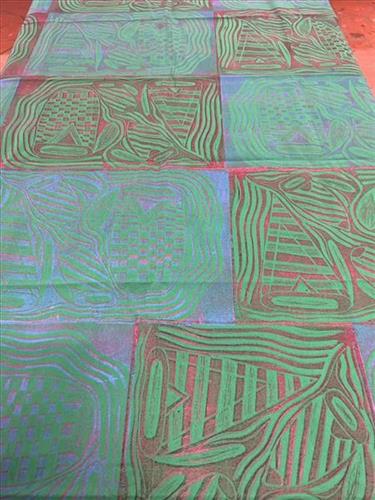
Abigail Namandja depicts the story of Birlmu in this beautiful, hand-printed lino design. Green cotton with light blue and pink ink.
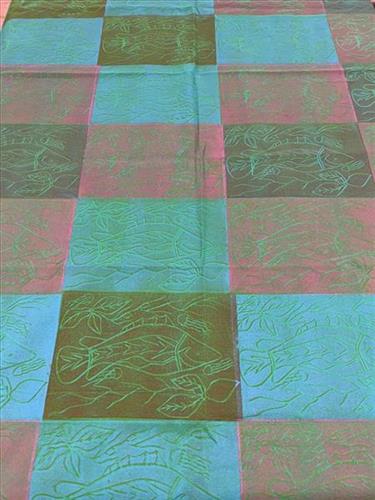
Abigail Namandja depicts the story of Birlmu in this beautiful, hand-printed lino design. Green cotton with light blue and pink ink.
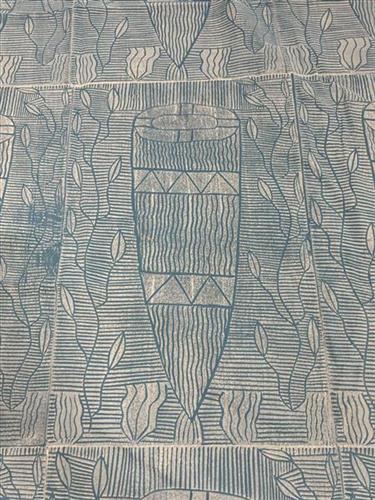
“In old times people would make these mandjabu (fish traps) to go fishing. They are made with vine we find in the jungle. That old man, Anchor Gulunba, he showed me how to make these fish traps. I would sit there and watch him making them. We catch barramundi, catfish, all kinds of fish.”
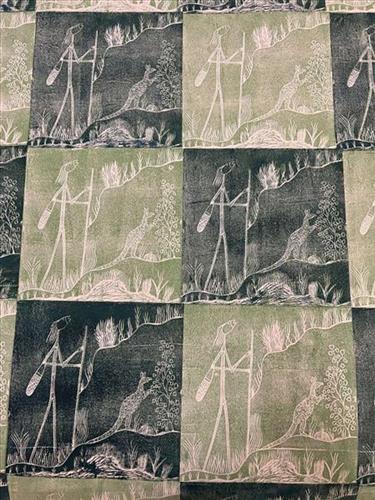
Jay Jurrupula depicts the story of ‘Kangaroo and Mimi spirit told with her hand carved, Lino print design.
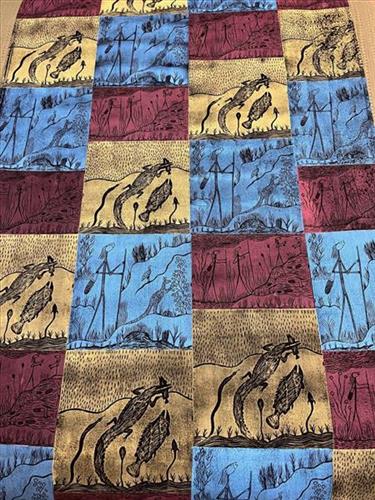
‘Bini-murreko means two brothers – big brother and little brother. Two brothers were really strong leaders and good hunters, sharing animals with different tribes. With those different tribe there were jealousy going on. Little brother went walkabout and heard the different tribe was talking about his tribe. They said ngarribin manre djed-djedme bokko Meaning: will make spear for them Ngarrbin danj-bun, ngarrbinbun Meaning: will spear them kill them little brother turn around went back tell his brother Namurre bokko kadi marne djed-djedme Karre wonens, kardi-djal danjbun Meaning: they making spear for us, they gonna spear us Couple of months they saw different tribe They changed their attitude They been bringing lots of animals to them and start asking for women And that tribe realise that’s how those brothers died. They kill them This Why? They got jealous because two brothers was a good hunter. This story written on the rock art and it stays forever.’
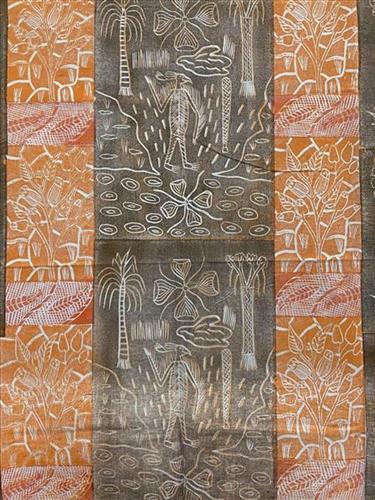
Namorodo, Manbedde (quinine tree Petalostigma pubescens ) and rolk (maggot) ‘This one is pandanus we call them Kundayarr and kundalk that’s grass, little billabong and leaves from the rock country and this skin, the tree made by Namarodo (the bad angel) and that stick. It also shows the colour of the rock paint and sand’ Janet Marawarr 2021
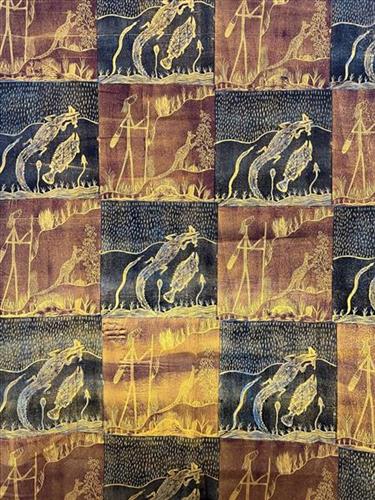
‘This is a true story. My great great grandfather and my father told this story and I tell it to my children. It’s about a freshwater crocodile called Modjarrkki. One day an unmarried man who was camping with his brother and his brothers wife went walking by himself. He came to a creek where he found a crocodile. He went back to camp and said to his brother ‘hey I found a croc, lets go kill it!’. He tried to kill the crocodile but the crocodile bit his brother. He bit his guts, his hand, his legs and he died. Modjarrkki was an angry crocodile but today Modjarkki doesn’t bite people, he’s only a little crocodile and he eats barramundi. He is still alive and he lives in rock country, Karrabarda, which is in Gorlobidahdah.’ Jay Rostron Jurrupula
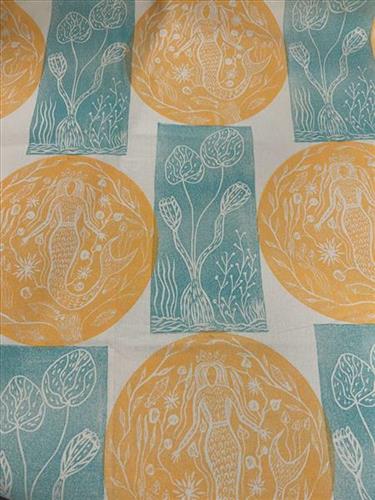
A beautiful hand printed design by Jay Jurrupula. ‘The mermaid design, that was my daughter design, Cindy Rostron, my daughter was helping me to make this.. she’s the djungkay for this mermaid design..’ Jay Rostron 2021
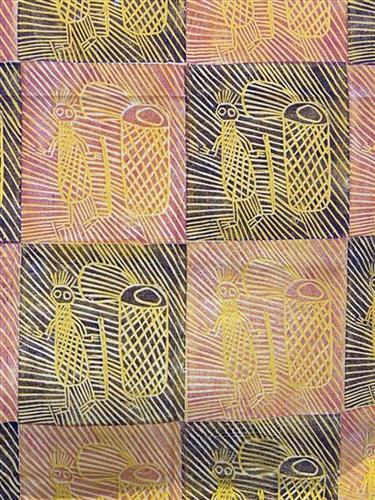
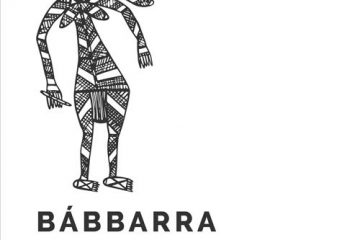
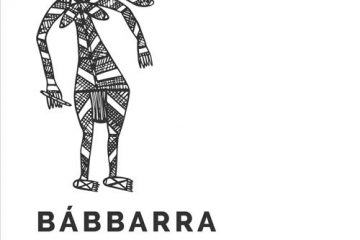
‘Bawáliba is the djang (Dreaming) of my mother and my uncles. They are good spirits, they protect us and they recognise families. They are really tall- just like human beings, like us. They dance late at night and have a lot of hair.
In olden times, long long long time ago Bawáliba were here, before people were on the land. Bawáliba used to go out hunting and care for country. They hunt carrying fish traps and digging sticks, near the homeland Djinkarr. They go out hunting on the floodplains with dilly bags and digging sticks. They collect a lot of bush foods, and sleep together with one bark shelter.
Sometimes now they still come alive when we sleep, they might come to our houses and peep through the window. At night, they cover themselves with white clay and red cloth tied around their waist. If we hear them, we jump out of bed and get up to look -but they have disappeared, they’re just too quick. Bawáliba might knock on the window to remind us they are there looking out for us.If you listen deeply you can hear them whisper, sometimes they talk about us and might say, ‘why are those people making camp here?’ then they realise ‘Oh they are family from here, it’s ok, they are just sleeping here for the night’.
During the day they always turn into stone and they sleep. We still know that green rock covered in moss near Djinkarr, that’s Bawáliba sleeping.
Some of my ancestors used to speak the same language as the Bawaliba, but all those old people are passed away now. It’s a little bit sad for us, because no one now can speak that Bawaliba language anymore.’ Lucy Yarawanga 2019
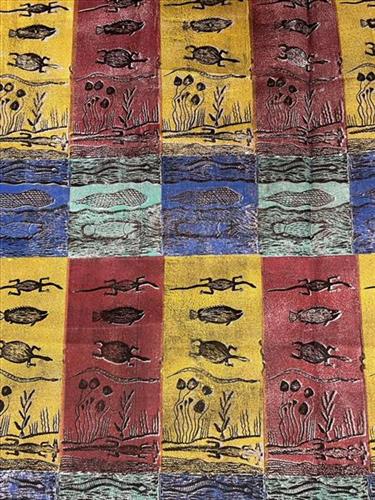
Modjarrkki (crocodile story) ‘This is a true story. My great great grandfather and my father told this story and I tell it to my children. It’s about a freshwater crocodile called Modjarrkki. One day an unmarried man who was camping with his brother and his brothers wife went walking by himself. He came to a creek where he found a crocodile. He went back to camp and said to his brother ‘hey I found a croc, lets go kill it!’. He tried to kill the crocodile but the crocodile bit his brother. He bit his guts, his hand, his legs and he died. Modjarrkki was an angry crocodile but today Modjarkki doesn’t bite people, he’s only a little crocodile and he eats barramundi. He is still alive and he lives in rock country, Karrabarda, which is in Gorlobidahdah.’ Jay Rostron Jurrupula
Kunmadj is the Kuninjku term for large woven collecting baskets, known as dillybags.
They are often made from the burney vine (Malaisia scandens), a strong, pliable plant that grows along the ground and into the canopy of monsoon vine thickets. The baskets are used to collect a variety of heavy foods, such as fish caught in conical fish traps or a good harvest of yams. As well as being of practical use, dillybags are of cultural significance to Arnhem Land people. Dillybags are totemic objects and they are associated with particular sites in the landscape.