377810582115333


Wak Wak

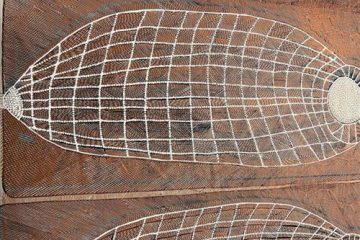
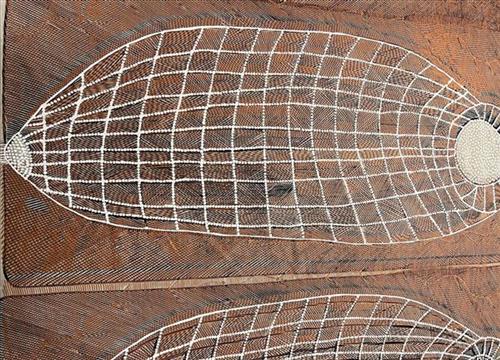
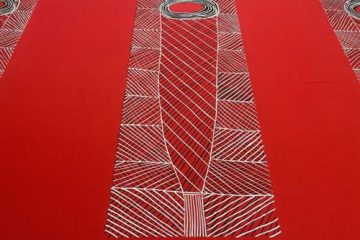
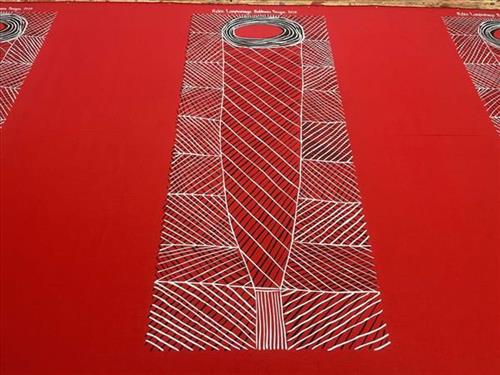
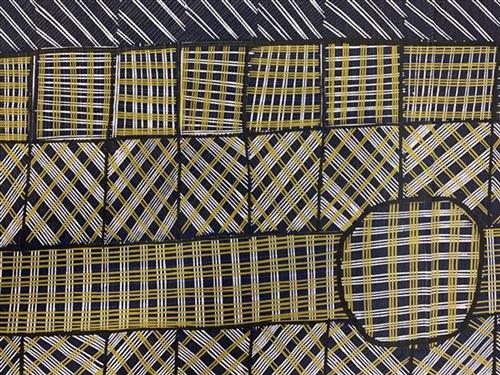
Wak Wak (Black Crow Dreaming) by Deborah Wurrkidj depicts a sacred site at ‘Kurrurldul’, an outstation south of Maningrida.

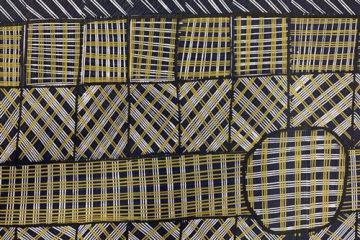
The ‘rarrk’, or abstract crosshatching, on this work represents the design for the crow totem ancestor called ‘Djimarr’. Today this being exists in the form of a rock, which is permanently submerged at the bottom of Kurrurldul Creek. The ‘Djimarr’ rock in the stream at Kurrurldul is said to move around and call out in a soft hooting tone at night. Both the stone itself and the area around it are considered sacred.

The imagery represents the rock mentioned above at the bottom of Kurrurldul creek, which is the final transmutation of the dreaming ancestor ‘Djimarr’. Finally, the pattern used here is also the crow design used in the sacred ‘Mardayin’ ceremony, which is a large regional patri-moiety ceremony now rarely conducted in central and eastern Arnhem Land.
377810582115332


Wak Wak

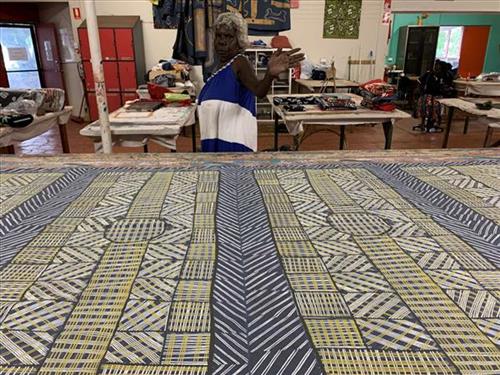
Wak Wak (Black Crow Dreaming) by Deborah Wurrkidj depicts a sacred site at ‘Kurrurldul’, an outstation south of Maningrida.

The ‘rarrk’, or abstract crosshatching, on this work represents the design for the crow totem ancestor called ‘Djimarr’. Today this being exists in the form of a rock, which is permanently submerged at the bottom of Kurrurldul Creek. The ‘Djimarr’ rock in the stream at Kurrurldul is said to move around and call out in a soft hooting tone at night. Both the stone itself and the area around it are considered sacred.

The imagery represents the rock mentioned above at the bottom of Kurrurldul creek, which is the final transmutation of the dreaming ancestor ‘Djimarr’. Finally, the pattern used here is also the crow design used in the sacred ‘Mardayin’ ceremony, which is a large regional patri-moiety ceremony now rarely conducted in central and eastern Arnhem Land.
377810582115330


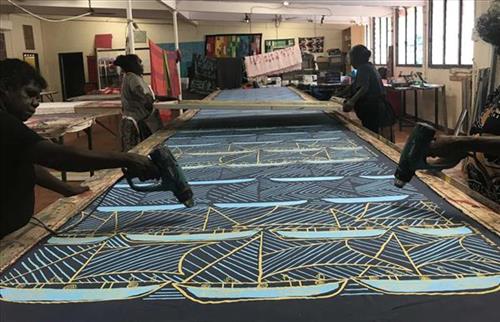
Makassan Boat with Bottles and Rope

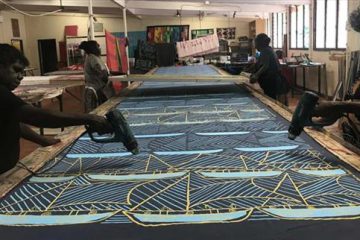
“Wubbunj is our traditional canoe. This design is the old history story of how people came to live in this place we call Maningrida. Two old people were staying on the other side of the saltwater, in Narlarrambarr area. The old people slept in a paper bark shelter and hunted on the water using their canoe. A long time ago our people carved these canoes from the big paperbark trees. They had paddles with one person at the front, one at back, and other kids and passengers in the middle. Kunkot (paper bark) was used to make the sails which they would stand up and catch the wind.

One day these old people saw a new boat in their waters, which belonged to the Makassans (Indonesians). Those two old men saw the big Makassan boat coming in, and decided to paddle their canoe from Narlarrambarr to the other side (modern day Maningrida). We were scared of the Makassans, they gave us tobacco and tea, but they took many of our women.

In this design I have painted the Makassan’s rope, smoking pipe and the pottery vessels they bought with them on a boat. Our people had never seen these things before they bought them across from Indonesia.

When those two old people tasted that water at Maningrida from the Djomi spring, it was sweet freshwater and they decided to stay here. People here had no clothes in those time, we were just wearing string morkoi (loin cloths). Seven tribes were here then, but now in Maningrida there are lots more languages.” – Raylene Bonson

377810582115270


Mandjabu

“In old times people would make these mandjabu (fish traps) to go fishing. They are made with vine we find in the jungle. That old man, Anchor Gulunba, he showed me how to make these fish traps. I would sit there and watch him making them. We catch barramundi, catfish, all kinds of fish.” – Helen Lanyinwanga

Kuninjku people traditionally make two sorts of conical fish traps. One called mandjabu made from a vine called milil, and another smaller one called manylik mandjabu, made from the grass manylik. The mandjabu conical fish trap is bigger and stronger and used in tidal reaches of creeks to catch large fish. The smaller, lighter manylik trap is used in freshwater flowing creeks to catch smaller fish and freshwater prawns. Traditionally, only men were involved in the construction of the large fish traps, but children would often crawl inside and assist.

To make fish traps and fish net fences artists firstly get vine (milil) from the jungle and they put it in water for one night to make it soft. Next they start weaving it; they make rings for the inside to keep the fish trap’s shape. Artists work for three or four weeks on the fish trap. They also make string from kurrajong (burdaga) to attach the hibiscus (bardainy) rings and to tie the conical end of the fish trap. This fish trap is used in saltwater and freshwater. People also use fish net fences called mun-dirra. A long time ago they would put the mun-dirra across rivers and creeks. In the middle they would place the an-gujechiya. They also used small things like sticks, rocks, mud and grass to block the fish from going through. People would then catch fish like saltwater barramundi rajarra, freshwater barramundi (janambal), small black freshwater catfish (buliya), bonefish (an-guwirrpiya), and sand bass (dalakan) in these fish traps.

377810582115269


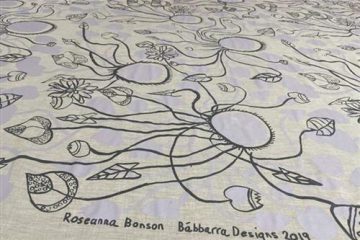
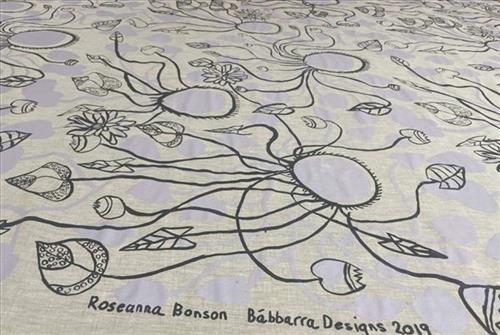
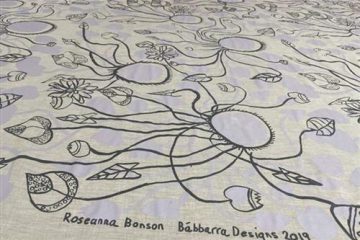
Wayuk (Waterlily)

‘I always follow the footpath of my grandmother. I have too many stories of my grandmother. We went to the bush and ate bushtucker like yam, yabbie, barra, catfish and magpie goose. We didn’t come into town often, we were staying at Barrihdjowkkeng outstation. I learned how the old people used to live. I always think about my family out there and I keep going. My grandmother asked me to work with her for many years. I watched her making lino and screen printing. That’s why I stay in this job and I’m for the women’s centre’.  Roseanna Bonson 2021

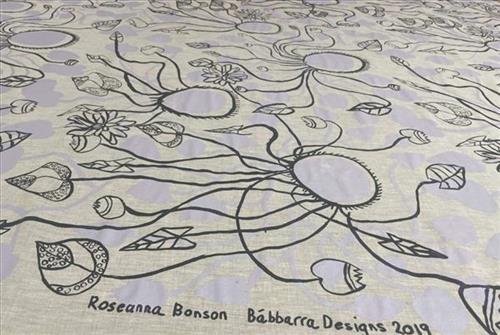
Roseanna’s first design is a 2 colour waterlily design. Wayuk (waterlily) *kuninjki grow in the swamps around Barrihdjowkkeng.

‘The flowers of the waterlily are white and yellow and I like that kind of colour.’ Roseanna Bonson 2021

377810582115268


Wayuk (Waterlily)

‘I always follow the footpath of my grandmother. I have too many stories of my grandmother. We went to the bush and ate bushtucker like yam, yabbie, barra, catfish and magpie goose. We didn’t come into town often, we were staying at Barrihdjowkkeng outstation. I learned how the old people used to live. I always think about my family out there and I keep going. My grandmother asked me to work with her for many years. I watched her making lino and screen printing. That’s why I stay in this job and I’m for the women’s centre’.  Roseanna Bonson 2021

Roseanna’s first design is a 2 colour waterlily design. Wayuk (waterlily) *kuninjki grow in the swamps around Barrihdjowkkeng.

‘The flowers of the waterlily are white and yellow and I like that kind of colour.’ Roseanna Bonson 2021

377810582115266


Wayuk (Waterlily)

‘I always follow the footpath of my grandmother. I have too many stories of my grandmother. We went to the bush and ate bushtucker like yam, yabbie, barra, catfish and magpie goose. We didn’t come into town often, we were staying at Barrihdjowkkeng outstation. I learned how the old people used to live. I always think about my family out there and I keep going. My grandmother asked me to work with her for many years. I watched her making lino and screen printing. That’s why I stay in this job and I’m for the women’s centre’.  Roseanna Bonson 2021

Roseanna’s first design is a 2 colour waterlily design. Wayuk (waterlily) *kuninjki grow in the swamps around Barrihdjowkkeng.

‘The flowers of the waterlily are white and yellow and I like that kind of colour.’ Roseanna Bonson 2021

377810582114342


Mandjabu

In old times people would make these mandjabu (fish traps) to go fishing. They are made with vine we find in the jungle. That old man, Anchor [Gulunba], he showed me how to make these fish traps. I would sit there and watch him making them. We catch barramundi, catfish, all kinds of fish.

Helen Lanyinwanga

Kuninjku people traditionally make two sorts of conical fish traps. One is called mandjabu and is made from a strong, durable vine called milil, and a smaller one is called manylik mandjabu, and made from the grass manylik. The mandjabuconical fish trap is bigger and stronger and used in tidal reaches of creeks to catch large fish. The smaller, lighter manyliktrap is used in freshwater flowing creeks to catch smaller fish and freshwater prawns. In earlier times, only men were involved in the construction of the large fish traps, but children would often crawl inside and assist.

To make mandjabu, weavers firstly harvest milil (burney vine, Malaisia scandens) and put it in water overnight to make it soft. Then they start weaving it; they make rings for the inside to keep the fish trap’s shape. People also make string from the bark of burdaga (kurrajong) to attach the bardainy (hibiscus) rings and to tie the conical end of the fish trap. It’s hard work and it can take three or four weeks to make a fish trap. People also use fish-net fences called kunkarlewabe. They would put the kunkarlewabe  across rivers and creeks. In the middle they would place the mandjabu. They also used small things like sticks, rocks, mud and grass to block the fish from going through. This way we would catch fish such as saltwater barramundi rajarra, ngaldadmurrng (freshwater barramundi), small black freshwater catfish (buliya), bonefish (an-guwirrpiya), and sand bass (dalakan) in the mandjabu.

377810582114216


Mardarda and Njarlarla

I

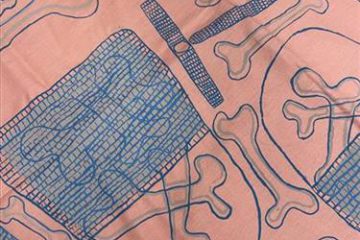
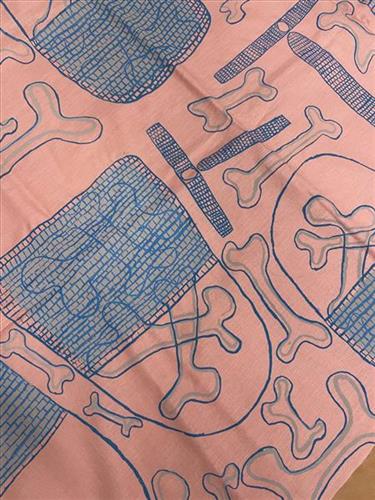
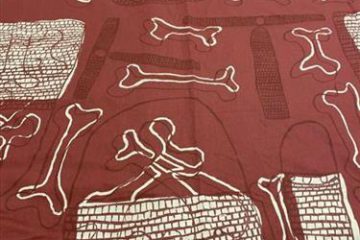
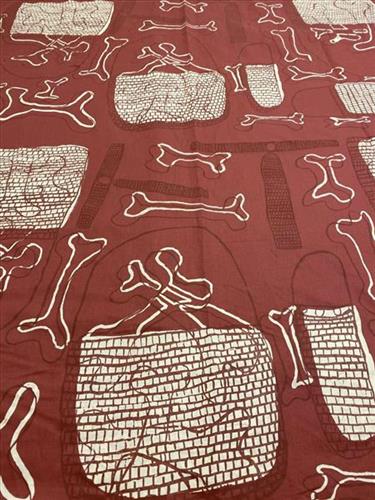
In Esther’s first screen design, she depicts the story of fire sticks and bones carried in a dilly bag, reminiscent of traditional ways of the Ndjebenna people.

‘Back in the old days, our people would use a ‘bush lighter’ for lighting fires, which was two pieces of special wood which would make fire easily. The old people carried a dilly bag containing the fire stick all times, when they moved camps.

Old people would always carry dilly bags, sometimes with water, honey, food or bones of our deceased people.

When someone passed away their body would be put on a high platform built from eucalyptus and paperbark. They would use a firestick to light a fire under the platform, and people would sing and dance around that platform to send the deceased’s spirit back to his or her country.

The body would then be left here for many months. When ready, the clan would return to collect the bones to take them back to the deceased’s homeland for burial.

To travel to the homeland, people would paint the bones with brown ochre and place them in a dillybag. When they reached the deceased’s homeland, people would sing together, place the bones in the lorrkkon and to leave them rest forever.”

377810582114215


Mardarda and Njarlarla

In Esther’s first screen design, she depicts the story of Mardarda (bones) and Njarlarla (fire sticks) carried in a dilly bag, reminiscent of traditional ways of the Ndjebenna people.

‘Back in the old days, our people would use a ‘bush lighter’ for lighting fires, which was two pieces of special wood which would make fire easily. The old people carried a dilly bag containing the fire stick all times, when they moved camps.

Old people would always carry dilly bags, sometimes with water, honey, food or bones of our deceased people.

When someone passed away their body would be put on a high platform built from eucalyptus and paperbark. They would use a firestick to light a fire under the platform, and people would sing and dance around that platform to send the deceased’s spirit back to his or her country.

The body would then be left here for many months. When ready, the clan would return to collect the bones to take them back to the deceased’s homeland for burial.

To travel to the homeland, people would paint the bones with brown ochre and place them in a dillybag. When they reached the deceased’s homeland, people would sing together, place the bones in the lorrkkon and to leave them rest forever.”