377810582168263


Romolo

One of Lucy’s latest linocut designs, Romolo, green frog.

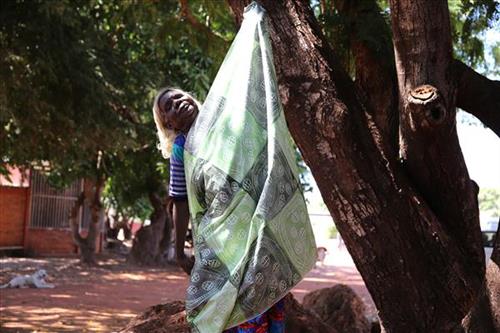
Lucy is an experienced textile artist at Bábbarra Women’s Centre. Lucy often references her ancestral stories in her textile work, including Bawaliba (Djinkarr spirit woman), with various lino and screen prints depicting this same narrative.

Lucy is from the Gurr.goni language group – one of the least commonly spoken languages in Arnhem Land. Lucy also speaks another eight Maningrida languages.

377810582168261


Djomi

This design depicts the story of the artist’s ancestral dreaming, the Djomi fresh water spirit mermaid.

The Djomi figure is a mermaid like spirit with fish tail that lives in the fresh water stream that flows out to the sea cliff near Maningrida. Djomi is a known to be a very powerful fertility symbol.

‘If you go there you can get pregnant easily. Djomi has babies, and they can give others babies too. The Djomi spirit is so powerful, that women can end up with multiple babies at once, twins or sometimes even more. The Djomi spirits lay eggs near the sacred freshwater stream in Maningrida. Inside the eggs are human babies as well as young Djomi.

Men do not go near that swamp, because Djomi is so powerful that men might get pregnant there too. So men, they are too scared of that Djomi. When we visit the Djomi freshwater spring, we can hear young Djomi crying. They sound like normal babies crying, those Djomi spirits. They are looking for a mother.

This Djomi is my dreaming, I got permission from my djunguys to paint this Djomi design. For me I always ask my djunguy permission to paint, because that is our cultural way.

This design also depicts the fresh water lily leaves, and seaweed from the base of the sea floor.
377810582168258


Mábbarla (Jelly Fish)

Mábbarla means Jelly Fish in Ndjébbana.

‘My homeland is Entrance island, Haulround island and Juda point. I really like Haulround island and that’s where we collect barruar (seagull egg). Entrance island is my favourite camping area, I go across with boat. Balanda (non-Aboriginal or European people) can’t go into those islands or Juda point without permission from me. We have a sacred totem ngaduma (palm tree) at those places and if people destroy it, we will have a strong wind and maybe a cyclone.’ Marilyn James 2021

377810582167783


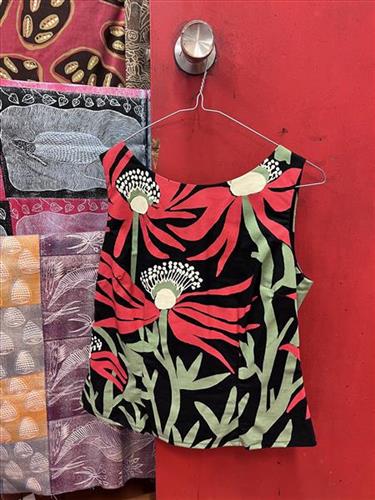
Manwak (Mumeka blooms)

Manwak grows near Mumeka creek, on the artist’s homeland. This beautiful large flower blooms during the mandjelk (wet season). It has deep green petals with a central red kernel which swells to the size of a berry. It is known for its long, sweeping petals which seem to dance in the winds.

By dry season, the inside kernel resembles a strawberry in appearance and flavour, but is also very spicy so it burns our mouth. Kids and adults pick these berries enthusiastically when walking or going hunting on my country. The inside of the flowers are eaten fresh, a favourite manme (bush food) of our people.

“When I was painting this Manwak story, I was painting in Maningrida. In my head I was dreaming of being on my homeland, eating ripe Manwak berries”- Deborah Wurrkidj

377810582167789


Man-djarduk (Red Bush Apples)

Deborah Wurrkidj is a Kuninjku artist from the Kurulk clan whose country lies around the outstation of Mumeka in central Arnhem Land.

In this design she has depicted man-djarduk (red bush apples) – a sweet, crisp bush food that is a favourite to collect.

Man-djarduk fruits in kurrung and kunumeleng seasons, the build-up and first rains seasons.

377810582167788


Ngarduk Kunred

“This river we call Mangabo. It is near Gudjarrngarrl homeland of my daughters, Deborah and Jennifer Wurrkidj. We cross that river when travelling to Munmoy outstation. In the wet season, that water comes up and covers over those rocks, and when you look down there are rocks all under the water.”

– Helen Lanyinwanga

377810582167787


Kunngol (cloud)

This design depicts certain Kunngol (cloud) that signal to people of central Arnhem Land that the end of the wet season is approaching. After months of daily monsoonal rain in Arnhem Land, these clouds are light and fluffy, not like the dark, heavy clouds of the monsoonal sky. At the time of the kunngol clouds, people know the country will soon dry up and the cold season (dry season) will arrive. When the kunngol clouds appear, all of the billabongs are already filled, the rivers are high and the country is brimming with life and fresh new growth after months of fresh water pouring from the sky.

377810582167785


Manbirrbbirr (small bush flowers)

In Kuninjku the name manbirrbbirr is used for a number of densely flowering shrubs and small trees including Verticordia cunninghamii, yellow flowering Austromyrtus species and also Acacia platycarpa which also has dense white. 


377810582167784


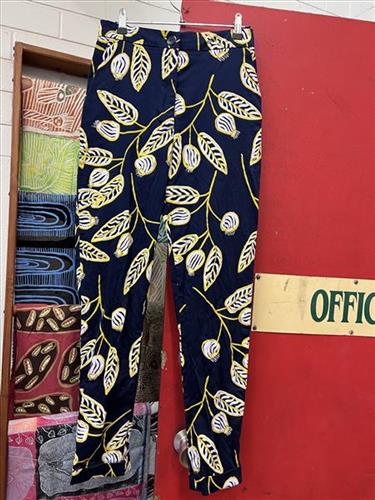
Kukurlk Kare (Going Underground)

Karrinung kukurlk kare, karrijare manme (we are going underground looking for food).

“This is my country. In this painting, I’m looking at her little bit different way. This is what we see when we’re kukurlk kare (going underground)

Man-kurndalh (Black plum) I call mother. It is my mother’s Djang/Dreaming. The bush onion (kulumuduk) is white, the same as onions you buy at the store. We don’t eat this one though, it’s poison.

Wayuk is the water lily, with the big root growing in the earth. This is when that water is drying up a bit. There are worms and beetles- this is what we see underground, when we are digging for manme.”

-Jennifer Wurrkidj

Hand Screen Printed by Publisher, Sydney Australia


377810582167248


Mududu

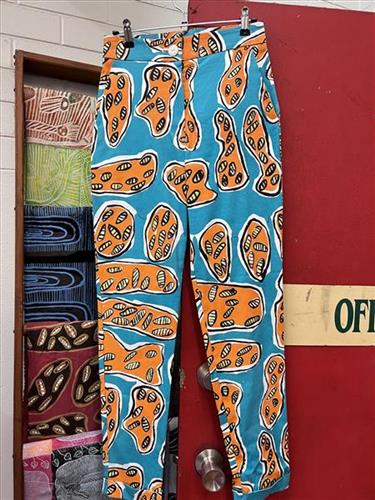
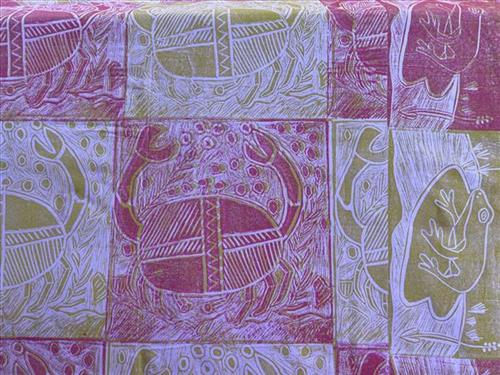
A new design by Lucy celebrating her love of eating mudcrab. 

Mududu is mudcrab in the Gurgoni language.

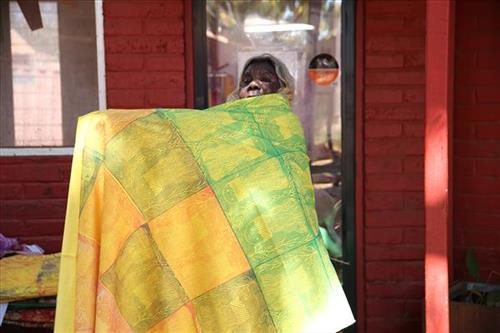
‘I feel good waking up in the morning, knowing I am going to Bábbarra. After work I go home and talk about my printing with all my family, and then I dream about it too. I am always thinking about my designs. They make me feel so proud.” – Lucy Yarawanga.