Stingray
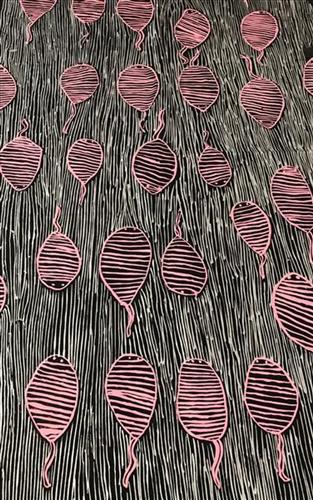
This is Debbie Pascoe’s first ever screen print design. Printed as a two colour design.
Debbie is from the Djinang language group in Maningrida, which according to the ABS Census has approximately 220 speakers.

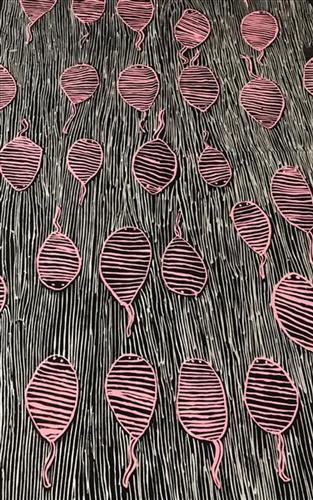
This is Debbie Pascoe’s first ever screen print design. Printed as a two colour design.
Debbie is from the Djinang language group in Maningrida, which according to the ABS Census has approximately 220 speakers.

This is Debbie Pascoe’s first ever screen print design. Printed as a two colour design.
Debbie is from the Djinang language group in Maningrida, which according to the ABS Census has approximately 220 speakers.

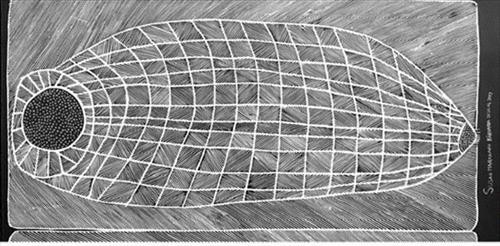
Kuninjku people traditionally make two sorts of conical fish traps. One is called mandjabu and is made from a strong, durable vine called milil, and a smaller one is called manylik mandjabu, and made from the grass manylik. The mandjabuconical fish trap is bigger and stronger and used in tidal reaches of creeks to catch large fish. The smaller, lighter manyliktrap is used in freshwater flowing creeks to catch smaller fish and freshwater prawns. In earlier times, only men were involved in the construction of the large fish traps, but children would often crawl inside and assist.
To make mandjabu, weavers firstly harvest milil (burney vine, Malaisia scandens) and put it in water overnight to make it soft. Then they start weaving it; they make rings for the inside to keep the fish trap’s shape. People also make string from the bark of burdaga (kurrajong) to attach the bardainy (hibiscus) rings and to tie the conical end of the fish trap. It’s hard work and it can take three or four weeks to make a fish trap. People also use fish-net fences called kunkarlewabe. They would put the kunkarlewabe across rivers and creeks. In the middle they would place the mandjabu. They also used small things like sticks, rocks, mud and grass to block the fish from going through. This way we would catch fish such as saltwater barramundi rajarra, ngaldadmurrng (freshwater barramundi), small black freshwater catfish (buliya), bonefish (an-guwirrpiya), and sand bass (dalakan) in the mandjabu.

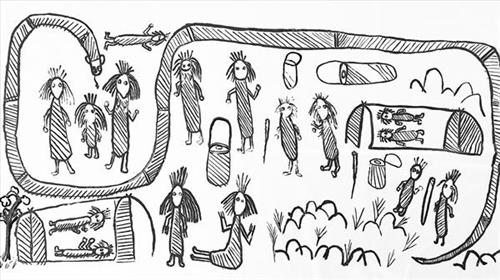
‘My Kikka (mother), when she was alive, she would tell me these stories. I was just a little girl and she would tell us the stories in her language Gurrgoni.
In the camps there were boy and girl Bawaliba, and old Bawaliba too. They loved to dance by the firelight, keeping rhythm with a stick. They had lots of hair, they were really tall and skinny, with spots on their bodies. The Bawaliba lived a long time in peace. They were the only spirits on their country and so they were never disturbed.
One day, a long time ago, the Bawaliba were out hunting and they saw a large snake- they didn’t know then but she was the Rainbow Serpent. They were really scared, they had never seen that. creature before. She was really beautiful- like a normal king brown snake but with a rainbow from the sky on her back. The rainbow serpent was really hungry, and she could smell the Bawaliba from a long way away. She was out looking for food. The Bawaliba tried to stop Ngalyod coming for them but she was just too quick. She snuck up behind the Bawaliba and before they could get away she ate them up. When she was really full and couldn’t eat anymore Bawaliba she changed the rest of them into stone. Still til this day, the Bawaliba stay on that same country as stones.’ Lucy Yarawanga

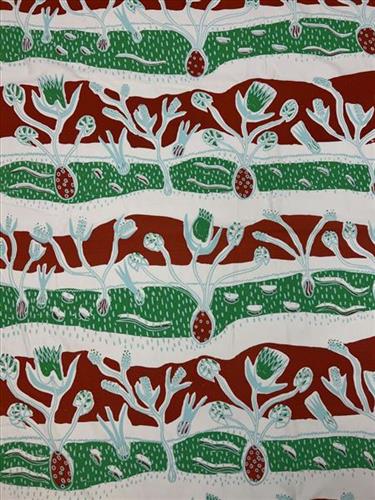
Karrinung kukurlk kare, karrijare manme (we are going underground looking for food).
“This is my country. In this painting, I’m looking at her little bit different way. This is what we see when we’re kukurlk kare (going underground)
Man-kurndalh (Black plum) I call mother. It is my mother’s Djang/Dreaming. The bush onion (kulumuduk) is white, the same as onions you buy at the store. We don’t eat this one though, it’s poison.
Wayuk is the water lily, with the big root growing in the earth. This is when that water is drying up a bit. There are worms and beetles- this is what we see underground, when we are digging for manme.”
-Jennifer Wurrkidj
Hand Screen Printed by Publisher, Sydney Australia

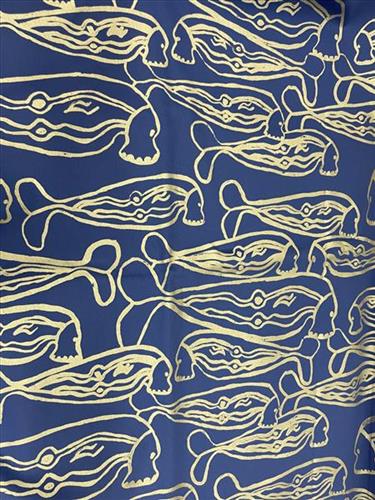
Dugong can be found in the waters around Maningrida They are a protected species but do form part of a traditional manme (bushfood) diet for some saltwater communities.

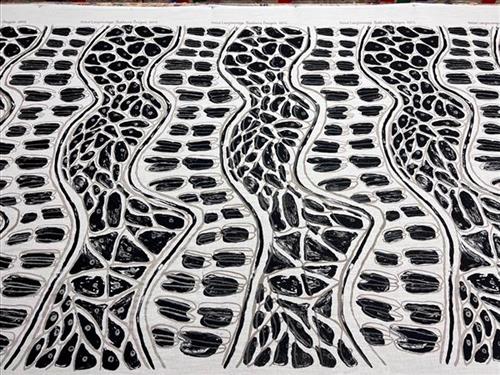
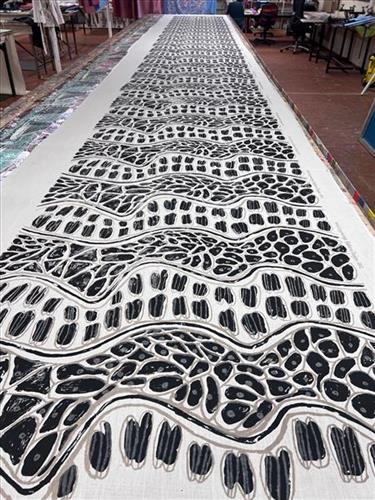
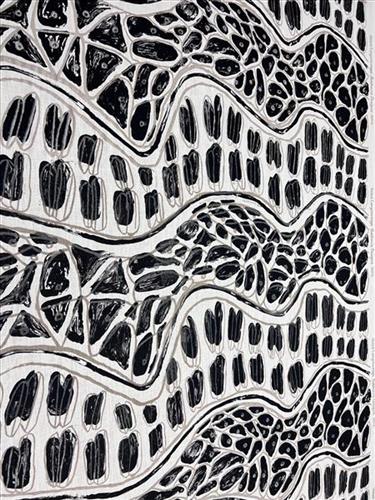
“This river we call Mangabo. It is near Gudjarrngarrl homeland of my daughters, Deborah and Jennifer Wurrkidj. We cross that river when travelling to Munmoy outstation. In the wet season, that water comes up and covers over those rocks, and when you look down there are rocks all under the water.”
– Helen Lanyinwanga

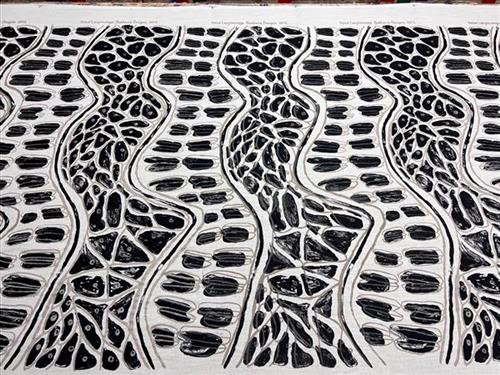
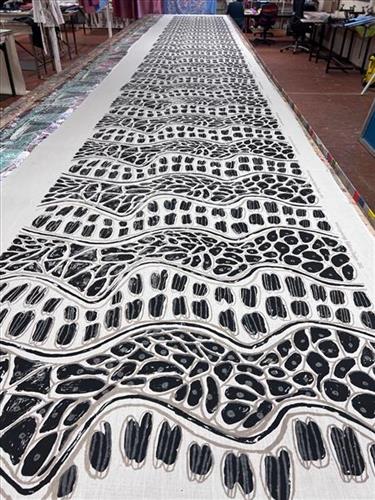
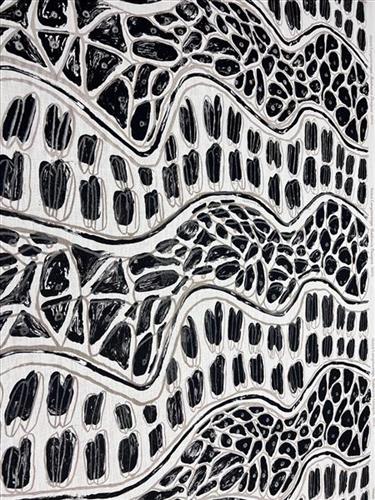
“This river we call Mangabo. It is near Gudjarrngarrl homeland of my daughters, Deborah and Jennifer Wurrkidj. We cross that river when travelling to Munmoy outstation. In the wet season, that water comes up and covers over those rocks, and when you look down there are rocks all under the water.”
– Helen Lanyinwanga

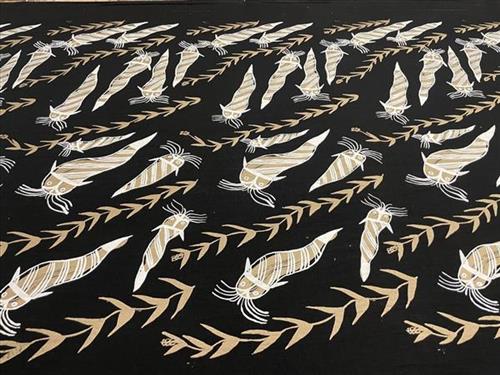
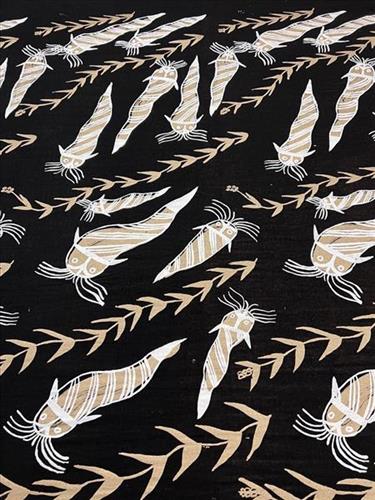
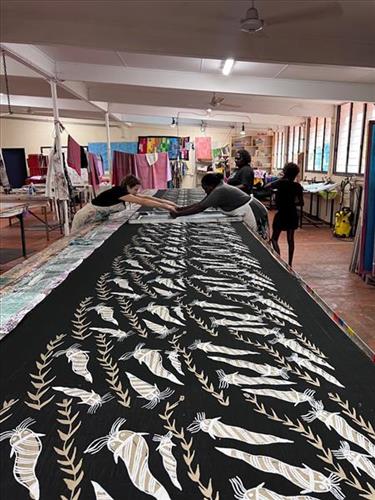
Marrngunj is the Kuninjku name for catfish. Catfish get their name from sensory barbels around the mouth which resemble a cat’s whiskers. Marrngunj specifically refers to the ‘eel-tailed’ catfish, a reference to its long tapering tail.

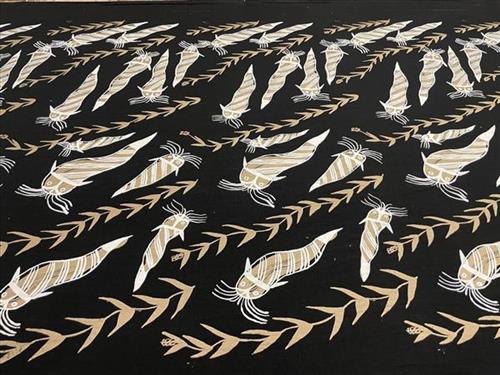
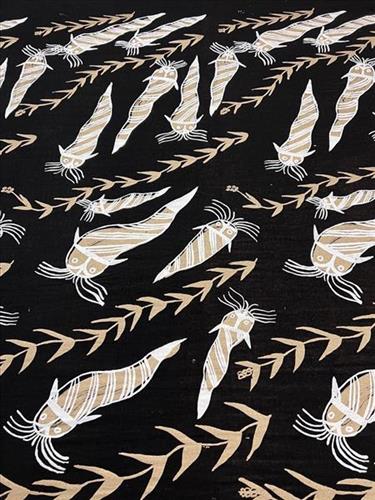
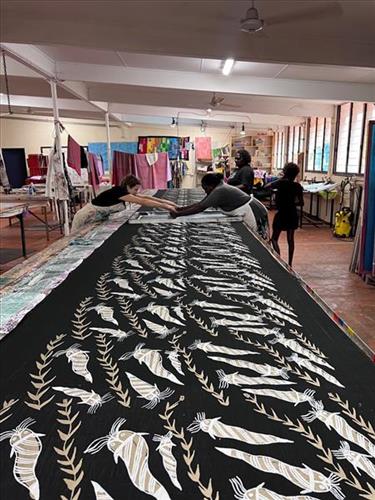
Marrngunj is the Kuninjku name for catfish. Catfish get their name from sensory barbels around the mouth which resemble a cat’s whiskers. Marrngunj specifically refers to the ‘eel-tailed’ catfish, a reference to its long tapering tail.