377810582154102


Marebu

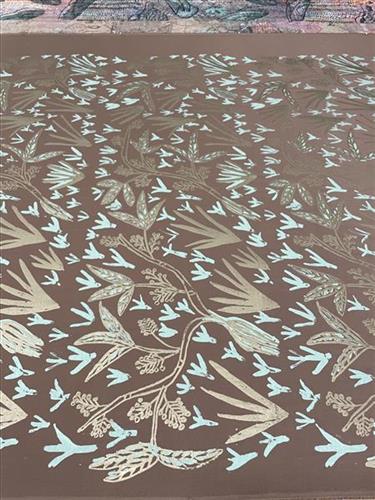
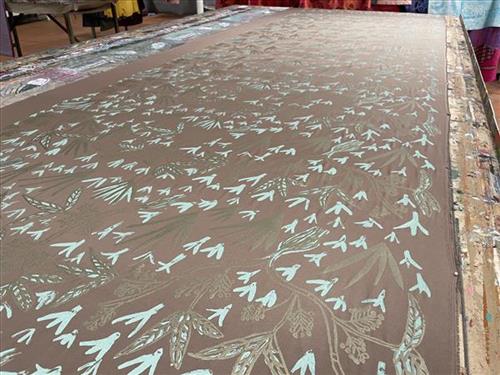
Deborah Wurrkidj is a Kuninjku artist from the Kurulk clan whose country lies around the outstation of Mumeka in central Arnhem Land. She is an accomplished artist working across mediums including painting, sculpture, weaving and textile design. For this design, Deborah Wurrkidj has depicted Marebu (woven pandanus mats).

Works in fibre from the Maningrida region are widely recognised as some of the finest in Australia. Artists confidently push the boundaries of fibre craft and cultural expression, adapting traditional techniques and forms to produce strikingly inventive and aesthetically exquisite artworks.

Artists weave many different kinds of mats. Conical mats were traditionally used to shield babies from mosquitoes. Long flat mats were used for blocking creeks so that fish would be diverted into fish traps. A small triangular mat made of pandanus fibre used to be worn by women during ceremonial gatherings, tied around their back and covering them at the front. Mats are also used for wrapping and rinsing food in water.

Artists usually use kundayarr, pandanus spiralis, to weave decorative round or oblong mats, as well as the less common triangular and conical shapes. Weaving is physically hard work, now done only by women. They colour the pandanus using natural dyes made from the roots, leaves or flowers of plants within the weaver’s clan estate.

The radial woven patterns of the finest round mats appear to vibrate with colour, sometimes regarded as an aesthetic manifestation of deep cultural meaning, as there is a significant spiritual dimension to pandanus mats.

377810582139891


Bush Dye

The old plant dyes used in Europe like indigo, saffron, woad and logwood fell out of use with the Industrial Revolution. But here, a natural “paintbox” thrives.


The most common dyes include:
Yellow-orange: Mandjurndum (the bright orange roots of the Pognolobus reticulatus bush)
Brown: Wirdilwirdil (the red bulb of Haemadorum breviculae grass)
Green: The growing shoot of the pandanus itself (Pandanus spiralis), boiled with the ashes of pandanus leaves.
Purple-pink – Wirndilk (the seeds of the Haemodorum coccineum plant, related to Kangaroo Paw)
Grey-Black – Manbedde (the leaves of the quinine bush, Petalostigma pubescens)


Source: Louise Hamby (ed.) “Twined Together”.

377810582139873


Bush Dye

The old plant dyes used in Europe like indigo, saffron, woad and logwood fell out of use with the Industrial Revolution. But here, a natural “paintbox” thrives.


The most common dyes include:
Yellow-orange: Mandjurndum (the bright orange roots of the Pognolobus reticulatus bush)
Brown: Wirdilwirdil (the red bulb of Haemadorum breviculae grass)
Green: The growing shoot of the pandanus itself (Pandanus spiralis), boiled with the ashes of pandanus leaves.
Purple-pink – Wirndilk (the seeds of the Haemodorum coccineum plant, related to Kangaroo Paw)
Grey-Black – Manbedde (the leaves of the quinine bush, Petalostigma pubescens)


Source: Louise Hamby (ed.) “Twined Together”.

377810582152013


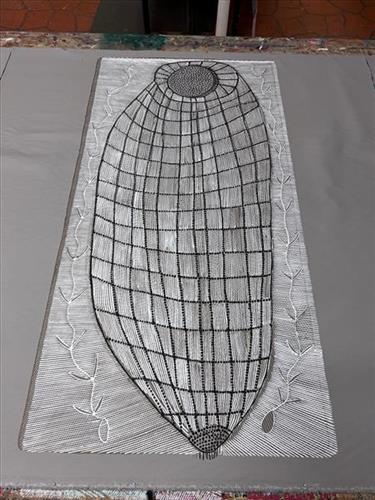
Mandjabu (Fish Trap)

“In old times people would make these mandjabu (fish traps) to go fishing. They are made with vine we find in the jungle. That old man, Anchor Gulunba, he showed me how to make these fish traps. I would sit there and watch him making them. We catch barramundi, catfish, all kinds of fish.” – Helen Lanyinwanga

Kuninjku people traditionally make two sorts of conical fish traps. One called mandjabu made from a vine called milil, and another smaller one called manylik mandjabu, made from the grass manylik. The mandjabu conical fish trap is bigger and stronger and used in tidal reaches of creeks to catch large fish. The smaller, lighter manylik trap is used in freshwater flowing creeks to catch smaller fish and freshwater prawns. Traditionally, only men were involved in the construction of the large fish traps, but children would often crawl inside and assist.

To make fish traps and fish net fences artists firstly get vine (milil) from the jungle and they put it in water for one night to make it soft. Next they start weaving it; they make rings for the inside to keep the fish trap’s shape. Artists work for three or four weeks on the fish trap. They also make string from kurrajong (burdaga) to attach the hibiscus (bardainy) rings and to tie the conical end of the fish trap. This fish trap is used in saltwater and freshwater. People also use fish net fences called mun-dirra. A long time ago they would put the mun-dirra across rivers and creeks. In the middle they would place the an-gujechiya. They also used small things like sticks, rocks, mud and grass to block the fish from going through. People would then catch fish like saltwater barramundi rajarra, freshwater barramundi (janambal), small black freshwater catfish (buliya), bonefish (an-guwirrpiya), and sand bass (dalakan) in these fish traps.

377810582151883


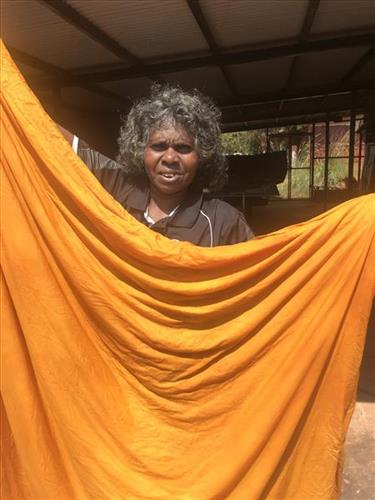
man-kurdudjumuk – yellow colour

The striking yellow – gold hue comes from the root oft of the man-kurdudjumuk (coelospermum reticulatum) which has been harvested from the sandy country near the flood plains. This laborious and tiring process requires digging up the entire shrub. The root is shaven into a pot of water and the colour is released into waster through boiling. 

377810582152432


Man-ngarre (Native Grasses)

Elizabeth had a distinctive artistic style, depicting the natural world with loose, organic strokes. Her style was evident in her key designs Kun-ngol (clouds), showing the cloud formations over her floodplain country after the wet season, and the fine detail of Kun-kirh (mud ripples) depicting cracked mud in the sun during dry season. Elizabeth was close family with Janet Marawarr, Lucy Yarawanga and Raylene Bonson, leading artists at Bábbarra.

This design celebrates the grasses of Arnhem land, the spear grass, Sorghum intransthat grows in the wet season and dies off or is burnt during the dry season.

377810582152431


Man-ngarre (Native Grasses)

Elizabeth had a distinctive artistic style, depicting the natural world with loose, organic strokes. Her style was evident in her key designs Kun-ngol (clouds), showing the cloud formations over her floodplain country after the wet season, and the fine detail of Kun-kirh (mud ripples) depicting cracked mud in the sun during dry season. Elizabeth was close family with Janet Marawarr, Lucy Yarawanga and Raylene Bonson, leading artists at Bábbarra.

This design celebrates the grasses of Arnhem land, the spear grass, Sorghum intransthat grows in the wet season and dies off or is burnt during the dry season.

377810582152389


Leaves

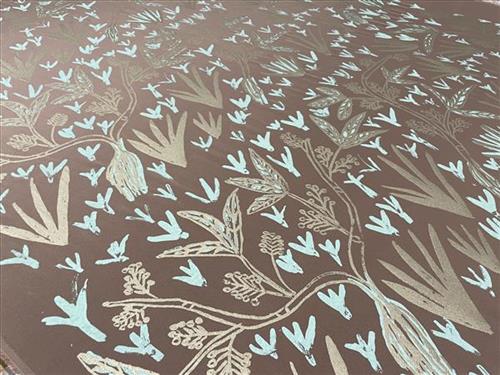
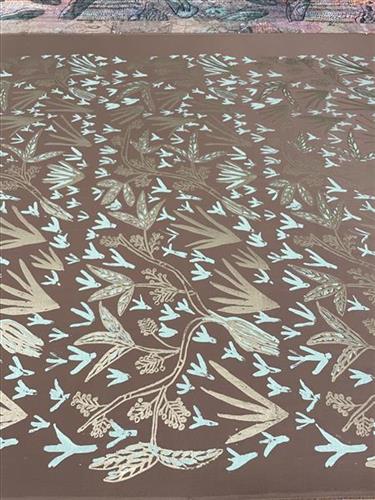
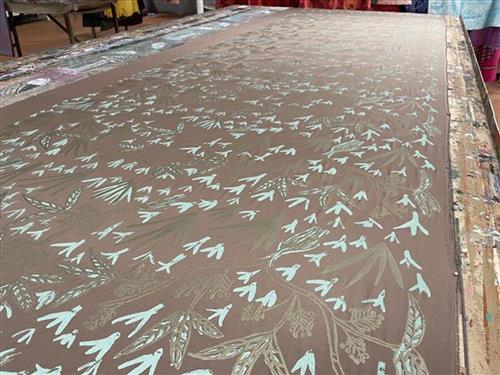
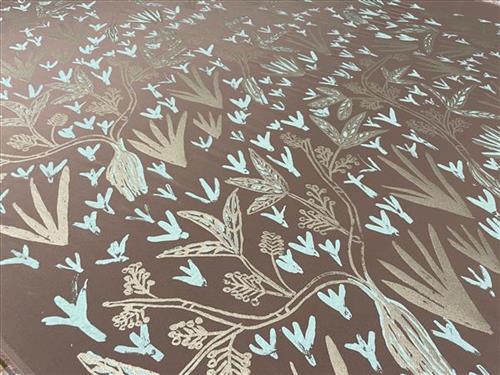
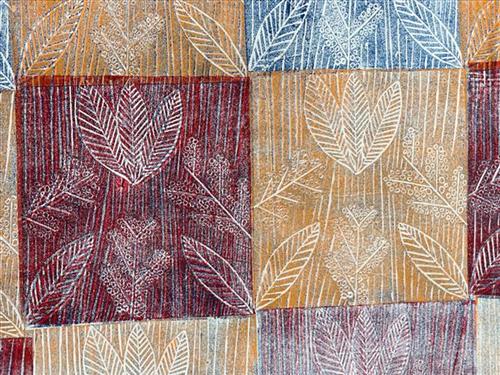
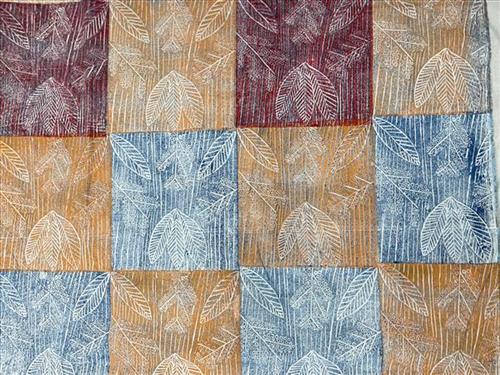
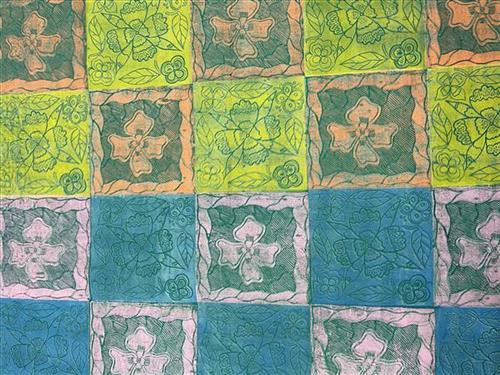
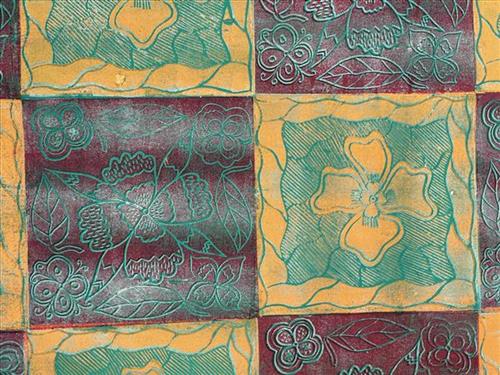
Belinda is inspired by the plants, leaves, shells and flowers around her bottom camp home in Maningrida where she can sit and stare at the ocean and the bush. When asked about this print she said ‘it’s just leaves, they are everywhere around Maningrida.’ Belinda has a great eye for colour and has mastered the the Lino print technique. 

377810582152385


Manbirrbbirr (small bush flowers)

In Kuninjku the name manbirrbbirr is used for a number of densely flowering shrubs and small trees including Verticordia cunninghamii, yellow flowering Austromyrtus species and also Acacia platycarpa which also has dense white.

A green silk base fabric printed with blue, yellow, red, pink, white and orange to a rainbow effect.